
The nightmare of communism had ended. Something new has taken place in newly found Czechoslovakia, which had the ascending Czech Republic ready to take place. However, for an educated person (in evolutionary biology, evolutionary psychology, or politics (both visible or background)) a new nightmare came to exist – the horrible establishment.
Why was communism so bad?
The communist regime in Czechoslovakia imposed harsh political repression. It was a one-party state with no tolerance for opposition. People who spoke against the regime faced imprisonment, forced labor, or death. Political dissent was not allowed, and democratic processes were dismantled.
There was no freedom of speech, press, or assembly. Censorship was strict, and the government controlled all media. Anyone who expressed dissenting views was often criminalized. Personal freedoms were severely restricted.
The secret police, the StB, constantly spied on citizens. People lived in fear, knowing their neighbors or colleagues might inform on them. This atmosphere of distrust created deep psychological strain for many.
The economy suffered due to central planning. Industries were inefficient, and shortages of basic goods were common. People faced frequent food shortages, and medicine was often unavailable. The system stifled innovation, and economic stagnation became the norm.
Farmers were forced into collective farms. Traditional farming practices were disrupted, and agricultural productivity dropped. Rural communities faced hardship as they were pushed into a system that didn’t work for them.
Cultural life was heavily controlled. Writers, artists, and intellectuals were only allowed to produce work that fit the communist ideology. Creativity was stifled, and many talented individuals were forced into silence or exile.
Fancy torture? Communists were experts
Torture was pervasive, especially in political prisons. The regime used physical and psychological abuse to extract confessions or break the spirits of dissenters. Many suffered deeply, their lives destroyed by these brutal practices.
Disabled people were treated poorly. They were often crowded into institutions with inadequate care. These facilities lacked the necessary resources, and the treatment of disabled individuals reflected the regime’s neglect and disregard for human dignity.
Citizens were not allowed to travel freely. The regime imposed strict emigration controls. People who tried to leave the country faced severe punishment, trapping many in an isolated and repressive society.
The invasion of 1968 crushed hopes for reform. The Prague Spring was an attempt to bring about a more humane socialism, but Soviet-led forces invaded to maintain control. This shattered the dreams of those who sought change and led to further repression.
By the 1980s, the economy had deteriorated even more. Living standards fell behind those of Western Europe. Technological and industrial progress was stunted, and daily life became increasingly difficult for the population.
The communist regime in Czechoslovakia ultimately failed. Because it imposed widespread suffering, denied basic freedoms, and could not sustain its economic model. It left a legacy of fear, repression, and poverty that shaped the lives of millions.
We must be impartial. It had its advantages
For someone who doesn’t care about analytic or continental philosophy, about free artistic expression, doesn’t need books allowed in “free” countries, doesn’t care about the continuous transfer of power (which exists in democracies), likes to have life certainties, plenty resources to found a family, and likes media overlooking all the scandals and brutal murders feels like communism really wasn’t bad. It was something desirable.
There was a compulsory obligation to have a job, which – once again, we must be impartial – was provided by the communist regime. Somebody just pretended to work, didn’t make problems, and had been overlooked.
Some disadvantaged people who cannot work, however, faced jail time. Homeless people didn’t appear on the streets, they were in mental asylums, jails, and so on.
What did the dream look like?
No more banned texts (Samizdat) by the communist regime. Finally, the long-dreamed and famous American bands were arriving in the country, with Václav Havel as an idol (I have an ambivalent relationship with him). Freedom of the press was established, along with truly free voting rights (as opposed to the mandatory voting for communists in the past).
Newly founded political parties were promising the unimaginable and unrealistic: “We will have a better economy than Austria in a matter of years, the same with Germany.” Well, Czechs are neither Austrians nor Germans. The Czech lands were on par with them in terms of economic prosperity during the reign of Charles IV. Some time has passed since that era.
Finally, everyone could pursue the dreams that communists had effectively prevented – whether in education, social class, income, artistic aspirations, and so on.
Newly found establishment: I was born in 1990, but have been awaken in 2009
I didn’t know there was any establishment back in 2009. There were media owned by German companies. And then, of course, political parties. I understood there was some intertwined influence, but that was all.
Suddenly, mainstream media, given by the War on Corruption that the US started to wage, commenced to report money-stealing crooks connected to the politicians. Well, a game changer. Something as the establishment does exist.
What was the next round? The very Czech oligarchs. One former PM stated: “No, the crooks are not the ones who are moving the country, these are oligarchs who also fight against the crooks over the influence.”
Of course, that was another game changer in my understanding of establishment.
Needless to say, all of these entities own media or exert enormous influence over them by interconnected relationships.
Well, we have forgotten to tell you. A few super-rich sociopaths rule the world
The Czech media stopped at the point of revealing who the oligarchs are. But there are some entities above them. And the kind of establishment is evidence-based.
Global banks such as Goldman Sachs, JPMorgan Chase, and Deutsche Bank are interconnected through ownership stakes, shared board members, and secret agreements. They control global finance, ensuring that a small elite group benefits while the rest of the world remains economically dependent.
So is not the case in the Czech Republic? Yes, it is, the beloved oligarchs are interconnected with them.
And who owns the banks and multinational companies that have great tax allowances? The super-rich families such as Rothchilds, Morgans, or Rockefellers. New money, old money, who cares?
The vicious establishment came to light, at least in my experience
I didn’t know there are international lobbyists such as George Soros, huge power networks above the nation-states that extract all the surplus value.
The Western elites are decadent, imprison, kill, or do character assassinations of their opponents. Kind of scary, isn’t it?
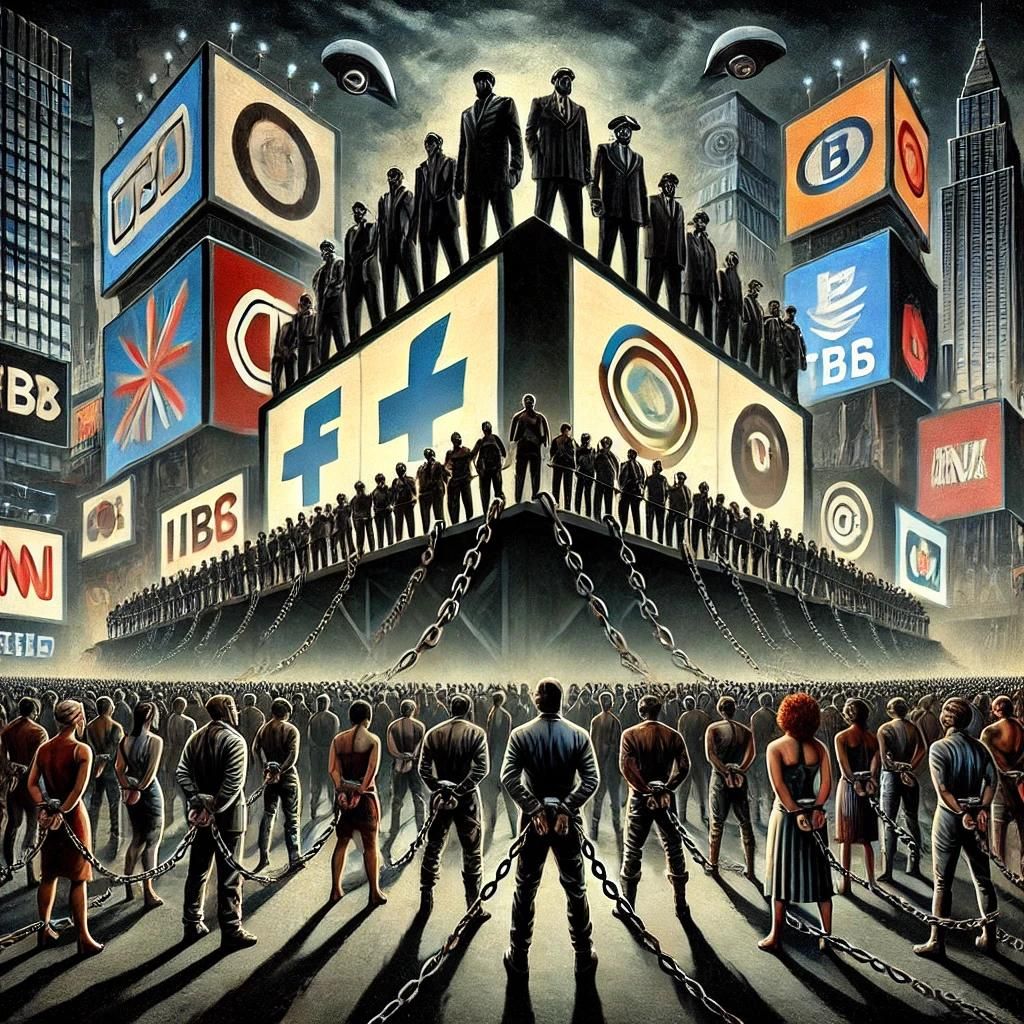
What is the establishment preventing from?
The establishment often works to maintain its power by strategically preventing certain advancements or freedoms that could disrupt the current socio-political and economic systems. These restrictions stem from deeply embedded power structures involving political elites, corporate interests, and institutions that benefit from maintaining the status quo. Here’s an expanded look at how the establishment achieves this across various areas:
1. Media control and suppression of free speech
The establishment prevents genuine freedom of speech by controlling the media, shaping public opinion, and suppressing dissenting voices. Major media conglomerates are often owned or influenced by a small number of corporate entities with close ties to political powers. This allows the establishment to ensure that only narratives that align with their interests are broadcasted widely. Investigative journalism that challenges government policies, corporate misconduct, or systemic corruption is frequently underfunded or censored. Whistleblowers and independent journalists face harassment, legal threats, or imprisonment, making it risky to report on the true nature of these power structures.
By controlling the flow of information, they prevent the public from accessing diverse viewpoints, which might inspire calls for reform or destabilize their influence. Algorithms on social media platforms, often designed or manipulated by those in power, can also shape public discourse by promoting content that reinforces mainstream narratives while suppressing alternative or critical voices.
2. Prevention of genetic enhancements
The establishment resists advancements in genetic technologies that could dramatically improve human intelligence, morality, and health. Genetic engineering has the potential to create humans with enhanced cognitive abilities, superior physical health, and possibly even higher moral reasoning. However, such advancements would threaten the current power structures by creating a population that is less controllable and more capable of questioning and resisting authority.
If people were to become super-intelligent or more moral, they would likely push for systemic changes, demand more equitable systems of governance, and challenge social hierarchies. Additionally, such enhancements could reduce reliance on established healthcare and educational systems, leading to a power shift away from traditional institutions. The fear of such destabilization drives the establishment to slow down or regulate genetic research to prevent widespread access to these potentially transformative technologies.
3. Suppression of game-changing medical research
The establishment slows the development of groundbreaking medical treatments, particularly those that could eliminate major diseases like cancer, Alzheimer’s, or heart disease. Pharmaceutical companies, which often wield significant influence over healthcare policies and funding, have little incentive to cure diseases outright. Instead, they focus on treatments that manage symptoms over long periods, creating a steady revenue stream. Cures, while beneficial for humanity, would disrupt this business model.
Furthermore, regulatory bodies, often influenced by these pharmaceutical giants, slow the approval process for new, revolutionary treatments. This prolongs suffering for millions but ensures the continuation of existing medical and financial structures. The establishment’s grip on healthcare ensures that the balance of power remains with those who control medical resources and access to life-saving treatments.
4. Stifling of renewable energy innovations
The fossil fuel industry, deeply embedded in the establishment, works to delay the adoption of renewable energy sources like solar, wind, and hydrogen power. Renewable energy threatens the profits of oil, gas, and coal industries, which have a vast influence on politics and global markets. By lobbying governments and funding misinformation campaigns, these industries slow the transition to cleaner energy, even as the world faces environmental crises.
They exploit political connections to ensure policies that favor fossil fuels, such as subsidies and tax breaks, remain in place. Renewable energy advancements could democratize energy production, reducing dependence on centralized power grids and large corporations. The establishment resists this shift to maintain control over energy resources and keep citizens reliant on traditional energy structures.
5. Blocking universal basic income (UBI)
The establishment is resistant to the idea of Universal Basic Income (UBI), a system where all citizens receive a guaranteed income regardless of employment. UBI would empower individuals to pursue creative, intellectual, or entrepreneurial activities without the stress of financial insecurity. By alleviating economic dependence, UBI could liberate people from traditional employment structures, reducing the control that corporations and governments have over labor forces.
The current economic system benefits from a large, dependent workforce that is tied to jobs out of necessity, rather than choice. UBI could reduce this dependency and lead to a more empowered, self-sufficient populace, something the establishment views as a threat to their control over the economy.
6. Opposition to financial decentralization
The rise of decentralized financial systems, such as cryptocurrencies and blockchain technology, presents a direct challenge to the traditional banking system and government-controlled currencies. Cryptocurrencies allow people to bypass banks, reducing the power of financial institutions that profit from controlling transactions, credit, and loans. The establishment opposes this shift because it diminishes their grip on monetary policy, financial surveillance, and wealth distribution.
Blockchain technologies, which can democratize data and secure transactions, are similarly resisted because they could remove intermediaries, reducing the influence of central authorities in various industries. Decentralized systems represent a redistribution of power that threatens established financial and governmental institutions.
7. Preventing surveillance-resistant communication
The establishment limits the development and spread of surveillance-resistant communication tools, such as encrypted messaging apps, decentralized communication platforms, and privacy-enhancing technologies. These tools would allow people to communicate freely without government or corporate oversight, threatening the ability of the establishment to monitor and control dissidents, activists, or critics.
Maintaining control over communication channels is crucial for any power structure, and by restricting access to secure, private communication, the establishment ensures that it can continue monitoring and regulating public discourse and political activism.
8. Opposing automation of mundane jobs
Automation, particularly in industries that rely on labor-intensive, low-skill jobs, is often resisted by the establishment. Automation could free workers from tedious tasks, allowing them to pursue more fulfilling or creative endeavors. However, the establishment fears that widespread automation would lead to mass unemployment and social unrest, as current economic models are built around employment-based income distribution.
Rather than embrace automation and adapt to a future where people are less dependent on traditional work, the establishment slows technological progress in this area to maintain labor as a controllable and essential part of the economic system.
9. Preventing full democratic participation
Technological advancements in direct democracy platforms, where citizens could vote on policies directly via digital platforms, are resisted by the establishment. Such systems would reduce the need for traditional representative bodies, diminishing the power of politicians and political elites. The establishment prefers representative democracy, where power remains concentrated in the hands of a few, rather than true participatory democracy, which would give more power to the general population.
Direct participation in governance could lead to faster reforms, more accountability, and less corruption, but it would also erode the establishment’s grip on political control.
10. Slowing scientific exploration
The establishment often restricts or slows down scientific exploration in areas that could pose ethical dilemmas or disrupt existing industries. For example, research into radical space exploration, extraterrestrial life, or advanced AI systems could lead to breakthroughs that challenge human-centered power structures or existing economic models. By controlling the pace and direction of scientific research, the establishment ensures that developments do not outpace their ability to manage the societal and economic implications.
These examples illustrate how the establishment uses its power to control or delay advancements that could disrupt existing structures of authority. Whether through media control, economic influence, or stifling technological and medical progress, the establishment works to maintain a stable system that benefits those in power at the expense of broader societal improvement.
11. Resisting life extension and anti-aging technologies
Life extension research, particularly advancements in anti-aging technologies, has the potential to drastically increase human lifespans. The establishment resists this because extended lifespans would disrupt traditional social and economic systems. Retirement models, social services, and population management would all be challenged, potentially leading to overpopulation concerns and a strain on resources.
The idea of a population living longer, healthier lives also threatens the hierarchical nature of current societies. As it could give people more time to accumulate knowledge, wealth, and power outside traditional institutional control. Fears of destabilization lead the establishment to slow down or regulate research in this area.
The Western establishment is a new communism to me
I still cannot believe it. We are living in a totalitarian regime now. Now like the Stalinist one. But you are completely helpless.
A voting circus occurs, American lobbyists fund their political puppets, get media attention, and political marketing thrives.
In “Republic, Lost”, Lawrence Lessig discusses how lawmakers navigate their positions on various issues. He explainins that only a small number of issues remain insulated from the influence of lobbyists. Specifically, Lessig suggests that on four or five issues, lawmakers are generally stable and cannot be easily influenced. However, for most other issues, the influence of lobbyists and special interests plays a major role. This leads leads politicians to “sell their soul” to secure campaign funding and maintain political power.
Conclusion: the Western establishment as a new communism and how to get rid of it
Without the direct approach of regular citizens, no changes can occur. People, hate it or not, must get rid of clientelism, no matter what political spectrum they are.
A new party aiming to get rid of clientelism would mean a complete change in everything. But citizens are stupid.

Leave a Reply