For decades, atheism lived in the margins. It spoke in footnotes, whispered in cafes, or lived silently in the minds of scientists and skeptics. Then came 9/11. With it emerged a wave of unapologetic atheism that wasn’t content to stay silent. This was the birth of New Atheism.
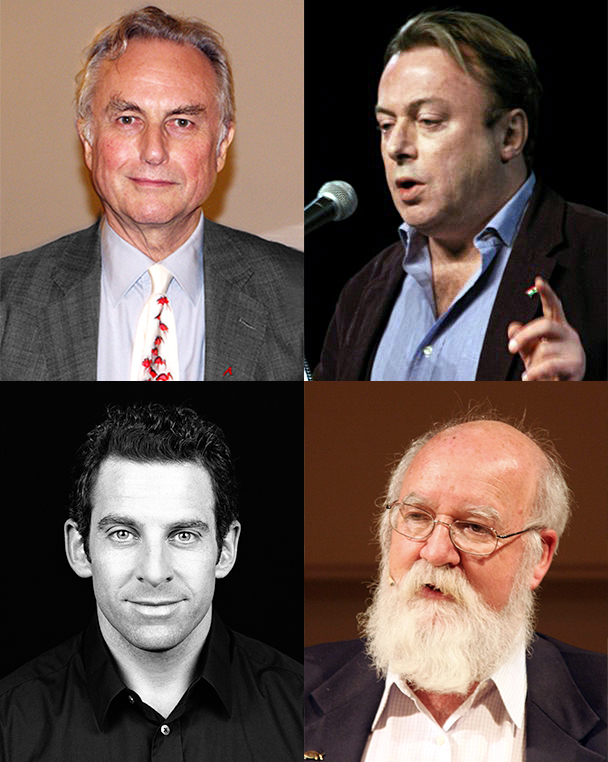
New Atheism wasn’t just about disbelief in God. It was about confrontation. Its message was clear: religion doesn’t just mislead—it damages. It delays science, incites violence, and manipulates the public. Atheism became a cultural force, led by four highly visible intellectuals: Richard Dawkins, Sam Harris, Christopher Hitchens, and Daniel Dennett.
From critique to cultural war
The Four Horsemen, as they were branded, wrote bestsellers and appeared in sold-out debates. They rejected religious tolerance and targeted faith as an intellectual fraud. Dawkins called belief in God a delusion. Harris linked it to terror. Hitchens described religion as poison. Dennett analyzed it as a meme complex. Their tone was not diplomatic. It was surgical.
But beneath their logic and style lay an old problem: clientelism. These thinkers were not radical outsiders. They rose through elite universities, elite publishing networks, elite media platforms. They spoke truth to power—but were also protected by it. Their critiques never touched the financial system, elite academia, or the deep state. They questioned gods, but never donors.
That hypocrisy stained the movement. They claimed to challenge authority, yet lived in its favor.
Religion in the public square
Despite its growing secular population, the West still funds religion through indirect means. Religious schools operate with public money. Churches own land but pay no tax. Politicians openly cite God in laws. Even in liberal democracies, superstition holds institutional power.
New Atheism forced a public conversation about these contradictions. It demanded that religious belief be treated like any other claim—not as sacred, but as testable, debatable, and optional. The movement laid the groundwork for efforts like Freethinkers International, including members (myself among them), who now push for bolder policies: the nationalization of religious institutions, the banning of publicly funded religious schools, and the creation of a single global agency to promote rationalism and atheism.
According to some Freethinkers International members, states must stop funding magical thinking. One unified institution should replace the scattered and protected religious domains. Religious schools, especially, are seen as the most dangerous: they indoctrinate before the mind is fully formed. In a scientific age, that is no longer acceptable.
But the 21st century belongs to religion
Yet New Atheism did not win. The 21st century has not become secular. Quite the opposite. Religion continues to dominate major parts of the world—politically, economically, and culturally.
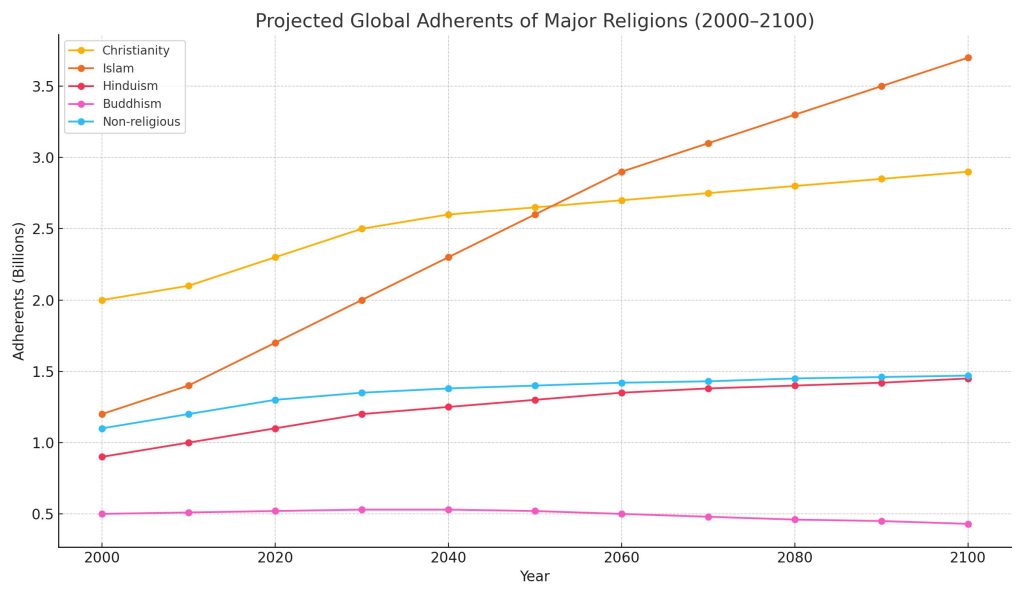
Islamism has expanded in both hardline and soft forms. Christianity has resurged in Africa and Latin America. Hindu nationalism in India, Orthodox revival in Russia, Evangelical power in the U.S.—all prove that religious identity has not faded. It has been weaponized.
People are not abandoning belief. They are clinging to it. In chaos, they reach for meaning. In fear, they turn to tribe. Religion offers both.
New Atheism never created a counter-identity strong enough to replace it.
The legacy and its limits
New Atheism changed the tone of public discourse. It made atheism visible, it made religion debatable. It gave voice to millions who previously felt alone. In this sense, it succeeded.
But it also failed to evolve. It became obsessed with Islam. And it ignored economic power. It mistook loudness for depth. Its leaders promoted reason, but rarely systemic analysis. And their closeness to elite structures made them vulnerable to the same hypocrisy they attacked.
Today, its legacy survives in softer forms: secular humanism, spiritual atheism, and rationalist communities. But the cultural power it once had is fading. The churches are not shrinking. The mosques are growing. The world did not move toward reason. It moved back toward myth.
New Atheism was a necessary shock. But it did not finish the job.
The next phase must go further—not just against belief, but against the systems that protect it.
Leave a Reply