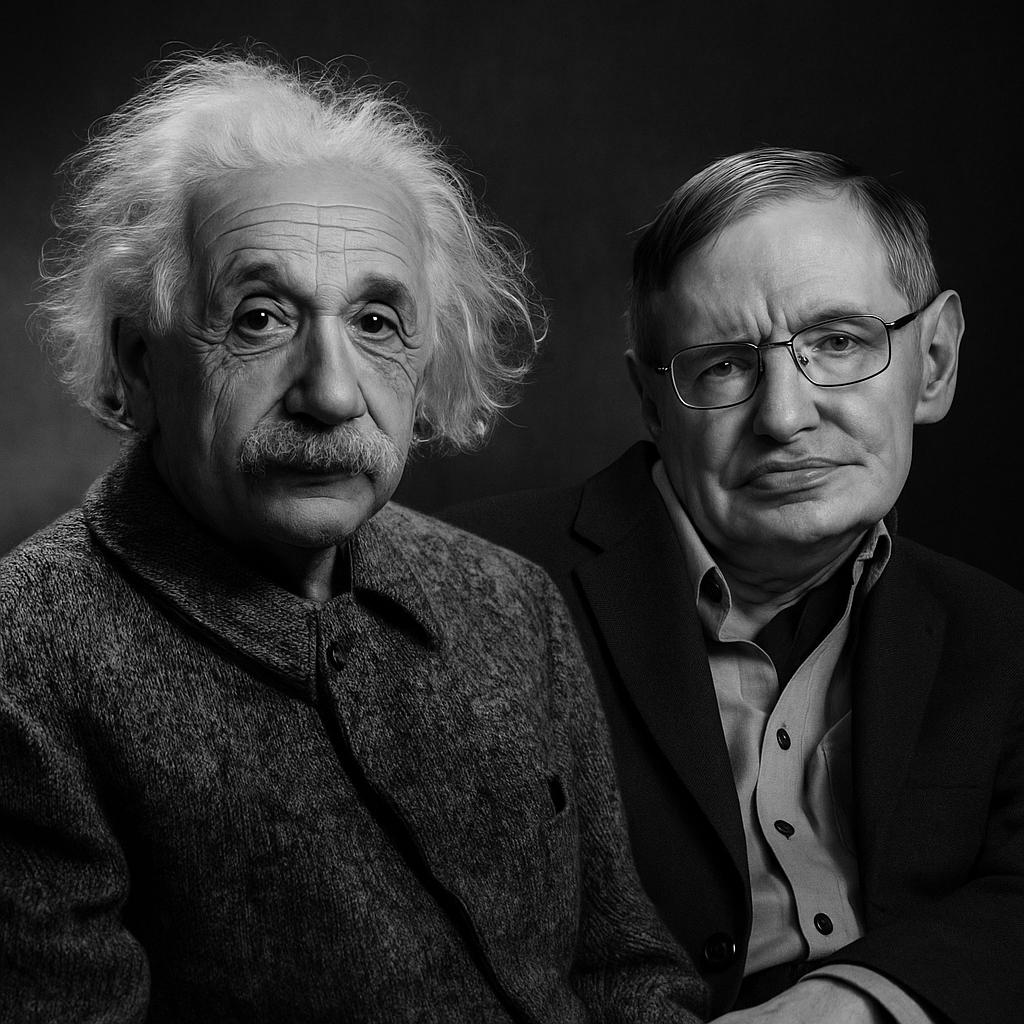
Some of the most brilliant minds in history saw inequality not as destiny but as design failure. Albert Einstein, Stephen Hawking, Linus Pauling, and Joseph Stiglitz all recognized that intelligence without morality becomes destructive. They understood that civilization cannot advance if its rewards flow only upward. Redistribution, to them, was not ideology — it was logic.
Politics Is multidimensional
The debate about redistribution cannot be confined to the left-right illusion. As I explained in Left and Right? It’s like choosing between Stalin and Hitler – Obsolete, Multidimensional (janbryxi.com), human societies operate on multiple axes — economic, moral, scientific, ecological. Redistribution stands at the intersection of fairness and stability. The real question is not whether one is left or right, but whether one serves systemic justice or entrenched privilege.
Why capitalism is unjust
Capitalism rewards ownership, not effort. It claims to measure merit, but it measures inheritance and access., it praises innovation but lets monopolies strangle it. It sells freedom yet builds dependence. Surplus value still exists — workers create wealth, owners extract it. The system does not correct itself; it compounds inequality. Redistribution is therefore the social equivalent of feedback in physics — a stabilizing force that prevents collapse.
Einstein: Morality beyond capital
Albert Einstein called unrestrained capitalism “the source of all evil.” He believed that science must serve humanity, not profit. His democratic socialism was not revolutionary but evolutionary — a moral stage in human progress. He warned that unchecked wealth concentration would corrupt democracy and eventually paralyze innovation.
Hawking: Machines and inequality
Stephen Hawking foresaw the danger of automation. Machines would replace labor, yet ownership would remain private. Without redistribution, he warned, society would divide into owners of algorithms and those replaced by them. His call was not ideological. It was scientific foresight — an understanding that technology magnifies injustice when ownership remains static.
From Haldane to Needham: Science for the people
J. B. S. Haldane, John Desmond Bernal, and Joseph Needham saw science as a collective enterprise. They rejected knowledge as a commodity and demanded that research benefit the public. Their socialism was scientific — a practical mechanism for preventing chaos and exploitation.
Pauling, Hodgkin, and the ethics of knowledge
Linus Pauling and Dorothy Hodgkin embodied scientific morality. Pauling’s pacifism and fight against nuclear weapons reflected his conviction that knowledge must serve life, not destruction. Hodgkin, a lifelong socialist, defended free education and healthcare. For both, redistribution was the moral extension of science.
Lewontin, Gould, and the biology of equality
Richard Lewontin and Stephen Jay Gould destroyed the misuse of genetics as justification for social hierarchy. They showed that evolution favors cooperation over domination. Their biology was moral — a counterpoint to the capitalist myth that inequality is natural.
Chomsky, Russell, and rational morality
Noam Chomsky and Bertrand Russell merged reason with ethics. Chomsky used linguistic theory to expose propaganda and elite control. Russell, a democratic socialist, built his political reasoning on mathematical logic — demanding consistency between intellect and fairness.
The humanists of science
Frédéric and Irène Joliot-Curie, both members of the French Communist Party, dedicated their lives to using science for peace. Dorothy Hodgkin stood for socialist humanism, proving that intellect without compassion is sterile. Andrei Sakharov, from inside the Soviet system, turned dissident not to abandon equality but to rescue it from tyranny.
Dawkins, Hitchens, and the secular left
Richard Dawkins and Christopher Hitchens came from the secular-humanist wing of the left. Dawkins’ defense of fairness and evidence aligned with social democratic values. Hitchens, a lifelong democratic socialist, saw redistribution as moral necessity — justice, not charity. Both rejected the worship of wealth and the moral emptiness of privilege.
The biologists of empathy: Kropotkin to de Waal
Peter Kropotkin showed that mutual aid, not violence, defines evolution. Frans de Waal later confirmed it — empathy and fairness are biological realities. Redistribution, in this light, is not invention. It is natural adaptation applied to society.
Economists and social scientists of fairness
Gunnar Myrdal, Amartya Sen, and Joseph Stiglitz used data to prove what moral sense already knew: inequality destroys societies. Redistribution is not theft but maintenance of stability. Jared Diamond connected civilization’s collapse directly to resource inequality.
The modern voices of justice
Neil deGrasse Tyson defends public investment in science. Brian Cox argues for universal healthcare. Michio Kaku calls for technology to serve humanity, not corporations. Jane Goodall links compassion across species. Robert Sapolsky grounds morality in neuroscience, while Peter Singer translates logic into global empathy.
Why scientists lean toward redistribution
Science exposes imbalance. It reveals how systems collapse when energy, matter, or wealth concentrate without correction. Redistribution is the social equivalent of thermodynamic equilibrium — the only way to keep complexity alive. That is why so many great minds, from Einstein to Dawkins, leaned left. Not from emotion, but from reason.
Additional notable left-leaning scientists and thinkers
Isaac Asimov – Rational humanist who supported social democracy and global cooperation.
Ursula Franklin – Feminist physicist and peace activist opposing militarism and inequality.
Patrick Blackett – Labour physicist who advocated public control of technology and industry.
Franz Boas – Anthropologist who fought scientific racism and promoted cultural equality.
Margaret Mead – Cultural anthropologist defending women’s rights and social justice.
Ernst Mayr – Evolutionary biologist rejecting pseudo-Darwinian elitism and hierarchy.
David Suzuki – Environmental scientist linking ecology, justice, and redistribution.
James Hansen – Climate scientist calling for wealth redistribution to protect the planet.
Brian Greene – Physicist promoting open education and public access to science.
Roger Penrose – Ethically minded physicist concerned with power and responsibility in science.
Sean Carroll – Theoretical physicist defending secular morality and egalitarian values.
Conclusion
The world’s greatest scientists never worshipped markets or ideologies. They worshipped balance. Einstein’s socialism, Hawking’s warnings, Stiglitz’s data, and Hitchens’ fury all stem from the same insight: inequality is entropy made social. Left-leaning thought among scientists was not rebellion but realism — an understanding that systems survive through feedback, not dominance.
These minds saw redistribution as science applied to morality. They refused to separate intellect from conscience. And they proved that justice is not utopian — it is mathematical. When a society ignores feedback, it collapses. When it redistributes, it endures. That is not left-wing rhetoric. It is physics, biology, and ethics speaking the same universal truth.
Leave a Reply