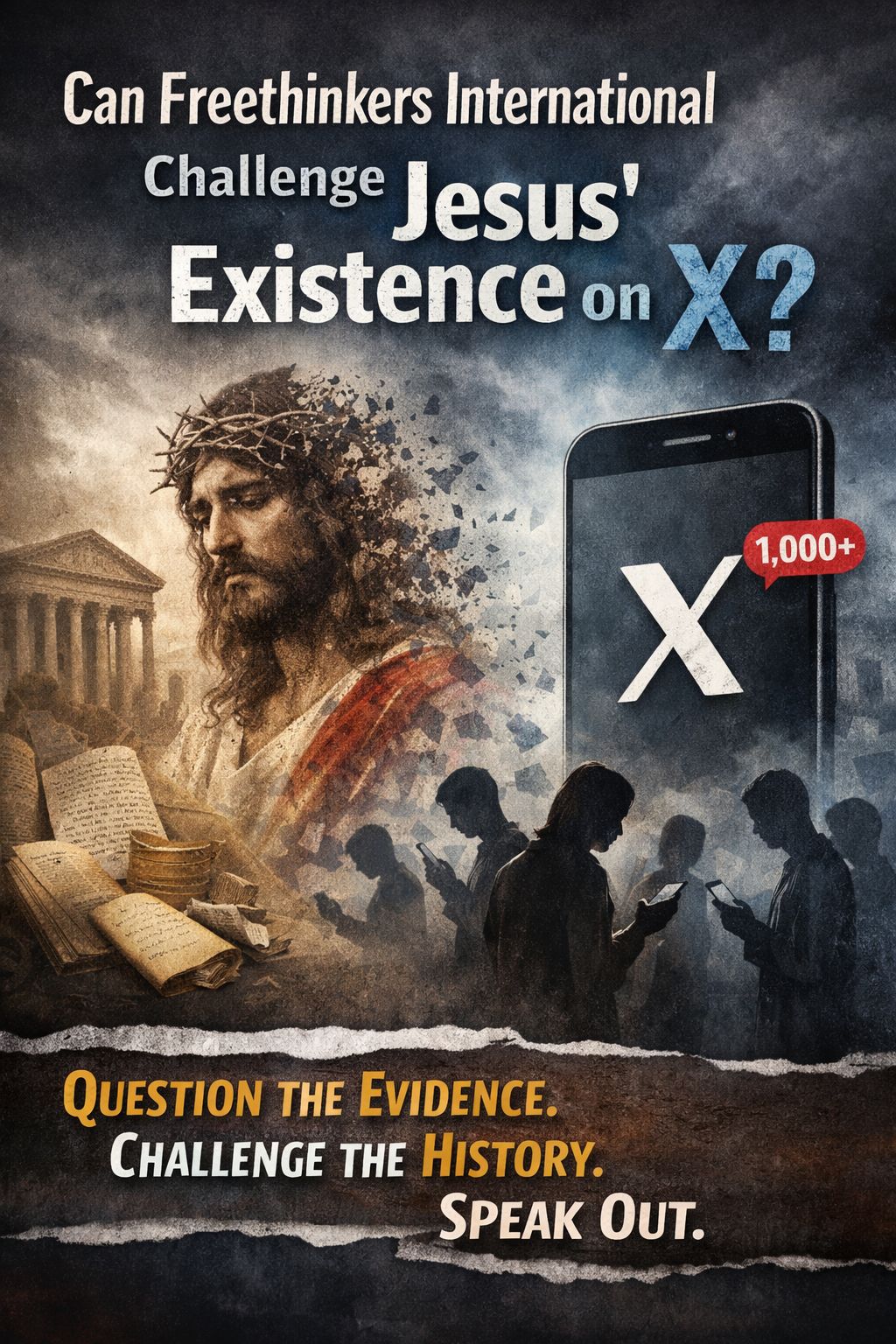
At first glance, the question sounds bold. Can one organization, through posts on X, destroy the historical existence of Jesus?
However, beliefs do not collapse because someone attacks them. People reconsider beliefs when doubt becomes legitimate.
Therefore, the real task is not destruction. It is normalization of examination.
Freethinkers International cannot erase Jesus by force. It can only encourage people to re-evaluate the strength of the evidence behind the claim.
The real question is not whether FI can destroy a belief.
It is whether ordinary people are willing to publicly question what they were told is a historical fact.
The digital battlefield: X and perception
Meanwhile, X amplifies visibility. Controversy spreads faster than nuance. Emotional reactions travel faster than careful historiography.
As a result, when more users question Jesus’ existence, it feels like a cultural shift. However, that feeling may reflect observational bias. If you follow skeptics, you see skepticism everywhere.
Nevertheless, perception shapes reality. Repeated exposure to doubt gradually reduces the aura of certainty.
When more individuals calmly state, “I am not convinced,” the claim stops sounding untouchable.
The historical core of the dispute
The debate must return to sources.
The earliest Christian writings come from Paul the Apostle. Yet Paul emphasizes visions and theology. He does not provide a detailed earthly biography.
The Gospels, traditionally linked to figures such as Mark the Evangelist, were written decades after the alleged crucifixion. That time gap introduces methodological tension.
Non-Christian references, including passages in Flavius Josephus and comments by Tacitus, appear later still. They are brief, they are debated. They are not contemporary administrative records.
None of this automatically proves non-existence. However, it complicates the word fact.
Yet in public discourse, certainty often exceeds documentation.
That gap deserves scrutiny.
Why people stay silent
Most people do not defend Jesus’ historicity because they studied the sources. They defend it because it feels normal.
From childhood, the narrative repeats. Schools mention it casually. Media assumes it. Even many atheists say, “He existed, he just was not divine.”
Consequently, questioning existence itself feels extreme. It feels socially risky.
People avoid conflict. They avoid labels. They avoid family tension.
Therefore, they remain silent.
Encouraging ordinary people to speak
Freethinkers International cannot win this debate alone.
However, it can encourage common individuals to write openly and calmly:
What contemporary records exist?
Why are the earliest sources theological?
Why does confidence exceed evidence?
When thousands of ordinary users raise these questions without aggression, the psychological barrier weakens.
The goal is not insult.
The goal is intellectual courage.
If large numbers of individuals publicly say, “I do not find the evidence decisive,” the conversation shifts. The burden of proof becomes visible.
Silence protects assumptions. Speech tests them.
Biases and strategic discipline
At the same time, both believers and skeptics carry biases.
Confirmation bias reinforces inherited beliefs. Reverse bias can push skeptics toward overstatement. Identity-protective cognition intensifies reactions.
Therefore, strategy matters.
Do not claim absolute proof of non-existence. Emphasize evidentiary standards instead. Distinguish probability from certainty.
Credibility requires discipline.
Mockery hardens opposition. Methodological consistency builds influence.
What X can realistically achieve
X will not rewrite academic consensus overnight. Threads cannot replace peer-reviewed scholarship.
However, social media can normalize doubt. It can reduce automatic deference to inherited claims. It can shift the cultural tone from “This is settled” to “This deserves examination.”
Cultural shifts rarely begin in lecture halls. They begin when ordinary people feel safe questioning publicly.
Final assessment
Freethinkers International cannot destroy Jesus’ existence through posts.
However, it can encourage ordinary individuals to challenge certainty. It can normalize asking for evidence. It can create an atmosphere where questioning historicity is not taboo.
The real transformation happens when common people decide they are no longer afraid to write:
“I am not convinced.”
That moment changes culture more than any single viral thread ever could.
Leave a Reply