DNA testing to identify distant relatives has grown in popularity due to advances in technology, with services like 23andMe and AncestryDNA offering insights into genealogical connections that span centuries. The process can uncover connections to distant relatives across the globe. Being related by DNA just draws us to our most primitive prehistoric instincts.
The second use is to be related by some country (or its part – for example, Nothern Germans, Southern Germans). But nation-states are basically an invention of the 19th century. How come German-speaking, Czech-speaking, or Polish-speaking people had identified as Czechs? And nowadays not.
Third, we are so genetically proximate that this show has no clowns.
For a person born in 1990 (just like me), estimating the number of ancestors stretching back to the 17th century (where my family tree ends) reveals how many people contributed to their lineage. Each generation approximately doubles the number of direct ancestors: two parents, four grandparents, eight great-grandparents, and so forth. Not to mention, the historical genealogical tree is just a paternal line.
With around 400 years between 1990 and the early 1600s, about 13 generations separate them from the 17th century. Using this calculation, the number of direct ancestors increases exponentially with each generation. By the 13th generation, the total number of theoretical ancestors could exceed 8,000.
However, due to pedigree collapse – when distant relatives in history intermarried – the actual number of unique ancestors would be somewhat lower. Despite this, these calculations offer a compelling look at the thousands of individuals who are part of a person’s genetic heritage over the span of several centuries.
An interesting genetic fact about humanity is how closely related we all are, regardless of race, status, or background. In a well-known example, even someone as prominent as former President Barack Obama shares over 99.9% of his DNA with a homeless person. This highlights how minor our genetic differences really are, despite outward appearances or societal divisions. Essentially, all humans are incredibly similar at the genetic level.
And IQ of 130, lawyer-like minded, with bunch of talents, and a prominent education, Barack Obama is “just” like a homeless man (don’t depreciate the homeless people).
On the other hand, studies on chimpanzees reveal a surprising contrast. Chimpanzees living in the same forest can be more genetically distinct from each other than the different human races. This is because humans, as a species, are relatively young and share a common origin in Africa (related by the DNA). We spread across the globe more recently in evolutionary terms, leading to less genetic diversity. In contrast, chimpanzee populations have been more isolated in their specific habitats for much longer, causing greater genetic differences between groups, even within the same area.
These comparisons show how, despite our apparent differences, humans are genetically closer to one another than many species that live in smaller, isolated environments.
One big family, not a division
Trying to find a relative is a stupid, childish instinct stemming from our African savannah environment. Are you sure you want to act like a monkey? Well, we are monkeys, but can also exert our will (though not free).
People should be cohesive, not divided, our primitive us/them tribalism brought nothing but death. One commonly cited estimate suggests that around 150 million to 1 billion people have died in wars over the course of human history. Do you really like it?
Not being French? It could have gotten physical. How French identity was created
In the 19th century, French pupils were often physically punished for speaking regional languages instead of standard Parisian French. This was part of a national effort to impose linguistic unity through education and to consolidate French national identity. At the time, France was home to several distinct nationalities, each with its own language or dialect. These included Breton in the northwest, Occitan in the south, Basque in the southwest, Alsatian in the east, and various others.
The French government viewed these languages as obstacles to national unity. The Jules Ferry laws of the 1880s, which made education free and compulsory, enforced the use of Parisian French in schools. Children caught speaking their regional languages were often subjected to punishment, such as carrying a “symbol of shame” (e.g., a token or sign) or sometimes a physical one.
This effort to suppress regional languages also reflected broader attempts to diminish the influence of distinct nationalities within France, promoting the idea of a single French identity. These policies led to a decline in the use of regional languages, which were often stigmatized as backward or inferior to standard French. It wasn’t until much later, in the 20th century, that France began to recognize and protect its regional languages and the cultural identities they represented.
The modern French, despite being related by the DNA somehow, is a mix of everything possible, so now you see that tribalism and nation-states are more than obsolete.
Closing the border? Look at the DNA now!
When it comes to modern nation-states, closed borders and reduced interaction between populations have historically influenced the genetic structure of nations.
In the past, populations were often more isolated due to geographic, political, or cultural reasons. This isolation led to increased interbreeding within smaller groups, which affected the genetic makeup of these populations.
Over generations, the lack of outside genetic material led to increased genetic homogeneity. This means that certain physical traits, like hair or eye color, became more common within these populations. Additionally, when smaller groups initially settled a region, their genetic traits could become dominant in the larger population through what is known as the “founder effect.” This is why some nations or regions show distinctive genetic markers that are rare elsewhere.
Despite the modern interconnectedness of the world, these historical patterns of isolation can still be observed in genetic studies today, revealing how closed borders and limited intermixing influenced the DNA of modern populations.
Trying to find what national-state tribe you belong to? Detrimental
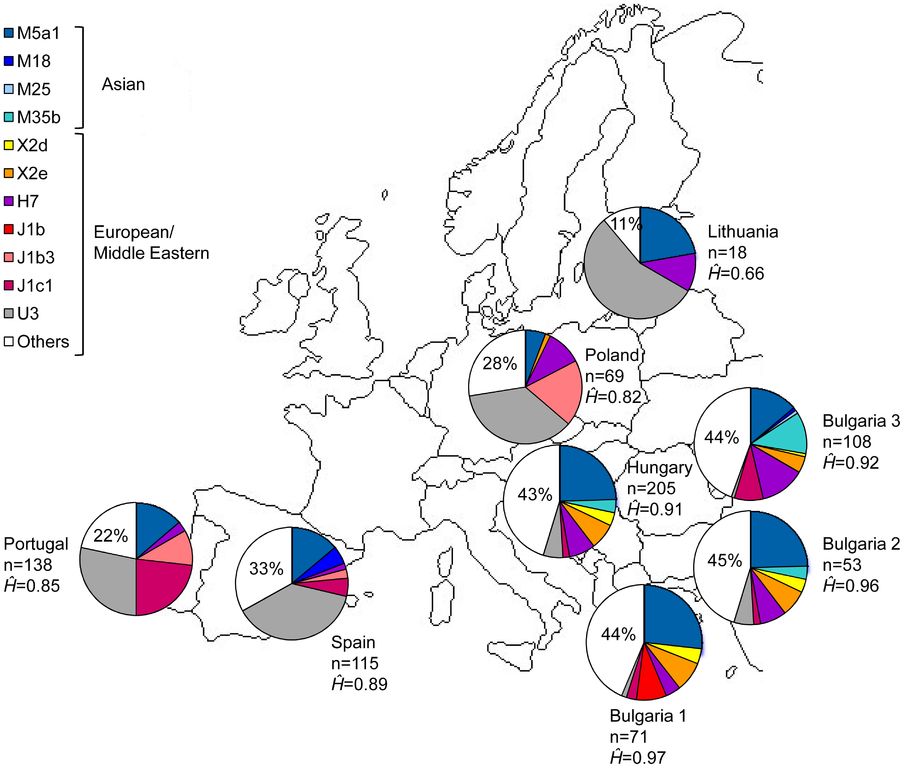
In the historical Czech lands, nationalism was a 19th-century invention. For centuries, the people of Bohemia, Moravia, and Silesia were proud of their kingdom, but they spoke various languages- Czech, German, Yiddish, and others- without a strong sense of national identity. It wasn’t until the Czech National Revival, in the late 18th and early 19th centuries, that intellectuals began to promote the Czech language and culture, laying the groundwork for modern nationalism.
The emergence of Czech nationalism was shaped by the Enlightenment, industrialization, and urbanization. As people moved to cities and interacted with others who spoke their language, a shared identity started to form. This process was driven by a rising Czech-speaking middle class, who sought to assert their cultural and linguistic identity against the German-speaking elite. Unlike in Western Europe, where nationalism emerged earlier, the Czech lands – part of a multi-ethnic empire – developed a national consciousness later, as the 19th century brought new social and political dynamics.
So there is some DNA that is the same. However, it may overlap with neighboring populations. I am a complete amateur in recognizing skull, bodily, and facial differences, yet I am kind of not convinced those populations really overlap.
Germans really look different from Czechs? Who cares?
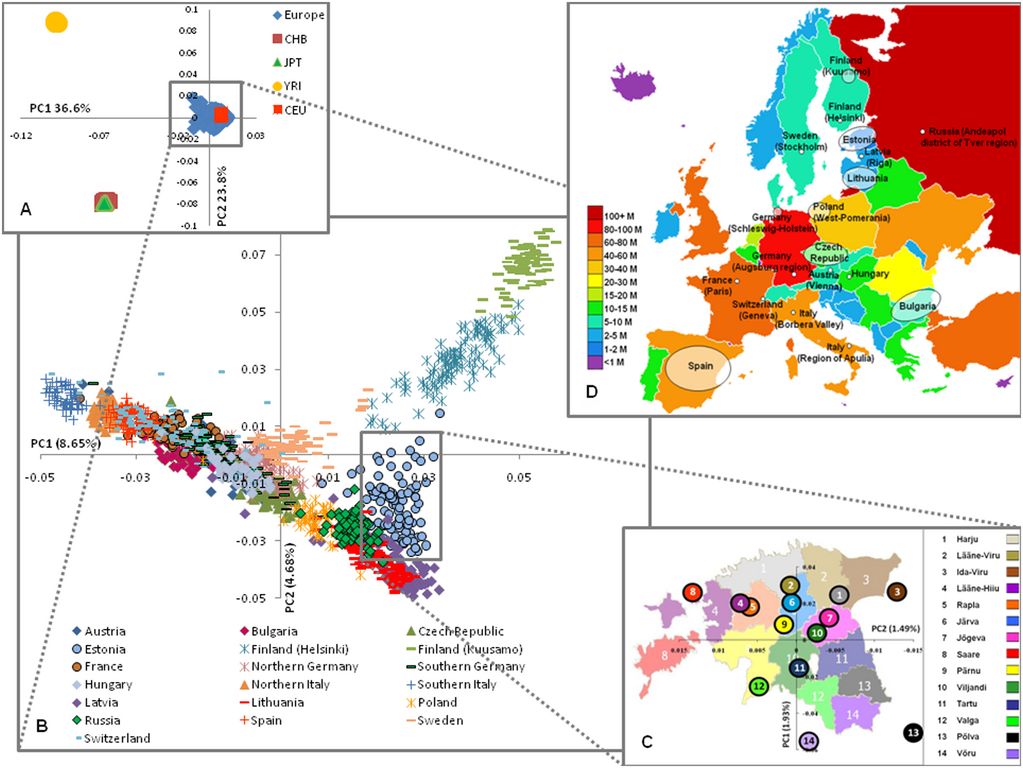
High and prominent cheekbones, a triangular skull, wide in the middle of the height. This is what I have studied. However, there are thousands of markers that define what Germans look like.
Even though there are studies that those populations significantly overlap, I don’t believe it. Just a plain look!
Nowadays Czech lands always had its population everlasting changing
You know very well the nationalist, Nazis, or some people with “identity”. Wrong! What are now the genetically “Czechs” is just a current mix that will be replaced.
The region of modern-day Czechia has been a crossroads for various tribes and migration waves since prehistoric times. The earliest known inhabitants were hunter-gatherers during the Paleolithic era, around 40,000 years ago. These populations, part of the broader Western European hunter-gatherer group, likely migrated from the Balkans and Western Europe as the first Homo sapiens spread across the continent. Evidence of their presence includes stone tools and the famous “Venus of Dolní Věstonice” figurine found in Moravia.
Neolithic revolution
Around 5,500 BCE, the Neolithic revolution brought the first farming communities to the area. These early farmers, part of the Linear Pottery Culture (LBK), likely came from the Near East, spreading agricultural practices and distinct DNA. This wave marked the transition from hunting and gathering to settled farming, fundamentally reshaping the genetic and cultural landscape of the region.
During the Bronze and Iron Ages, new groups such as the Celts (around 500 BCE) moved into the region, bringing both cultural influences and genetic contributions. The Celts, particularly the Boii tribe, left their name in the region, known as Bohemia. The Roman period saw further interaction, though the Czech lands were largely beyond the Roman Empire’s borders.
Later, during the Migration Period (400–600 CE), Germanic tribes like the Marcomanni and Quadi passed through, followed by waves of Slavic peoples who settled in the region by the 6th century. The Slavic migration, believed to have originated from Eastern Europe, is considered the foundation of the modern Czech population’s ancestry.
Each of these waves left its mark on the genetic makeup of the population, creating a blend of hunter-gatherer, Neolithic farmer, Celtic, Germanic, and Slavic DNA. Today’s Czech population is a testament to thousands of years of migration and cultural blending.
Constant change: the everlasting evolution of immigration in the Czech lands
Since 1900, the Czech lands have seen various waves of immigration, shaped by war, politics, and economic changes.
At the start of the 20th century, the Czech lands were part of the Austro-Hungarian Empire. People moved freely within the empire, with Austrians, Hungarians, and Poles settling in Bohemia and Moravia. After World War I, Czechoslovakia emerged as an independent state. During this time, the country attracted Jews fleeing persecution in Eastern Europe. This diversity strengthened as Slovaks, Hungarians, and Germans also became key parts of the population.
World War II shattered this harmony. The Nazi occupation led to mass deportations and emigration, especially of Jewish people. After the war, Czechoslovakia expelled millions of ethnic Germans from the Sudetenland, dramatically altering the demographic landscape. This left a gap that was filled by ethnic Czechs and Slovaks, as well as new immigrant groups like Romani people, Hungarians, Bulgarians, and Romanians. These groups moved into the empty towns and regions once populated by the Germans, marking a new phase of settlement.
Immigration even in the hardcore communism
In the Cold War years, immigration slowed due to the communist regime’s tight control over movement. However, Czechoslovakia signed labor agreements with Vietnam, bringing in Vietnamese workers, a group that established a lasting community. Some people from other Eastern Bloc countries, like Poland, Bulgaria, and Hungary, also migrated to Czechoslovakia, mostly for work or study.
The Velvet Revolution of 1989 ended communist rule and reopened the country to the world. The breakup of Czechoslovakia in 1993 led to a surge of Slovak immigrants. Ukrainians began arriving in large numbers in the 1990s, seeking jobs in construction and other industries. The war in Ukraine in 2022 has only intensified this trend, making Ukrainians the largest immigrant group today. Balkan nationals, fleeing wars in the 1990s, and workers from Russia, Mongolia, and Central Asia also contributed to the growing foreign-born population.
Looking ahead, immigration to the Czech Republic is likely to continue. As the economy grows, demand for labor will attract more workers from Ukraine, the Balkans, and other parts of Eastern Europe. The Vietnamese community will keep expanding, drawing family members to join those already established. Refugees and asylum seekers from the Middle East and Africa may also increase, especially as political instability and climate change force people to seek new homes. The Czech Republic, once primarily a source of emigrants, will remain a key destination for new arrivals.
The Czech Republic will continue to attract immigrants in the coming years, driven by a range of factors. Economic opportunities, labor shortages, and global crises will shape these future waves of migration.
Ukrainians will likely remain the largest group of new arrivals. The ongoing conflict in Ukraine and the country’s need for reconstruction will keep pushing people to seek safety and jobs abroad. Even after the war ends, many will stay in the Czech Republic for work. Other Eastern Europeans, including Belarusians, Moldovans, and people from the Balkans, will also move to the Czech Republic. They will be drawn by better economic conditions and the demand for workers in construction, manufacturing, and services.
The Vietnamese community, already well-established, will keep growing. Family reunification and economic opportunities will attract more Vietnamese immigrants, further expanding their role in Czech society. This community has been a stable part of the country’s post-communist immigration and will continue to be significant.
Tribalism and new DNA
Migrants from the Middle East and Africa will likely increase. Conflicts in Syria, Afghanistan, and Sub-Saharan Africa will push more refugees to seek asylum in Europe. While the Czech Republic hasn’t been a primary destination for these groups, EU policies could lead to a higher share of asylum seekers coming to the country. Additionally, climate change will force more people from Africa and Asia to migrate. Droughts, rising sea levels, and extreme weather will displace populations, and some will find refuge in Europe, including the Czech Republic.
Central Asian and Russian migrants will also grow in numbers. Political instability and economic struggles in these regions will push people to seek work and better living conditions in the Czech Republic. Workers from Kazakhstan, Uzbekistan, and Russia will likely increase, looking for jobs in an expanding Czech economy.
Intra-EU migration will continue to be a factor. Workers from Slovakia, Poland, Romania, and Bulgaria will move to the Czech Republic for higher wages and job opportunities. As the country grows economically, its position within the EU will attract skilled labor from across the continent.
In the coming decades, the Czech Republic will see immigration rise. The country’s growing economy, demand for labor, and stability within the EU make it an attractive destination for people seeking new opportunities and a better life.
Tribalism and the funny side of it
Since prehistoric times, the lands of modern-day Czechia have been a crossroads for population movements. The earliest known inhabitants were Paleolithic hunter-gatherers, followed by Neolithic farmers around 5,500 BCE, who migrated from the Near East. During the Bronze and Iron Ages, Celtic tribes such as the Boii settled in the region, leaving a cultural and genetic legacy. The Migration Period brought Germanic tribes like the Marcomanni and Quadi, followed by waves of Slavic settlers in the 6th century, laying the foundation for today’s Czech population.
In the 20th century, massive population transfers reshaped the region. After World War II, Czechoslovakia expelled millions of ethnic Germans from the Sudetenland in a sweeping post-war retribution. This created a demographic void, soon filled by ethnic Czechs, Slovaks, Romani people, Hungarians, Bulgarians, and Romanians, many of whom moved into areas vacated by the Germans. These post-war movements, along with earlier historical migrations, have shaped the genetic and cultural fabric of the modern Czech Republic, blending ancient and more recent influences into a diverse population.
Tribalism: My own identity
If I am related by the DNA, it would be Czech “tribe”. I am 37,5 % Moravian Czech with some ancestors living in Sudetenland, some in the corner where Slovakia and Austria neighbor. I am 50 % Eastern Bohemian Czech and, finally, 12,5 % Central Bohemian Czech. There is also some possibility of Jewish ancestry.
Tribalism and being related by DNA don’t mean anything. I am a mix of Slavic, Celtic, and Germanic tribes with thousands of possible ancestries.
The final mention: I couldn’t care less.
Leave a Reply