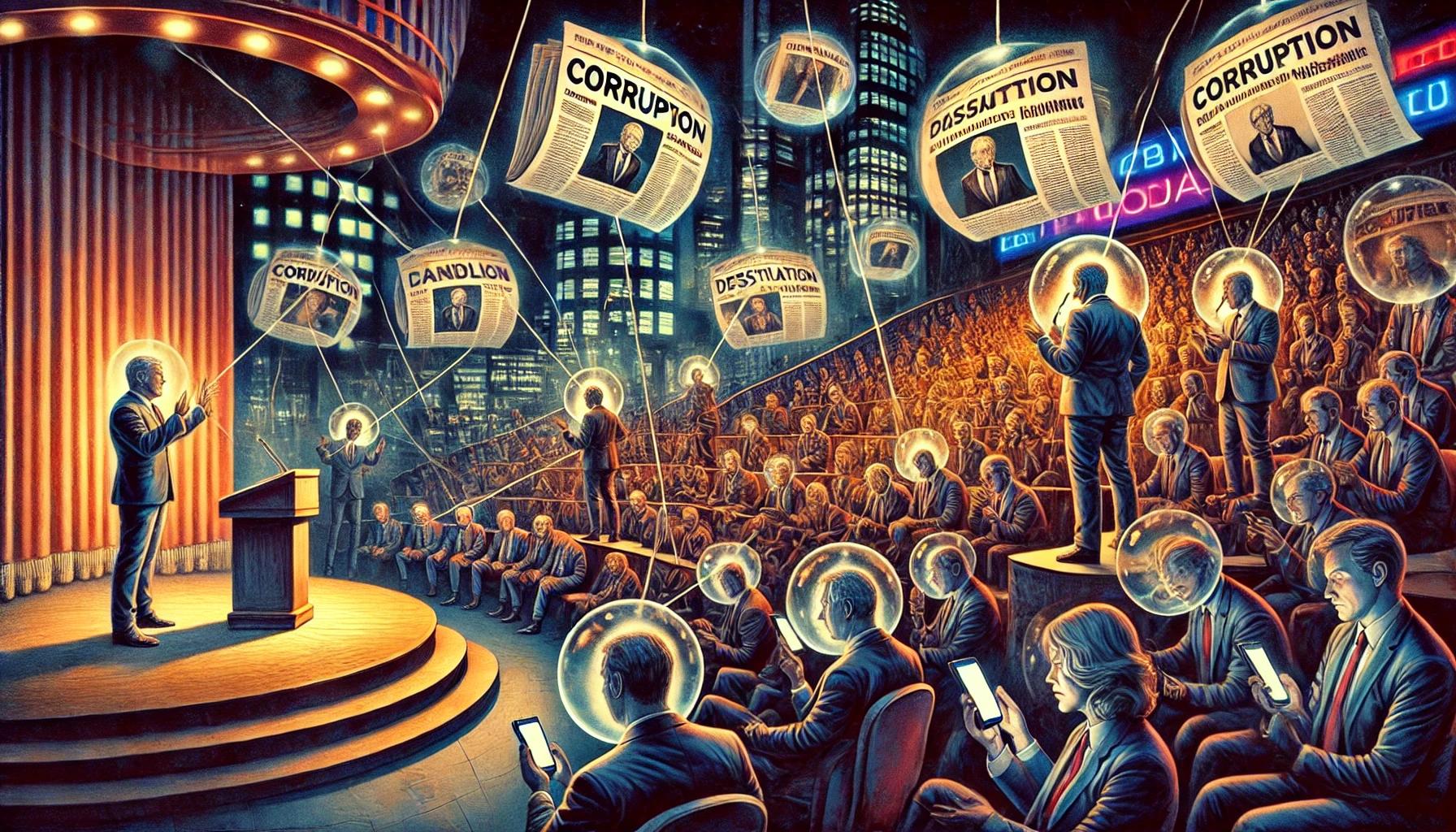
No doubt, the current political culture in many countries has deteriorated in unthinkable ways. For example, the United States, Czech Republic, Slovakia, Hungary, Poland, Turkey, Brazil, India, Philippines, Nicaragua, El Salvador, Kuwait
People are joking that if one unnamed oligarch shot up the whole kindergarten in the Czech Republic, his political preferences would reach 50 %.
But how come this did happen? Globalization, the global war against corruption, social media with its social bubble. This article provides an answer whether even the super-rich controlling politics want it.
Scandals now are no longer scandals
Recent political scandals in the United States have exposed a striking shift in public tolerance and accountability. In the past, corruption, sexual misconduct, and abuse of power could destroy political careers. Today, despite serious allegations, many politicians continue to hold office or remain politically influential. The cases of Donald Trump, Joe Biden, Eric Adams, Andrew Cuomo, and Bob Menendez illustrate this change. Comparing their scandals to historical cases like Watergate and Abscam highlights how political culture has deteriorated, with consequences that would have been unthinkable in earlier decades.
Donald Trump: Indictments and controversies that did not end his career
Donald Trump’s presidency and post-presidency have been marked by numerous scandals, any of which would have been career-ending for past politicians. He has faced four criminal indictments, including charges related to efforts to overturn the 2020 election, mishandling classified documents, and falsifying business records. The E. Jean Carroll sexual assault case resulted in a defamation judgment of over $80 million against him. He has also been accused of financial fraud in New York, leading to massive fines. Despite these legal battles, Trump remains a leading Republican candidate for the 2024 election.
Comparing Trump’s situation to Richard Nixon’s shows how standards have shifted. Nixon resigned in 1974 after the Watergate scandal, which involved illegal surveillance and a cover-up. He was never criminally charged, yet the political pressure forced him from office. Today, Trump faces far more severe allegations, yet he retains widespread support. The polarization of American politics and the normalization of scandals have allowed him to remain a central figure in Republican politics.
Joe Biden: Scandals that would have been politically fatal
Joe Biden has faced his own share of controversies, though they have received less political fallout. His son, Hunter Biden, has been at the center of corruption allegations, particularly regarding foreign business dealings with Ukraine and China. Investigations into whether Biden was aware of or benefited from these dealings remain ongoing. Additionally, Biden’s handling of classified documents has drawn criticism, though it has not led to the same legal consequences as Trump’s case.
Comparing Biden’s situation to past Democratic scandals, the contrast is clear. In 1988, Joe Biden himself was forced to drop out of the presidential race due to a plagiarism scandal in which he copied speeches from British politician Neil Kinnock. That scandal, while minor compared to today’s political controversies, was enough to derail his campaign. Similarly, in 1972, Democratic Vice Presidential candidate Thomas Eagleton was removed from the ticket after revelations about past mental health treatments. In contrast, Biden’s more significant controversies have not led to his political downfall, reflecting a shift in political accountability.
Eric Adams: Allegations of corruption
New York City Mayor Eric Adams has faced federal investigations into allegations of bribery, illegal campaign contributions, and foreign influence. Prosecutors initially pursued charges related to Adams’ connections to Turkish officials and business interests, but the Justice Department later dropped the case under controversial circumstances. Resignations within the DOJ followed, raising concerns about political interference.
A historical comparison highlights the change in accountability. In the 1970s Abscam scandal, multiple members of Congress were convicted and forced out of office for accepting bribes from FBI agents posing as Arab businessmen. Compared to those convictions, Adams’ ability to remain in office despite serious corruption allegations shows a decline in the consequences for political wrongdoing.
Andrew Cuomo: A political comeback despite scandal
Former New York Governor Andrew Cuomo resigned in 2021 after numerous women accused him of sexual harassment. Investigations confirmed inappropriate behavior, leading to widespread calls for his resignation. Despite this, Cuomo has announced a comeback, running for mayor of New York City in 2025.
Historically, politicians accused of sexual misconduct often faced harsher consequences. In 2011, Anthony Weiner, a Democratic congressman, resigned after a sexting scandal. In 1989, John Tower was denied confirmation as Secretary of Defense due to allegations of inappropriate behavior. Today, Cuomo’s ability to return to politics despite multiple allegations shows how public tolerance has changed.
Bob Menendez: Corruption that once would have been disqualifying
Former Senator Bob Menendez was convicted of bribery, extortion, and conspiracy. Prosecutors uncovered cash, gold bars, and luxury gifts linked to political favors. In past decades, such blatant corruption would have led to immediate expulsion from the Senate. Instead, Menendez retained his position for years before finally facing serious legal consequences.
The case is reminiscent of Spiro Agnew, who resigned as Vice President in 1973 over corruption charges. Agnew’s resignation was seen as a major political scandal at the time. Today, Menendez’s bribery case, though severe, has not caused the same national outrage.
Globalization and economic changes
Globalization and economic changes have shaped the world in profound ways. While they have brought progress, they have also created political instability and weakened democratic institutions in many countries. Economic inequality has widened as globalization concentrated wealth in fewer hands. Workers in developed countries have seen their wages stagnate, while industries have moved to cheaper labor markets. Deindustrialization has left many communities without jobs, fueling resentment toward political elites. As traditional industries collapsed, people turned to populist leaders who promised to restore economic security.
Financialization has also played a major role. Instead of investing in productive industries, many economies have shifted toward stock markets and financial speculation. This has benefited large corporations and investors, but it has done little for ordinary workers. Governments have responded to economic crises with austerity, cutting social services while bailing out banks and large businesses. These policies have widened the gap between the rich and the poor, undermining trust in democracy. People feel that the system favors elites, leading to rising support for anti-establishment politicians.
Trade liberalization and the outsourcing of jobs have made economies more fragile. Many countries have become dependent on global supply chains, making them vulnerable to trade wars and economic downturns. Local industries have struggled to compete with cheaper imports, leading to factory closures and mass unemployment. Economic frustration has fueled nationalist movements, with leaders blaming foreign competition for domestic problems.
Current political culture: Political fragmentation and the rise of populism
As economic conditions deteriorated, traditional political parties weakened. In many countries, center-left and center-right parties abandoned their working-class bases, embracing neoliberal policies that favored corporations over people. Unions, which once played a crucial role in protecting workers, have lost power. Without strong political representation, many workers have turned to populist leaders who claim to fight for them but often undermine democratic norms.
The rise of the gig economy has also worsened economic insecurity. Many workers no longer have stable employment, relying on short-term contracts with few protections. This has made it harder for people to plan for the future, increasing anxiety and frustration with political leaders. Economic instability has pushed more people toward extreme political movements that promise radical change.
Urban-rural divides have deepened. Globalization has concentrated wealth in major cities, while rural areas have been left behind. As young people move to cities for better opportunities, rural communities feel abandoned. This has created political polarization, with urban voters supporting progressive policies while rural voters turn to nationalist and conservative leaders. The loss of traditional ways of life has fueled resentment, further dividing societies.
Economic pressures and geopolitical tensions
Many countries have become trapped in cycles of debt and economic dependence. Developing nations, reliant on foreign investment, are vulnerable to economic shocks. When financial crises hit, capital flows out, leaving economies in ruin. Sovereign debt has also become a major issue. Countries burdened with high debt levels have had to cut public spending, leading to mass protests and political instability. The IMF and World Bank have imposed strict economic conditions on struggling nations, often making their situations worse.
Resource competition has intensified. As economies grow, the demand for energy, water, and raw materials has led to conflicts over resources. Climate change has made this worse, causing droughts, food shortages, and forced migration. Many governments have responded by tightening borders and adopting nationalist policies. Economic migration has become a major political issue, with many countries struggling to integrate new arrivals while facing backlash from their populations.
Trade-based conflicts have also escalated. Countries now use economic tools as weapons, imposing tariffs, sanctions, and restrictions on key resources. The US-China trade war, for example, has disrupted global markets and increased tensions between the world’s largest economies. This has pushed governments toward protectionism, weakening international cooperation.
Declining trust in institutions
As economic conditions have worsened, people have lost trust in governments, central banks, and other institutions. Many believe that policymakers serve corporate interests rather than the public. Central banks, once seen as stabilizing forces, are now viewed with suspicion. Their handling of inflation, monetary policies, and financial bailouts has led to accusations that they favor the wealthy at the expense of ordinary citizens.
Pension systems are also collapsing. Aging populations and financial mismanagement have made it difficult for governments to sustain retirement benefits. Younger generations, facing rising costs of living and stagnant wages, feel they will never receive the benefits their parents did. This has created generational conflicts, further dividing societies.
Housing has become a major issue. Real estate speculation, driven by global investors, has pushed housing prices beyond reach for many people. Gentrification has displaced low-income communities, leading to protests and growing resentment toward governments that allow corporate interests to dominate urban development.
Militarization and the erosion of democracy
In response to rising instability, many governments have increased military spending and expanded police powers. Economic insecurity has led to greater reliance on private security forces, surveillance, and authoritarian measures. Some leaders use economic crises as excuses to consolidate power, weaken democratic checks and balances, and suppress dissent.
Foreign interference in elections has also become a problem. With the globalization of finance and technology, outside actors can influence domestic politics through funding, disinformation campaigns, and economic pressure. This has led to widespread skepticism about the legitimacy of elections, further weakening faith in democracy.
Crony capitalism has flourished. In many countries, governments favor politically connected businesses, awarding them contracts, bailouts, and regulatory advantages. This has created monopolies and weakened fair competition. Corruption has increased as politicians and business elites work together to maintain their power.
The privatization of public goods has further alienated people from their governments. Healthcare, education, and infrastructure have been handed over to corporations, often leading to higher costs and reduced access. Many feel that governments no longer serve their interests, but rather those of private investors.
Super-rich: Global war against corruption
The global war against corruption which the super-rich started in order to be able to invest without huge bribes has paradoxically made people less sensitive to political scandals. As governments, media, and international organizations intensified anti-corruption efforts, exposure to scandals became routine. The public now sees corruption as an inevitable part of politics rather than an extraordinary event.
Frequent revelations of corruption have led to desensitization. In many countries, high-profile investigations and leaks, such as the Panama Papers and Paradise Papers, revealed extensive corruption networks. However, the sheer volume of scandals overwhelmed the public. When every politician or business leader is accused of wrongdoing, distinguishing between major and minor offenses becomes difficult. Many people feel that corruption is so widespread that punishing one or two individuals will not change the system.
Political polarization has also shaped public reactions. In deeply divided societies, corruption accusations are often seen as politically motivated attacks rather than legitimate concerns. Supporters of a leader accused of corruption often dismiss the allegations as part of a smear campaign. This has allowed politicians to survive scandals that would have ended careers in previous decades.
Corruption as something moral
The normalization of corruption in some countries has further weakened public outrage. In places where corruption has been exposed but rarely punished, people assume that investigations will lead nowhere. This cynicism has made many voters indifferent, leading to lower expectations of political integrity.
The media’s role has been complex. While investigative journalism has uncovered major scandals, the constant flow of corruption stories has made them less shocking. Sensationalist coverage and political bias have further eroded trust in reporting, making people skeptical of corruption allegations.
Global anti-corruption efforts have improved transparency but also exposed the limits of accountability. When leaders remain in power despite corruption scandals, people lose faith in the justice system. This has led to growing apathy, where voters assume that all politicians are corrupt, so scandals no longer influence their decisions.
Ultimately, the war against corruption has made wrongdoing more visible but has not always led to stronger enforcement. This paradox has contributed to widespread political disillusionment, reducing the impact of scandals on public opinion.
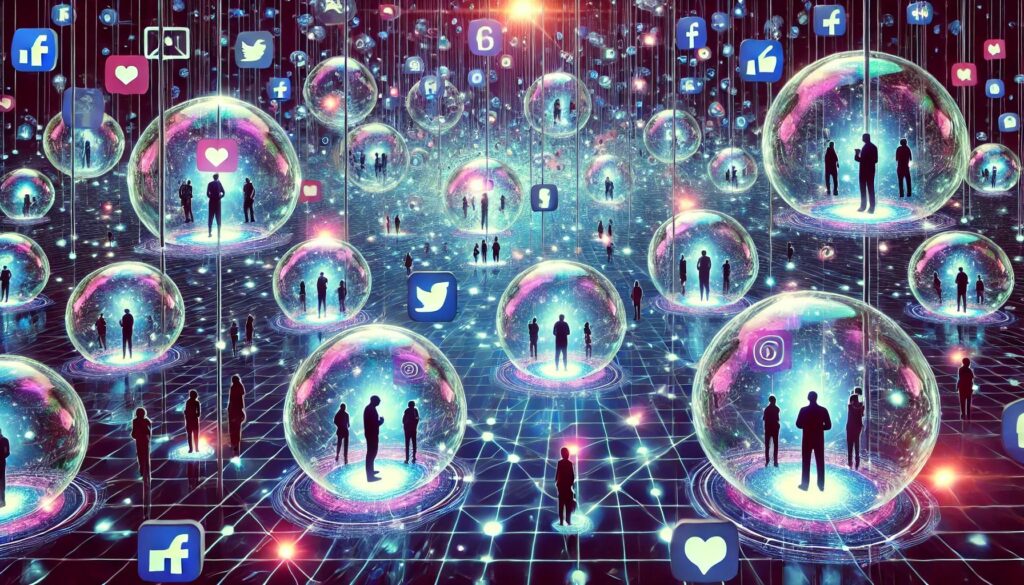
Social media has played a significant role in the deterioration of political culture, largely due to the formation of social bubbles. These online spaces reinforce existing beliefs, isolate individuals from opposing views, and create highly polarized political environments. Instead of fostering open debate, social media has encouraged ideological echo chambers where misinformation, radicalization, and hostility thrive.
Algorithms are designed to maximize engagement by showing users content that aligns with their interests. This reinforcement creates social bubbles where people are constantly exposed to opinions they already agree with while being shielded from alternative perspectives. Over time, these bubbles make political beliefs more extreme, as users receive a continuous stream of confirmation for their existing views. Debate becomes impossible because people no longer engage with those who think differently.
Misinformation spreads rapidly within these bubbles. False or misleading narratives gain traction because they appeal to emotional biases rather than facts. Since users primarily interact with like-minded individuals, fact-checking is less effective. Once misinformation takes hold, it becomes difficult to counter, even when proven false. This has eroded trust in traditional media, experts, and democratic institutions.
The rise of online outrage culture has further degraded political discourse. Social media rewards outrage with visibility, making the most extreme voices the loudest. Politicians and influencers exploit this dynamic, using divisive rhetoric to gain followers and media attention. As a result, politics becomes more about emotional manipulation than substantive policy discussions.
Good old tribalism
Polarization intensifies as social bubbles foster an “us vs. them” mentality. Opposing political camps view each other not just as rivals, but as enemies. Compromise becomes unthinkable, and democracy suffers when people no longer see political opponents as legitimate. Social media amplifies this division, making cooperation in governance increasingly difficult.
The illusion of participation is another problem. While social media gives users a sense of political engagement, it often replaces real activism with performative outrage. Many people believe that sharing a post or arguing online is a meaningful contribution, but in reality, it often does little to effect real-world change. This creates a passive political culture where outrage substitutes for organized action.
Moreover, disinformation campaigns, often driven by foreign actors or domestic political groups, exploit social media’s vulnerabilities. Automated bots, fake accounts, and algorithmic manipulation spread false narratives, destabilizing societies and weakening trust in institutions. These tactics have been used to influence elections, manipulate public opinion, and deepen societal divisions.
Social media has reshaped political culture, turning it into a battleground of extreme ideologies, misinformation, and tribal loyalty. Instead of bringing people together, it has driven them further apart, making democratic governance more fragile. Until societies address the destructive influence of social bubbles, political culture will continue to decline.
Mass media
Mass media has played a central role in the growing desensitization to political scandals. In earlier decades, investigative journalism had the power to expose corruption and misconduct, leading to swift political consequences. The Watergate scandal, revealed by The Washington Post, forced a sitting U.S. president to resign. The Iran-Contra affair, uncovered by the media in the 1980s, severely damaged Ronald Reagan’s administration. Even relatively minor ethical violations, such as plagiarism or extramarital affairs, could end a politician’s career. Today, however, mass media operates differently, and its influence on public perception has changed.
The sheer volume of news has contributed to scandal fatigue. The 24-hour news cycle, combined with social media, has created an environment where audiences are bombarded with stories of political corruption, personal misconduct, and abuse of power on a daily basis. When every week brings a new revelation about a politician’s wrongdoing, it becomes difficult for the public to process which scandals are significant and which are not. As a result, many people have simply stopped caring.
Another factor is media fragmentation. In the past, most people got their news from a few major newspapers and television networks. Today, news consumption is divided among partisan outlets, independent platforms, and social media feeds. Each outlet presents scandals differently, often through the lens of its own political biases. A scandal that would have been universally condemned in the past is now either downplayed or amplified depending on the ideological leanings of the news source. This creates a situation where scandals no longer have a universal impact—one political camp may see an event as outrageous, while another dismisses it as fake news or a partisan attack.
Entertainment instead of news
The rise of social media has further eroded the impact of traditional journalism. While investigative reporters still uncover wrongdoing, their findings now compete with viral misinformation, sensationalist narratives, and entertainment-driven news. Social media algorithms prioritize engagement over truth, meaning that outrage, conspiracy theories, and ideological content spread more rapidly than carefully researched journalism. Many users engage only with sources that reinforce their beliefs, reinforcing social bubbles where scandals involving their preferred politicians are either ignored or excused.
This shift has allowed politicians to survive controversies that once would have been fatal. In earlier decades, public figures feared negative media coverage because it shaped public opinion. Today, many politicians can bypass traditional media entirely, communicating directly with their supporters through social media. This removes a major check on political accountability. Even when mainstream outlets report serious scandals, their impact is diluted by competing narratives online.
Mass media has not only failed to hold politicians accountable—it has also contributed to a political culture where scandals are expected rather than shocking. The overexposure to political corruption has led to a sense of inevitability. Many voters believe that all politicians are corrupt, so revelations of wrongdoing no longer influence their decisions. This normalization of misconduct means that even serious crimes—such as bribery, election interference, or abuse of power—no longer guarantee political consequences.
Ultimately, mass media has transformed from an institution that once exposed and punished corruption into an environment that enables its survival. The combination of constant news saturation, partisan bias, social media distortions, and public fatigue has made scandals less impactful than ever before. Unless media consumption habits change or journalistic institutions regain their influence, political accountability will continue to erode.
The Big Banks make sure we have center-right politics
They don’t want the fight of the right against the left as it used to be, because the left would win. So they pressure political countries to have politics not so good for the majority of normal people.
So people are angry, voting for populists, but nothing happens so they are desensitized for scandals.
Since it’s the banks who play the major role, the phenomena we can see in Germany of the Czech Republic are not isolated things.
Current political culture: Do the super-rich prefer the current bad political culture?
No, the answer is no. Not only is shadow politics wild, but they also cannot extort any given politician because people simply don’t care. Did you murder a baby? We don’t care.
As for the super-rich, they do not benefit from the current bad political culture. In fact, they may prefer a more stable and predictable system where politicians are accountable and policies are reliable. Shadow politics is more chaotic than ever, making it difficult for powerful business interests to manipulate governments in a consistent way. When scandals no longer matter, politicians become harder to control. If public outrage no longer pressures them, then neither can corporate lobbying or blackmail.
Additionally, unpredictability in governance is bad for business. Investors and corporations thrive in environments with legal stability, clear regulations, and functional institutions. When political culture deteriorates, policies shift erratically, laws are enforced inconsistently, and economic uncertainty increases. This makes long-term investment riskier, which is why many business leaders may actually prefer a return to stronger political accountability. The idea that corruption benefits the wealthy is often overstated—unchecked corruption leads to instability, which is not ideal for most industries.
One possible addition to your analysis could be a deeper look at how the decay of political accountability impacts different factions of the elite. Some may benefit from short-term chaos, but most prefer long-term predictability. This could help explain why even the wealthiest players have struggled to exert control in today’s political environment.
Current political culture: Conclusion
Political culture has deteriorated beyond recognition. Scandals that once destroyed careers are now met with indifference. Globalization, the war on corruption, social media bubbles, and media desensitization have all contributed to this shift. The erosion of accountability is evident across multiple countries, from the United States to the Czech Republic and beyond. The normalization of corruption and misconduct has left the public cynical and disengaged. Instead of demanding better governance, voters accept political scandals as part of the system, allowing populists and entrenched elites to thrive without consequence.
Will the super-rich fix it?
The super-rich do not benefit from this chaos. While they wield influence over policy, shadow politics has become unpredictable. When outrage no longer pressures politicians, neither can corporate lobbying or blackmail. Business leaders prefer stability, where rules are predictable, contracts are honored, and policies remain steady. But in the current climate, corruption is too widespread to be controlled by any one faction, creating uncertainty that makes long-term investment risky. What is often mistaken for elite manipulation is, in reality, a fractured and volatile political landscape where even the wealthiest struggle to exert lasting control.
Is there a way back to better political culture? If so, who will make it happen—the super-rich or the people? The elite have the means to restore stability if chaos begins to threaten their interests. However, their efforts will likely focus on surface-level fixes rather than systemic reform. Real change requires pressure from below. Scandinavian democracies have shown that sustained civic engagement can force political accountability. But in the U.S., voter indifference remains a major obstacle. While many choose the lesser evil in elections, this passive resistance is not enough to reverse decades of political decline. Without an active and engaged public willing to demand higher standards, the culture of impunity will persist, and political scandals will remain meaningless.
Leave a Reply