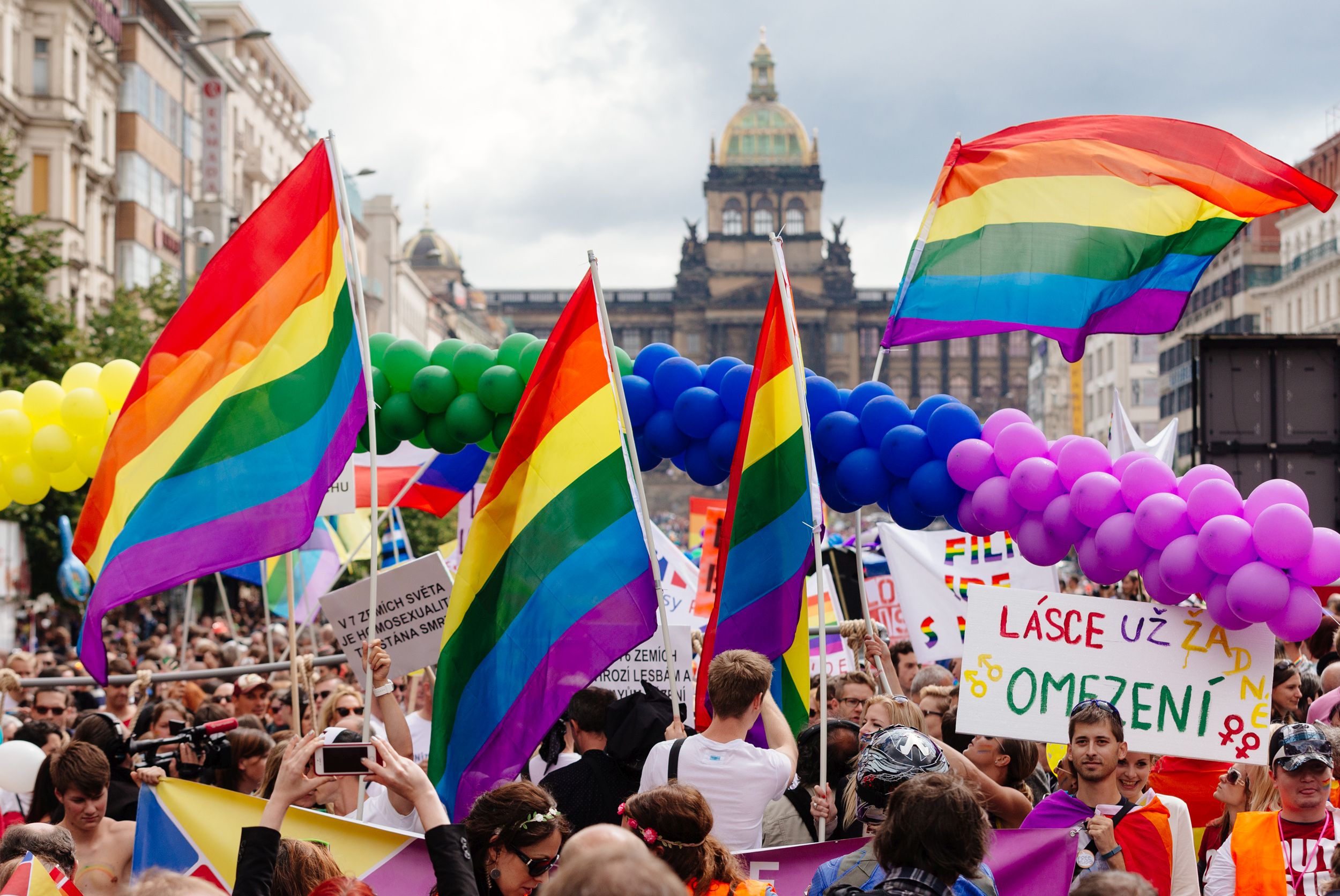
Few social movements have changed Western society as profoundly as the fight for LGBTQ+ rights. A few decades ago, many gay men and lesbians lived in fear. They concealed their relationships from their families. They worried about losing their jobs. In many countries, the state itself treated them as criminals. Some ended up in prison. Others were forced into psychiatric institutions because their sexual orientation was wrongly classified as a mental illness.
The world has changed dramatically since then. Many democracies recognize same-sex marriage. Employers increasingly protect LGBTQ+ employees from discrimination. Television, films, and literature portray same-sex relationships as a normal part of society. Younger generations often struggle to imagine how difficult life was for gay people only half a century ago.
This progress deserves recognition. It did not happen by accident. Millions of people challenged prejudice despite enormous personal risk. Many lost their careers. Some lost their families. Others paid with their lives. Pride marches became one of the symbols of that struggle. They reminded society that LGBTQ+ people had existed all along. The difference was that they were finally refusing to remain invisible.
Yet every successful movement eventually reaches a point where it must ask a difficult question. Are its current methods still the most effective? That question does not challenge the movement’s goals. It examines its strategy. Political campaigns do it. Businesses do it. Charities do it. Social movements should do the same.
The debate over Pride marches belongs in that category.
Human rights come first
Before discussing Pride itself, one point should be beyond dispute. People should never face discrimination because of their sexual orientation or gender identity. The state should protect every citizen equally under the law. No one should lose a job because they are gay, no one should fear violence because they hold hands with their partner. No parent should reject a child for being lesbian, bisexual, or transgender.
Unfortunately, much of the world still fails this basic moral test.
Homosexuality remains illegal in dozens of countries. Several governments still impose life imprisonment. Others retain the death penalty in law or in practice. Even in countries where legal equality exists, many LGBTQ+ people continue to experience harassment, bullying, and physical violence. Some cannot safely reveal their identity to their own families. Others flee their countries because remaining there places their lives in danger.
These facts matter because they provide essential context. Any discussion about Pride should begin by recognizing that the movement did not emerge from comfort or privilege. It emerged because millions of people lacked rights that heterosexual citizens took for granted.
However, acknowledging that history does not mean every modern tactic automatically serves the movement equally well. Supporting equal rights does not require supporting every strategy adopted in their name.
Those are two different questions.
The image the public sees
Most people never attend a Pride march. Their opinions therefore come from somewhere else. They watch television reports, they scroll through social media. They see photographs in newspapers. Those images become their understanding of the event.
That is where an interesting problem appears.
Anyone who personally knows several gay men or lesbians usually notices something obvious. Most live remarkably ordinary lives. They wear jeans, business suits, dresses, or sportswear; they work in offices, hospitals, factories, universities, and restaurants. They worry about mortgages, deadlines, children, and retirement. Their sexual orientation tells us very little about how they look or behave.
Media coverage often creates a different impression.
Journalists rarely photograph the accountant walking quietly beside his husband. Television crews rarely interview the lesbian couple pushing a stroller. Those images receive little attention because they appear ordinary. Modern media rewards novelty, conflict, and spectacle. As a result, cameras naturally gravitate toward the participants wearing fetish clothing, elaborate costumes, leather outfits, or almost no clothing at all.
There is nothing surprising about this. News organizations compete for attention. Social media algorithms reward the most unusual content. The more controversial an image becomes, the more likely millions of people are to share it.
The consequence, however, deserves careful consideration.
A relatively small group of participants often becomes the public face of an event attended by hundreds of thousands of people.
Representation or distortion?
Imagine two different Pride marches.
In the first, television cameras focus primarily on teachers, engineers, doctors, office workers, pensioners, students, parents, and children. Participants wear ordinary clothes. Couples hold hands. Families wave rainbow flags. The central message becomes simple. LGBTQ+ people are ordinary citizens asking for equal treatment.
Now imagine the second march.
Television reports almost exclusively show fetish gear, explicit sexual imagery, provocative performances, and the most visually shocking participants. Those images dominate headlines for days. Millions of people who never attended the event conclude that this is what Pride represents.
Which version would persuade more undecided citizens?
That question deserves an honest answer.
Many supporters immediately respond that participants have every right to dress however they wish. They are absolutely correct. Freedom of expression protects that choice. Nobody should dictate how adults dress at a lawful public event.
However, rights and political strategy are not identical.
Every movement carefully considers the image it presents to the public. Environmental organizations know that one activist throwing paint at a famous painting can overshadow thousands of peaceful volunteers cleaning beaches. Political parties spend enormous resources choosing candidates who appeal to undecided voters. Charities understand that public trust determines donations.
Pride should not be exempt from the same discussion.
If the objective is to persuade society that LGBTQ+ people deserve equal rights, then public perception inevitably matters. Asking whether certain images help or hinder that objective is not an attack on LGBTQ+ people. It is a question about communication.
A simple thought experiment
Suppose next year’s Pride march looked completely different.
Imagine thousands of participants wearing business suits, summer dresses, jeans, sports jackets, or ordinary casual clothes. Doctors marched beside nurses. Lawyers walked beside construction workers. Elderly couples held hands. Parents pushed strollers while children carried rainbow balloons. Television cameras would still record the event, but the headlines would probably change.
Would critics find it more difficult to portray Pride as excessively sexualized?
And would moderate voters become more sympathetic?
Would opponents lose one of their strongest talking points?
Nobody knows the answers with certainty. Nevertheless, these questions deserve discussion because perception influences politics. Public opinion shapes elections. Elections shape legislation. Legislation determines rights.
That does not mean Pride should become a carefully choreographed public relations campaign. Authenticity remains important. Freedom remains important. Diversity remains important.
It simply means that every movement benefits from asking whether its public image accurately reflects the people it claims to represent.
The average gay man does not spend Saturday afternoon wearing leather straps in the city center. Neither does the average lesbian. If that is true, should those images dominate public understanding of Pride?
The answer is far from obvious. Yet refusing to ask the question does not make it disappear.
What do LGBTQ+ people think?
Public debate often creates the impression that the LGBTQ+ community speaks with one voice. That assumption falls apart the moment you begin listening to LGBTQ+ people themselves. Like every other group, they disagree about politics, culture, religion, and strategy. They also disagree about Pride.
Many people eagerly participate every year. They describe Pride as liberating, joyful, and deeply personal. Some remember a time when they had to hide every aspect of their identity. Walking openly through the streets therefore represents much more than a parade. It symbolizes freedom.
Others see things differently.
Many gay men and lesbians deliberately avoid Pride marches. Some dislike the commercialization of the events. Others believe large corporations have transformed what began as a protest into a marketing opportunity. Still others argue that the media focuses so heavily on the most provocative participants that ordinary LGBTQ+ people become almost invisible.
These voices rarely receive the same attention as activists or politicians. Yet they matter because they remind us that no community is politically uniform. Treating millions of people as though they all share the same opinion is itself a stereotype.
Does visibility always persuade?
Supporters of Pride usually make one central argument. Visibility changes minds.
History gives them good reasons to believe this. For centuries, many LGBTQ+ people remained invisible because they feared persecution. Most heterosexual people therefore assumed they had never met a gay person. Once friends, relatives, colleagues, and neighbors began coming out, those assumptions collapsed. Suddenly, homosexuality no longer belonged only to distant stereotypes. It belonged to sons, daughters, classmates, and coworkers.
Psychologists have long described this phenomenon through the contact hypothesis. In simple terms, prejudice often decreases when people have meaningful contact with members of another group. Knowing someone personally tends to humanize them. Abstract fears become much harder to maintain when they concern a real person you respect.
That evidence deserves serious consideration. It helps explain why public acceptance of LGBTQ+ people has increased so dramatically across much of the democratic world.
However, another question naturally follows.
Does every kind of visibility produce the same effect?
A quiet conversation with a respected colleague differs from a thirty-second television clip showing only the most provocative moments of a parade. Both create visibility, yet they may influence audiences very differently. One encourages identification. The other may encourage distance.
That distinction deserves far more attention than it usually receives.
The media rewards extremes
Modern journalism does not merely report reality. It selects which parts of reality millions of people will see.
Editors face practical constraints. Television news lasts only a few minutes. Online articles compete for clicks. Social media algorithms reward content that provokes strong emotional reactions. Consequently, journalists often choose images that appear unusual, dramatic, or controversial.
Pride marches fit this pattern perfectly.
Imagine a parade with fifty thousand participants. Forty-nine thousand wear ordinary clothes. One thousand wear elaborate costumes or fetish gear. Which photographs will dominate newspaper front pages the following morning?
The answer seems obvious.
Ordinary people rarely generate headlines. Extraordinary images do. Consequently, many viewers conclude that those extraordinary images represent the entire event. In reality, they may represent only a small fraction of participants.
This creates a feedback loop. Critics point to sensational photographs as proof that Pride has become excessive. Supporters respond that critics ignore the overwhelming majority of ordinary participants. Both statements may contain elements of truth.
The problem lies not only with Pride itself but also with how modern media functions.
Rights and strategy are different conversations
Too many discussions about Pride become emotionally charged because two completely different questions become mixed together.
The first concerns human rights.
Should LGBTQ+ people enjoy the same legal protections as everyone else?
In a liberal democracy, the answer should be straightforward. Equal treatment under the law does not depend on popularity. It does not depend on religion. It does not depend on whether someone approves of another person’s lifestyle. Human rights belong to individuals simply because they are human.
The second question concerns political strategy.
Does every aspect of modern Pride maximize public support for those rights?
That question has no obvious answer. Political campaigns regularly evaluate which slogans persuade voters. Environmental organizations debate which protests generate sympathy and which alienate the public. Labor unions discuss negotiation tactics. Civil rights organizations examine public messaging.
Nobody interprets these discussions as attacks on the goals themselves.
Pride should receive the same treatment.
Asking whether certain forms of public expression strengthen or weaken support for LGBTQ+ equality does not imply opposition to equality. It reflects an interest in achieving that equality as effectively as possible.
Confusing these two conversations prevents serious discussion.
The middle of society
Political movements rarely succeed by convincing their strongest supporters. Those people already agree.
Nor do they usually succeed by persuading their fiercest opponents. Many opponents remain unconvinced regardless of the evidence presented.
Most social change depends on a different group.
It depends on ordinary citizens who have not firmly decided where they stand. These people may support equal rights while feeling uncertain about aspects of Pride. Others may know very little about LGBTQ+ issues and simply respond to whatever images dominate the news.
These individuals often determine election results. They influence public opinion. They shape cultural norms. Winning their confidence therefore matters enormously.
That reality raises an uncomfortable possibility.
If the most widely circulated images of Pride reinforce stereotypes instead of challenging them, the movement may unintentionally make persuasion more difficult. On the other hand, if those same images encourage visibility, confidence, and solidarity within the LGBTQ+ community, they may still serve an important purpose.
Both possibilities deserve careful examination.
Reducing the debate to slogans such as “Pride is perfect” or “Pride is harmful” ignores a far more complicated reality.
Pride around the world
Another common mistake is to speak about Pride as though every march looked the same. They do not.
Some resemble peaceful community festivals. Families attend with young children. Local charities provide information about mental health, HIV prevention, and youth support. Elderly couples walk beside teenagers. Musicians perform on small stages, while volunteers collect donations for organizations that help LGBTQ+ people facing homelessness or domestic violence.
Others look completely different.
Some organizers deliberately embrace provocation. Participants wear fetish clothing or highly revealing outfits. Performances emphasize sexuality rather than equality. Unsurprisingly, these events generate the greatest media attention. They also generate the greatest controversy.
Lumping every Pride march into a single category therefore makes little sense. Judging a quiet family-oriented march by the images from the most provocative parade is just as misleading as judging an entire religion by its most extreme followers.
Generalizations rarely help us understand reality.
Should Pride change?
This question makes many people uncomfortable because it appears to present only two options. Either Pride remains exactly as it is, or society abandons LGBTQ+ rights altogether.
That is a false choice.
Every successful movement evolves. Political parties change their campaigns. Businesses redesign their advertisements. Human rights organizations constantly adjust their messaging. They do not do this because their principles have changed. They do it because they want to persuade more people.
Pride should not be immune from the same discussion.
Suppose organizers discovered that family-oriented marches consistently increased public support for LGBTQ+ rights, while highly sexualized events consistently reduced it. Would it make sense to ignore that evidence? Most people would probably answer no. Conversely, suppose rigorous research demonstrated that provocative marches actually produced greater acceptance in the long term. Critics would need to confront that evidence as well.
The point is simple. Strategy should follow evidence rather than ideology.
What should the movement achieve?
The ultimate purpose of any civil rights movement is not to organize the largest parade. It is not to produce the most viral photograph. It is not even to attract the greatest amount of media attention.
Its purpose is to improve people’s lives.
That means reducing discrimination. It means preventing violence.; it means convincing parents not to reject their children. And it means ensuring that employers hire people based on merit rather than prejudice. It means protecting equal rights before the law.
Every tactic should be judged against those goals.
If a particular approach increases public support, it deserves consideration. If another unintentionally strengthens stereotypes, the movement should at least ask whether a better alternative exists.
There is nothing controversial about that principle. Every organization that seeks long-term success regularly evaluates whether its methods still serve its objectives.
A conversation, not a verdict
Too often, discussions about Pride end before they begin.
Supporters sometimes dismiss every criticism as homophobia. Critics sometimes dismiss every Pride participant as an extremist. Both reactions replace evidence with emotion.
Reality is rarely that simple.
Many people who question aspects of Pride strongly support LGBTQ+ equality. Many participants who enjoy colorful and provocative parades also recognize that the media often presents a distorted picture. Likewise, many opponents of Pride oppose LGBTQ+ rights regardless of how peaceful or restrained a march becomes.
That complexity should encourage humility.
Instead of asking whether Pride is good or bad, we should ask more precise questions. Which kinds of events persuade undecided citizens? And which strengthen stereotypes? Which improve public acceptance? Which help young LGBTQ+ people feel less isolated? Those questions invite evidence rather than ideology.
Conclusion
The struggle for LGBTQ+ equality has transformed millions of lives. Few reasonable people would wish to return to an era when gay men and lesbians hid their identities out of fear, when governments criminalized private relationships, or when discrimination enjoyed legal protection.
That achievement deserves respect.
At the same time, no movement should assume that every strategy remains equally effective forever. Public attitudes change. Media changes. Politics changes. Successful movements adapt to those changes without abandoning their principles.
Perhaps modern Pride marches represent the best possible strategy. Perhaps some forms of Pride persuade while others alienate; perhaps the average citizen would react differently if media coverage focused less on a handful of sensational participants and more on the thousands of ordinary LGBTQ+ people who simply want to live in peace.
Those questions deserve honest discussion rather than outrage.
Supporting equal rights and evaluating political strategy are not contradictory positions. In fact, they belong together. A movement that genuinely seeks equality should care not only about the justice of its cause but also about the effectiveness of the methods it uses to achieve it.
Leave a Reply