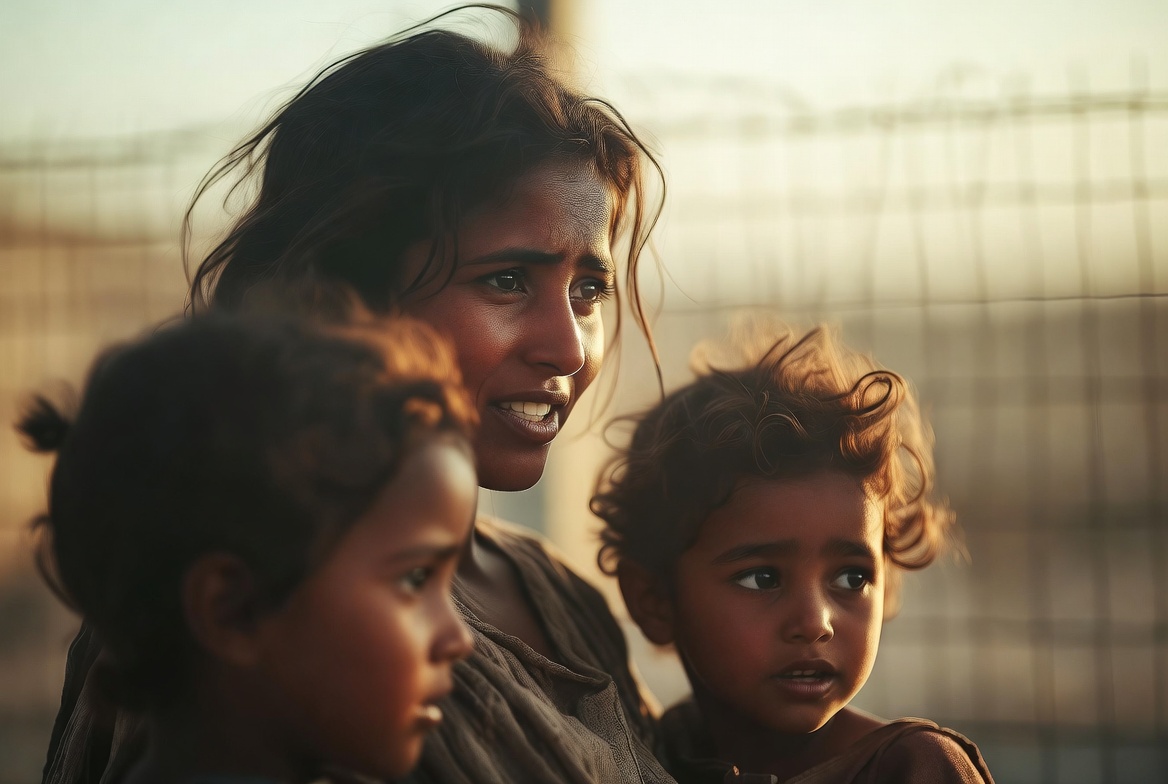
The debate surrounding Ceuta has become about far more than border security. It has exposed a disturbing willingness among many Europeans to forget that refugees are human beings before they are migrants. The headline suggesting that those trying to cross into Ceuta deserved even harsher treatment was not an attempt to inform readers. It was an attempt to provoke fear, anger, and tribal instincts. Instead of encouraging a serious discussion about migration, it encouraged contempt for desperate people whose greatest crime was trying to escape circumstances that many Europeans would never tolerate for themselves.
None of this means every migrant has a legal right to enter Europe or remain there. States have the right to control their borders and distinguish between refugees, economic migrants, and people who have no legal claim to asylum. Those are legitimate political questions. They are entirely different, however, from celebrating cruelty or encouraging people to see refugees as less than human.
Why refugees keep coming
Many refugees do not leave functioning societies. They come from countries devastated by civil war, dictatorship, terrorism, corruption, economic collapse, or chronic instability. In many regions, food insecurity is widespread, healthcare is minimal, education barely functions, and violent death is a realistic possibility. For countless families, remaining at home means accepting a future with almost no opportunity and little hope.
People often ask why refugees risk drowning in the Mediterranean or climbing heavily fortified fences. The better question is why they would stay. If someone believes that remaining in their homeland means hunger, persecution, or an early death, risking everything for a small chance of survival becomes understandable. Someone who has almost nothing left naturally has very little left to lose.
Europeans are also descendants of immigrants
One of the greatest ironies in these debates is that Europeans themselves descend from countless waves of migration. Human history is a history of movement. Tribes migrated across continents, kingdoms expanded into new territories, populations mixed, and borders shifted continuously. The ancestors of modern Europeans arrived from somewhere else just as the ancestors of every other population did.
Recognizing this historical reality does not mean countries should abolish border controls. Every sovereign state has the right to regulate immigration and protect its territorial integrity. It does, however, undermine the idea that migration itself is somehow abnormal or fundamentally incompatible with European history. In the broad historical sense, all Europeans are descendants of immigrants.
The politics of dehumanization
Words matter because they shape moral judgment. Once refugees stop being described as people and start being described as invasions, floods, or swarms, compassion becomes much easier to suppress. They cease to be mothers, fathers, children, or young people with ambitions. Instead, they become abstract threats whose suffering supposedly deserves little sympathy.
This process has occurred repeatedly throughout history. Before societies tolerate discrimination or violence, they almost always begin by changing the language they use about the targeted group. Dehumanization rarely starts with physical violence. It usually begins with words that make violence seem emotionally acceptable.
Cheap political points
For many far-right politicians, migration has become one of the easiest political tools available. Images of refugees crossing fences or arriving on boats produce immediate emotional reactions. They create fear, anger, and a sense of cultural insecurity that can easily be transformed into electoral support. Complex discussions about international development, conflict prevention, demographic change, or asylum reform attract far less attention than emotionally charged slogans about invasions and national survival.
That strategy works because it appeals directly to ancient tribal instincts. It encourages people to divide the world into “us” and “them” while ignoring the individuality of those on the other side of the fence. It is politically effective precisely because it replaces careful reasoning with emotional reflexes.
Europe’s moral contradiction
The debate over refugees also exposes another contradiction within Europe. Europeans often express enormous political outrage over people attempting to enter the continent while showing far less collective urgency about preventable suffering affecting Europeans themselves. Every year, many Europeans die prematurely from preventable diseases or conditions whose burden could be reduced through healthier lifestyles, stronger prevention, earlier diagnosis, or more effective public-health policies.
At the same time, Europe faces a profound demographic crisis. Birth rates remain well below replacement levels across much of the continent, and many governments struggle to create conditions that encourage families to have children. Public debate frequently focuses on consumption, economic growth, and maintaining comfortable lifestyles, while comparatively less attention is devoted to reversing demographic decline or investing in policies that make raising children more attractive and financially sustainable.
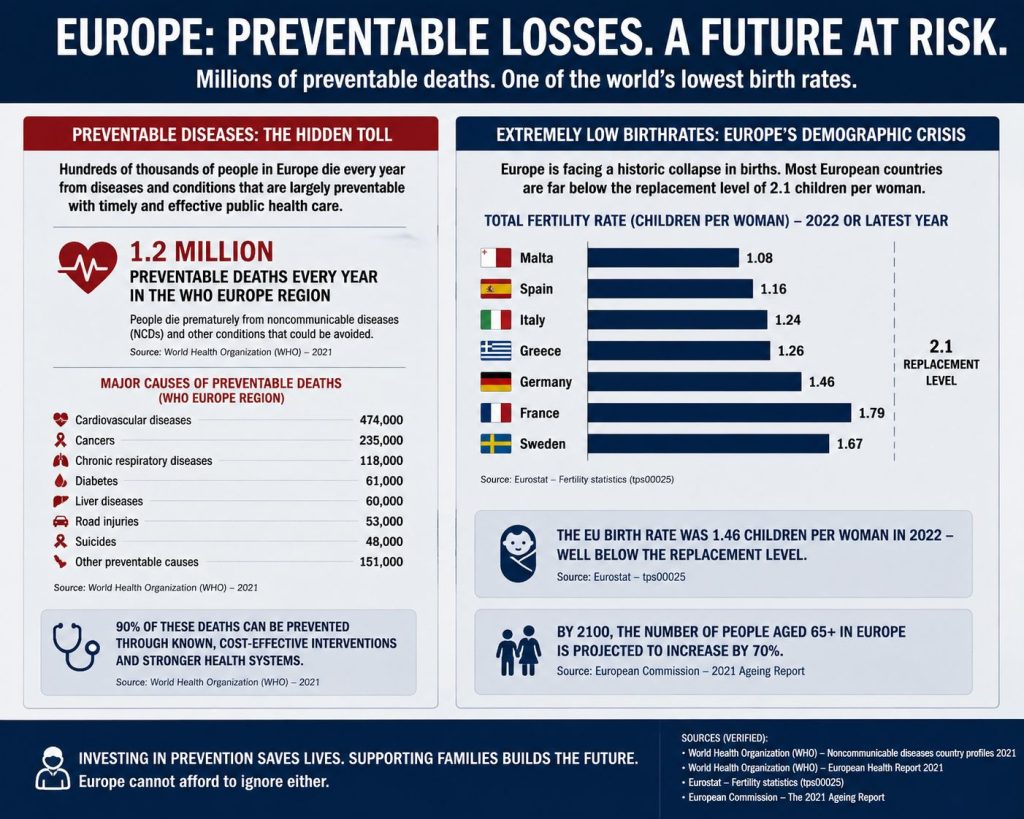
Whether one agrees with that criticism or not, it raises an uncomfortable question. If European societies are unwilling to address many of their own preventable losses of life and long-term demographic decline, why is so much political energy directed toward portraying desperate refugees as the greatest moral threat facing the continent?
Compassion does not require open borders
It is entirely reasonable to argue that a considerable proportion of migrants should not remain in Europe. International law distinguishes between refugees and other migrants, and governments have every right to enforce those distinctions. A functioning asylum system depends upon fair procedures and the ability to return individuals who do not qualify for protection.
None of that requires abandoning basic humanity. Rejecting an asylum application is not the same as denying someone’s dignity. Enforcing immigration law is not the same as celebrating suffering. Secure borders and respect for human rights are not mutually exclusive principles.
A moral obligation
As Pope Francis repeatedly argued, wealthy societies have a moral responsibility to help those fleeing desperate circumstances. That responsibility does not necessarily mean admitting everyone who arrives. It can involve humanitarian aid, fair asylum procedures, support for refugee camps, conflict prevention, and international development that reduces the reasons people flee in the first place.
One does not need to be Catholic to appreciate the ethical principle behind that argument. Civilizations should ultimately be judged not only by how well they protect themselves but also by how they treat those who possess the least power.
A headline appealing to humanity’s lowest instincts
The headline about Ceuta was not merely provocative. It deliberately appealed to fear, resentment, and the darkest aspects of tribal psychology. Rather than encouraging readers to consider why people risk their lives to reach Europe, it invited them to feel disgust and hostility toward individuals whose circumstances most Europeans would never willingly endure.
Europe has every right to defend its borders. It also has a responsibility to defend the values it claims to represent. Once society begins applauding headlines that encourage contempt instead of compassion, the real victim is no longer only the refugee standing at the border. It is Europe’s own commitment to human dignity.
Leave a Reply