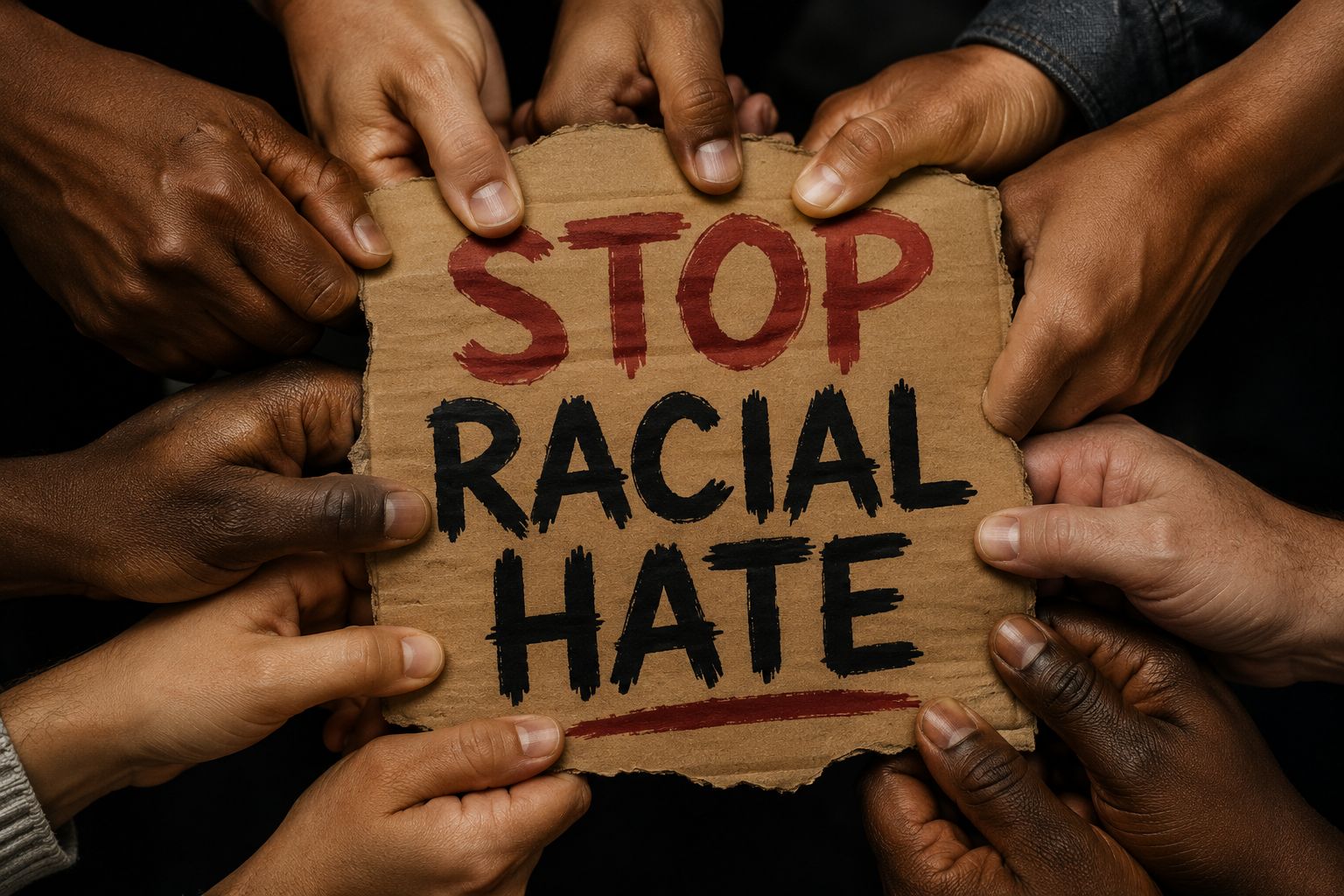
The death of Professor Jason Arday has left British academia in a state of shock and soul-searching. As politicians and colleagues call for a “moment of reflection,” a deeply uncomfortable question lingers beneath the surface: was the relentless pursuit of the 41-year-old academic driven by legitimate concerns about plagiarism, or was it a racially charged manhunt disguised as scholarly integrity?
The rise and fall of a “wunderkind”
When Jason Arday was appointed as a professor of sociology of education at Cambridge in 2023, it was hailed as a progressive milestone. At just 37, he was the youngest Black professor in the university’s long history—a remarkable achievement for someone who had been diagnosed with autism and global developmental delay at age three, and who, according to his memoir, was non-verbal until 11 and couldn’t read until 18.
His life story was lauded as extraordinary. Arday spoke of fundraising feats, including running 30 marathons in 35 days and raising millions for charity. He became a celebrity academic, a symbol of what diversity, equity, and inclusion policies could achieve.
But then came the scrutiny. In July 2026, a postdoctoral researcher published allegations that Arday had plagiarized sections of his PhD dissertation. An analysis suggested that more than 100 passages in Arday’s thesis bore striking similarities to the work of another academic, published six years earlier.
The floodgates opened. Questions were raised not just about his PhD but about his previous academic posts and even his personal biographical details. Former classmates challenged his claims about being non-verbal until 11. Universities that had awarded him honorary degrees modified their websites, changing his “600 miles in six days” claim to “12 days.”
The manhunt
What followed was what Arday’s family described as a “campaign of sustained abuse.” Sir Simon Baron-Cohen, a Cambridge professor who had received a voice note from Arday on the morning of his death, said the academic “felt that he could not go on.”
But was this simply rigorous academic scrutiny, the kind any professor should expect? Or was it something more sinister?
Arday himself believed it was racially motivated. In the epilogue to his memoir, he wrote that he had “continued to face harassment and persecution as the subject of targeted campaigns driven by racial animus.”
Professor Baron-Cohen told the BBC that Arday believed “there was a racist playbook to discredit black academics at universities and accusations of plagiarism were used to try and bring down black academics.”
The pattern: Scrutiny that follows black scholars
Here lies the crux of the issue: if the allegations were purely about academic integrity, why did the response resemble a manhunt? And why do similar cases involving white academics fail to generate the same frenzy?
The Claudine Gay precedent
Just three years earlier, Harvard’s first Black president, Claudine Gay, was subjected to a similar public dismantling. When plagiarism allegations emerged against her, the attacks came from conservative activists and media, framing her as a DEI hire. The response was a political weapon, not a pursuit of academic truth. Gay resigned under pressure, but the pattern was clear: a Black woman in power was targeted not for isolated errors but for her very presence in that position.
The case of the white historian
Contrast this with the case of a prominent white historian at Harvard who faced plagiarism allegations in 2021. The matter was handled internally, with no media frenzy, no national debate, no dissection of his personal biography. He retained his position. The difference was not the nature of the allegations but the race of the accused.
The forgotten plagiarists
When a professor at a less prestigious university is found to have plagiarized, the matter is typically handled internally. It rarely becomes front-page news. There is no national debate about the integrity of the institution, no campaign of public shaming, no relentless investigation into every facet of their life.
Consider the case of a German defense minister who resigned after plagiarizing his PhD thesis. While the media covered it, the response was political and contained. His childhood, his personal struggles, and his fundraising history were not scrutinized. His mental health was not debated in the press. He was allowed to resign with dignity.
Or consider the numerous white academics who have committed plagiarism and continued their careers, often with minimal professional consequences. Their mistakes are treated as human error, not as evidence of fundamental fraud.
A double standard laid bare
The contrast is jarring and revealing. When a white academic is accused of plagiarism, the focus remains on the work. When a Black academic is accused, the focus becomes the person—their background, their qualifications, their very right to be there.
Shadow communities secretary Sir James Cleverly described Arday as “a vulnerable fantasist” who was “put into positions he was clearly not qualified for” by institutions seeking a “black wunderkind to show off.”
This language reveals a deep-seated cynicism about Arday’s very presence in elite academia. It implies that a Black, autistic man from a working-class background could only have achieved such heights through manipulation or tokenism, not through merit. The framing of Arday as a “fantasist” was not just about his work but about his identity—a judgment that he was fundamentally out of place.
The focus on Arday’s background—his autism, his non-verbal childhood, his learning difficulties—was framed as an exposure of his “true” self. Yet other academics with unconventional paths are rarely held to the same standard. When a white academic struggles with learning disabilities, it is celebrated as triumph over adversity. When a Black academic does the same, it becomes evidence of fraud.
The role of the media
The media played a crucial role in amplifying the narrative of Arday as a fraud. While plagiarism allegations in academia are common, they rarely make national headlines. The sustained media coverage of Arday’s case suggests that his race and his status as a DEI hire were what made the story newsworthy.
The tabloid coverage framed Arday not as an academic facing allegations but as a symbol of everything wrong with diversity policies. His death has not quieted this narrative; it has intensified it, with commentators now debating whether he was a victim of racism or a fraud who finally faced exposure.
A call for reflection
Prime Minister Andy Burnham called for a “moment for reflection” after Arday’s death, saying, “It’s a tragedy on so many levels.” Cambridge University Vice-Chancellor Professor Deborah Prentice acknowledged the “anger and anxiety around this damaging and difficult case.”
But an “aberration” suggests this is an isolated incident. The reality is that the case of Jason Arday exposes a systemic problem: the weaponization of plagiarism accusations against minority academics, the double standard in how such cases are pursued, and the media’s role in amplifying a narrative of fraud and failure.
The question is not whether Arday made mistakes or even committed plagiarism. The question is why the response to his alleged transgressions was so disproportionate. Why did it feel like a manhunt?
The uncomfortable truth
Those who targeted Arday may insist they are not racist. They may argue that their concerns were purely academic. But the pattern of behavior tells a different story. The relentless scrutiny, the media frenzy, the personal attacks—these are not how academia treats plagiarism when the accused is white.
The tragedy is that a young man is dead, and the debate is still about his guilt or innocence, rather than the brutal and relentless campaign that preceded his death. His family’s words ring painfully true: “The campaign of misinformation was too much for Jason, who was a gentle man and who always wanted to see the best in everyone.”
The “moment for reflection” must extend beyond Arday’s personal tragedy. It must examine the mechanisms of public shaming, the intersection of race and scrutiny, and the very real consequences of treating an academic investigation as a public spectacle. The failure was not just one man’s alleged plagiarism, but the institutional and media systems that turned his life into a case study, and ultimately, a tragedy.
And it must acknowledge what everyone sees but few will say aloud: the man-hunt for Jason Arday was about his race. His Blackness made him a target. His Blackness made his story newsworthy. His Blackness made his alleged mistakes unforgivable. Those who pursued him may deny it, they may insist they were simply seeking the truth, but the evidence of a double standard is overwhelming.
The pursuit of Jason Arday was not about plagiarism. It was about the audacity of a Black man in a white space, and the determination to prove he did not belong.
Leave a Reply