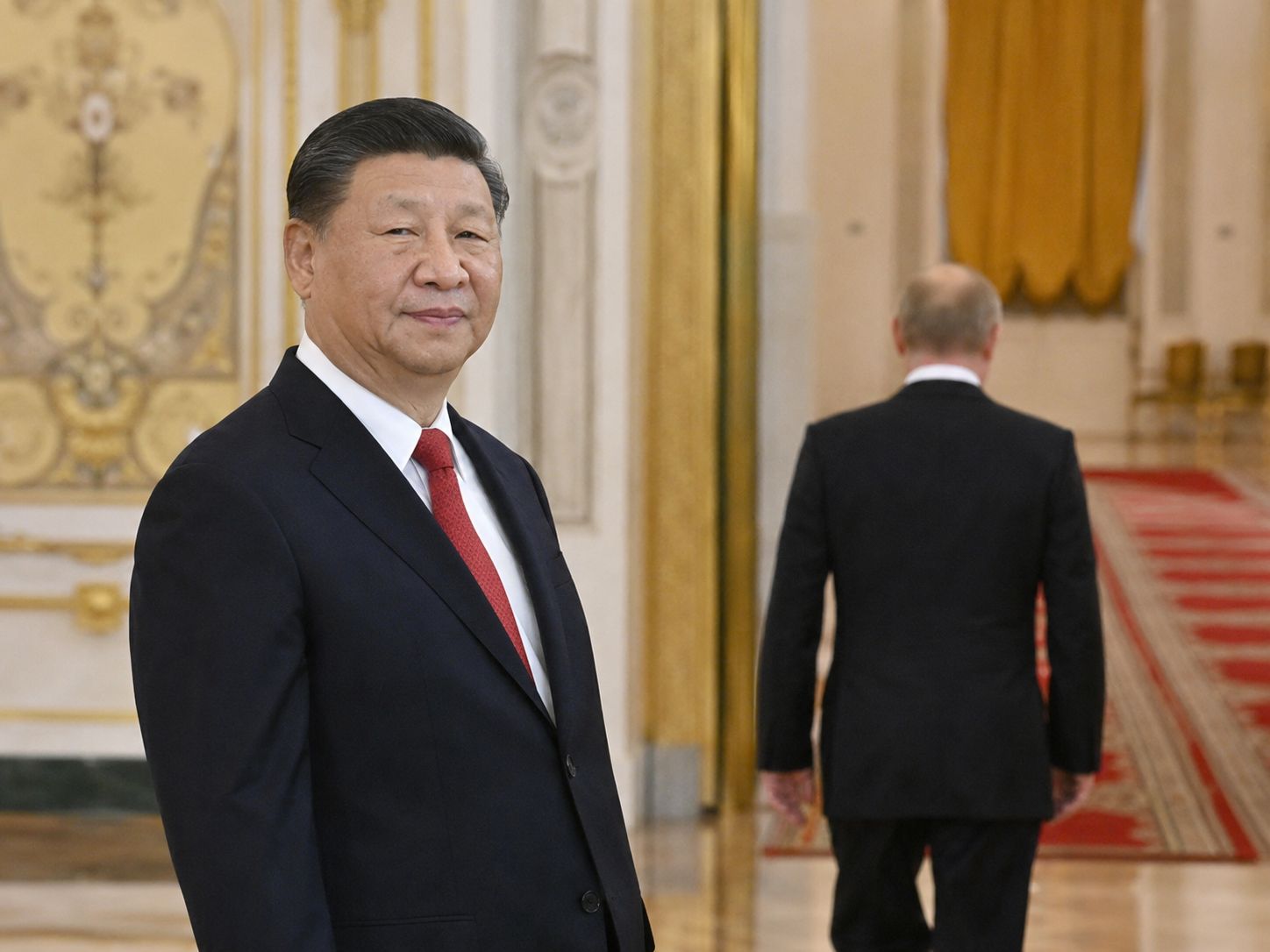
When Xi Jinping came to power in China, Vladimir Putin looked like a remarkably useful political partner. He had already spent more than a decade consolidating power, marginalizing domestic opposition, weakening independent media and presenting himself as the leader who had restored Russia after the instability of the 1990s.
Xi was beginning a similar concentration of authority in China. Although their political systems were different, the two leaders shared important instincts. Both distrusted Western political influence, rejected liberal democracy as a universal model and believed that their countries deserved far greater influence over the international system.
For years, their relationship appeared unusually personal. Xi publicly described Putin in 2019 as his “best and bosom friend” and said that he had interacted with Putin more closely than with any other foreign leader. They celebrated birthdays together, exchanged unusually warm gestures and repeatedly met outside formal diplomatic settings.
However, something much more important was happening underneath the friendship. China was becoming dramatically stronger, while Russia was failing to keep pace.
The relationship gradually stopped looking like a partnership between two comparable great powers. Instead, Russia increasingly became the weaker partner.
And Putin himself helped accelerate the transformation.
Xi once had reasons to admire Putin
When Xi chose Russia for his first foreign trip after becoming Chinese president in 2013, the symbolism was obvious. Moscow represented an important geopolitical partner against American dominance, while Putin represented a political model that had survived repeated confrontation with the West.
The two leaders subsequently met dozens of times. Their governments coordinated positions at the United Nations, expanded military cooperation and developed increasingly similar narratives about Western interference, sovereignty and a supposedly emerging multipolar world.
Putin also offered Xi something particularly valuable: strategic security along China’s enormous northern border. The Sino-Soviet confrontation had once forced China to prepare for possible war with Moscow. Cooperation with Russia allowed Beijing to concentrate much more attention on the Pacific, Taiwan and competition with the United States.
Their personal relationship therefore had genuine strategic foundations. It was not simply theater.
Yet the balance of power was already changing.
China was becoming a manufacturing, technological and commercial giant. Russia remained a formidable nuclear and military power, but its economy increasingly depended on natural resources.
By 2024, China’s nominal GDP was roughly $18.7 trillion, compared with about $2.2 trillion for Russia. The difference was not merely quantitative. China occupied central positions in global manufacturing and supply chains that Russia simply could not replicate.
Putin could still speak to Xi as the president of another great power. Economically, however, the two countries had stopped playing in the same league.
The “no limits” moment
The symbolic high point came on February 4, 2022.
Xi and Putin met in Beijing shortly before Russia invaded Ukraine. Their governments released a long joint statement declaring that friendship between the two countries had “no limits” and that there were no forbidden areas of cooperation. China also explicitly opposed further NATO enlargement, adopting one of Moscow’s central geopolitical arguments.
For Putin, the message was extremely valuable. Russia could confront the West without being completely isolated.
For Xi, the partnership offered something else. Russia challenged the Western-led international order far more aggressively than China itself usually dared to do.
Moscow could take enormous risks. Beijing could observe the consequences.
In that sense, Russia increasingly became useful to China precisely because it was willing to do things China preferred not to do itself.
Putin’s invasion changed everything
The invasion of Ukraine transformed the relationship.
Putin apparently expected a relatively quick military victory. Instead, Russia entered a prolonged war, faced enormous Western sanctions and lost much of its economic relationship with Europe.
Suddenly, China was no longer merely an important Russian partner. It became essential.
Russian energy exporters needed customers. Russian companies needed machinery, electronics and consumer goods. The financial system increasingly needed the yuan. Meanwhile, Chinese companies entered markets abandoned by Western firms.
Trade surged. Bilateral trade reached a record of roughly $245 billion in 2024, although it later declined in 2025.
Russia also redirected much of its energy trade eastward. In 2025, roughly 80 percent of Russian oil exports went to China and India as European demand collapsed under sanctions and political pressure.
China gained access to a sanctioned supplier desperate for customers.
Russia gained an economic lifeline.
Those are not equal forms of dependence.
The junior partner emerges
The transformation became increasingly difficult to hide.
During Xi’s 2023 visit to Moscow, Putin praised China’s economic development and remarked that Russia was “even slightly jealous.” The comment sounded friendly, but it captured the underlying reality.
China could choose among dozens of major trading partners. Russia had lost access to many of its most important ones.
Chinese banks demonstrated that asymmetry particularly clearly. Despite official declarations of friendship, many became reluctant to process Russian transactions when they feared American secondary sanctions. Russian businesses consequently had to use intermediaries and increasingly complicated payment mechanisms.
Beijing did not sacrifice its global economic interests for Moscow.
That fact reveals an important limit to the famous “no limits” partnership. There are limits whenever Russian interests threaten sufficiently important Chinese interests.
China supports Russia because Russia remains useful. It does not appear prepared to absorb unlimited economic damage on Russia’s behalf.
China can increasingly dictate the terms
Energy provides perhaps the clearest example.
After losing much of its European gas market, Russia desperately needed to redirect exports toward Asia. The proposed Power of Siberia 2 pipeline therefore became strategically important to Moscow.
That desperation gave Beijing enormous bargaining power.
During Putin’s May 2026 visit to China, the two governments again displayed political unity and signed numerous agreements. Yet they failed to finalize the long-awaited pipeline deal because important commercial issues, including pricing, remained unresolved.
Russia needs another major Chinese gas market much more than China needs Russian gas.
Beijing can therefore wait.
Carnegie analysts described the broader trend clearly: Moscow is becoming increasingly tied to Beijing, while China has greater ability to determine which projects interest it and under what conditions it will participate.
That is no longer a relationship between economic equals.
Putin gave China discounted resources and geopolitical leverage
From Beijing’s perspective, Putin has inadvertently created several advantages.
First, Russia redirected enormous quantities of energy toward Asia. China gained another major source of oil and gas that does not depend entirely on maritime routes controlled or monitored by the United States and its allies.
Second, Western sanctions weakened Russia’s negotiating position. Beijing could bargain with a supplier possessing fewer alternative customers.
Third, the war absorbed enormous Western political, military and financial attention. Every artillery shell, air-defense missile and military budget increase devoted to Europe represented resources that could not simultaneously concentrate on China.
Finally, Russia became more dependent on Chinese technology, trade and finance.
Putin wanted to restore Russia as an independent pole of global power.
Paradoxically, his war helped turn Russia into a country increasingly dependent on another pole of global power.
Putin suddenly looked vulnerable
Xi also received an extraordinary demonstration of how quickly Putin’s supposedly unshakable power could be challenged. During Yevgeny Prigozhin’s Wagner mutiny in June 2023, Wagner forces seized key military facilities in Rostov-on-Don and advanced toward Moscow before abruptly turning back. The rebellion lasted less than a day, yet it punctured Putin’s carefully cultivated image of absolute domestic control.
For Xi, the lesson was difficult to ignore. A ruler who appeared almost politically untouchable could suddenly face an armed challenge from inside his own system. Beijing’s subsequent behavior is revealing. China is now cultivating relationships with Russian officials and elites who could remain influential after Putin leaves power. This does not prove that Xi personally despises Putin, but it gives him every reason to regard the Russian leader as considerably more vulnerable and expendable than he once appeared.
Friendship and hierarchy can coexist
Authoritarian leaders do not need to dislike one another to exploit each other.
Xi may genuinely like Putin. Their personal relationship may remain considerably warmer than China’s relationships with most Western leaders. At the same time, Xi can recognize that Russia’s weakness gives China opportunities.
The two realities do not contradict each other.
Putin provides military power, natural resources, diplomatic support and willingness to confront the West. Russia also remains a permanent member of the United Nations Security Council and possesses the world’s largest or one of the world’s largest nuclear arsenals.
China therefore has little reason to humiliate or abandon Moscow.
A weakened but stable Russia may actually suit Beijing remarkably well.
China does not necessarily need Russia to collapse. It needs Russia to remain powerful enough to cause problems for China’s geopolitical competitors, but dependent enough that it cannot seriously challenge Chinese interests.
That may be close to the position Moscow now occupies.
From model to dependent
The Xi–Putin relationship therefore tells a larger story about the changing international order.
When Xi entered China’s presidency in 2013, Putin could plausibly appear as the more experienced authoritarian statesman. He had ruled Russia since the beginning of the century, confronted the United States, centralized political power and rebuilt much of the Russian state’s authority.
Thirteen years later, the hierarchy looks very different.
China has the much larger economy, greater industrial capacity and far broader global commercial influence. Russia possesses immense natural resources and military power, but the war in Ukraine has increased its dependence on Chinese markets and technology.
Putin wanted Russia to escape Western domination.
Instead, he helped make Russia increasingly dependent on Beijing.
Xi does not need to publicly insult him. He does not need to terminate their friendship. He does not even need to stop calling him a friend.
The changing balance of power says enough.
The relationship has not demonstrably developed from personal admiration to personal contempt. It has developed from unusually warm cooperation between two powerful leaders into an increasingly unequal partnership in which Xi holds more cards.
And for a man like Vladimir Putin, who built his entire political identity around restoring Russia’s status as a great and independent power, becoming China’s junior partner may represent a humiliation.
Leave a Reply