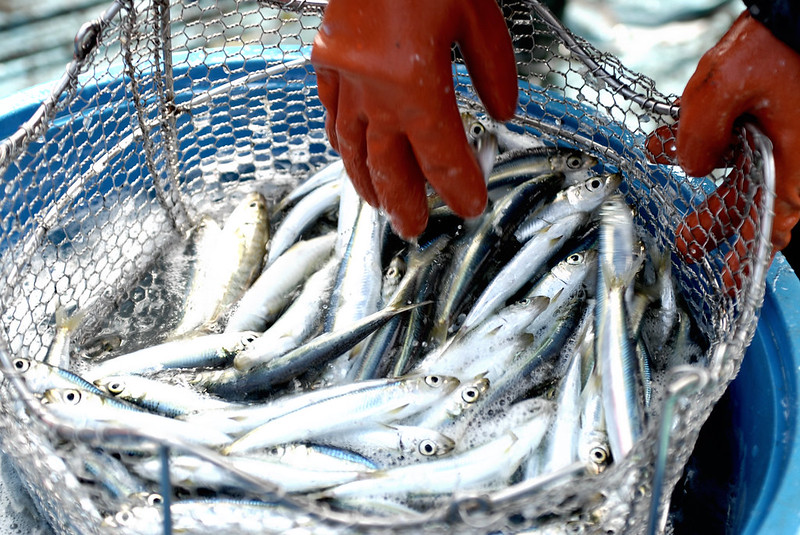
“Give a man a fish, and you feed him for a day. Teach a man to fish, and you feed him for a lifetime.” They illustrate by this proverb the importance of self-sufficiency and education. Instead of providing temporary aid, it advocates for empowering people with the skills they need to support themselves in the long term.
The origins of this proverb are somewhat unclear, and it doesn’t come from a specific story or fable. It is often attributed to various sources, including Chinese, Native American, and Biblical teachings. Though there is no definitive evidence linking it to a particular origin. The concept is more of a universal wisdom that has been expressed in many cultures.
Teach a man to fish – how silly
It would work in a world where we have free will, where are no limits, no history of givin individuals, no statistically-proved correlations that defy this.
IQ, derived talent and creativity
Not everyone has the same cognitive abilities or IQ (g factor). Some individuals may struggle to learn new skills due to cognitive impairments, learning disabilities, or simply because their strengths lie in other areas. For these individuals, the idea of “teaching them to fish” may not be as straightforward as the proverb suggests. People have different talents and aptitudes. Expecting everyone to learn the same skill ignores these individual differences.
Different talents and then what?
Some people may simply not have a natural talent or interest in the skill being taught. Forcing someone to learn a skill they are not inclined towards can be ineffective or even counterproductive. It’s important to recognize and nurture individual talents rather than imposing a one-size-fits-all approach. The world needs a diversity of skills, not just “fishing.” While one person might excel in a practical skill, another might be better in intellectual, artistic, or managerial roles. The proverb oversimplifies the complexity of skill development and employment.
Educational disparities
Not everyone has access to quality education or training. In many parts of the world, educational resources are scarce or unevenly distributed. Without access to good teachers, materials, and learning environments, the opportunity to “learn how to fish” may be severely limited. Even when education is available, it may not be effective. Poor teaching methods, outdated curricula, or an irrelevant education system can fail to equip individuals with the skills they need to succeed. In such cases, the promise of learning a skill like fishing might not lead to the expected lifetime of self-sufficiency.
There is not only lessened physical strenght as you get old, but Performance IQ is also getting lower (therefore even the talents connected to it). You can see the copyrighted image here.
So if someone has an IQ of 120 (both parts equal), he or she must prepare for it to decline by around 5 points every ten years starting at 45 years old (the decline is apparent in the vast majority of cases). Thus, his or her IQ will be 90 when in their 80s. A grandmother can cook the same meals she was used to all her life; however, she cannot learn to cook new ones.
Warren Buffett: “I won the ovarian lottery by being born in the United States.”
The opportunities to apply learned skills like fishing vary widely depending on where a person lives. In some regions, environmental degradation, overfishing, or lack of access to markets can make fishing unsustainable or unprofitable. The proverb assumes a stable and supportive environment, which is not always the case.
In highly unequal societies, even those who learn valuable skills may struggle to escape poverty due to systemic barriers such as lack of access to capital, discrimination, or monopolistic control over resources. Simply teaching someone a skill does not necessarily empower them to overcome these larger structural challenges. Social mobility – the ability to move up the socio-economic ladder – is not equally accessible to everyone. In societies with low social mobility, learning a new skill might not translate into better opportunities or higher income. Structural barriers like class discrimination, nepotism, or lack of social connections can prevent individuals from capitalizing on the skills they have learned, keeping them trapped in poverty despite their efforts.
Motivation, resilience, and mental health
Learning a new skill requires motivation, mental health, and emotional resilience. People facing depression, trauma, or other mental health challenges may find it difficult to learn or apply new skills. The proverb assumes a level of mental well-being that not everyone has. In some cultures or communities, traditional roles or societal expectations may limit an individual’s ability to learn or apply new skills. Social norms, gender roles, or family expectations can influence whether a person is allowed or encouraged to learn something like fishing.
The proverb assumes that the necessary resources – such as fishing equipment, access to fishing grounds, or markets to sell the fish – are available. In reality, many people face logistical challenges that prevent them from fully utilizing the skills they have learned. Learning a new skill takes time, and not everyone has the luxury of time to invest in learning. People who are struggling to meet their immediate needs may not be able to afford the time required to learn a skill that could theoretically sustain them in the long term.
In some areas, the infrastructure required to support sustainable fishing – like cold storage, transport, and markets – may be lacking. Without these, even a skilled fisherman may not be able to make a living. Government policies, legal restrictions, or corruption can also impede the ability of someone to use the skills they’ve learned. For instance, restrictive fishing licenses, monopolies on fishing rights, or political instability can prevent someone from benefiting from their newfound abilities.
Teach a man to fish: Some people cannot reskill
In a rapidly changing world, skills can become obsolete. What might sustain someone today could be irrelevant tomorrow due to technological advancements, shifts in the economy, or environmental changes. Teaching someone to fish is only beneficial as long as fishing remains a viable occupation.
Some people can be also so morally degenerated (we have no free will), so it is impossible to reskill them.
The proverb assumes that the natural environment will continue to support fishing indefinitely. However, overfishing, climate change, and pollution can deplete fish stocks, making it impossible for even the most skilled fisherman to sustain themselves.
The classic example of developing countries
Where a person is born greatly affects their access to opportunities, education, and resources. In some countries, political instability, lack of infrastructure, or environmental challenges might make it impossible to apply even the most well-taught skills. The proverb does not account for the vast differences in opportunity available to individuals based on their country of origin. In many societies, the ability to rise above one’s socio-economic status is limited by systemic inequalities. Even if someone learns valuable skills, they might still be trapped in low-paying jobs or unable to access higher social strata due to factors beyond their control. These are social class, race, or economic background. Without pathways for upward mobility, the skills they acquire may not lead to a better life, making the advice in the proverb somewhat idealistic and incomplete.
And you think academic success lies just in IQ
Multiple factors beyond IQ significantly impact academic success. Math anxiety can paralyze students, leading to poor performance, while learned helplessness, often resulting from repeated failures, can make students give up trying. Domestic violence and a challenging socioeconomic environment contribute to stress and instability, further hindering learning. Motivation is crucial but can be eroded by these negative experiences. Additionally, learning disabilities, health issues, bullying, the quality of education, and parental involvement all play pivotal roles in shaping educational outcomes. The article ultimately argues that success in school is influenced by a complex web of factors, not just intelligence.
I am calling off everything – and something provocative: can we teach a man to fish?
Imagine we would have free will, something absurd to its core. The vast majority of people believe in free will, but they have never read anything, weren’t thinking about it, have cognitive biases, fallacies, formal fallacies, or are religious.
Also, there is cultural influence, moral responsibility, intuition and personal experience, desire for control, social reinforcement, fear of determinism, media influence (stories in books, movies, and other media often depict characters making choices, subtly reinforcing the concept of free will), educational systems (many educational systems implicitly or explicitly teach concepts that align with the belief in free will, such as the idea that effort leads to success), philosophical and religious teachings, psychological comfort (belief in free will can provide psychological comfort by reducing existential anxiety and the fear of randomness or chaos), social and legal expectations (society and legal systems are built on the assumption that people have free will, and so people conform to this belief to fit into societal norms). And the final one? It is unbelievable we have no free will, as our prehistoric instincts tell us otherwise.
As we have free will, everybody can be Einstein, Musk, or Bill Gates
No limits to IQ (you woke up and choice your IQ as 190), and have any talents found on the extreme of extreme of the normal distribution. Creativity has no limits.
Complete control of emotions, the process of learning at the fastest pace, unlimited empathy, perfect memory, and just free will.
If I omit those aforementioned where they are partly thanks to connections, you could wake up in the morning and be just like them.
But if people really believe in this, the saying may be right. We, however, have no free will – maybe only in fairy tales.
Conclusion: Teach a man to fish – or rather not
“Give a man a fish, and you feed him for a day. Teach a man to fish, and you feed him for a lifetime.”
In conclusion, it serves as a noble ideal promoting self-sufficiency and empowerment through skill acquisition.
However, this perspective can be overly simplistic and fails to account for the complex realities of human life.
Factors such as cognitive abilities, innate talents, educational disparities, socio-economic barriers, and environmental conditions all significantly impact an individual’s ability to truly benefit from learned skills. We have no free will and equal opportunity overlooks the deep-seated inequalities and challenges that many face, making the proverb enormously less universally applicable than it might initially appear. In reality, not everyone can equally capitalize on new skills due to these diverse and often insurmountable obstacles.
Leave a Reply