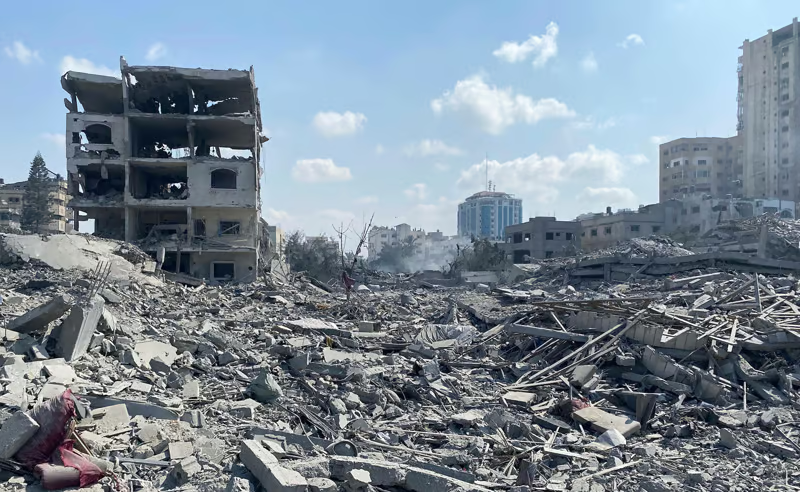
It is ironic. Nazi Germany had tried to hide, camouflage and then destroy the evidence of their extremely massive genocide. Since the Jews were the main target, it cannot be more ironic than 80 years after World War II ended, Israelis (not all Jews) are practicing this, but in an open manner. So the question is, how did hidden and open genocides look in the past?
The Nazi machine never revealed to ordinary Germans (or the world) what was happening, meanwhile some Israelis used binoculars to see destruction of Gaza live. They make trips to places where immense human suffering is occurring. As a genocide, it is a disgusting form of dark tourism.
Cognitive biases, fallacies and formal fallacies
This document, while possessing many truths and pinpoints the key message, is somehow biased.
Hasty generalization occurs when someone draws a broad conclusion based on insufficient or unrepresentative data. Sampling bias happens when the selected sample does not accurately represent the whole population, leading to incorrect generalizations.
So yes, tons of Israelis make trips to the affected areas and feed their insatiable evil appetite. But others don’t. The young lady saying that she would like to kill all of them doesn’t represent the opinion of all Israelis.
Not all Jews are Israelis and not every Israeli is a Jew. Not all Jews are Israelis, make such trips, or agree with the genocide.
Don’t forget there are also anti-Zionist Jews. By the way, I am a Zionist (being anti-Zionism is a form of anti-Semitism because you would destroy a functional state) and a proponent of the two-state solution.
The world is brainwashed by Jewish-clintelism groups
The issue is the majority of the world really thinks Israel is just defending itself (because Jewish groups have enormous influence over media). Hundreds of thousands of civilian deaths are really imminent dangers to Israel.
Jewish clientelism often likes to show its power. But in such a case? The Jewish-clintelism (yes, in the same way as the Catholic, Evangelical clintelism) powerful persons are intelligent. And intelligent should lead us to more humane views. I know they try to make Great Israel, but doing this? While Netanyahu is just a puppet (even really powerful), his masters must be really evil. Don’t forget that the Israeli lobby in the US uses American power to destabilize Middle Eastern countries so they cannot compete with Israel.
In order to prove I am not an anti-semite, I deeply despise Christians American super-rich families who deprive normal Americans in need of decent life.
So am I really an anti-Semite? The products of Anglo-Saxons
The super-rich in the US do not want normal Americans to have access to healthcare because a privatized system keeps profits flowing. Universal coverage would hurt insurers and Big Pharma, while medical debt keeps people vulnerable and compliant. Prison reform is equally unwelcome, as mass incarceration fuels private profits and provides cheap labor. Rather than addressing real mental health crises, corporations push overmedication on the healthy while neglecting those truly in need—because every crisis is a business opportunity.
Education remains a tool of control. Burdensome student debt ensures economic dependence, while a weakened labor movement keeps wages low and workers divided. Affordable housing is deliberately unattainable, benefiting real estate speculators and trapping millions in financial instability. Political reform is impossible under a system where dark money and lobbying dictate policy, ensuring that power never shifts. Every law, every loophole, and every crisis is engineered for profit.
Financial independence would threaten the elite’s grip. Instead, consumer debt, wage suppression, and car dependency lock people into perpetual servitude. Public transportation remains underfunded, as oil companies and automakers profit from the status quo. Corporate monopolies thrive without antitrust enforcement, while media consolidation guarantees that narratives remain in elite hands. Every distraction, from propaganda to social division, serves their financial interests.
Taxation follows the same pattern. The wealthy exploit loopholes while the working class shoulders the burden. Environmental protections face resistance because accountability would hurt corporate profits. The rich do not fear instability—it keeps the public distracted and easy to manipulate. The problems persist not because they are unsolvable, but because solving them would mean less profit and less control.
Nazis actually hid their actrocities
The Nazis hid their genocide through deception, destruction of evidence, and systematic elimination of witnesses. Their methods evolved as the war progressed, ensuring mass murder remained obscured from both the German public and the international community. Language was their first tool of deception. The “Final Solution” was a bureaucratic term masking extermination, while “resettlement” implied relocation rather than death. Deportation orders, transport lists, and internal communications rarely used direct terms for killing. Instead, phrases like “special treatment” (Sonderbehandlung) and “evacuation” made genocide sound like administrative policy.
Extermination camps were built to deceive. Treblinka, Sobibor, and Belzec, part of Operation Reinhard, were designed to resemble transit stations. Fake railway platforms, posted schedules, and signs misled victims into believing they were being relocated. New arrivals were stripped of their belongings, often receiving receipts for confiscated property to maintain the illusion of resettlement. At the last moment, many were told they would undergo disinfection, leading them calmly into gas chambers disguised as shower facilities.
Secrecy ensured that few understood the full scale of genocide. The system was compartmentalized—guards, train operators, and bureaucrats handled isolated tasks, never seeing the entire process. Even SS officers overseeing extermination knew only their assigned role. Orders were spoken or written in coded language, reducing the risk of documentation. Those who did know too much were often eliminated. Sonderkommando prisoners, forced to remove bodies from gas chambers and burn corpses, were regularly executed to silence witnesses. In occupied territories, locals who saw mass shootings or mass graves were murdered.
Unlike Israelis, they tried to destroy the evidence
As the Soviet Red Army advanced in 1943, the Nazis began covering their tracks. Operation Reinhard had already exterminated 1.7 million Jews, and camps were dismantled to remove evidence. Mass graves were dug up, corpses burned, and remains crushed into dust. Sonderkommando 1005, led by SS officer Paul Blobel, exhumed and incinerated bodies across Poland, Ukraine, and the Baltic states. Ashes were dumped in rivers, scattered in forests, or mixed into fields. Treblinka and Sobibor were destroyed, their sites plowed over and disguised as farms.
Even the international community was deceived. When reports of genocide leaked out, the Nazis orchestrated propaganda campaigns to discredit them. Theresienstadt was turned into a Potemkin village to fool the Red Cross. In 1944, an inspection tour was staged, featuring well-fed prisoners, cultural events, and neatly arranged living quarters. A propaganda film, later known as “The Führer Gives the Jews a City,” presented the ghetto as a self-sufficient Jewish settlement, masking the reality of disease, starvation, and deportations to Auschwitz.
In the final months of the war, the Nazis accelerated their destruction of evidence. Gas chambers at Auschwitz were dynamited, Majdanek was set on fire, and thousands of documents were burned. The SS executed thousands of remaining camp prisoners, forcing others on death marches to prevent their liberation by Allied forces. Witnesses were silenced, but the effort came too late. The Red Army discovered intact gas chambers at Majdanek and Auschwitz before they could be fully destroyed. Documents were recovered, and surviving prisoners testified to what had taken place.
Like Netanyahu, just following orders
Even after the war, denial remained part of the cover-up. Heinrich Himmler privately acknowledged the Holocaust in a 1943 speech, praising the SS for “remaining decent” despite carrying out mass extermination. But in public, Nazis claimed ignorance. At the Nuremberg Trials, high-ranking officials insisted they were “just following orders” or unaware of the true extent of the killings. Others fled. Ratlines, escape networks supported by sympathizers, smuggled SS officers and Nazi war criminals to South America and the Middle East. Many lived undisturbed for decades, protected by new identities and friendly regimes.
Despite all these efforts, the cover-up failed. Liberated camps, mass graves, Nazi documents, and survivor testimonies exposed the Holocaust. The Nazis had tried to erase history, but their crimes were too massive to disappear.
Here are some other genocides that were deliberately hidden or denied:
- Armenian genocide (1915-1917) – The Ottoman Empire systematically exterminated 1.5 million Armenians. The government denied it, destroyed records, and manipulated historical narratives. Turkey continues to reject it as genocide.
- Holodomor (1932-1933) – Stalin’s Soviet Union engineered a famine in Ukraine, killing millions. The USSR suppressed information, censored foreign journalists, and eliminated witnesses. Official records downplayed or denied the famine’s existence.
- Nanking massacre (1937-1938) – Imperial Japan slaughtered up to 300,000 Chinese civilians. The government destroyed evidence, banned survivors from speaking, and later revised history books to downplay the atrocities.
- Cambodian genocide (1975-1979) – The Khmer Rouge killed nearly two million people. The regime executed those who could testify, buried victims in mass graves, and concealed the scale of the killing fields. Even after their fall, many denied it.
- Rwandan genocide (1994) – Hutu extremists murdered 800,000 Tutsis in 100 days. The perpetrators hid bodies, spread propaganda denying the killings, and claimed it was a civil war rather than genocide.
- Bosnian genocide (1992-1995) – Serbian forces massacred Bosniaks, including 8,000 men and boys in Srebrenica. Leaders denied the genocide, destroyed evidence, and dismissed international findings as political attacks.
- Darfur genocide (2003-present) – Sudan’s government-backed militias killed and displaced millions. The regime downplayed the crisis, blocked investigators, and refused to acknowledge the killings as genocide.
- Uyghur genocide (ongoing) – China’s persecution of Uyghurs includes mass internment, forced sterilization, and cultural erasure. The government censors information, suppresses leaks, and frames re-education camps as anti-terror efforts.
- The Ethiopian Tigray War (2020–2022) – Ethiopian and Eritrean forces, along with local militias, carried out mass killings of Tigrayans. Military officials and political leaders openly encouraged the massacres, and some soldiers filmed themselves committing atrocities. Social media posts from officials called for the extermination of Tigrayans, framing it as a patriotic duty.
- The Darfur Genocide (2003–present) – The Sudanese government-backed Janjaweed militias carried out mass killings of non-Arab ethnic groups in Darfur. Sudanese officials justified the attacks, and militia leaders openly celebrated the destruction of entire villages. Some fighters recorded themselves bragging about rapes and killings, seeing it as their right to dominate over their victims.
- The Cambodian Genocide (1975–1979) – The Khmer Rouge, under Pol Pot, openly bragged about eliminating enemies of the revolution. They described the killings as “cleansing society” and regularly executed people in public. Slogans such as “To keep you is no benefit, to destroy you is no loss” reflected their complete lack of secrecy. Some Khmer Rouge commanders kept records and photographs of executions, treating them as achievements.
Genocides as something to be bragged about?
- The Bangladesh Liberation War Genocide (1971) – The Pakistani military launched Operation Searchlight, aiming to exterminate Bengali intellectuals, students, and activists. The government openly justified the killings as necessary to preserve Pakistan’s unity. Military leaders boasted about their campaign, and propaganda framed the mass slaughter as a necessary crackdown against “traitors.”
- The Indonesian Anti-Communist Purge (1965–1966) – The Indonesian government, under General Suharto, orchestrated the mass slaughter of suspected communists. Estimates suggest 500,000 to over a million people were killed. Government officials and military officers publicly encouraged and later celebrated the killings. Militias filmed themselves executing prisoners, and newspapers published triumphant reports of mass murders. Even decades later, some of those involved still openly speak of the killings with pride, as seen in the documentary The Act of Killing (2012).
Russian imperial ambitions
- The Russian Conquest of the Caucasus (19th century) – The Russian Empire carried out systematic ethnic cleansing of Circassians, Chechens, and other indigenous peoples. Russian generals documented their massacres with pride, often framing them as victories against “barbarian” tribes. The Circassian genocide (1860s) resulted in mass killings and forced deportations to the Ottoman Empire. Survivors were either enslaved or left to die in the Black Sea.
- The Zulu Mfecane (1815–1840s) – Under Shaka Zulu, the Zulu Kingdom waged a brutal campaign known as the Mfecane (“The Crushing”). Entire ethnic groups were wiped out, and surviving captives were often absorbed into Zulu society through violent assimilation. Shaka’s generals openly boasted of massacres, and Zulu oral traditions still recount how enemy clans were “trampled like grass beneath the feet of the great elephant.”
- The Massacre of the Tasmanian Aboriginals (19th century) – British colonizers in Tasmania openly bragged about hunting down and exterminating indigenous Tasmanians. The “Black War” (1828–1832) was a deliberate genocide, with bounty hunters, militias, and settlers openly competing to wipe out the native population. Some even collected skulls and body parts as trophies, and newspapers celebrated the destruction of entire tribes.
Roman genocide
- The Roman Destruction of Carthage (146 BCE) – After the Third Punic War, the Roman Republic utterly destroyed Carthage. Roman generals, particularly Scipio Aemilianus, openly boasted about the extermination of Carthaginians. Historians recorded that 50,000 survivors were enslaved, the city was razed, and the land was allegedly salted to prevent future habitation. Romans viewed this as a triumph, celebrating it in poetry, speeches, and military parades.
- The Rohingya Genocide (2017–present) – Myanmar’s military and nationalist groups openly called for the cleansing of Rohingya Muslims. Government officials and Buddhist extremists spread propaganda claiming that Rohingya were invaders who needed to be removed. Massacres were carried out in full public view, with soldiers and mobs filming and sharing videos of the killings.
Other genocides
- The Mongol Conquests (13th–14th century) – The Mongols, under Genghis Khan and his successors, openly bragged about annihilating entire cities. Chroniclers recorded massacres where millions were slaughtered, and Mongol leaders sent messages boasting of the destruction of civilizations like Khwarezmia, Baghdad, and Nishapur. Some accounts describe Mongol envoys demanding submission with the warning: “If you resist, we will kill every man, woman, and child.”
- The Yazidi Genocide (2014–2017) – ISIS openly celebrated the extermination and enslavement of Yazidis. Propaganda videos showed executions, and ISIS leaders published articles justifying the rape and sale of Yazidi women as “a divine right.” Fighters bragged about their crimes in official ISIS media, with no attempt to conceal their actions.
- The Haitian Genocide (1804) – After Haiti’s successful slave revolt, Jean-Jacques Dessalines ordered the systematic extermination of the remaining white population. French men, women, and children were hunted down, and the killings were carried out in public. Dessalines and his generals openly declared that no white man would remain on Haitian soil, taking pride in the complete elimination of the French ruling class.
- The Conquest of the Americas (1492–1800s) – Spanish, Portuguese, British, and later American settlers openly took pride in exterminating indigenous peoples. Christopher Columbus wrote to the Spanish Crown about how easily natives could be subjugated or eliminated. The United States, under policies like “Manifest Destiny,” justified the mass killing and forced removal of Native Americans. Andrew Jackson publicly called for their eradication, and General Philip Sheridan famously declared: “The only good Indian is a dead Indian.”
Statistics of Israeli population approval of genocide
Statistics that make you puke:
- October 2023: Following the October 7 attacks, a Maariv poll on October 19 indicated that 65% of Israelis supported a ground invasion of Gaza, while 21% opposed it. However, by October 25-26, support for an immediate large-scale ground offensive had decreased to 29%, possibly influenced by concerns over hostages held by Hamas.
- December 2023: A survey by the Israel Democracy Institute found that 87% of Jewish Israelis supported the ongoing war in Gaza. Additionally, 75% opposed the U.S. administration’s calls to reduce heavy bombing in densely populated areas.
- January 2024: A poll conducted by Tel Aviv University revealed that 51% of Israeli Jews believed the Israel Defense Forces (IDF) were using an appropriate amount of force in Gaza, while 43% felt the IDF was not using enough force.
Truly disgusting
- February 2024: An Israel Democracy Institute poll found that 51% of Israelis believed the main goal of the war should be returning the hostages, while 36% believed it should be toppling Hamas.
- May 2024: According to a Pew Research Center survey, 39% of Israelis felt the military response against Hamas in Gaza had been appropriate, 34% believed it had not gone far enough, and 19% thought it had gone too far. Among Israeli Arabs, 74% felt the response had gone too far, compared to only 4% of Israeli Jews.
- December 2024: A Maariv poll indicated that 67% of Israelis supported a ceasefire in exchange for the return of hostages held by Hamas.
- January 2025: On January 1, relatives of Gaza hostages organized protests, blocking major highways and demanding a ceasefire and hostage deal, reflecting public pressure on the government to prioritize negotiations over continued military action.
- February 2025: A report by the RAND Corporation noted that a large majority of Israelis preferred pursuing a second phase of the hostage deal with Hamas over resuming the war, indicating a public inclination towards negotiation and de-escalation.
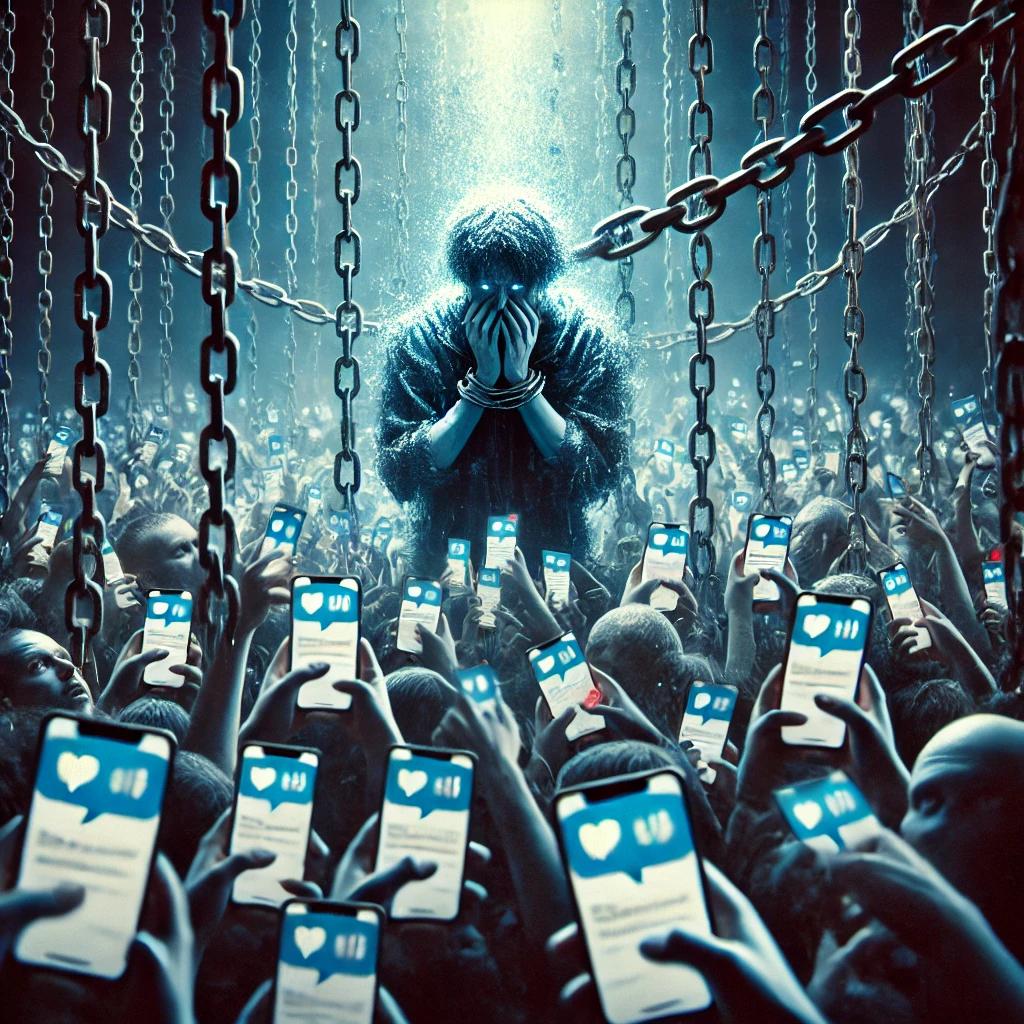
On Facebook, X, and other social media platforms, the divide between pro-Israelis and pro-Palestinians has become an all-consuming war of narratives, with both sides growing increasingly partisan and unable to find common ground. Instead of fostering meaningful discussions, these platforms amplify division, reinforcing tribalism through cognitive biases, emotional reasoning, and logical fallacies. The digital battlefield does not reward truth, empathy, or understanding—it rewards outrage, cruelty, and the most extreme voices. Instead of engaging with nuanced perspectives, people dehumanize the other side, celebrating suffering and justifying atrocities as necessary or deserved.
If cognitive biases, fallacies, and formal fallacies did not dominate these discussions, there would be no ongoing feud—at least not in the way it manifests today. As I explored in my article, much of the conflict is not just driven by history or territorial disputes but by how people process information and justify their beliefs. Instead of rational debate, both sides fall into predictable patterns of flawed logic that perpetuate division.
Confirmation bias ensures that people only seek out information that supports their existing views, rejecting anything that challenges them. Motivated reasoning allows them to twist facts into whatever best serves their side. Straw man arguments dominate discussions, reducing the opposing side’s stance to an easily attackable caricature rather than engaging with its true complexities. False dichotomies turn the conflict into an absolute battle of good versus evil, erasing nuance, shared suffering, and historical context.
Pro-Israeli and pro-Palestinian: Unbeliveable cruelty
But worst of all, people are not just biased—they are cruel. Social media reveals the darkest corners of human nature, where people revel in the suffering of their enemies. Entire accounts are dedicated to mocking dead civilians, cheering on bombings, and justifying violence in ways that strip the victims of their humanity. This is not just political bias; it is a descent into collective sadism, where suffering is seen not as a tragedy but as a form of justice. Anyone who expresses even the slightest sympathy for the other side is branded a traitor, an apologist, or worse, an enemy. The cruelty is not incidental—it is the point.
Social media algorithms exacerbate this, pushing the most inflammatory, aggressive content to the forefront. Echo chambers form, reinforcing biases and deepening hatred. What could have been platforms for education and critical thinking have instead become tools for radicalization. The cycle of violence, both online and in reality, continues to feed itself, as people become more entrenched in their hostility, unwilling to acknowledge even an ounce of legitimacy in the suffering of the other side.
As the article explains, the real enemy is not just the other side—it is the deeply flawed thinking and the cruelty that fuels this endless war. If people could recognize and overcome these biases, they would see that their fears, suffering, and desires are often more similar than different. Without these mental traps and this widespread dehumanization, the cycle of hatred and retribution would lose its fuel. But as long as people continue to indulge in blind partisanship and revel in cruelty, the conflict will not only persist—it will worsen. The problem is not just the war on the ground. It is the war in people’s minds.
Ronald Reagan and Israeli-conducted Holocaust
In August 1982, during the Lebanon War, President Ronald Reagan expressed strong disapproval of Israel’s extensive bombing of West Beirut. In a phone call with Israeli Prime Minister Menachem Begin, Reagan deliberately used the term “holocaust” to emphasize the severity of the situation, highlighting that the symbol of the war was becoming the image of a seven-month-old baby with its arms blown off.
This incident is documented in Reagan’s diary entry from August 12, 1982, where he noted his anger over the prolonged bombardment and its impact on civilians. He warned Begin that such actions could jeopardize the future relationship between the United States and Israel.
Reagan’s use of the word “holocaust” in this context underscores the gravity with which he viewed the humanitarian crisis resulting from the conflict.
My messages to Israelis from humanistic standpoint
While it is not normal to murder a baby, a husband, a wife, an elderly person, or to maim someone, nor is it acceptable to commit serial murder, it is equally unacceptable to carry out genocide that results in the deaths of hundreds of thousands. The scale of atrocity does not justify itself through individual crimes, and responding to brutality with mass extermination does not make it right. Moral standards do not shift based on numbers; just as killing one innocent person is abhorrent, killing entire populations cannot be excused under any rationale.
The author believes any form of violence is insupportable, any form of terrorism from either side and hate have no place in a civilized world. There is no place for tribalism (us/them).
Leave a Reply