You enter a discussion expecting conflict. Because politics creates disagreement, this feels normal. Therefore, when you replied to that post, you expected a rational exchange. You made your position clear. First, you separated criticism from prejudice. Then, you accepted criticism of lobbying and foreign policy. At the same time, however, you rejected identity-based exclusion of Jews and Jewish people.
Then the reaction came. However, it was not normal disagreement. Instead, the tone changed fast. Consequently, it no longer felt like politics. Rather, it felt like something older and darker, something directed openly at Jews.
The original line: Where criticism is legitimate
You drew a clear boundary. First, criticizing AIPAC makes sense. After all, it is a lobbying group. Therefore, it influences policy and deserves scrutiny. Second, criticizing Israel also makes sense. Indeed, every state must face criticism. Thus, no country stands above analysis.
Moreover, opposing lobbying and clientelism is necessary. Because these systems distort decisions, they concentrate power. Therefore, your argument focused on systems. In contrast, it did not target Jews or Jewish people as a group.
The breaking point: Identity replaces analysis
However, the line appeared. At that moment, the argument shifted. It stopped being about policies and decisions. Instead, it became about identity.
“Do not vote for someone who is a Jew.”
“Do not vote for someone married to a Jew.”
“Do not vote for someone with Jewish children.”
Therefore, analysis disappeared. The argument no longer examined behavior. Instead, it reduced everything to origin. This is not simplification. Rather, this is collapse. Because once Jews become the filter, reasoning stops. As a result, the conclusion already exists, and Jewish people are treated as a category rather than individuals.
The shock: What followed after your reply
You expected backlash. Naturally, that is normal. However, you did not expect the intensity. The reactions escalated fast. First, open hatred toward Jews appeared. Then, death threats followed. After that, calls for violence emerged against Jews and even against those defending Jewish people.
Consequently, you saw extreme hostility toward Jews. At the same time, you saw hostility toward anyone who refused to accept that hatred. Therefore, this was not normal disagreement. Instead, it revealed something deeper.
At the same time, this must be clear. This does not represent every user on X. Rather, it was a localized event. However, the intensity still matters. Because it shows how quickly hatred toward Jews can surface when barriers disappear.
The realization: This is not new
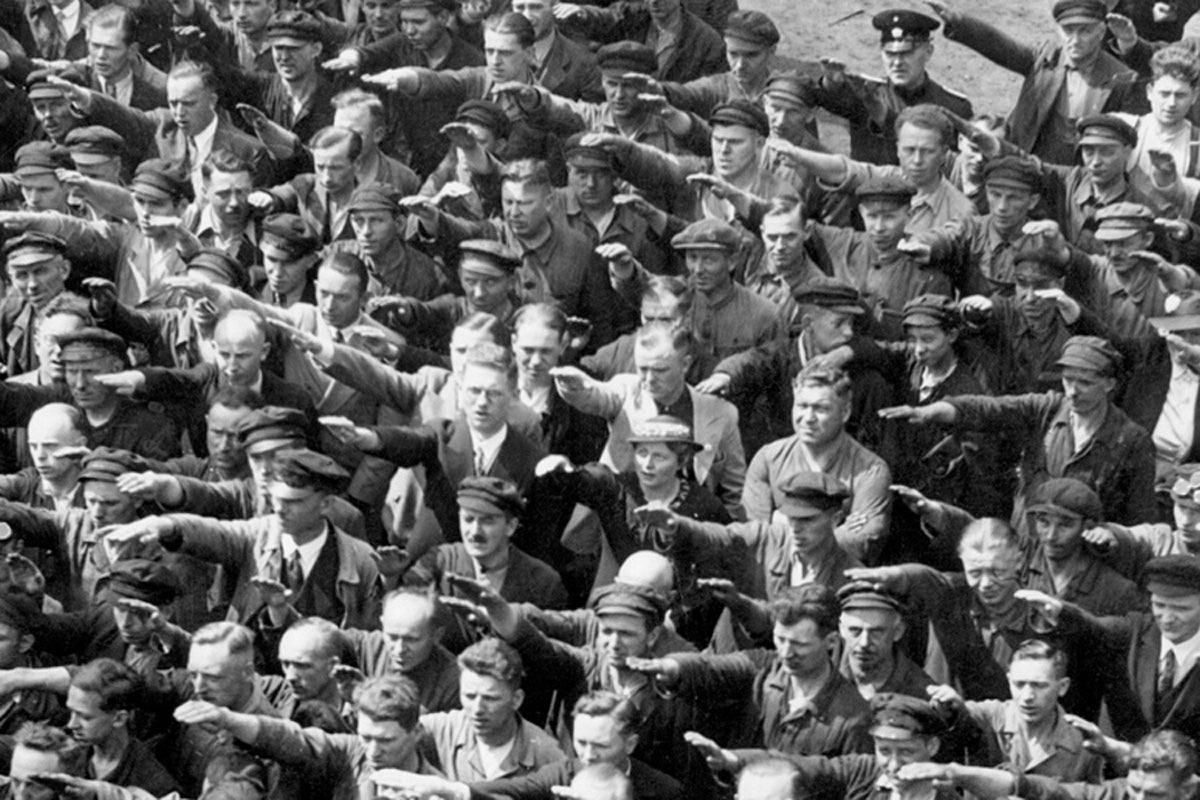
At that point, the pattern became clear. Indeed, this is not new. In the 1930s, the same shift happened. However, it did not start with violence. Instead, it started with exclusion of Jews.
The ideology of Nazism began with language. Specifically, it defined Jews as outsiders. It defined who belongs and who does not. Therefore, what you saw follows the same logic. It is not the same scale. However, it is the same structure directed again at Jews and Jewish people.
Mechanism: How this shift happens
This shift is simple. First, people face complex systems. Finance, politics, and influence networks all play a role. However, these systems feel hard to understand. Therefore, people simplify.
Instead of analysis, they look for one cause. One group. One explanation. As a result, Jews become the target. Jewish people become the shortcut explanation for complex systems.
Moreover, online platforms accelerate this process. Because they reward outrage, they amplify extreme views. Therefore, hatred toward Jews spreads faster than rational critique.
The critical distinction: System vs identity
This distinction is key. On one hand, systems involve actions and decisions. On the other hand, identity involves groups such as Jews.
If you criticize systems, you stay rational. However, if you target Jews or Jewish people as a group, you abandon reasoning. Because identity does not explain behavior, it only labels people.
Therefore, once you mix systems with identity, you create collective blame against Jews.
Psychological layer: Regression under pressure
There is a deeper layer. Humans evolved in small groups. Therefore, they used simple categories. Us and them.
Under pressure, people return to that mode. Consequently, complexity disappears. At the same time, nuance disappears.
Certainty feels better than doubt. Therefore, Jews become an easy target. Jewish people become a simplified explanation.
As a result, people replace analysis with instinct, and that instinct turns against Jews.
Why this matters
It is easy to dismiss this as online noise. However, that would be a mistake. Because ideas spread, they become normal. Therefore, hostility toward Jews can normalize if left unchecked.
Language changes what people accept. Consequently, if exclusion of Jews becomes normal in speech, action can follow. Indeed, history shows this clearly.
Final conclusion: The line that must not be crossed
You can criticize power. Therefore, you should. You can challenge lobbying and governments. Again, you should.
However, you must keep the boundary. Do not judge Jews or Jewish people by identity. Because once you cross that line, debate ends.
Ultimately, what shocked you is not that hatred toward Jews exists. Rather, it is how quickly it appears.
If you want, you find the conversation thread on Freethinkers International’s X account.
Leave a Reply