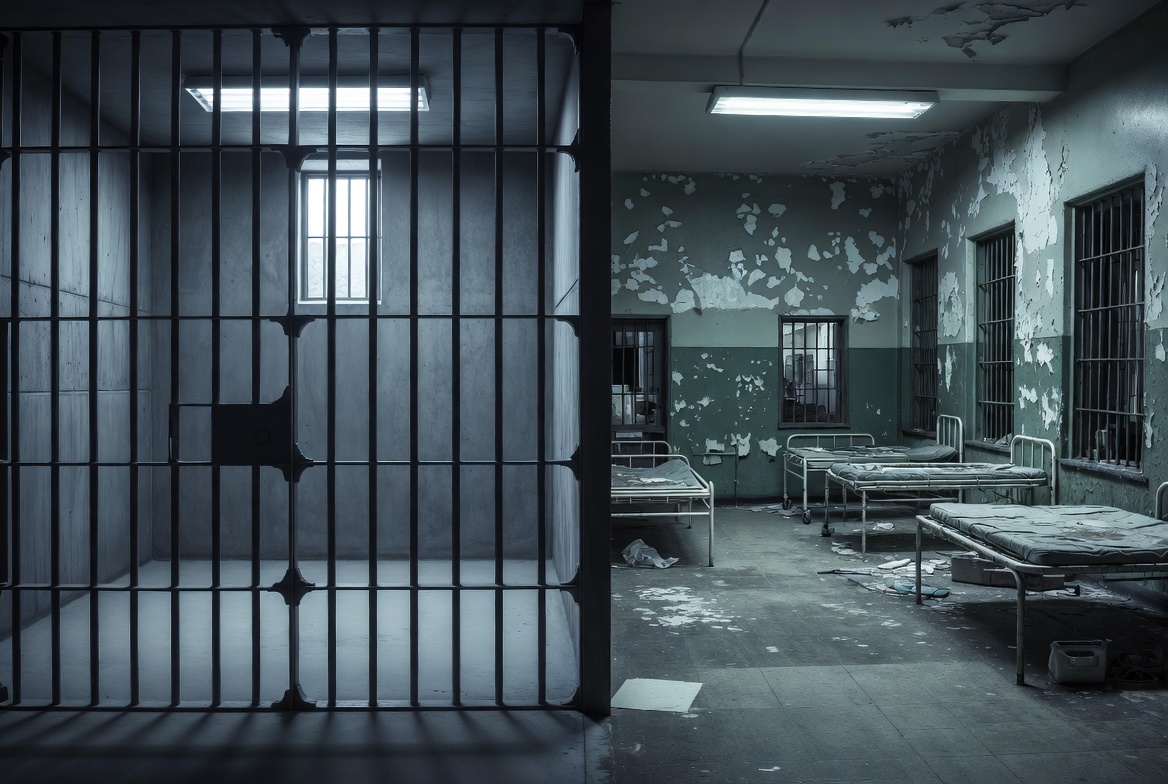
I deliberately withhold the name of the hospital and the identities of the people I write about. This text records my own experience and events as I perceived them during my hospitalization and as I remember them. I reproduce direct speech from memory; it is not taken from the medical records. My purpose is not to attack anyone personally but to describe my own experience of psychiatric care as accurately as possible.
One would think medical providers are compassionate professionals who, at the very least, act professionally toward their patients and each other. Unfortunately, I found that the reality can be very different. Not to say that physicians and nurses are not human beings like the rest of us, and may suffer uncertainty, anxiety, anger, and sadness – all of which can present themselves as rudeness.
However, that is precisely why professional standards exist. A healthcare professional should be able to manage their own emotions even in stressful situations and not take them out on a patient. This is not an ordinary job. People’s health, and sometimes even their lives, may be in their hands.
That was not the case with a certain hospital (or should I say jail) that I voluntarily admitted myself into because of a depressive decompensation. Why? For a few reasons of mine based on my experience that would be relayed in this critique
This hospital “cured” my well-documented OCD, atypical autism, and a personality disorder. Of course, I am being ironic. None of these can simply be “cured” in this way. I told one wheelchair user: “Go there and they will make you walk again.” I would also like to note that I am a highly anxious individual with severe atypical autism. So I voluntarily admitted myself to this certain hospital. My experience? Keep reading.
1) Inadequacies in patient’s safety and care
First, “do no harm.” The famous injunction from the Hippocratic Oath applies equally to mental health organizations as it does to individual doctors. When individuals enter a healthcare center anywhere in the globe, they expect excellent and courteous care. Unfortunately, it seemed this certain hospital does not portray such ideologies.
Exhibit A
I saw a patient in the mental facility bend over, take a rolled paper, and snort an unknown substance. In my experience, drug use was rampant in the hospital despite being reassured by the senior doctor that there was no way of obtaining drugs there. In my experience, patient safety was neglected to such an extent that, on one occasion, I had to call a nurse to a patient who was unresponsive to external stimuli after taking a drug. This patient later told me that I had saved his life by doing so.
I told this to another nurse; she didn’t reply at all.
So much for safety and care.
Exhibit B
During my stay, I was put together with a drug addict. He was from the drug addicts department, and most patients were scared of him, but they put him in my department. “The Czech prime minister is going to hang, the Slovakian prime minister is going to hang, Putin is going to hang!”
“Aren’t you scared I will kill you in your sleep?” he asked. “No, I am not,” I replied. In reality, I knew he had few moral inhibitions, but I also thought he would not risk ending up in jail.
A nurse came and whispered: “Well, some of our former clients told us: Those who have been both in this mental hospital and in jail know that this is worse than jail.” One would have thought they were going to deny it or marginalize it. They did no such thing.
During most of my stay, I slept only around four hours a night. I informed a peer consultant about my sleep problems, with the understanding that she would pass the information on. However, the lack of sleep continued to place a significant strain on me during my stay.
Exhibit C
“You gotta be f***ing kidding me. Two out of four people piss into a male urinal bottle,” a nurse said. “F***ing animal, he was only here for such a short time and has already left such a mess.” One person said to nurses: “So am I going to start taking hard drugs?” “What? You want to integrate?!”
I used to vomit every morning because of my poor mental state. There were three toilets in my department, only one possessing a toilet seat. I told the nurse about my vomiting. “Well, I would have to see that for myself first,” she responded.
Consequently, I didn’t eat breakfast. “Bryxí, you’ve got your breakfast here.” Then she started screaming yet again: “Ain’t you gonna eat it?!” I told one person: “Look, man, you are gonna get it, I am not gonna eat, I have been vomiting.”
What more can a healthcare center provide? What else is it intended to be, if not a place where health specialists are to provide safe treatment, observe due protocols and maintain excellent sanitary standards? Hospitals and other medical institutions (mental health or not) that do not have proper safety procedures in place are putting the people in their care in great danger of harm or even death. And they can be sued for the harm they cause in medical malpractice actions.
No! It is not jail. It is a mental healthcare facility.
2) Communication failures
Good communication is the beginning of good healthcare. Safe, efficient, and trusted conveyance of information is essential during every patient visit, procedure, and handoff between caregivers. Poor communication can have serious effects on patients1. However, we observe that healthcare professionals operate in complicated, high-stress, high-danger circumstances where they often have to think on their feet to save lives. We know human error can never be eradicated. But this doesn’t take away the fact that miscommunication between health care personnel (such as during patient handoffs or transitions of care) can lead to medical mistakes, misdiagnosis, and inappropriate treatment.
And that is exactly what happened when I stayed in this certain psychiatric hospital.
Exhibit D
“What the hell do you want again?!” a nurse started screaming at me when I came to the nurses’ room for the first time of the day. “Well, an anti-psychotic,” I responded. “So, something against anxiety,” she replied.
Then it came again: “Why are you wearing pajamas?” I responded: “So give me my belt.” Such an absurd question to ask, knowing my belt was taken away at my admittance.
There was a roommate in my department who seemed really normal. I guess some businessman. “Just tell him flat-out you are hearing voices! Go ahead and tell him! There is no reason for you not to do it! I have told you: Tell him!” the voice urged me.
The voice started commanding me after a while: “Don’t you ever tell him. Don’t tell him. What is he going to think? That you are a real nut. Whom he is sharing a room with?!”
I was already stressed and confused. All I wanted was my medication, but it seemed difficult to communicate with the nurse.
“And what did you do to prevent the anxiety? Were you present at the canine-assisted therapy?!” She said. Laying more emphasis on anxiety diagnosis instead of psychosis.
Exhibit E
Research shows that patients who comprehend their diagnosis and treatment choices are more likely to adhere to medical advice and their health regimens.2 My former psychiatrist recorded: “Persistent psychotic phenomena in the form of command auditory hallucinations…” So I understood what was going on with me.
I was later able to tell this diagnosis to my newly assigned doctor. “No, you don’t have such a diagnosis; I am not going to prescribe you any medicine. When you are psychotic, I am going to prescribe you an antipsychotic,” she said. In other words, I’ll have to see for myself, just as the nurse said when I was vomiting.
During a ward round, someone (though not my attending doctor) said to me in a raised voice: “You should see what psychosis looks like!” I replied: “And, ma’am, when it screams at you to jump into river X, what do you call that?” I received no answer.
Diagnostic mistakes are failures due to miscommunication in establishing an accurate and timely explanation of a patient’s health problem. These mistakes may be giving the wrong medicine, the right medicine but in the wrong dose, or to the wrong patient. Such mistakes can occur during writing the prescription, transcribing the prescription, dispensing the prescription, or administering the medication.
They cut the most of my heavy-dose medicines in just 14 days.
Then something happened that should not have happened and had never happened to me before. Here I rely solely on the medical records, because I remember nothing from a period of approximately two days. It should be noted that the individual reports sometimes differ:
“… the first in the phase of a generalized seizure (unconsciousness, convulsions of the limbs) after falling from a bed in the psychiatric hospital… another manifested with focal onset in the left side of the face and early generalization after transfer to the emergency department… then a generalized tonic-clonic seizure… it cannot be ruled out that the seizure occurred only after the fall – contusion (bruising of the brain), concussion? … A total of 3 seizures were documented in city X, one GTCS (generalized tonic-clonic epileptic seizure with loss of consciousness, stiffening of the body, and bilateral convulsions), the second FBTC (focal epileptic seizure evolving into a bilateral tonic-clonic seizure with loss of consciousness, stiffening of the body, and convulsions), the type of the third seizure could not be determined …”
Diagnostic summary (from an outpatient neurology follow-up):
Compression fractures of all thoracic vertebrae – vs. in connection with the seizure in X/2026.
Onset associated with the withdrawal of psychiatric medication
I also sustained a facial injury, specifically an injury to my nose. After transfer to the emergency department, I underwent an emergency brain CT scan and was also given intravenous Apaurin.
Luckily, I didn’t damage my spinal cord. I “only” have compression fractures of all thoracic vertebrae. I faced the possibility of surgery, wore a brace, am in pain, cannot walk long distances, and often have to rest.
The discharge report then records “a history of heart failure with reduced EF, arrhythmia on BB.” English Wikipedia states: a 35% risk of death in the first year3. That is frightening. So I began trying to find out what had happened. A doctor in neurology assured me that it had not been acute failure and that I need not worry, but it appeared throughout the reports, so he was simply copying it. A very long search for what had happened followed. You could say I was passed around like a hot potato. “So I shouldn’t be taking this medication for it, or this one either. To hell with it, let me just drop dead!” After a long time, in response to my request, a doctor from the psychiatric hospital informed me that it had been an error when entering the diagnosis. For the first time, someone apologized to me for something. Waiting so long was hell.
I won’t even describe the amnesia I had after this; this critique is primarily about the mental hospital and partly about subsequent events. Subjectively, I have had far greater memory difficulties since my stay.
Miscommunication in patient handoff is estimated to cause 80% of significant medical mistakes. It is among the leading causes of the estimated five million additional deaths yearly due to poor quality of care in low- and middle-income countries (LMICs)4.
That is why health systems need to take reasonable efforts to establish a favorable atmosphere in which health care providers can care for patients as safely as possible, especially with recognized problems that have known remedies.
3) Disrespect and bad medical cultural systems
Disrespectful acts happen and are sustained under the conditions embedded in the workplace culture, either directly between staff or between staff and patients. In the case of a certain mental health hospital, it is both.
Exhibit F
There were two chairmen (patients) in the hospital, one succeeding the previous. Both of them have had anger issues. Maybe it has to do with something with the chairmanship in the institution; I don’t know.
I was touched very improperly by one patient, to whom I relayed the physical inconvenience of that to the chairman. He did not seem particularly interested. “Does it bother you? Tell it to the nurses,” he said. I guess there was no proper medical cultural system in place at the hospital for such cases.
The same patient went scantily clad and started flirting with a nurse. That was when the chairman stepped in (well, I guess it was because I was just a patient and I didn’t deserve the type of respect that he expressed to the nurse). He started shouting at the patient: “Stop this behavior! I’m telling you, stop it.” The patient didn’t react. The chairman started screaming: “OK, you little motherf***er, I am cutting you off my list of activities!”
Exhibit G
The next chairman took it to another level. We were in the dining room. Saying he was screaming would be an understatement; he wanted to get his lungs sore. “Who has f***ing stolen my cup?! Who?! Ain’t nobody going to confess you f***ing motherf***ers?! I am starting to get pissed here!” He shouted angrily.
The previous chairman then pointed out a really pale guy: This seemed like some sort of horror movie to me. But it continued. He banged a table with his fist and shouted: “Whom the hell are you staring at, you little motherf***er?!”
Some staff sometimes used informal “you” instead of formal “you” in Czech, which is highly impolite. For speakers of languages with no T-V distinction, it is something like calling someone: “Listen, kid.”
There was also a constant feeling of infantilization. Adults were spoken to as though they were misbehaving children, reprimanded for minor issues, and expected to obey without explanation. A psychiatric hospital should help restore dignity to people who are already vulnerable. Too often, I experienced the opposite.
Despite the emphasis on the feeling of safety and a good medical culture system for more than 2 decades in medical institutions, in my experience, there has been little to no progress in this hospital and in some cases, the incidence of disrespectful behaviors seemed to have increased.
Another healthcare worker met me and said: “Jan, I am doing your laundry.” Surprisingly, I asked, “Am I going to pay something?” “Not this time,” he responded. So next time, it will be paid from my funds, I guess? No. I was wondering whether to write a check.
Isn’t it required of hospitals to publish pricing for all services beforehand? Based on a good medical cultural system, hospitals are meant to publicize what they charge all payers for all services, not privately. Not only that, their dryer was even broken; the blood pressure monitor was broken as well.
The most disturbing aspect of my stay was not just a single incident but the disrespectful atmosphere that surrounded nearly everything. Patients were frequently shouted at instead of spoken to with basic respect. Privacy often seemed nonexistent.
Medical and personal issues were discussed openly in front of others, while many people felt they had little control over even the smallest decisions affecting their daily lives. Rather than being treated as individuals with different histories, personalities, and illnesses, many of us felt reduced to diagnoses or bed numbers.
Like I said, just like in jail.
4) Discrimination and hectic emotional toll
Discrimination in health care is a prevalent issue that impacts patients, health care professionals, and the quality of service. There is no consensus on a definition of discrimination. Still, there is general agreement that the term should be defined as unfair treatment of individuals on the basis of their race, color, religion, sex (including pregnancy, sexual orientation, or transgender status), income, national origin, social status, disability, age, or genetic information.
Most study emphasis has been paid to patients’ experiences of prejudice and negative effects such as poorer quality healthcare treatment and conflictual provider-patient interactions. This hospital expressed that to the core.
Exhibit H
“Who wants to be included in some activities, like cleaning toilets?” She asked. By the way, the toilets I was supposed to clean were non-smoking, yet cigarette butts were scattered all over the floor. I didn’t raise my hand but fully expected this: “What about Mr. Bryxí?” she asked. “Well, doctor, I am too unwell to do it,” I responded. “No, it will have a beneficial effect on you,” she said.
I managed to do it for the first time, next time, I was so psychotic, and it took an emotional toll on me that I had to tell one drug addict to do it. 90 % of people there were either marijuana or cigarette smokers, so I went into the smoking room: “I am sick. Can you please clean the toilets?” I requested. “Yes, I can.” But he did not do it. So I urged him. “Yes, I’m gonna do that, Jan, and you start being really annoying.” He said, so another person had to do it instead of him.
Exhibit I
My mother’s partner paid a visit to me and requested to see me. “No, he has been hospitalized,” someone said. He then called my mother: “It is impossible she said, maybe it was some lunatic, there are plenty of them.” “No, he really has been hospitalized.”
I expected my immediate family to be informed about what had happened to me in this situation, but that did not happen.
Exhibit J
A nurse told me: “I haven’t seen you in the shower for a while.” I was there for 3 days! The same nurse was sniffing other patients’ clothing to know whether they had some hygienic habits.
There was a really sick man, bullied by both patients and staff. He became annoying, and the nurse started screaming: “Get the hell outta here!” He then cut his wrists, which led to him being restrained.
I thought someone should stand up for him. One fellow patient said: “Look, he doesn’t have even the least social support. He is a poor man.” “Mind your own business,” someone from the professional staff replied.
Imagine you are arrogant, and you are doing everything as a healthcare practitioner to not come off as arrogant, but you are still totally arrogant. The worst thing is you work in a mental hospital.
Research shows that medical professionals are unfortunately often impolite. A 2020 study of 7,680 emergency medicine residents revealed that 45% experienced some sort of mistreatment in the job (e.g., discrimination, abuse, or harassment). Interestingly, though there were remarks about nasty nurses, both physicians and nurses stated that doctors were to blame for a major share of the disruptive, impolite behaviors.
So, I guess she could blame it on statistics. However, we as altruistic humans are not expected to fall into bad stereotypes, especially if other people’s well-being is in our hands.
I continue with the final part of the article, from further stories from the hospital through the contrast with neurology to the final assessment of the consequences of hospitalization.
I have thousands of stories, even from previous lives of the patients: injecting methamphetamine inside the nose, a stranger lying in someone’s bed, a man screaming and hitting the window, only for someone to realize nobody was there; fights and conflicts. But I guess this happens in every mental hospital.
In a neurology department, you start to realize you have a urinary catheter, diapers, and an IV cannula. But it is a cultural shock. The staff is very kind and good. “He is barely speaking, then falls asleep,” the discharge report says.
“Jan, eat at least one kifli or a yogurt!” She insisted. She got frustrated. “Look, I’m gonna come back to it and it is going to be eaten!” “Look, nurse, my tongue really hurts!” “Well, you have a lot of canker sores,” she noticed. The senior doctor examined it: “It is brutally bitten; the real issue is that it is recovering, therefore why it hurts.” A bit of my tongue was actually dangling during the examination like I was a Rottweiler expecting juicy treats.
Even though my memory, due to longer amnesia, will probably never fully recover, my short-term memory was brutal: MRI can be a very stressful and noticeable event. I was premedicated with some intravenous benzodiazepine, they say I was slightly claustrophobic. But just like EEG, brain CT, I cannot recall anything about it. The only examination I remember was the day after it, and it was a spine scan. I was pushed there in a wheelchair.
They said they were treating patients in the mental hospital just like pieces of furniture, no humane approach. I experienced staff screaming at me or someone else. It shouldn’t be, but it was this way.
I experienced little humanity in other environments, but there were hardly any signs of humanity in this institution. There was silencing or misunderstanding of one’s affects, which led to epistemic injustices and additional damages connected to well-being. It also had other harms, particularly those associated with the person’s well-being, such as isolation, bewilderment, increased stress and worry.
I consider my choice to be hospitalized as my biggest or nearly biggest life mistake. It had happened. I could have died, ended up paralyzed, or had status epilepticus. It will have lasting neurological and physical effects on me in my future life. Physical pain, amnesia, trauma, loss of trust in psychiatric institutions, subjective deterioration of executive functions, a risk of the future epileptic seizures (I am under neurological follow-up and take antiseizure medication), no long-distance walking, traveling, the need to significantly limit caffeine (which previously enabled me to work) — these are all consequences I am dealing with.
I knew that Czech psychiatry was not good. But this was completely out of proportion, and it still has a profound impact on my life.
1Joint Commission (2010). Joint Commission Center for Transforming Healthcare Tackles Miscommunication Among Caregivers.
2Haskard Zolnierek KB, DiMatteo MR (2009). Physician Communication and Patient Adherence to Treatment: A Meta-analysis.
3Wikipedia, “Heart failure”: https://en.wikipedia.org/wiki/Heart_failure
4Kruk ME et al. (2018). Mortality due to low-quality health systems in the universal health coverage era: a systematic analysis of amenable deaths in 137 countries.
Leave a Reply