Christianity rests on a historical claim. A person existed. Events happened. Teachings emerged from that reality.
At first glance, this seems similar to other belief systems. However, Christianity goes further. It ties salvation, morality, time, and identity to specific historical events; it does not say “this is wisdom.” It says “this happened.”
Therefore, if the historical layer collapses, the consequences do not remain theoretical. They become structural. They affect institutions, culture, law, psychology, and daily life.
This is not a minor correction. It is a systemic reconfiguration.
If the foundation proves false, then everything built on top must be reinterpreted.
Therefore, the real question is not emotional. It is analytical.
If Christianity were fabricated from the beginning, what would actually disappear, and what would remain?
Core narrative: What if Christ had never existed
At the center stands one figure. Jesus Christ.
Christianity depends on his existence in a very specific way. Not as a symbol. Not as a metaphor. But as a historical individual who lived, acted, taught, died, and rose again.
If this figure never existed, the consequences cascade immediately.
First, the timeline collapses. The gospels present themselves as accounts of real events. However, historians point out a crucial pattern. The earliest period shows silence. Contemporary Roman records do not clearly mention Jesus. Jewish sources from the time remain vague or absent. Detailed narratives appear later, not earlier.
This reversal raises a structural problem. In most historical cases, evidence is strongest closest to the event. Here, it grows over time.
Second, the texts change status. The gospels stop being testimonies. They become literary constructions. Different versions contain contradictions. Narratives evolve. Theology appears embedded into storytelling.
This suggests composition, not documentation.
Third, the central events lose grounding. The crucifixion becomes a narrative device. The resurrection becomes a theological claim rather than a historical event. Miracles shift from reported occurrences to symbolic elements.
Fourth, the identity of Jesus transforms. Instead of a historical individual, he becomes a constructed figure. A synthesis of ideas, traditions, and expectations. Possibly influenced by earlier mythologies, philosophical schools, and cultural needs.
Fifth, early Christianity itself must be reinterpreted. Instead of followers spreading the memory of a real person, they become creators and transmitters of a developing belief system. Competing groups shape the narrative. Different communities produce different versions of “truth.”
Therefore, Christianity no longer emerges from a single origin. It emerges from a process.
This changes everything.
It means the religion does not describe an event. It describes the evolution of belief.
Religious institutions: Churches without foundation
Churches derive authority from continuity. They claim connection to the original events.
If those events never occurred, this continuity breaks.
The authority of clergy changes immediately. Priests no longer represent a divine chain of transmission. They represent tradition.
Institutional hierarchy remains. However, its justification weakens. The difference is fundamental.
Before, authority flows from divine origin. After, authority flows from human organization.
Therefore, churches transform from sacred institutions into historical systems.
They may still function. They may still influence. However, they no longer claim absolute legitimacy.
Rituals and sacraments: Actions without origin
Christian rituals depend on historical anchors.
Baptism reflects spiritual rebirth. The Eucharist reflects a final meal. Confession reflects divine forgiveness.
If those events never occurred, rituals detach from reality.
They continue physically. However, their meaning changes.
Instead of reenacting real events, they reenact narratives. Participation becomes symbolic rather than literal.
This creates a subtle but profound shift.
Faith becomes performance. Not connection.
Statues, symbols, and imagery: Visuals without referent
Christianity constructs a visual world.
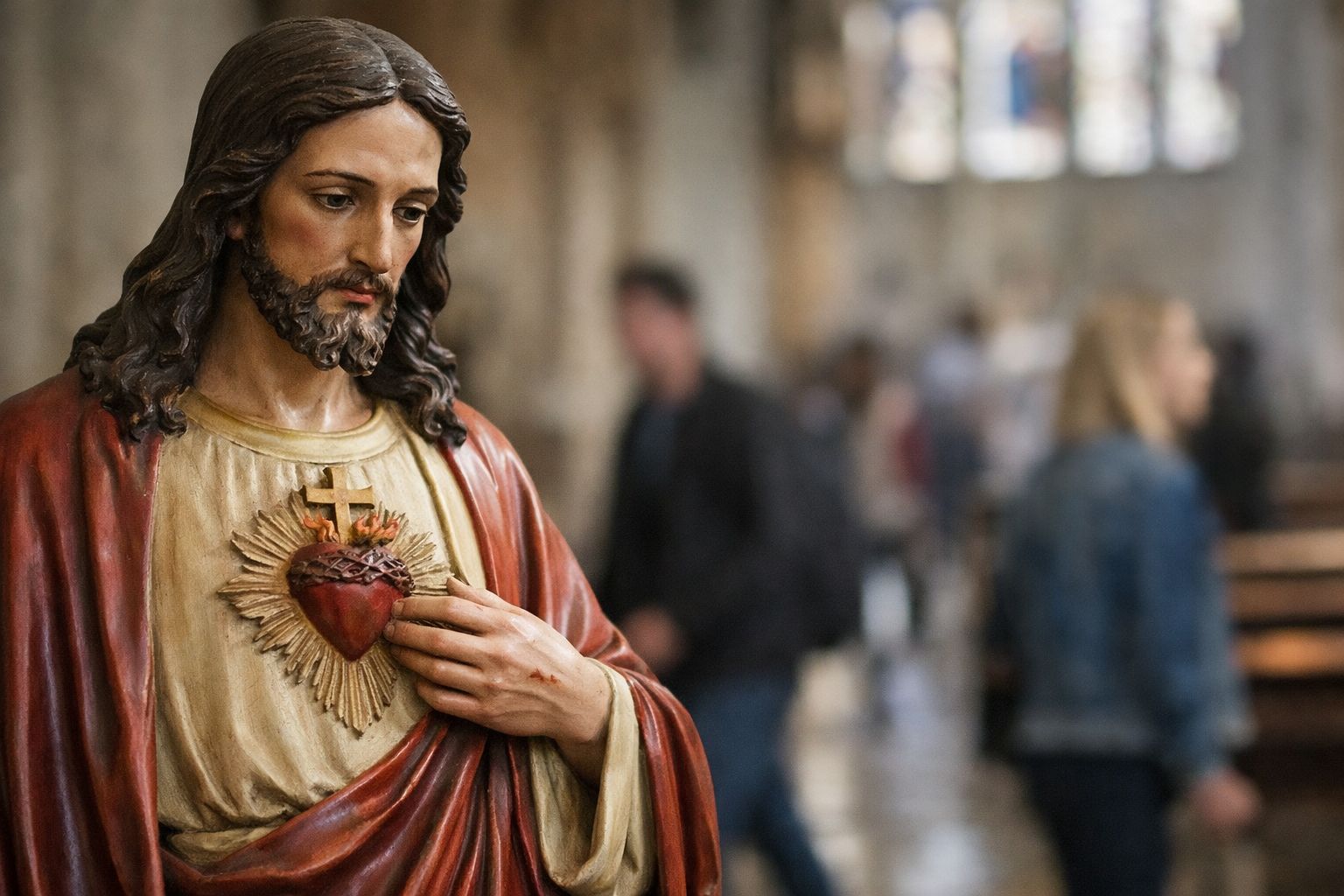
Statues of Jesus and saints populate churches. Crosses appear everywhere. Paintings depict scenes accepted as real.
If the foundation collapses, these objects remain. However, their status transforms.
They no longer represent historical individuals. They represent ideas.
A statue becomes comparable to a mythological figure. A painting becomes comparable to artistic interpretation.
The entire visual language shifts from sacred representation to cultural expression.
Feasts and holidays: Time without event
Christianity organizes time.
Christmas marks a birth. Easter marks a resurrection. Saints’ days mark historical lives.
If those events never occurred, the calendar loses its original justification.
However, the structure remains.
People continue to celebrate. Traditions persist. Social rituals survive.
Yet meaning changes.
Christmas becomes seasonal. Easter becomes symbolic. The religious core fades into cultural habit.
Time remains structured. Its origin dissolves.
Christian morality claims divine origin.
Commands come from God. Therefore, they require obedience.
If the source disappears, morality must justify itself differently.
Rules require explanation. Ethics becomes a system of reasoning, not authority.
This creates a shift.
Before, morality is given. After, morality is negotiated.
Importantly, morality does not disappear. It becomes grounded in human needs, cooperation, and consequences.
Superstition and belief systems: Invisible structures dissolving
Christianity carries layers of belief.
Miracles. Divine intervention. Heaven and hell. Sin and redemption.
If the foundation collapses, these systems lose coherence.
Fear-based structures weaken. Eternal punishment becomes questionable. Divine reward loses credibility.
However, psychological residue remains.
Humans tend to maintain patterns even after belief weakens. Therefore, some elements persist as habit or metaphor.
Over time, literal belief transforms into symbolic interpretation.
Language and culture: Deep structures shifting
Christianity shapes language deeply.
Concepts like sin, grace, salvation, and redemption permeate communication. Literature draws heavily from biblical imagery. Moral frameworks reflect religious categories.
If the foundation collapses, language does not disappear.
However, its depth changes.
Words remain. Their origin becomes historical rather than sacred. Their meaning shifts from absolute to contextual.
Culture retains structure. It loses certainty.
Art, music, and architecture: Legacy reinterpreted
Christianity produced immense cultural output.
Cathedrals dominate cities. Music defines eras. Paintings shape artistic history.
If belief collapses, these works remain intact.
However, their interpretation changes.
They become artifacts. Not evidence of truth. They reflect human creativity, not divine inspiration.
This does not diminish their value. It relocates it.
Identity and belonging: Psychological consequences
For many, Christianity provides identity.
It defines purpose; it structures life. It offers community.
If the foundation disappears, identity destabilizes.
Some experience loss. Others experience freedom. Many reinterpret rather than abandon.
New frameworks emerge. Secular ethics, philosophical systems, or alternative beliefs fill the gap.
Identity does not vanish. It reorganizes.
Religion historically legitimizes power.
Kings ruled by divine right. Institutions justified control through doctrine.
If Christianity collapses, these justifications weaken.
Power does not disappear. It shifts.
Law replaces divine authority. Economics replaces theology. Political systems redefine legitimacy.
The structure persists. The narrative changes.
Replacement systems: What fills the vacuum
Humans require frameworks.
If Christianity disappears, alternatives emerge.
Secular ethics expands. Science gains authority. Ideologies compete. National identity strengthens.
These systems provide structure, meaning, and direction.
Therefore, belief does not disappear. It transforms.
Persistence: What would not disappear
It is essential to recognize continuity.
Morality continues. Cooperation persists. Social systems remain.
Many elements attributed to Christianity originate from evolution and social necessity.
They survive independently.
This reveals a deeper truth.
Christianity did not create these systems. It organized and amplified them.
Conclusion: Transformation, not disappearance
If Christianity were fabricated from the beginning, the world would not collapse.
Instead, meanings would shift.
History becomes narrative. Ritual becomes tradition. Authority becomes human.
Structures remain. Interpretations change.
Therefore, the final insight follows.
Christianity’s removal would not erase society.
It would expose its foundations.
Leave a Reply