Ideas, opinions, politics, humanities
-
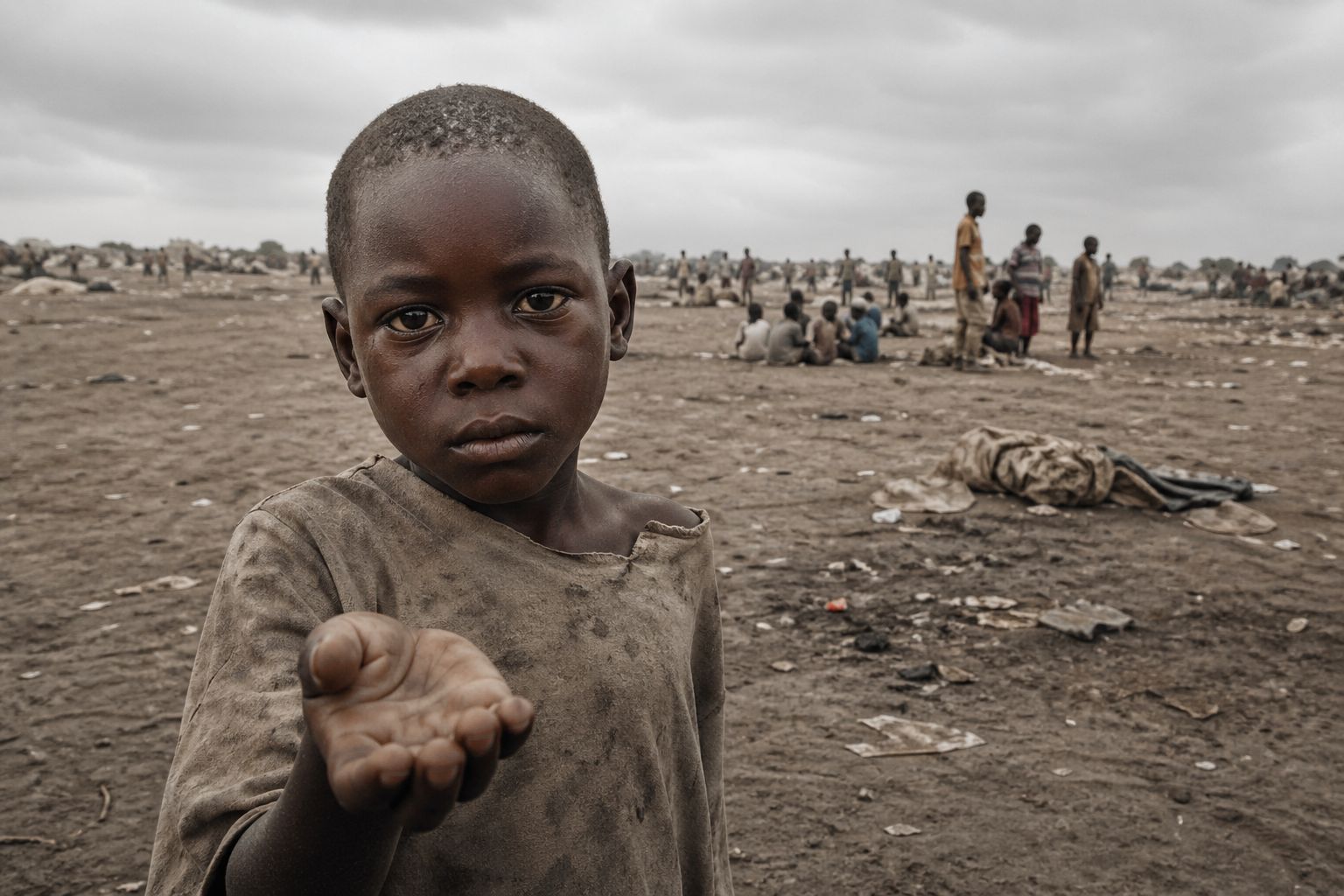
Global hunger: Starvation is a policy choice
The world produces enough food. Yet millions starve. Therefore, the problem does not lie in production. It lies in distribution, incentives, and power. In other words, hunger reflects a systemic failure, not a natural limit. At the same time, wealth has reached unprecedented levels. Capital concentrates in the hands of wealthy families, multinational corporations, and…
-
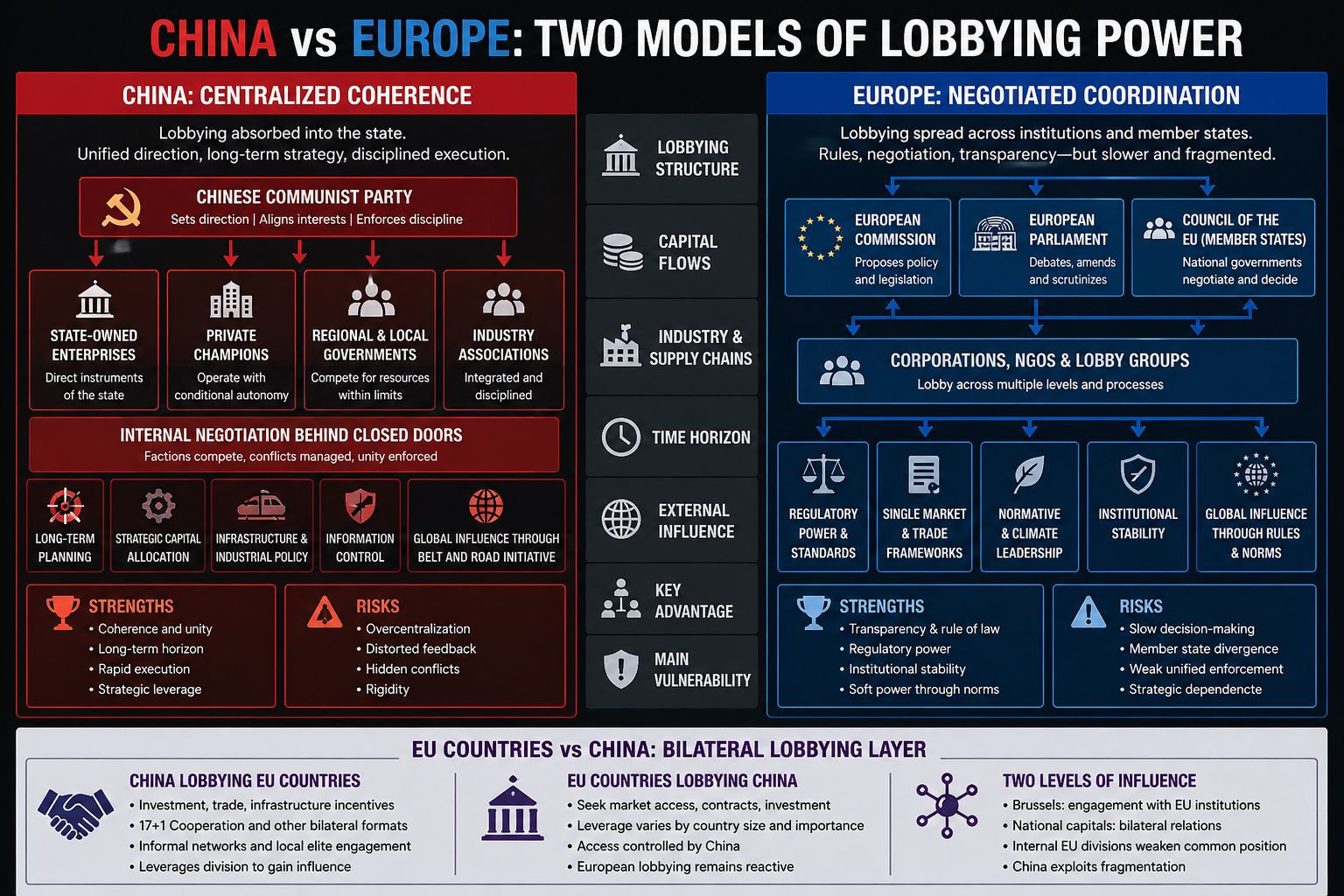
China vs Europe: Two models of lobbying power
At first glance, China and Europe organize influence in fundamentally different ways. On the one hand, China integrates lobbying into the state. On the other hand, Europe distributes lobbying across institutions and member states. Therefore, the contrast does not lie in whether lobbying exists. Rather, it lies in how power structures absorb or disperse it.…
-

China as one mega-lobbyist, America as a battlefield of lobbies
China does not lobby like the West. Instead, it absorbs lobbying into the state. As a result, the boundary between state, corporation, and strategy begins to fade. At the center stands the Chinese Communist Party. It coordinates direction across sectors. Moreover, it enforces alignment when needed. Importantly, it does not eliminate interest groups. Rather, it…
-

How war built Silicon Valley: The military-tech complex
World War II reshaped not only borders but the relationship between science, industry, and power. It forced governments to mobilize knowledge at an unprecedented scale. It forced companies to innovate under pressure. It forced scientists to solve problems with immediate consequences. Therefore, the war did not only produce weapons. It produced a system. This system…
-

Who built the global financial system? Power alliances
Europe did not rebuild itself in isolation after World War II. It rebuilt through links. Every factory needed foreign capital. Every currency needed external trust. Every government needed partners. At the same time, wealthy families with prewar financial influence did not disappear. They adapted. They repositioned themselves inside the emerging system. Therefore, interconnection did not…
-

Is there an escape from the Orthodox Jewish community?
People ask a simple question. Can someone leave a tightly structured religious world and build a new life? The answer exists, yet it is complex. Exit is possible. However, it carries layered costs. Therefore, one must examine not only the act of leaving, but also the psychological, social, and economic transformation that follows. The issue…
-

The 1924 immigration act: Hidden intentions, a 400 million America
In 1924, the United States adopted one of the most restrictive immigration laws in its history. The Immigration Act of 1924 presented itself as a rational policy. It promised order, stability, and controlled population growth. Moreover, it framed itself as a necessary response to social tension and rapid change. However, beneath this neutral language lay…
-
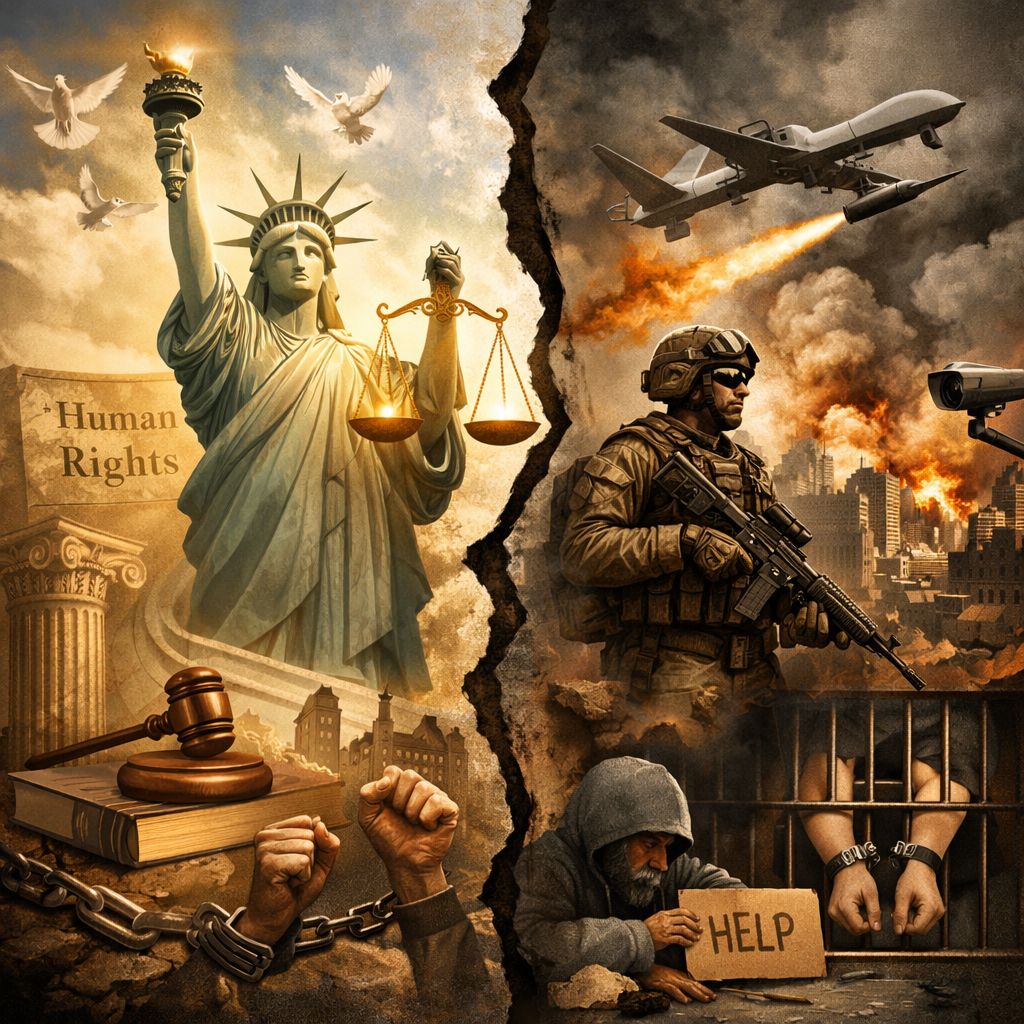
Western moral superiority in theory and praxis
The West presents itself as the highest moral stage of civilization. It speaks in the language of human rights, dignity, restraint, and universal values. Moreover, it exports this language through diplomacy, media, academia, and international institutions. Therefore, moral superiority does not remain an internal belief. It becomes a global standard against which other societies are…
-
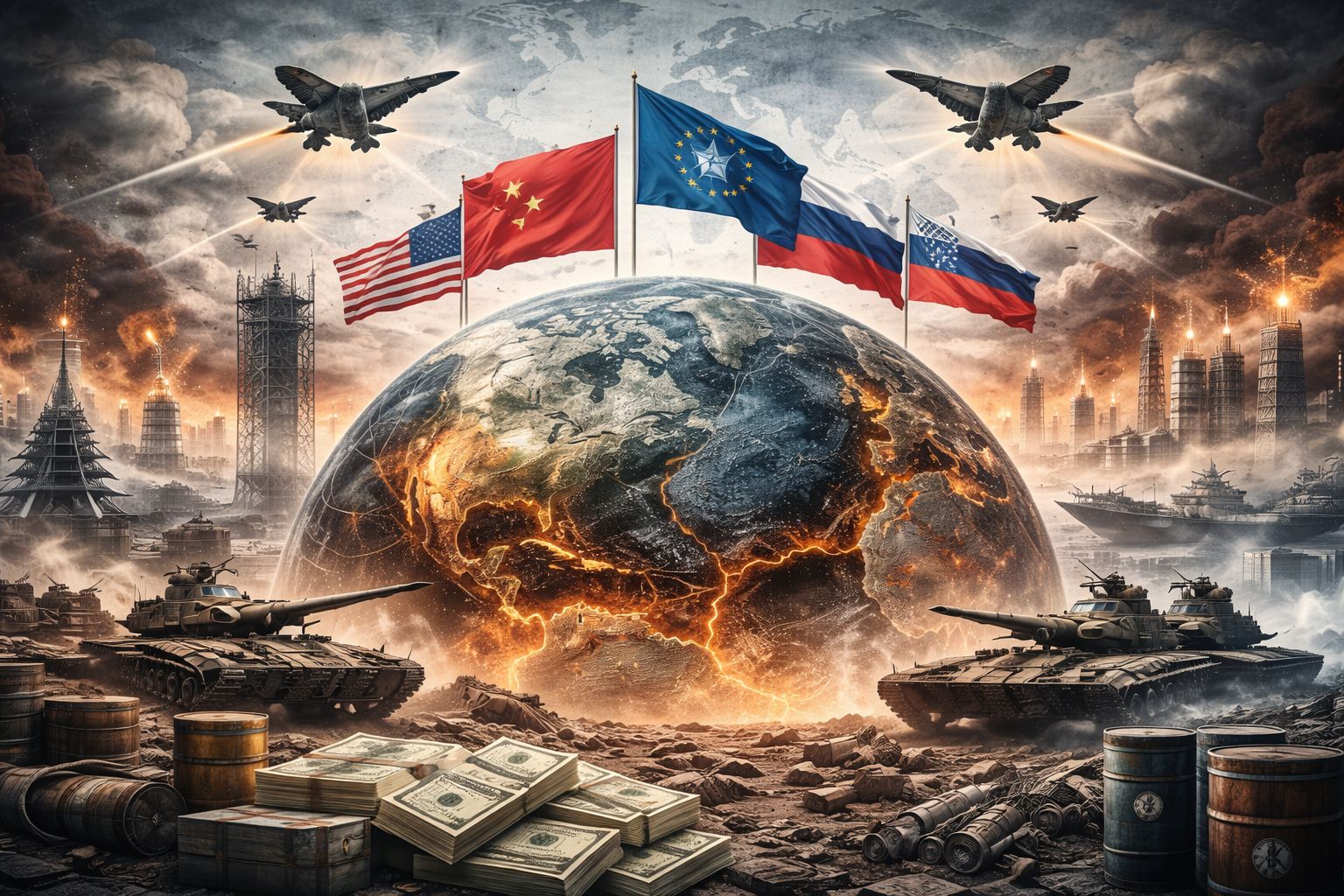
The world before WW3
The world does not enter global war suddenly. It drifts toward it. Tensions accumulate. Alliances shift. Economic systems strain under pressure. Therefore, to understand a potential World War III, one must analyze the current structure of power. This includes states, capital flows, institutions, and informal networks. War does not emerge from chaos. It emerges from…
-
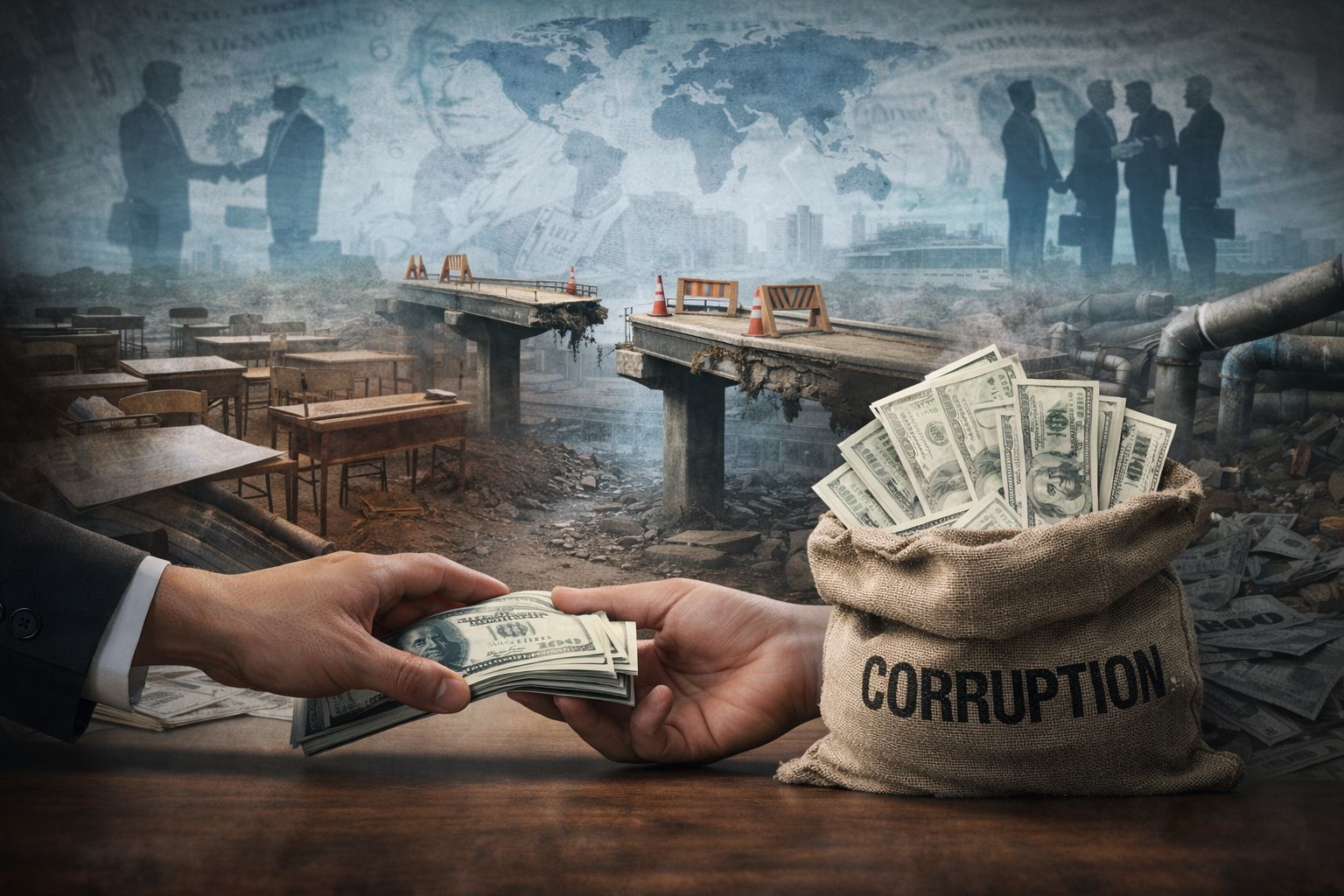
The evolutionary psychology of corruption
Corruption does not begin in institutions. It begins in human nature. People often treat it as a failure of laws, culture, or governance. However, these explanations remain incomplete. Corruption emerges from behavioral tendencies that once improved survival and reproduction. Therefore, to understand corruption, one must start with biology. Only then can one understand why it…