Tag: philosophy
-
Philosophy cannot define itself: 2,500 years and still no definition
What is philosophy? It sounds like one of the simplest questions imaginable. Ask a physicist what physics studies. They will tell you it investigates matter, energy, forces, and the laws governing the universe. Ask a biologist what biology studies. They will answer that it examines living organisms and the processes of life. Ask a linguist…
-
When philosophy becomes a joke
Philosophy has always asked humanity’s biggest questions. What is reality? Can we know anything with certainty? Does free will exist? What makes an action morally right? These questions have occupied some of the greatest minds in history, and the answers continue to shape science, politics, religion, and everyday life. Unlike mythology or theology, philosophy built…
-
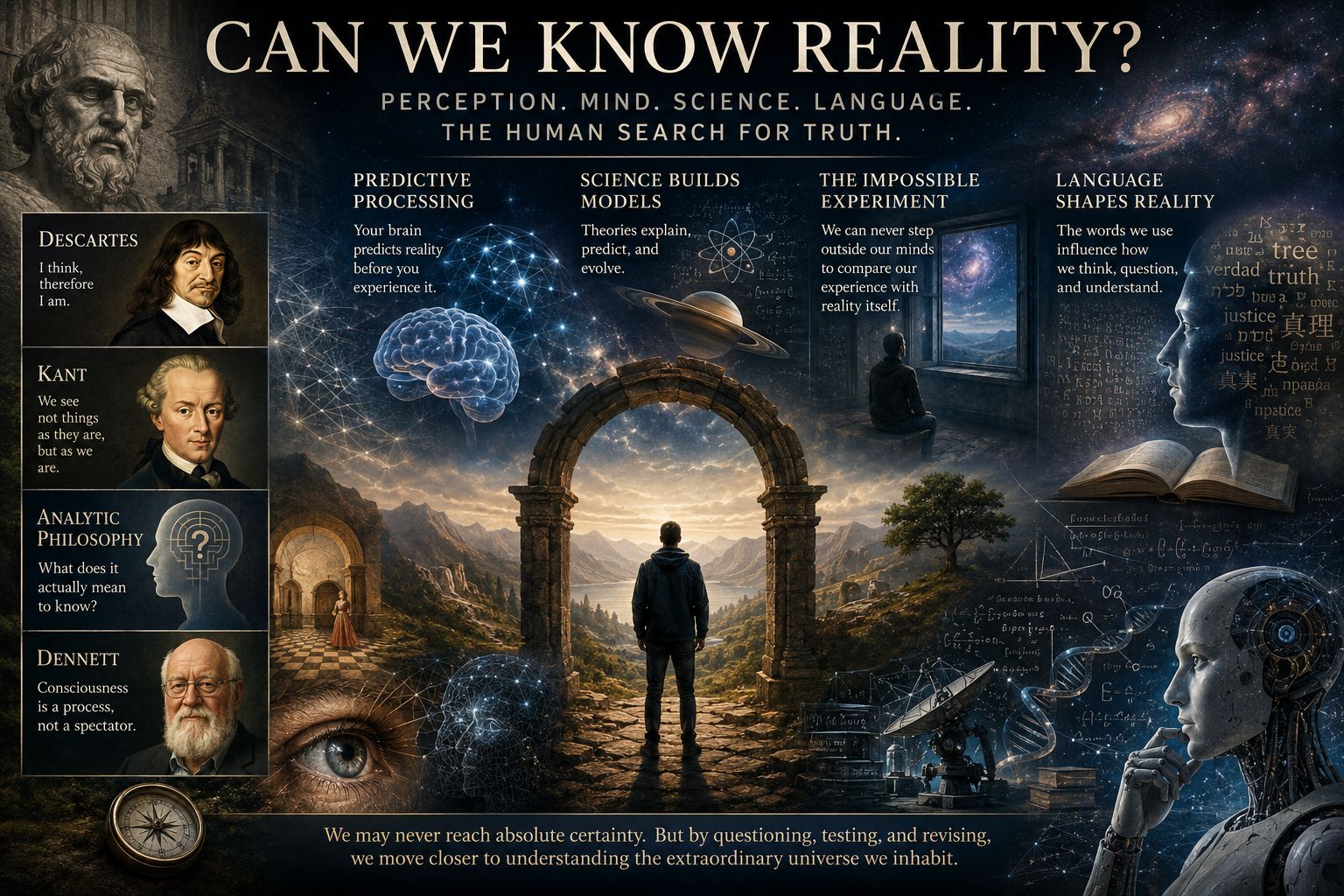
Everything you see may be an illusion. Can we ever know reality?
Look around you for a moment. You probably see walls, furniture, trees outside the window, or perhaps a computer screen displaying these words. Everything appears solid and obvious. Consequently, you instinctively trust what your eyes tell you. Nevertheless, philosophy asks a deeply uncomfortable question. What if you have never experienced the world itself? What if…
-

Why arguments almost never change minds
This is a short excerpt from highly esteemed Professor Graham Oppy’s Reinventing Philosophy of Religion: An Opinionated Introduction. (link) Even though it is very short compared to the original, it covers the most significant points. The text presents a deep critique of how arguments function in philosophy, especially in debates about religion. It challenges the…
-
Enlightenment echoes in a fragmented century
The Enlightenment reshaped how humanity thinks, argues, and governs. It turned reason into a public force rather than a private habit, and it built the mental architecture of modern life. Today we swim in digital noise, emotional narratives, identity battles, and ideological tribalism. Therefore the Enlightenment feels both triumphant and threatened. People enjoy technologies that…
-

Want to study Continental philosophy? Pay for it!
Continental philosophy survives not because it enlightens, but because it is funded. Europe keeps paying for it, decade after decade, as if confusion were culture. Professors protect it like a national monument. Universities preserve it like ancient ritual. Yet outside of Europe, it barely breathes. Across the Atlantic, philosophy evolved. It merged with science, logic,…
-
AI, the super-rich and the end of freethinking
I cannot hide that I was inspired by the article on Freethinkers International. My original idea was meant to show how the super-rich obedient AI is molding our mental processes so those who rule us are securely conducting their immoral business. However, the great idea is that the world of robots and AI also means…
-
Why even a modern conservative cannot be a freethinker?
I post this article both on my blog and Freethinkers International. And I am sure my own blog more than aware readers have their opinion already formed. Yet, the ongoing debate on Freethinkers International has provoked me to write this piece. We live in megacities, use electricity, have microchips, atomic bombs, high-speed trains, however, we…
-
Philosophy should stop talking about free will. It is none of its business
Philosophy couldn’t even come up with its own definition for the thousands of years of its own existence and they school us what definition of free will is. Whom we can imagine when saying the word “philosophy”? For example Willard Van Orman Quine, Tomáš Garrigue Masaryk, Bertrand Russell, and even Martin Heidegger. Everything can be…
-
Why are anarchism and communism utopian?
Just like philosophy (or its continental side) or religion political ideologies don’t reflect scientific progress. When anarchism and communism came into existence there was no evolutionary theory. People believed in a blank state. People are born like blank sheets of paper. It just depends on how you raise them. Of course, people are selfish but…