Tag: religion
-

Where did belief in God decline? And the sad news: The 21st century will still be a century of religion
For anyone expecting religion simply to disappear as education, science and technology advance, the first decades of the 21st century offer a frustrating answer. In large parts of the developed world, secularization is real. Christianity has lost millions of adherents. More people openly identify as atheists, agnostics or religiously unaffiliated. In some countries, the transformation…
-
“Till we meet forever.” Can delusions become any deeper?
“Till we meet forever.” People say it at funerals with complete sincerity. They believe they will see their loved ones again. Death is not the end. It is merely a temporary separation. That single sentence reveals something remarkable about the human mind. Hundreds of millions of Americans sincerely believe not only that an afterlife exists,…
-

How did the West make the world religiously radicalized?
Modern religious radicalization did not emerge from religion alone. Instead, it emerged from collapsing states, foreign interventions, geopolitical competition, economic dependency, identity crises, propaganda systems, and prolonged instability. Nevertheless, many mainstream narratives simplify the issue heavily. They present extremism as if it appeared naturally inside certain cultures or religions. However, this explanation ignores how global…
-

Christians and Jews: Who are the chosen people?
The idea looks simple at first. One God. One truth. One chosen people. However, the moment you examine Judaism and Christianity side by side, the simplicity collapses. Both traditions claim a unique relationship with God. Both anchor their identity in that claim. Yet they define it in fundamentally different ways. Therefore, what appears as a…
-

Navigating freethought and atheism in religious families
Freethought and atheism rarely emerge in isolation. Instead, they develop inside environments shaped by tradition, authority, and inherited belief. Therefore, the conflict does not begin as a philosophical disagreement. It begins as a social rupture. You do not merely question ideas. You challenge identity, hierarchy, and emotional bonds. Consequently, navigating this path requires far more…
-

As time went on, chroniclers claimed to know more about Jesus
At first glance, one expects a simple pattern. A real person lives, acts, influences others, and leaves traces. The earliest records should contain the strongest and most direct evidence. Later generations should preserve, interpret, and slowly lose detail. However, the case of Jesus appears reversed. The earliest period shows almost nothing. Later periods suddenly show…
-

American religiousness: Decent or fanaticism?
At first, religion in America looks normal. You see churches, you hear references to God. You assume something similar to Europe. However, this assumption collapses the moment you engage with it more deeply. I expected moderation. I expected distance; I expected something like Czechia, where religion survives mostly as a weak cultural residue. Instead, I…
-

Human rights violations in the name of religion: Third part
Human rights frameworks protect freedom of religion while simultaneously prohibiting discrimination, violence, and coercion. This dual protection creates a paradox. Religion enjoys legal shielding as belief, yet often operates as a source of harm when belief transforms into authority. The contradiction does not sit at the margins of human rights law. It sits at its…
-
Cognitive-behavioral manual for leaving religion
Leaving religion feels like dismantling a world inside your skull. You tear out a belief system that shaped your fears, your morals, your identity, your family bonds, your daily routines, and your sense of cosmic safety. And you do not simply reject a doctrine. You uproot an entire psychological ecosystem. This manual explains every hidden…
-
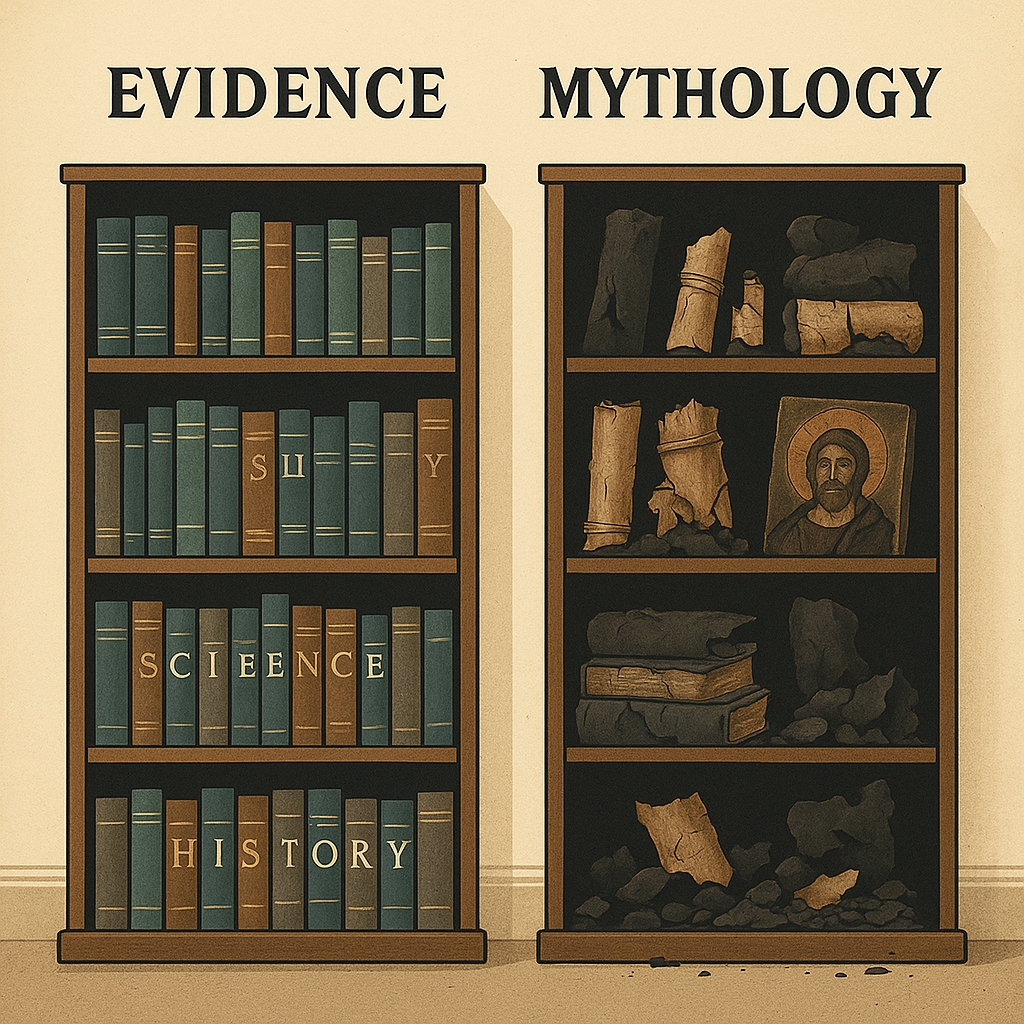
Facing Jesus’ non-existence: Two approaches
Every honest inquiry begins with discomfort. And nothing creates more discomfort than asking whether Jesus ever existed at all. Once you look at the historical evidence, the silence becomes deafening. The era overflowed with chroniclers who described everything: uprisings, quacks, prophets, magicians, riots, executions, natural phenomena, and obscure cults. Yet they never described Jesus. This…