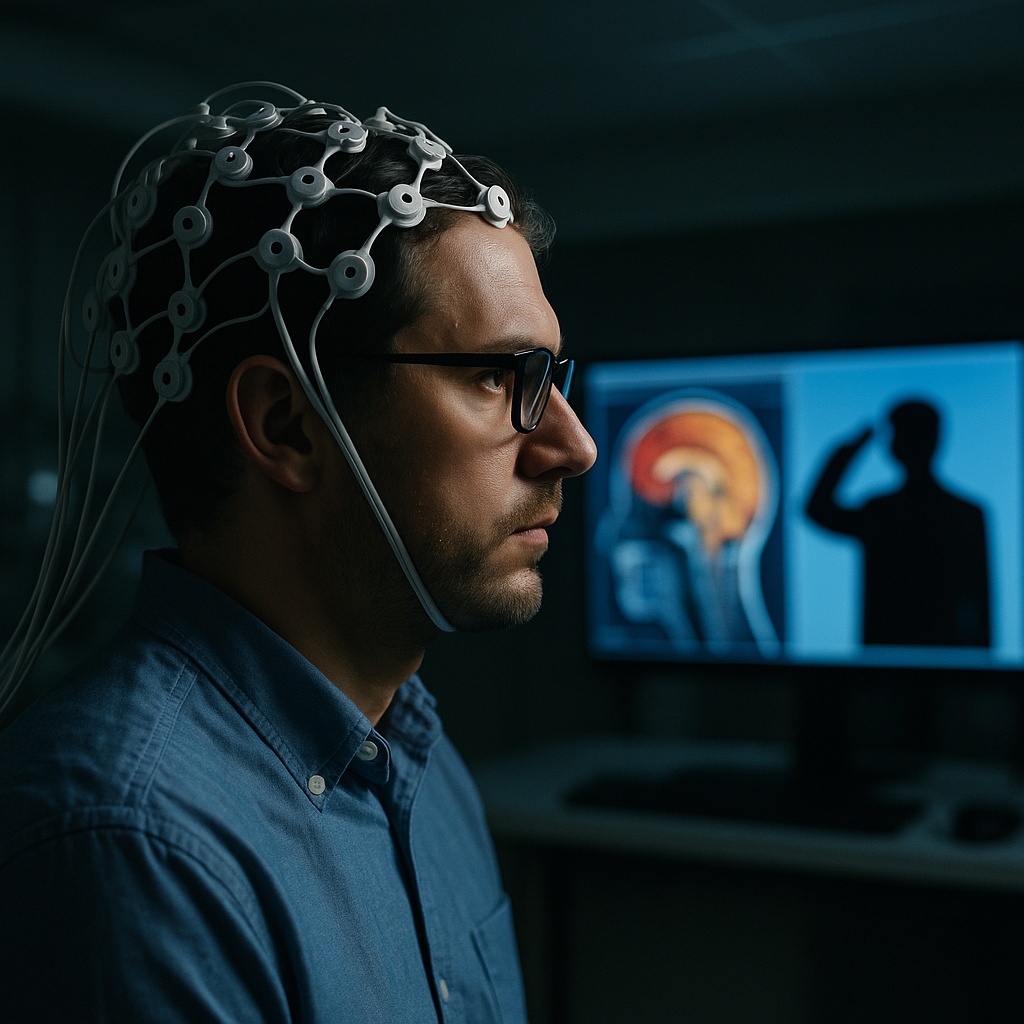
Obedience is often framed as a moral choice or a social consequence. Yet beneath the surface of society’s rules lies biology. Our willingness to follow orders has deep neurological roots shaped by evolution. The neuropsychology of obedience reveals that following authority isn’t just learned – it’s wired into our brains over millennia. We obey not only because of duty or fear, but because ancient neural circuits reward us for it and ease our discomfort when we conform. In short, obedience lives in the brain’s design as much as in culture’s dictates.
The brain’s architecture for hierarchy
Human brains evolved in tribes and dominance hierarchies. We are fundamentally wired to recognize leaders and rank – a survival trait from our early ancestors. In fact, psychologists note that we quickly perceive status cues and prefer hierarchical order in groups. This instinct makes sense: knowing who has power and whom to follow helped coordinate group efforts and avoid conflicts. Hierarchy streamlined decisions and improved survival, so natural selection entrenched it in our neural architecture. Across human cultures (and even in other social animals), stable pecking orders emerge spontaneously, suggesting the brain is built to establish and navigate hierarchies.
Modern neuroscience indicates there’s a network of brain regions attuned to social rank. For example, studies in primates show that the same neurons in the amygdala that process reward also encode social status, blurring the line between hierarchy and pleasure. Evolution effectively merged following the leader with feeling good. From the basal ganglia (an ancient brain area) to the frontal cortex, multiple circuits enforce our place in social order. In mice, scientists identified specific neurons in the dorsomedial striatum that determine dominance or submission – if these cells are removed, a subordinate mouse stops yielding to the winner. Such findings hint that our brains have dedicated switches for “boss” and “follower.” In essence, biology set up our minds to respect authority: it’s efficient, it kept us alive, and it’s literally built-in.
The dopamine reward of social approval
Obedience doesn’t just keep the peace – it feels rewarding. When others approve of us, our brains light up with pleasure signals. Neuroscientists have found that social approval (like gaining a good reputation or praise) activates the same reward circuitry in the brain as receiving money. The ventral striatum, rich in dopamine, surges when we get a nod of approval or a compliment. In one experiment, volunteers showed heightened ventral striatum activity when their opinions aligned with others’ and gained agreement. In other words, agreement is addictive. Our neural reward system treats a thumbs-up from peers like a dose of sweet dessert. This is the “common neural currency” of reward – whether it’s a paycheck or a pat on the back, the brain’s dopamine pathways speak the same language.
This neural chemistry makes following the crowd intrinsically satisfying. We get little dopamine hits when we fit in or meet others’ expectations. Starting in childhood, the smile of a parent or teacher’s praise triggers positive neurotransmitters. By adulthood, everything from a workplace promotion to Instagram “likes” can flood us with a rewarding glow. And dopamine is a powerful teacher: it reinforces behaviors, essentially saying “do that again.” So, obeying rules and norms – when met with approval – conditions our brain to repeat obedience. It feels good to be told “good job.” Psychologically and biologically, social validation is like a warm hug for the brain. Compliance becomes our comfort zone because approval is chemically pleasurable. We are, to a degree, slaves to the rewards of acceptance that evolution ingrained in us for living harmoniously in groups.
Obedience silences moral conflict
Following orders not only rewards us – it can also quiet the inner voice that says something is wrong. History’s darkest chapters, from wartime atrocities to abusive systems, show ordinary people committing harmful acts under authority. Neuroscience now illuminates how the brain copes: it shuts down conflict and empathy when we obey. A striking study found that when people followed an experimenter’s orders to inflict pain on someone, their brain’s empathy centers became far less active than when they chose freely. Regions like the anterior insula and cingulate cortex – which normally flare up when we see others hurt – stayed comparatively muted under commands. In the same study, activity in areas linked to guilt also diminished with obedience. Essentially, the obedient brain muffles the signals that would make us feel bad. This neural numbing helps explain why coercion can lead to cruelty: the usual pangs of empathy and conscience don’t pierce as sharply when “I was just following orders.”
Even our sense of conflict before a harmful act is dampened by obedience. Researchers measuring brainwaves found that a specific signal of moral hesitation, mid-frontal theta oscillation, drops dramatically when someone obeys an order compared to acting by choice. The brain literally registers less internal struggle if an authority figure is taking responsibility for the decision. Psychologists call this the “agentic shift” – we see ourselves as an agent executing another’s will, rather than acting on our own, which relieves us of guilt. In Stanley Milgram’s classic obedience experiments, many participants inflicting electric shocks asked who would be accountable if the “learner” was hurt. When the authority said, “I will take responsibility,” they continued pressing the shock switches. The instruction seemed to flip a switch in the mind: personal moral conflict off, authority’s command on. Trials after World War II echoed this mental mechanism, with perpetrators insisting they were “just following orders” to excuse horrific acts. Obedience, rooted in neural wiring, can become a potent anesthetic to conscience – silencing our moral pain and allowing us to do the unthinkable with a strangely clear mind.
The biological comfort of conformity
For most of us, fitting in feels far more comfortable than standing out. That comfort, too, is grounded in neurobiology. Humans are ultra-social creatures; being part of the pack kept our ancestors alive, and our brains reward us for staying in sync. Modern research shows that conformity isn’t just a cultural habit but an innate tendency “hardwired” in the brain. We can see it in neural responses: when other people agree with our choices, the brain’s reward center responds happily (lighting up the same region that processes pleasure from food or money). Alignment with the group brings a sense of safety and satisfaction at a very primal level.
On the flip side, going against the group can be literally painful. Social neuroscientists have discovered that social rejection activates the same brain regions as physical pain. The dorsal anterior cingulate – a region that registers the sting of a burn or ache – also registers the sting of being excluded or shunned. In evolutionary terms, isolation was deadly; being cast out of the tribe meant vulnerability. So our brains evolved an alarm system: loneliness hurts, quite genuinely. This drives us to avoid the pain of ostracism by following the herd. Even subtle disagreement can spike anxiety. Studies have observed that when individuals choose to dissent, stress hormones rise and areas associated with error-detection in the brain activate, as if one’s brain is warning: “Danger – you’re deviating from the group!” Small wonder a juror may stay silent despite doubts, or a bystander may laugh along with a bad joke – nonconformity is uncomfortable. Conformity, in contrast, offers a warm psychological blanket. When we nod along with the majority, the brain’s stress center relaxes while bonding hormones like oxytocin can increase, reinforcing feelings of trust and belonging. Biologically, there is comfort in the crowd. Our neural chemistry soothes us when we move in unison with others, keeping us tethered to group norms for the sake of both relief and reward.
How modern institutions exploit ancient circuits
These ancient obedience circuits – forged in caves and savannas – are still very much active, and modern institutions have learned to pull their levers. Consider the military: armies capitalize on our hierarchical wiring and willingness to defer to authority. Rigid chains of command, ranks, uniforms – these aren’t just about organization, but about psychology. A private automatically yields to a general because every cue in the environment screams who is in charge. Military training explicitly cultivates the agentic state: soldiers are conditioned to stop asking “why” and just respond to the commanding officer. The hierarchical structure even dilutes personal responsibility, making it easier to follow orders without remorse. Each level in the chain feels the next level “above” holds the moral burden. In effect, the military outsources conscience upward. This exploitation of our obedience reflex can turn ordinary people into efficient executors of a strategy, no questions asked. It’s an ancient tribal script – follow the chief – writ large in a modern institution.
Corporate and technological institutions play on these tendencies as well, sometimes in startlingly explicit ways. Social media companies, for instance, have harnessed our dopamine-driven need for social approval with ruthless precision. As former Facebook president Sean Parker admitted, the platform was designed to exploit a “vulnerability in human psychology” – whenever someone likes or comments on your post, “we… give you a little dopamine hit,” he said. Each notification icon glowing red is like a Pavlovian cue, tapping into the brain’s reward loop that evolution created to bond us to our community. By gamifying social validation, tech platforms keep us obediently checking and scrolling, almost as if we’re compulsively seeking the tribe’s approval. Advertising and politics, too, press on these ancient buttons. Marketers use celebrity endorsements or authority figures in lab coats to make claims – knowing that we are inclined to trust and obey perceived authority automatically. Populist leaders whip up in-group loyalty and out-group fear, hijacking our tribal circuits to win allegiance. From classrooms that run on gold stars to workplaces dangling employee-of-the-month honors, modern systems continually exploit our craving for approval and our deference to status. These institutions have effectively weaponized our Stone Age brain. They trigger instincts that served us in small bands and use them to shape behavior in massive, complex societies – often to their own advantage.
Reclaiming agency through conscious disobedience
Understanding the neural basis of obedience isn’t just an academic exercise – it’s a key to personal freedom. If ancient circuits push us to comply, can we override them? The answer lies in our capacity for self-awareness and conscious choice – essentially, in the more recently evolved parts of our brain that can modulate the older impulses. The frontal lobes (particularly regions right behind the forehead) are the brain’s command center for reasoning, self-control, and planning. Unlike the reflexive amygdala or dopamine midbrain, the frontal cortex can think about thinking. It’s what allows us to say, “Hold on, do I actually agree with this?” or “Is this rule just?” – instead of simply reacting. Neuroscience shows that these rational brain regions can overrule emotional drives. For example, during a fear response, the prefrontal cortex can inhibit the amygdala’s panic signals, allowing a calmer, more measured reaction. We can apply the same principle to obedience: by engaging higher cognition, we create a space between the command and our action, a moment for moral reasoning to step in.
Conscious disobedience is in a sense like mental exercise for these frontal circuits. It might start with small acts of questioning – training the brain to tolerate the discomfort of going against the grain. Over time, practice builds neural strength. Research on mindfulness and self-regulation suggests that deliberately resisting automatic responses can rewire the brain’s pathways, strengthening connections that let the thinking brain veto the reacting brain. One study found that a prefrontal brain region could dampen the distress of social pain by regulating activity in the emotional centers. This hints that we can learn to dampen the distress of social disapproval in a similar way. By consciously reminding ourselves that a scowl from a stranger or a dissenting opinion online is not a life-or-death threat, we help our rational brain soothe the primitive alarm bells. In doing so, we reclaim our agency from the automatic obedience circuits.
Reclaiming agency also means redefining reward. If our brains get a dopamine rush from approval, we can train ourselves to derive satisfaction from a different source: integrity and autonomy. It is possible – albeit challenging – to make independent choices feel rewarding. Think of the quiet pride one feels after standing up for what’s right, even if unpopular. That feeling is the brain’s reward for living in line with one’s core values instead of the social carrot on a stick. By reflecting on those moments of principled disobedience, we amplify their emotional reward and encode a positive memory. Essentially, we can condition ourselves to take pleasure in authenticity and courage, not just compliance. Each time we do, we chip away at the old neural habit of obedience and strengthen a new pathway of conscious choice.
In the end, to resist is to rewire. Knowing that our urge to obey has biological hooks in us doesn’t make us robots; it makes us human. And humans have the unique ability to be aware of our instincts and deliberately go against them when we must. Conscious disobedience – whether it’s questioning a dubious order at work, walking away from toxic groupthink, or speaking an unpopular truth – is like a workout for the mind. It engages the neural circuits of reflection, empathy, and courage, teaching our brain that there are rewards beyond the primal comfort of conformity. We stop being puppets pulled by ancient strings and start using those strings as ropes to climb above our conditioning. The neuropsychology of obedience shows us the trap; understanding it lights the way out. Through awareness and will, we can neurologically reclaim our agency – rewiring our brains, one principled act of rebellion at a time, to honor the better angels of our nature over the automatic ghosts of our evolutionary past.
Leave a Reply