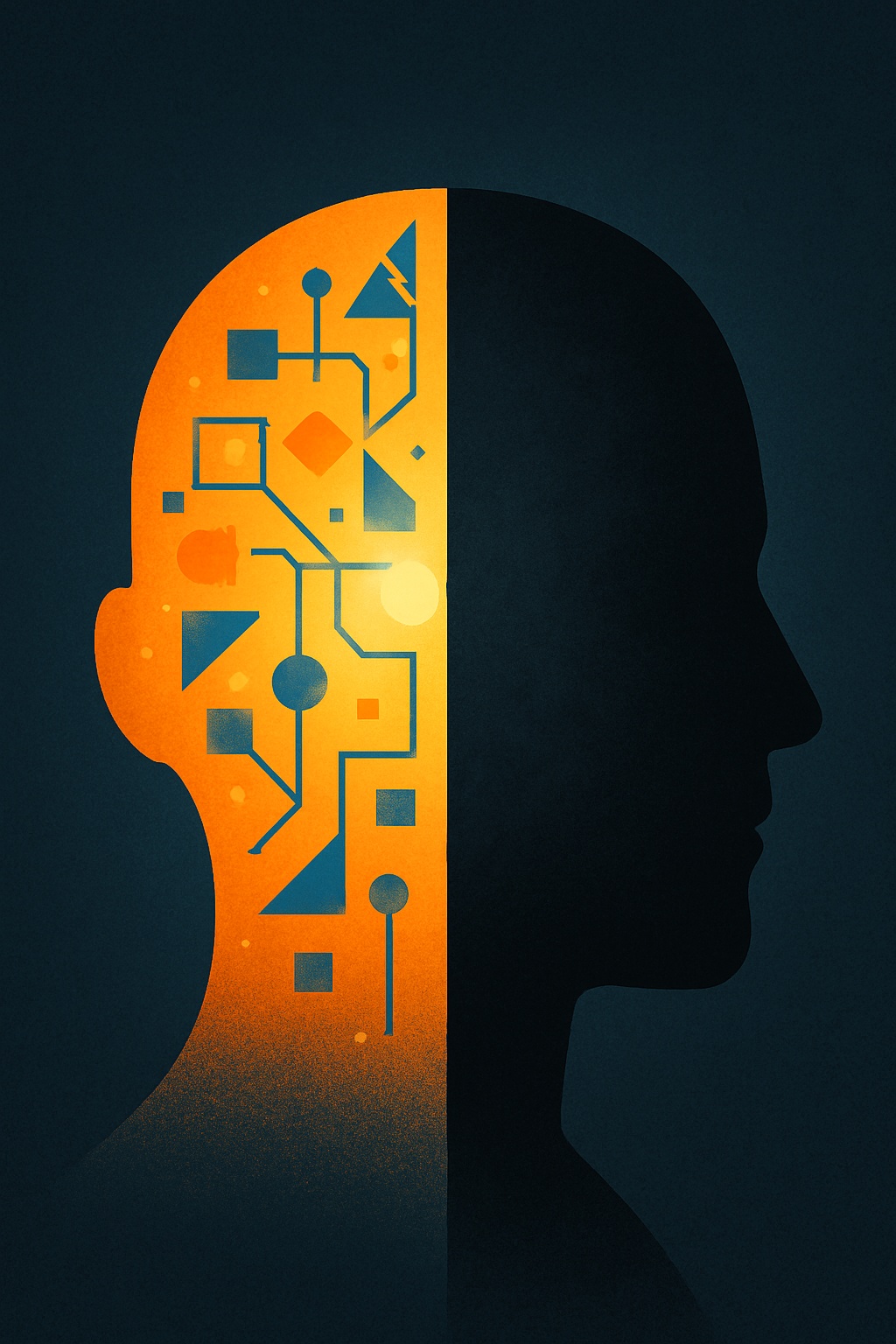
Intelligence does not guarantee good thinking. Intelligence gives potential, but potential does not create mastery. Psychologists repeat that people must learn how to use intelligence. They say that raw IQ means nothing without attention, awareness, and method. This raises an uncomfortable question. Will the brain allow you to use the intelligence you have? Or will it sabotage you with distraction, emotion, and bias? This question matters, because many people with very high IQ remain blind to the world. They fail to work with their own intelligence. They do not know how to use it. And they often do not even notice this failure.
What intelligence actually measures
IQ measures pattern detection, abstraction, memory, and reasoning speed. It detects how quickly and how accurately a person discovers structure inside chaos. It measures the ability to form concepts, compare them, and combine them. IQ does not measure wisdom. It does not measure emotional stability, it does not measure discipline. It does not measure moral insight or experience. IQ tells you how powerful the engine is. It does not tell you how well you drive the car.
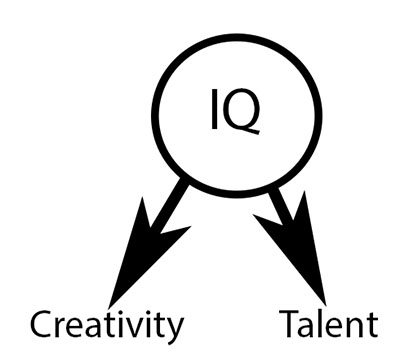
Attention: the gatekeeper of intelligence
Attention decides which information will enter conscious processing. Without attention, intelligence remains asleep. Even a genius fails when the mind ignores relevant data. Humans evolved with limited attention because the hunter-gatherer world did not demand wide information scanning. Today the modern world requires constant awareness, but the brain gives only a narrow beam of attention. This means that intelligent people often fail to use their IQ, because their attention sits somewhere else. Their eyes see the world, but their mind watches only a small piece of it.
You must know how to use intelligence
A psychologist once said that intelligence works only when you know how to use it. This idea sounds obvious, yet many people misunderstand it. Intelligence gives you speed. It gives you tools. But you must learn the mental methods. You must learn how to organize information, how to test assumptions, how to search for contradictions, and how to break big problems into small ones. Without these habits, high intelligence becomes an elegant but useless ornament. It looks impressive. It achieves nothing.
Why higher IQ increases world awareness
As IQ rises, the ability to detect anomalies increases. High-IQ individuals notice patterns faster. They see links between events and ideas. They recognize deception, manipulation, and inconsistencies with less effort. This gives them sharper world awareness. They observe more, they question more. They connect more dots. When attention and emotional stability support this, the person becomes deeply aware of how society works. They see what others overlook.
Why some very intelligent people lack awareness
However many high-IQ individuals fail in world awareness. They focus on narrow intellectual interests and they fall into hobbies, games, theories, or abstractions. They do not observe society, they do not analyze events; they live in mental tunnels. Emotional problems reduce awareness even more. Anxiety traps attention in fear. Depression turns attention inward. Narcissism locks attention on self-image. Trauma scatters attention across memories. Even extreme intelligence collapses under this noise. The person becomes smart but blind.
Metacognition: the missing skill
Metacognition is the ability to observe your own thinking. Without metacognition, people cannot control their reasoning. They do not see their mistakes, they do not notice when emotion replaces logic. They cannot evaluate their own knowledge. High IQ without metacognition creates dangerous confidence. It creates articulate error. It produces a person who argues brilliantly but thinks poorly. Metacognition separates true intelligence from raw horsepower. It trains the brain to use its capacity correctly.
Cognitive biases override raw intelligence
Human thinking still follows hunter-gatherer patterns. Biases dominate the mind. Confirmation bias makes people search for information that matches their beliefs. Myside bias makes people defend their tribe instead of truth. Motivated reasoning makes desire stronger than logic. High-IQ people often create more sophisticated rationalizations. They defend their beliefs with more complexity. They build stronger illusions. Intelligence does not save them. The brain sabotages its own potential.
Emotional regulation decides how intelligence works
Emotions direct attention. Fear pushes attention toward imagined threats. Anger narrows attention to specific targets. Desire narrows attention to rewards. Stress reduces cognitive reach. High IQ does not cancel this process. Intelligence works only when emotions stay stable. Otherwise reasoning becomes distorted. People with superior IQ often break down under stress. Their intelligence becomes trapped. They cannot use it because their emotional system hijacks their attention.
Knowledge architecture
To use intelligence well, you need structure. You need a wide base of knowledge. You need long reading, long learning, long exploration, you need deep familiarity with history, psychology, science, economics, and logic. Without this architecture, thinking becomes shallow. Even brilliant minds produce empty opinions. High intelligence without knowledge creates quick but meaningless thought. It produces speed without direction.
Discipline and attention training
Attention needs training. Intelligence needs habits. Reading trains depth. Long solitary thinking trains reflection. Writing trains clarity. Curiosity trains exploration. Questioning trains independence. Many high-IQ individuals lack these habits. They rely on talent. They avoid effort. Their intelligence remains theoretical. They never build the discipline that transforms intelligence into mastery.
Environment shapes how intelligence works
The social environment decides how much intelligence you can use. Conformist groups punish independent thinking. Low-level peers reward superficiality. Authoritarian systems punish curiosity. Family pressure blocks creativity. Even high-IQ individuals follow the herd when they fear rejection. They hide their intelligence. They use it only inside safe boundaries. Society shapes the mind much more than people admit.
Evolutionary mismatch
Human intelligence evolved for small tribes. It evolved for social negotiation, gossip, small-scale planning, and survival. The modern world demands abstraction. It demands systems thinking, scientific reasoning, and long time horizons. Many brains cannot bridge this gap. Even high-IQ individuals fall into primitive thinking because modern reasoning tools do not match ancient mental software. The brain limits what intelligence can do. Evolution built hardware that does not always support high-level thought.
The brain’s limit: when intelligence cannot express itself
Sometimes intelligence exists, but the brain refuses to use it. Genetic factors influence attention. Personality traits influence motivation. Trauma influences emotional control. Pathology influences perception. Some people with extremely high IQ remain unable to apply it. Their mind fights against itself. Their brain blocks awareness, curiosity, risk-taking, or focus. Intelligence becomes locked behind psychological walls.
How to learn to use the intelligence you have
A person can unlock intelligence with specific training.
Train sustained attention.
Build deep knowledge.
Read long books.
Expose yourself to complex problems.
Separate emotion from reasoning.
Reject tribal thinking.
Seek contradiction instead of confirmation.
Control ego.
Practice metacognition.
Think slowly before thinking quickly.
Explore the world without fear.
These habits turn potential into real ability.
Conclusion
Intelligence gives capacity. But attention, emotion, discipline, and metacognition decide whether capacity becomes real strength. Many high-IQ individuals misunderstand this. They think intelligence is enough. They believe the mind will use itself automatically. It will not. Intelligence remains useless unless the person learns how to operate it. The brain gives hardware. But only method, awareness, and discipline turn the hardware into real power.
Leave a Reply