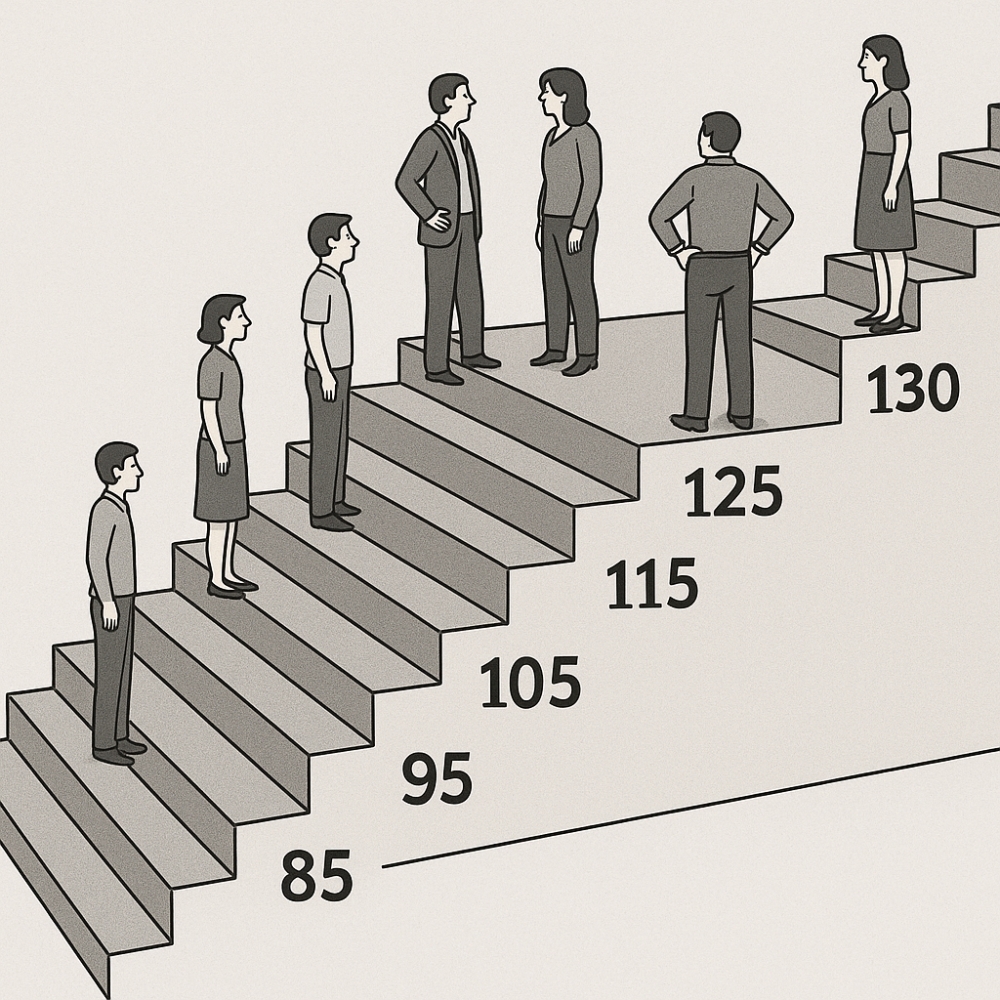
People obsess about IQ because it gives them a simple story in a world that feels impossible to decode. They want certainty, they want ranking. They want a number that answers questions they feel too afraid to ask. IQ (one of the most prominent scientific concepts in the humanities) offers exactly that. It promises clarity, it promises order. And it promises a hierarchy that looks scientific even when the science behind human intelligence tells a far more complex tale. However, people cling to IQ with religious energy because numbers feel safer than ambiguity. They turn one psychological measurement into a symbol of personal worth. And once the symbol takes root, no amount of nuance changes their conviction.
The origin of IQ: A tool that escaped its cage
The first intelligence tests did not aim to sort humanity into superior and inferior categories. They aimed to help children who struggled in school. Yet the industrial world needed faster methods of sorting. Factories needed efficiency. Armies needed rapid classification. Governments needed structure. IQ stepped into that vacuum. It spread across institutions because numbers offered bureaucrats a clean form of control. And once institutions adopted IQ, society absorbed it as a marker of potential, identity, and value.
Evolutionary psychology: Our brains love hierarchy
Humans evolved inside small groups where status determined survival. Every tribe watched power, respect, dominance, and competence with sharp eyes. That instinct never disappeared. Modern society replaced tribal dominance with modern indicators. Wealth became one. Education became another. IQ became the newest marker. People use IQ to map the hierarchy they already feel inside their bones. And since evolution rewards fast judgments, they cling to the idea that one score reveals everything important about a mind.
Social comparison: People fear being average
People constantly compare themselves with others. They want to know who stands above them and who stands below them. IQ fuels that instinct because it promises a clean ranking system. People imagine that their score defines their success or failure. They use IQ to feel superior, they use IQ to rationalize envy. They use IQ to soften insecurities they never resolved. And social media amplifies this obsession because every platform rewards the performance of identity. IQ becomes a badge. Or a shield. Or a weapon.
The illusion of objectivity: Numbers calm people
Numbers feel like truth. They eliminate chaos. They silence doubt. IQ benefits from this illusion. People look at a numerical score and treat it as a final verdict on ability, potential, and destiny. Yet IQ only measures specific cognitive processes like working memory, pattern recognition, and reasoning speed. It does not measure creativity, it does not measure wisdom, or intelligence in a broader sense. It does not measure moral judgment or resilience. Still, people want simple answers more than they want accurate ones, so they treat IQ as a revelation rather than a tool.
Insecurity drives obsession
People fear inadequacy. They fear mediocrity even more. IQ gives them a narrative that either comforts them or torments them. High-IQ individuals chase validation because they suspect the world does not reward them enough. Average individuals fear that intelligence determines success more than effort. Low-scoring individuals fear being labeled forever. Consequently, every group develops emotional needs that attach themselves to the concept of IQ. The obsession grows because insecurity grows. And insecurity grows because society links mental ability with survival.
Capitalism turns IQ into currency
Modern capitalism rewards cognitive labor. Corporations treat intelligence as a resource. Universities treat it as an admissions filter. Governments treat it as a predictor of productivity. IQ serves capitalism perfectly. It simplifies hiring. It accelerates sorting; it identifies who will access the most lucrative sectors. People therefore treat IQ as a form of economic destiny. And because money shapes modern life, people treat intelligence scores as precursors to wealth and power. Consequently, obsession emerges not from curiosity but from fear of falling behind.
Bill Gates was asked: “What Microsoft competitor worries you most?” “Goldman Sachs and Morgan Stanley,” he replied. Because in software development, you need the people with the highest IQs.
Politics weaponizes IQ
Ideologues abuse IQ because it offers them ammunition. The far right uses IQ to justify inequality. The far left dismisses IQ because it threatens their egalitarian ideals. Each side turns a psychological measurement into propaganda. Governments exploit IQ debates to justify policy choices in education and employment. People cannot discuss IQ calmly because each side feels the conversation threatens its identity. Thus obsession grows because conflict grows. People no longer debate intelligence. They defend their tribe.
What IQ actually measures
IQ predicts certain types of performance with reasonable accuracy. It predicts academic success, it predicts the ability to analyze patterns. It predicts problem-solving capacity under time pressure. But it does not predict wisdom. It does not predict creativity. It does not predict leadership, empathy, social intelligence, or perseverance. People confuse one narrow slice of cognition with the entire human mind. And that confusion fuels obsession because people want a single number to express everything complex, nuanced, and contradictory about human potential.
Genetics: The most explosive part
People panic when genetics enters the conversation. They fear that high heritability means fixed destiny, they fear what biological differences imply for inequality. They fear that research will validate extremist narratives. These fears turn IQ into a cultural firestorm. Yet genetics only tells part of the story. Environment shapes ability. Education shapes opportunity. Nutrition shapes development. Class shapes destiny far more than people admit. Nonetheless, people cling to the genetic debate because it feels like a scientific battlefield where identity must be defended.
Culture turns IQ into mythology
East Asian societies glorify intelligence because of extreme competition. Western tech culture glorifies intelligence because innovation shapes prestige. Media glorifies geniuses because stories about exceptional individuals sell better than stories about mundane hard work. IQ becomes mythology. Every society uses it to elevate certain people and dismiss others. And once mythology forms, individuals internalize it. They chase the score because they believe the world worships it. They obsess because culture obsesses.
IQ as a modern caste system
IQ creates categories people cannot escape once they enter them. Society treats low-IQ individuals as disposable. Society treats high-IQ individuals as valuable even when they lack other virtues. This dynamic mirrors caste systems of the past. It mirrors aristocracy. It mirrors religious hierarchies. People accept it because it feels scientific. Yet intelligence does not equal value. Intelligence does not equal morality. Intelligence does not equal humanity. People always search for hierarchies. IQ simply became the new one.
Why IQ is toxic online
Online debate rewards aggression, certainty, and tribal pride. IQ fuels all three. High-scorers boast. Low-scorers feel attacked. Average-scorers feel anxious. Consequently, every discussion about intelligence becomes warfare. Algorithms amplify this because strong emotions generate engagement. People rarely debate IQ with curiosity. They debate with fear or ego. As a result, obsession grows every year because the internet magnifies every insecurity the human mind carries.
Why IQ still matters
IQ is not destiny. IQ is not morality. IQ is not even a measure of full intelligence. Yet IQ helps diagnose learning challenges. It helps identify giftedness, it helps researchers study cognition. It helps predict certain types of performance. People obsess over IQ because they overestimate its power. But rejecting IQ entirely also distorts reality. IQ matters, but not in the way most people think.
What actually builds a life
Success comes from thousands of factors that IQ cannot measure. Self-control determines persistence. Emotional intelligence shapes relationships. Resilience carries people through crises. Creativity opens new paths. Social skills build alliances. Class background opens or closes opportunities long before intelligence matters. Luck also plays a role that people never acknowledge. Therefore intelligence alone explains almost nothing about life outcomes. People cling to IQ because they do not want to accept how much chaos, inequality, and randomness shape existence.
Conclusion
People obsess over IQ because it gives them the illusion of order in a world ruled by uncertainty. They treat intelligence scores as identity markers, social weapons, economic predictions, and moral judgments. But IQ remains a narrow measurement of specific cognitive abilities. It cannot define a person’s worth. It cannot define destiny. And it cannot replace the rich complexity of the human mind. People search for simple stories. IQ gives them one. That is why the obsession never fades.
Leave a Reply