Tag: capitalism
-
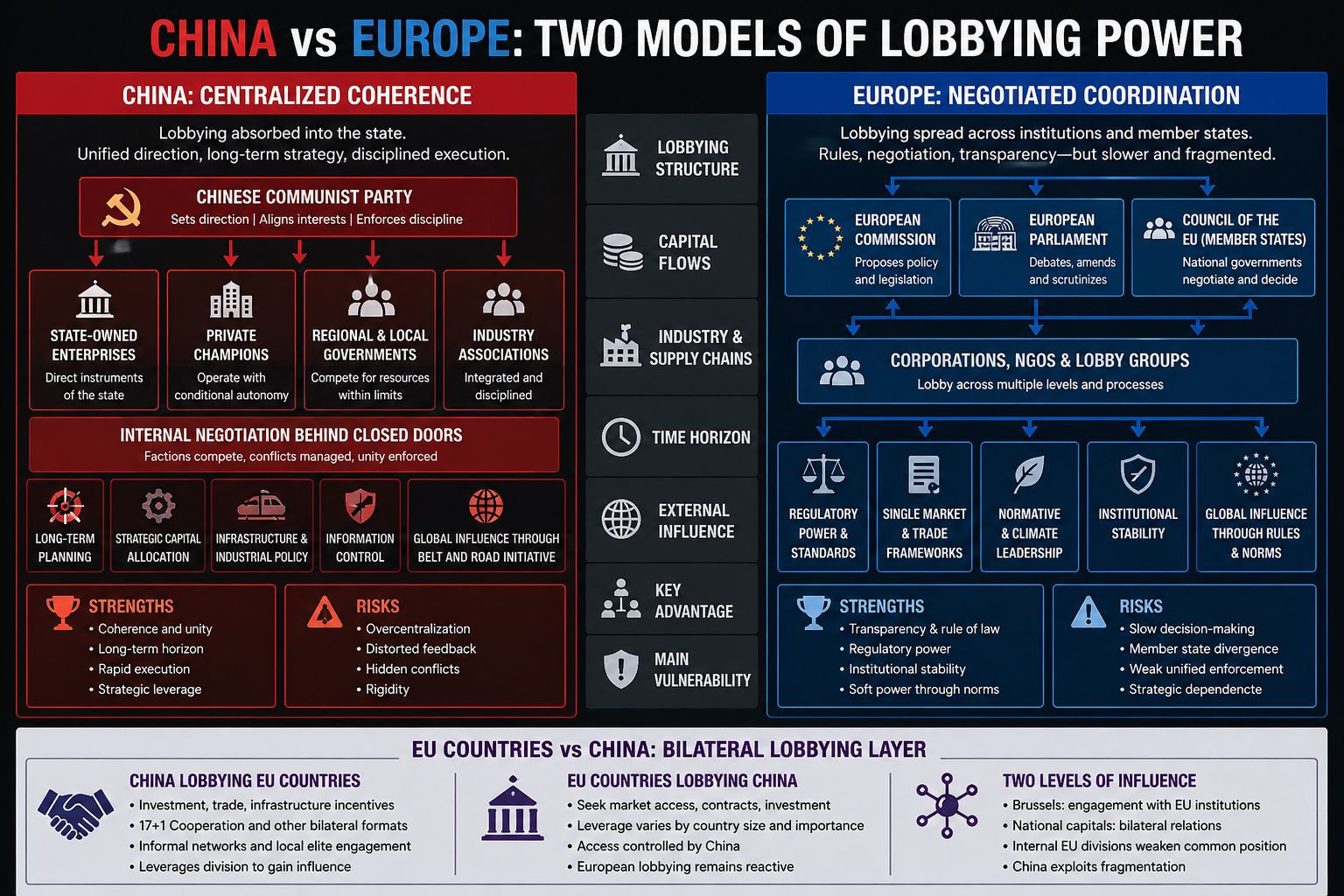
China vs Europe: Two models of lobbying power
At first glance, China and Europe organize influence in fundamentally different ways. On the one hand, China integrates lobbying into the state. On the other hand, Europe distributes lobbying across institutions and member states. Therefore, the contrast does not lie in whether lobbying exists. Rather, it lies in how power structures absorb or disperse it.…
-

China as one mega-lobbyist, America as a battlefield of lobbies
China does not lobby like the West. Instead, it absorbs lobbying into the state. As a result, the boundary between state, corporation, and strategy begins to fade. At the center stands the Chinese Communist Party. It coordinates direction across sectors. Moreover, it enforces alignment when needed. Importantly, it does not eliminate interest groups. Rather, it…
-
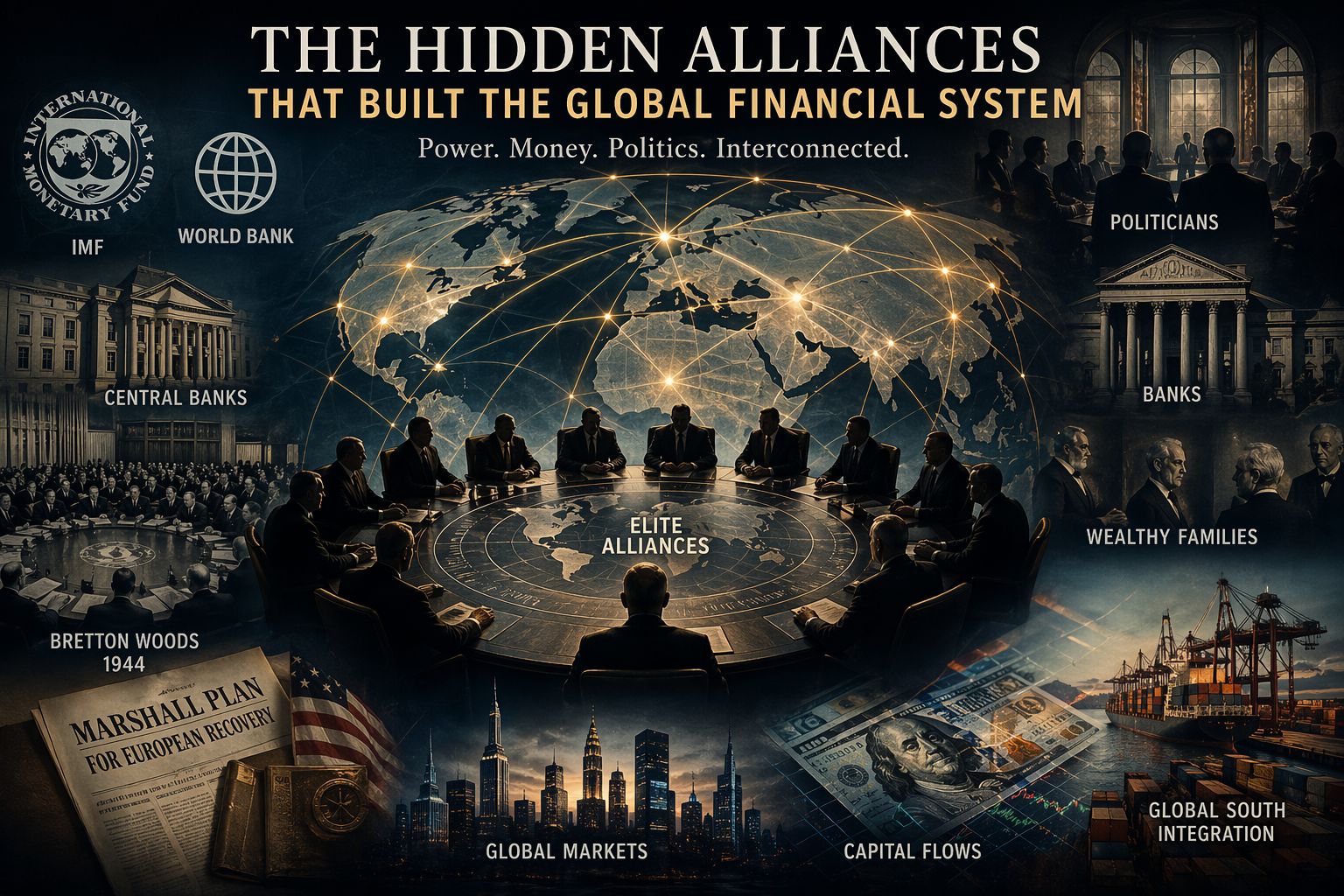
Who built the global financial system? Power alliances
Europe did not rebuild itself in isolation after World War II. It rebuilt through links. Every factory needed foreign capital. Every currency needed external trust. Every government needed partners. At the same time, wealthy families with prewar financial influence did not disappear. They adapted. They repositioned themselves inside the emerging system. Therefore, interconnection did not…
-

Why are Brits enraged at “presence”?
Public anger in the United Kingdom does not come from one event. Instead, it builds over time. People feel it in daily life, in conversations, and especially online. Therefore, what looks irrational often follows a structure. It is not chaos. It is accumulation. Crime: The starting point Crime acts as the initial trigger. Not statistics,…
-

How capitalism exploits ancient instincts: Homo consumens
Humans live in a highly complex economic system. However, the brain did not evolve for it. It evolved in small groups under scarcity, danger, and constant competition. Therefore, capitalism does not create human behavior. It exploits pre-existing instincts. This mismatch defines modern life. The evolutionary foundation of human behavior For hundreds of thousands of years,…
-
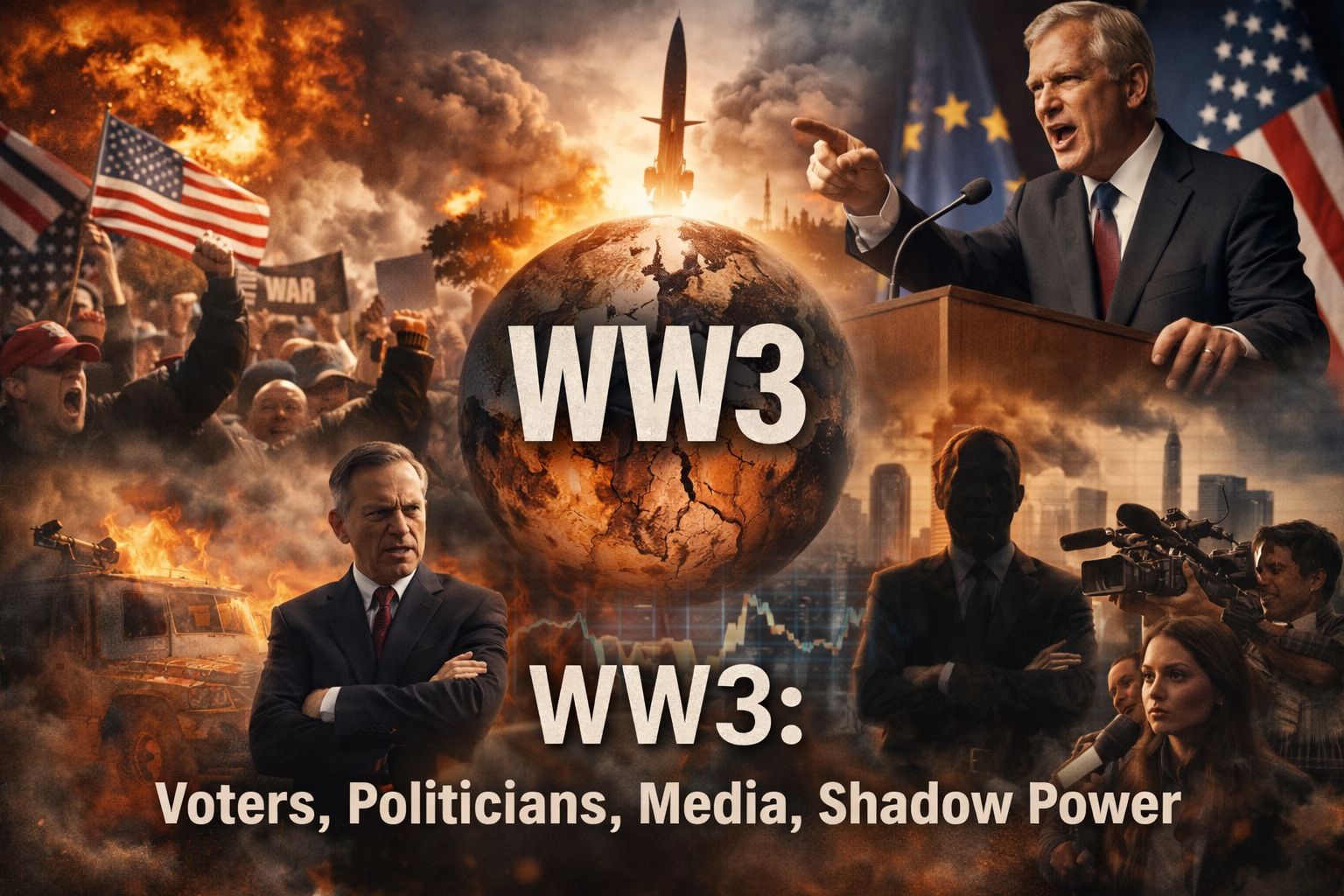
WW3 and stupidity: Voters, politicians, media, shadow eminences
At first glance, people search for a single cause of war. Of course, it is complex, but if we should regard to simplified actors by current morality, this article is for you. They want one villain, one mistake, one decisive moment. However, reality looks very different. Wars emerge from layers of incentives, ignorance, fear, and…
-

How does US democracy survive Donald Trump?
People panic. They imagine one man can destroy everything. They talk about collapse as if it stands one election away. However, that view ignores how the system actually works. It ignores structure, it ignores incentives. It ignores history. The system already survived far worse The United States did not face its first crisis under Trump.…
-
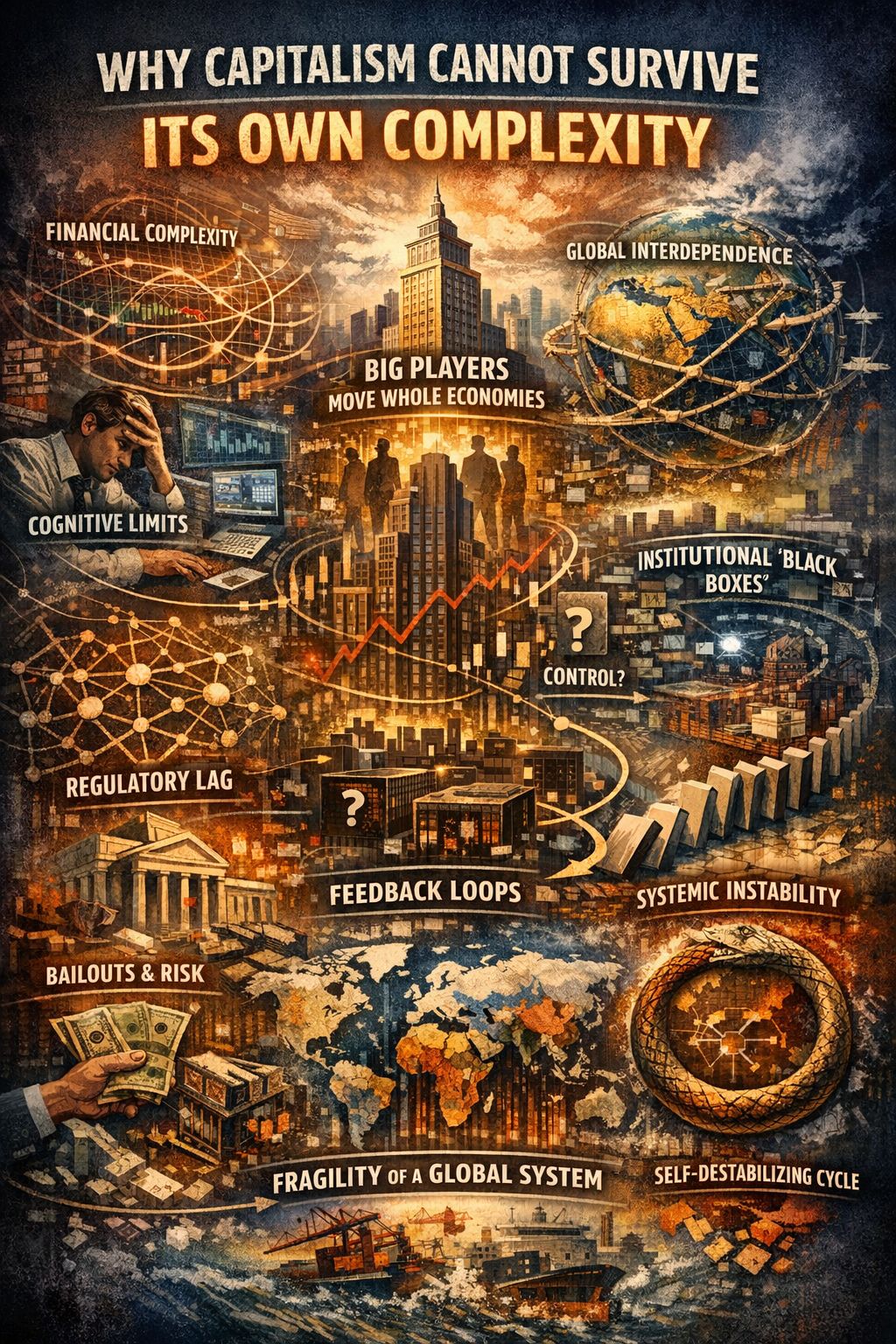
Why capitalism cannot survive its own complexity
At first glance, capitalism looks simple. It connects buyers and sellers. It rewards effort, innovation, and efficiency. It scales across societies and creates wealth at unprecedented levels. For a time, it even appears self-correcting. However, this simplicity belongs to an earlier stage. As capitalism expanded, it did not merely grow. Instead, it accumulated layers. It…
-

The rich manipulation of whole economies
Modern economies appear decentralized. Governments debate. Voters elect leaders. Markets supposedly react to millions of independent decisions. Yet this visible surface hides a far more concentrated structure. Big banks, super-rich families, multinational corporations, and powerful lobbying networks interact constantly behind the scenes. They move capital, shape regulations, and define investment priorities. Consequently, they influence economic…
-

The myth of meritocracy in modern society
Modern societies repeat one central promise. Work hard. Be talented. Stay disciplined. And you will rise. However, this promise describes an ideal, not a mechanism. It comforts the middle class; it legitimizes the elite. It disciplines those at the bottom. Meritocracy sounds rational. It sounds fair. It sounds scientific. Yet when you examine how capital,…