
Western medicine in theory and practice is a huge difference. Alternative medicines are gaining popularity worldwide. People are increasingly seeking natural remedies, holistic approaches, and treatments outside conventional medicine. This trend often stems from dissatisfaction with modern healthcare’s limitations, rising costs, and concerns about side effects. Practices like acupuncture, herbal remedies, and Ayurveda have seen a surge.
In theory, Western medicine is superior because it is grounded in the scientific method. It emphasizes empirical evidence, repeatable experiments, and rigorous peer review. This framework ensures that treatments and interventions are validated through extensive research before being implemented. As a result, risks are reduced, and outcomes are improved. Unlike other medical systems that rely on tradition, intuition, or anecdotal evidence, Western medicine continually evolves. It incorporates new discoveries and technologies, fostering constant innovation. Its focus on understanding disease mechanisms at molecular and systemic levels allows for targeted therapies. Personalized medicine also addresses health issues with precision. Furthermore, Western medicine prioritizes scalability and public health. This is evident in the development of vaccines and antibiotics that have eradicated or controlled numerous diseases globally. While it acknowledges the value of holistic approaches, its foundation on evidence, transparency, and adaptability makes it uniquely effective.
However, in practice, it faces significant challenges. Financial and economic barriers limit access to care for many. A lack of medical personnel further strains its efficiency. Human factors, such as mismanagement or errors, can also impact outcomes. Systemic inefficiencies create gaps between its theoretical potential and its real-world application. Despite its superiority in theory, these flaws reveal the complexities of implementing Western medicine on a global scale.
Between the mid-19th and early 20th centuries, Western medicine achieved more advancements than other medical systems had in the previous 1,000 years.
Mao was cruel, yet not stupid: Traditional medicines fail miserably
Mao Zedong pragmatically recognized the limitations of traditional Chinese medicine (TCM) despite its cultural significance. While publicly supporting TCM to foster nationalism and mobilize resources, he privately dismissed its lack of scientific rigor. He valued Western medicine’s empirical evidence and effectiveness, promoting a hybrid approach to modernize healthcare while preserving ideological control. Mao acknowledged TCM’s historical role but saw the future in scientifically advanced medicine.
Most of it doesn’t work

Traditional medicine is deeply flawed because it simply does not work in most cases. Unlike modern medicine, which is grounded in rigorous testing and evidence, traditional practices are often based on unproven theories, cultural traditions, or superstition. Remedies such as herbal teas, energy healing, or balancing bodily elements lack scientific validation. And fail to provide measurable benefits for most health conditions.
When traditional medicine appears to have an effect, it is often due to placebo responses rather than any true therapeutic value. This failure is especially evident in the treatment of serious illnesses like infections, cancers, or chronic diseases. Traditional methods cannot match the results achieved by scientifically developed treatments. People who rely on traditional medicine for conditions requiring precise, targeted interventions often face prolonged suffering, worsening symptoms, and, in some cases, preventable death. The simple truth is that traditional medicine does not hold up under scrutiny. And its inability to reliably cure diseases demonstrates its fundamental ineffectiveness.
Western medicine in theory and practice: Traditional medicine doesn’t work? Who cares?
Another major flaw is that traditional medicine continues to promote practices that do not work. And often ignoring overwhelming evidence to the contrary. Rooted in historical and cultural beliefs, many of these practices persist despite their failure to produce results. For example, methods like cupping, acupuncture, or consuming specific herbs are often claimed to heal a wide range of ailments. Yet controlled studies consistently show they lack any meaningful impact.
This misplaced trust in ineffective remedies can lead people to delay or entirely avoid seeking evidence-based treatments that could save their lives. In the case of life-threatening conditions such as heart disease or diabetes, reliance on traditional medicine can result in tragic outcomes. Furthermore, many traditional systems resist incorporating scientific advancements, clinging instead to outdated ideas that have been repeatedly proven ineffective. The continued reliance on such practices not only fails to heal but also actively prevents progress in addressing health issues.
No results and unfortunate commercialization
Additionally, the unregulated nature of traditional medicine highlights its inability to deliver consistent, reliable results. Without standardization or oversight, traditional remedies vary widely in preparation, potency, and safety. This lack of consistency often means that treatments are not only ineffective but can also be dangerous. Herbal remedies, for instance, may be contaminated with toxins, heavy metals, or even pharmaceuticals. This causes harm to users instead of healing them.
The commercialization of traditional medicine has further worsened this issue, leading to the proliferation of dubious products and fraudulent claims. Patients seeking help are often sold ineffective or unsafe remedies, wasting resources and delaying access to proven treatments. Ultimately, traditional medicine fails to meet the fundamental criteria of effective healthcare: it cannot reliably diagnose, treat, or cure illnesses. While it may hold cultural or historical value, its inability to provide real solutions underscores why it cannot be considered a legitimate alternative to modern medicine.
How to test medicine?
The history of testing medicine is a fascinating evolution from unverified practices to the rigorous methodologies we use today. Early approaches relied heavily on tradition, superstition, or observational evidence without systematic evaluation. However, during the Islamic Golden Age, Ibn Sina (Avicenna) revolutionized medical thought by recognizing the importance of structured testing. In his influential work, The Canon of Medicine, written between 980 and 1037, he emphasized that treatments must be tested on individuals with specific illnesses. And compared to untreated groups to assess their effectiveness.
He also noted that illnesses could resolve naturally. Therefore, stressing the need to distinguish between a treatment’s real efficacy and the body’s natural healing processes. While his ideas were groundbreaking, they were not widely adopted until centuries later, during the scientific revolution. In the 18th century, pioneers like James Lind conducted controlled studies. For example his experiment proving that citrus fruits cured scurvy. These developments eventually led to the modern randomized controlled trials that form the backbone of evidence-based medicine.
Placebo effect

The introduction of the placebo further refined medical testing by allowing researchers to separate the true effects of a treatment from psychological and natural factors. A placebo, an inactive substance or intervention, is used in control groups to account for the placebo effect. Patients perceive improvement simply because they believe they are receiving treatment. This method is critical for distinguishing between treatments that genuinely work and those that seem effective due to patient expectation. Additionally, many illnesses, such as viral infections, minor injuries, and chronic conditions with fluctuating symptoms, often resolve naturally without intervention. Placebo-controlled trials, which became widespread in the mid-20th century, address these challenges by isolating the actual impact of a treatment from these other factors. Double-blind trials, in which neither the patient nor the researcher knows who receives the active treatment, further ensure objectivity and accuracy. This makes this approach the gold standard in modern medical research.
They insist: It really works!
Despite this rigorous framework, alternative medicine supporters often falsely claim their treatments work. But they overlook the role of placebo effects and natural healing. Many alternative therapies, including homeopathy, crystal healing, and herbal remedies, rely on anecdotal evidence rather than controlled trials. When users report positive outcomes, these often result from the placebo effect, natural recovery, or psychological factors like belief and expectation.
For example, conditions such as headaches, mild back pain, or colds frequently improve on their own. This leads patients to mistakenly credit alternative treatments. Proponents often dismiss the necessity of clinical trials, arguing that historical use or personal testimony suffices as proof of efficacy. However, this reasoning ignores the importance of distinguishing between correlation and causation. Confirmation bias further reinforces these false claims, as successes are highlighted while failures are overlooked. Without the rigorous evaluation provided by placebo-controlled studies, alternative medicine remains scientifically unverified and unreliable, especially for conditions that often improve without any intervention.
Western medicine in theory and practice: Theory part
Western medicine is perfect in theory for many reasons. It is built on the scientific method, ensuring accuracy and reliability. Treatments are developed through observation, experimentation, and analysis, removing guesswork and superstition. Every step follows a clear, logical process: identify a problem, form a hypothesis, test it rigorously, and draw conclusions. This method guarantees that treatments are supported by hard evidence. Unlike traditional or alternative systems, Western medicine does not rely on anecdotal success stories or unverified practices. It demands proof. A treatment must be tested and retested before it is considered effective. This foundation in evidence ensures that only methods with proven results are adopted, making it the most reliable approach.
Western medicine also prioritizes precision. It does not generalize treatments but tailors them to specific conditions and patients. By understanding diseases at molecular and cellular levels, it targets the root causes of illnesses. Antibiotics, for example, combat bacterial infections directly, saving millions of lives. Vaccines go even further by preventing diseases before they occur. Imaging technologies like MRIs, CT scans, and ultrasounds allow doctors to diagnose problems early and accurately. This precision minimizes errors and maximizes treatment effectiveness. Personalized medicine, which uses genetic information to customize care, represents the cutting edge of this precision-focused approach. It ensures that treatments are not just effective but optimized for individual needs, a level of sophistication unmatched by any other system.
Focus on prevention
Another key strength is Western medicine’s focus on public health and prevention. It has eradicated diseases like smallpox and nearly eliminated polio, feats no other system has achieved. Large-scale vaccination campaigns protect millions from deadly illnesses. Advances in sanitation, antibiotics, and healthcare delivery have extended life expectancy worldwide. The emphasis on prevention ensures that health systems are proactive rather than reactive, saving lives and resources. In theory, Western medicine combines evidence-based practices, targeted precision, and preventative strategies to address health challenges comprehensively. Its adaptability, rooted in science, allows it to evolve with new discoveries. This makes it the most robust and theoretically perfect system for advancing human health.
Western medicine in theory and practice: The practial part is bad
Western medicine faces numerous challenges in practice, often deviating from its theoretical perfection. A significant issue is the high cost of healthcare, which places immense financial strain on individuals and families. For many without insurance or adequate financial resources, access to necessary treatments remains out of reach. Profit-driven systems, dominated by pharmaceutical companies and private healthcare providers, prioritize revenue generation over patient outcomes. This focus leads to inflated drug prices, making even life-saving medications unaffordable for many. Additionally, healthcare providers often prioritize treatments and procedures that are more lucrative. This goes regardless of whether they are the most appropriate or necessary for the patient. This profit-first mindset fosters inefficiencies and creates mistrust among patients who feel their well-being is secondary to financial interests.
Over-medicalization is another pervasive issue, with a system that frequently addresses symptoms through medication rather than tackling underlying causes. This approach can result in unnecessary prescriptions and a reliance on pharmaceuticals. This is often at the expense of preventative care or lifestyle-based interventions. For instance, chronic conditions like diabetes or hypertension are often managed with long-term drug regimens rather than a comprehensive focus on diet, exercise, and education.
This tendency to treat symptoms rather than causes not only increases healthcare costs. But also diminishes the quality of life for patients, many of whom endure side effects from medications. Furthermore, over-medicalization fosters a culture of dependency on the healthcare system rather than empowering individuals to take control of their health. This dynamic is compounded by marketing from pharmaceutical companies that promote medication as a quick fix for a wide range of issues. This creates an over-reliance on drugs rather than sustainable, long-term health solutions.
Inequalities
Systemic inequalities further undermine the accessibility and effectiveness of Western medicine. Healthcare disparities are rampant, with marginalized and low-income communities frequently receiving substandard care. These populations often experience limited access to high-quality facilities, specialists, and treatments due to geographic, economic, or systemic barriers. Rural areas, for example, are underserved, with fewer healthcare providers and facilities. This forces patients to travel long distances or forgo care altogether. Urban centers, while better resourced, often have significant disparities in care based on socioeconomic status. Public health programs, though impactful in theory, frequently fail to address these gaps. This leaves underserved populations at higher risk for preventable diseases and poor health outcomes. These systemic flaws highlight the stark gap between the potential of Western medicine and its real-world application, where profit-driven motives, over-medicalization, and unequal access prevent the system from realizing its theoretical promise of comprehensive and equitable healthcare.
Doctors have IQ, talents and carefulness or negligence
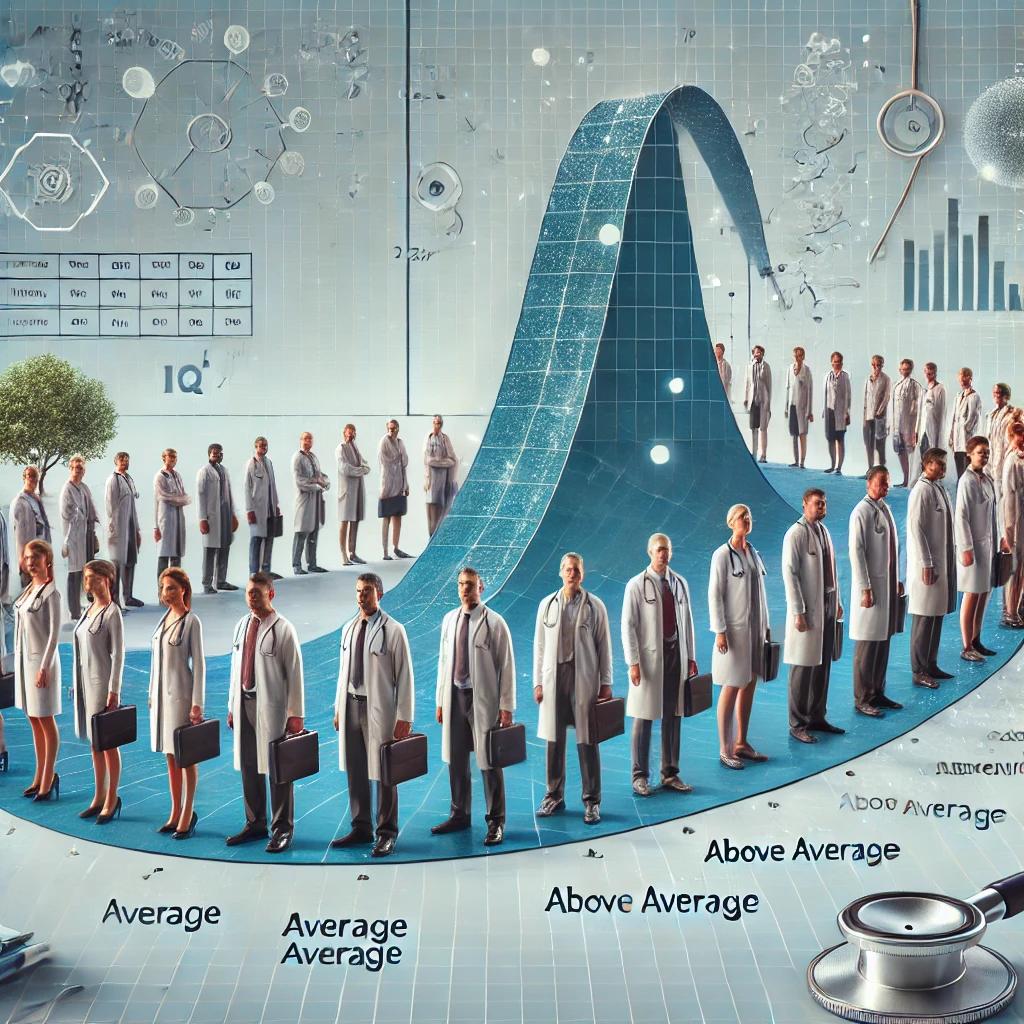
Western medicine, in theory, relies heavily on the qualities and abilities of physicians to function at its peak. Ideally, doctors possess high IQ, enabling them to grasp complex medical concepts and make precise diagnoses. Their talents, derived from this intellectual capacity and honed through years of rigorous education and training, ensure skill in performing intricate procedures and interpreting diagnostic results. Personality traits like empathy, effective communication, and the ability to stay calm under pressure are critical for building patient trust and delivering comprehensive care. Meticulousness, or careful attention to detail, is equally essential, ensuring that treatments are personalized, safe, and effective. Furthermore, physicians are expected to display infinite mental abilities such as adaptability, problem-solving, and creativity, allowing them to innovate and handle unique medical challenges. In theory, Western medicine depends on this combination of IQ, talent, personality, and diligence to achieve its full potential.
However, in practice, many doctors lack these ideal characteristics, which undermines the system’s effectiveness. IQ varies widely among physicians, and not all are able to fully comprehend or apply the complexities of modern medicine. Talents, which should derive from intellectual capacity and training, are unevenly distributed; years of education do not guarantee expertise, and some physicians struggle with precision or mastery in their fields. Empathy and communication skills, which are vital for patient care, are also absent in many practitioners. Some doctors display indifference, arrogance, or poor interpersonal skills, creating barriers to effective treatment and eroding patient trust. Additionally, meticulousness often falls short, with rushed consultations, incomplete evaluations, or misdiagnoses being common in practice. These shortcomings are exacerbated by systemic pressures such as high patient volumes, administrative tasks, and limited time for each consultation, which prevent many physicians from delivering the level of care Western medicine promises in theory.
Same education, diverse outcomes
Furthermore, the adaptability and creativity required to solve complex medical problems are not universal among doctors. Many rely rigidly on established protocols, failing to think critically or adapt when cases deviate from the norm. Over-reliance on technology and diagnostic tools often replaces the nuanced judgment that comes with experience and creativity. Bureaucratic inefficiencies and fragmented care compound these issues, leading to disjointed treatment plans and communication breakdowns among specialists. Additionally, systemic inequalities mean that many patients, particularly those in low-income or marginalized communities, face substandard care. The variability in physicians’ IQ, skills, personalities, and dedication highlights the stark gap between the theoretical perfection of Western medicine and its practical flaws. This discrepancy, driven by human limitations, systemic inefficiencies, and economic barriers, often undermines the potential of the system to deliver equitable and effective healthcare.
Hot potato
In the current healthcare system, patients often become “hot potatoes,” passed from one doctor to another without anyone taking full responsibility for diagnosing the root cause of their ailments. This scenario typically begins when a patient presents symptoms that do not fit neatly into a single specialty or are difficult to diagnose. The primary care physician, constrained by time and overwhelmed with patients, refers the individual to a specialist, often without conducting a thorough initial examination.
The specialist, focused narrowly on their area of expertise, may dismiss the problem if it does not align with their specialty. For example, a neurologist may rule out a neurological condition and send the patient to a rheumatologist, who might then conclude that it is not a rheumatological issue and refer them elsewhere. Each doctor adds tests, notes, and referrals, but no one takes a holistic view of the patient’s condition. This fragmented approach leaves the patient frustrated, untreated, and often without answers, as they shuttle between appointments, repeating their symptoms to an endless chain of providers.
Western medicine in theory and practice: Western medicine perfect in practice
Were Western medicine perfect in practice, such situations would be rare, and patients would receive seamless, coordinated care. In an ideal system, the primary care physician would act as the central figure, dedicating sufficient time to thoroughly understand the patient’s symptoms and medical history. This physician would have access to advanced diagnostic tools and collaborate closely with specialists to determine the cause of the issue.
Specialists, instead of working in silos, would function as part of an integrated team, sharing information and insights through a centralized medical records system. For example, if a patient presented with chronic fatigue and joint pain, the primary care physician would work with a multidisciplinary team that includes rheumatologists, endocrinologists, and neurologists. Together, they would analyze test results, discuss possibilities, and formulate a unified plan of care. The patient would be actively involved in the process, with doctors explaining findings clearly and ensuring that no stone is left unturned in the pursuit of answers.
Seamless efficiency
In this perfect system, delays and unnecessary referrals would be minimized because the focus would be on collaboration, efficiency, and accountability. Physicians would not simply pass the patient along but instead would track progress and ensure that any referrals were purposeful and necessary. Advanced technologies like artificial intelligence could assist by cross-referencing symptoms, medical histories, and existing data to suggest likely diagnoses and guide further investigations. Public health resources would also be mobilized to prevent the patient from slipping through the cracks, providing navigation services and follow-up care. The system would emphasize preventative measures and early intervention, reducing the likelihood of complex, undiagnosed conditions developing in the first place. Ultimately, in a perfect practice of Western medicine, patients would feel supported, understood, and confident that their health concerns were being addressed comprehensively, without the frustration of being treated like a “hot potato.”
The utopia
If Western medicine were perfect in practice, physicians would have endless time and capacity to address every patient’s needs thoroughly, regardless of the complexity of their symptoms or conditions. Economic constraints would no longer dictate the duration of appointments or the allocation of resources. Doctors would spend as much time as necessary to listen, evaluate, and investigate each patient’s concerns. This unlimited capacity would ensure that no symptom, no matter how subtle or seemingly insignificant, went unexamined. Physicians would approach every case with meticulous attention to detail, leaving no possibility unexplored, whether the issue involved a straightforward condition like high blood pressure or a complex, multi-system problem like lupus. Without the pressure of time limits or economic considerations, every patient would receive the full scope of care required to uncover the root cause of their troubles.
No medicine as a business
Economic barriers, which currently create inequalities in healthcare access, would be eliminated in this perfect system. Healthcare would be universally accessible, with no patient denied care due to financial hardship. The system would not be driven by profits but by a commitment to health and well-being. Pharmaceutical companies would operate under strict regulations to ensure that medications were affordable and developed solely for their therapeutic value, not for marketing or profit. Resources would be distributed equitably, ensuring that rural and underserved communities received the same high-quality care as urban centers. Advanced diagnostic tools and technologies, such as genetic testing, AI-driven analysis, and high-resolution imaging, would be universally available, funded by a system that prioritized patient outcomes over economic constraints. This would ensure that even rare diseases or complex conditions like Parkinson’s, Alzheimer’s, or certain cancers were identified and treated promptly, regardless of a patient’s economic status.
Physicians in this perfect system would also benefit from an endless capacity for mental energy and adaptability, free from the burnout and stress that currently plague the profession. Economic considerations would no longer limit staffing levels, ensuring that every healthcare facility was fully equipped with the personnel and resources needed to meet demand. Specialists would collaborate seamlessly, with financial incentives removed from the equation, creating an environment where the patient’s health was the sole priority. Preventative care would be a cornerstone of the system, with economic resources channeled into early detection programs, vaccination campaigns, and lifestyle interventions that could prevent the onset of chronic illnesses like diabetes, cardiovascular diseases, or obesity-related conditions. Ultimately, this idealized version of Western medicine would combine infinite resources, collaborative expertise, and patient-centered care to ensure that every ailment, no matter how challenging, was addressed with precision, compassion, and efficiency.
Western medicine in theory and practice: Conclusion
Western medicine, in theory, represents an unparalleled approach to healthcare. It is built on scientific rigor, evidence-based practices, precision, and adaptability. These strengths make it the most effective system for advancing human health and addressing complex medical challenges. However, in practice, significant gaps emerge. Economic barriers, over-medicalization, systemic inefficiencies, and inequalities often prevent it from realizing its theoretical potential.
At the same time, the growing popularity of alternative medicine presents additional challenges. While some alternative approaches may offer value in complementary care or stress management, the majority lack scientific validation. Practices like homeopathy, energy healing, or herbal remedies often rely on anecdotal evidence, placebo effects, or historical tradition, without providing consistent, measurable results. In many cases, alternative medicine delays or even discourages patients from seeking evidence-based treatments, leading to worsened outcomes. Moreover, the commercialization of alternative medicine has led to the proliferation of unregulated products, false claims, and unsafe practices, further undermining its credibility.
Despite these challenges, Western medicine remains unmatched in its ability to innovate and deliver targeted solutions. To bridge the gap between theory and practice, efforts must focus on increasing accessibility, reducing profit-driven motives, and promoting preventative care. Collaboration, integration of technology, and patient-centered approaches can help achieve a more equitable and effective system.
While no healthcare model is without flaws, Western medicine’s foundation in science provides a clear pathway for improvement. By addressing its shortcomings and countering the rise of unproven alternative practices, it can strive to become not just a theoretical ideal, but a practical reality that serves humanity universally and comprehensively.
Leave a Reply