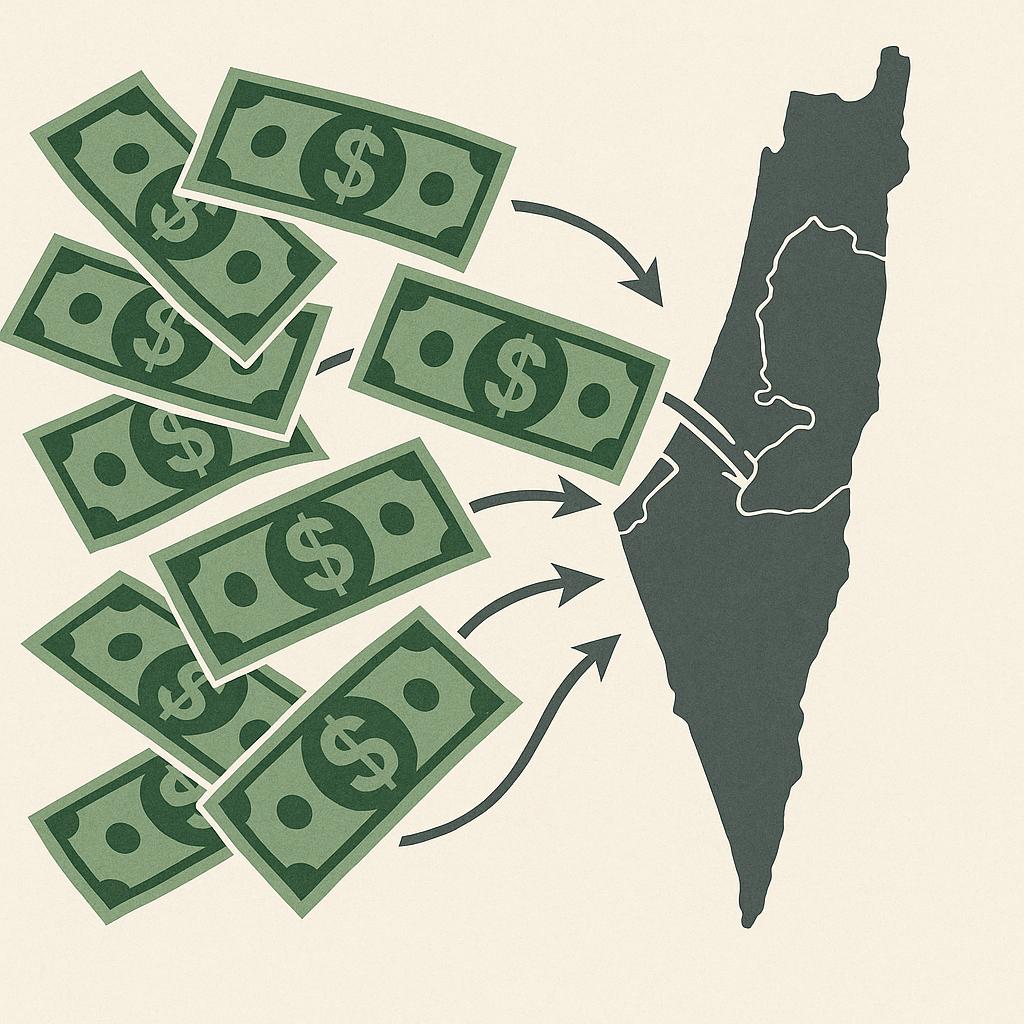
The popular story of Israel is simple. Brave settlers, driven by faith and determination, transformed desert and swamps into a modern state. According to this narrative, Israelis built everything with their own hands and sacrifices. It is a story repeated in textbooks, speeches, and media.
But this story is misleading. Israel did not rise from nothing. It was not built only by settlers on the ground. From the beginning, the project depended on massive financial and political support from abroad. Jewish banking dynasties, wealthy families, and later Western governments provided the money and protection that made Israel possible. To claim that Israelis built the country alone is to erase the global networks that stood behind them.
Zionist settlement before 1948
The first waves of Zionist settlement in Palestine were fragile. Farmers lacked experience, resources were limited, and conflicts with local populations made life difficult. Without help, many of these early projects would have collapsed.
The Rothschild family became the lifeline. Baron Edmond de Rothschild financed dozens of colonies, provided agricultural experts, and bought land. Schools, hospitals, and entire villages carried his name. This was not local self-reliance—it was foreign money shaping the map of Palestine.
The Jewish National Fund, created to buy land for Jewish settlers, collected donations worldwide. From Europe to America, Jewish communities sent money to support colonization. Every acre of land acquired was proof that international networks mattered more than local productivity. Zionism survived not through self-sufficiency, but through global patronage.
The role of Jewish banking dynasties and families
Jewish elites in Europe and America played a decisive role. The Rothschilds were only the most famous. Families like the Montefiores and other financiers gave donations, political influence, and prestige. Their support convinced European politicians that Zionism was a serious project worth tolerating.
This created a system of patron-client relations. Settlers became dependent on donors for survival. The elites, in return, expected loyalty and protection of their investments. Every colony, school, or hospital built with their money tied Israel closer to its global benefactors. From the start, Israel was never simply a local project. It was an extension of elite wealth and elite strategy.
Statehood and foreign funding after 1948
When Israel declared independence in 1948, its economy was weak, its industry small, and its agriculture insufficient. The new state could not fund itself. Survival came from abroad.
West Germany played a decisive role. Reparations paid after the Holocaust gave Israel billions of marks. This money became one of the main sources of the state budget in the 1950s. It financed infrastructure, energy, and even weapons.
The United States soon became another pillar. Aid packages flowed regularly, along with private donations from wealthy Jewish families. By the 1970s, American aid guaranteed Israel’s military superiority. Israeli universities, cultural institutions, and hospitals were often financed by benefactors in New York, London, or Paris rather than taxpayers in Tel Aviv.
Every war reinforced the pattern. Israel did not fight alone. External money, external weapons, and external diplomacy ensured its survival. The myth of total self-reliance ignores this deeper reality.
Why elites defend Israel so strongly
Why do global Jewish elites defend Israel with such intensity? The answer lies in their investment. Israel represents not only a homeland but also a political insurance policy. Its survival guarantees their historical project is not wasted.
Financially, defending Israel protects decades of investments. Politically, it strengthens their influence across Western states. Any attack on Israel can be interpreted as an attack on those who funded and legitimized it. Therefore criticism of Israel is often met with extraordinary hostility—it threatens networks of money, power, and identity that extend far beyond the Middle East.
Israel and Western control
Every major war showed this dependence. During the Suez Crisis of 1956, Israel had to withdraw because the United States and the Soviet Union demanded it. In 1973, Israel relied on an emergency American airlift to survive the Yom Kippur War. Even today, U.S. military aid ensures Israel maintains superiority, but it also ensures obedience. Israel cannot act fully independently. It remains tied to Washington and, indirectly, to European powers.
This obedience is not optional. Without Western support, Israel would face economic collapse, diplomatic isolation, and military inferiority. The myth of Israel as a fully independent actor ignores the deeper truth: it must follow orders from the powers that sustain it.
Additional factors beyond finance
Although elite financing and Western pressure form the core, other elements reinforce the system. The military-industrial complex in the United States profits from constant arms transfers and battlefield testing. Christian Zionist movements in America add lobbying power, framing support for Israel as a religious duty. Together with financial dynasties, these forces create a shield around Israel that resists international criticism.
Concrete examples of dependence
The Weizmann Institute, one of Israel’s top research institutions, was built with donations from abroad. Hebrew University’s early funding came mostly from wealthy Jews in Europe and America. Hospitals, theaters, and even entire towns were often named after donors who lived thousands of kilometers away.
Today, Tel Aviv’s technology sector is praised as innovative. Yet much of its funding comes from U.S. venture capital. Its integration with American defense industries ensures dependence rather than independence. Even Israel’s nuclear program would have been impossible without French and later American cooperation.
Conclusion
The myth of Israelis building their state entirely on their own is false. From the earliest colonies to modern high-tech industries, Israel has depended on outside funding, elite networks, and Western political protection. Also, some powerful Jewish clientelist groups groups are anti-Israel.
Banking dynasties and wealthy families made the Zionist dream possible. Reparations and American aid kept the state alive after 1948. Western pressure forced obedience in times of crisis. Far from being self-made, Israel stands as a project of global elites, maintained through financial flows and strategic dependence.
Understanding this reality explains why Israel is defended so aggressively. To question Israel is to question the power of those networks. And that, more than any desert pioneer story, is the true foundation of the Israeli state.
Leave a Reply