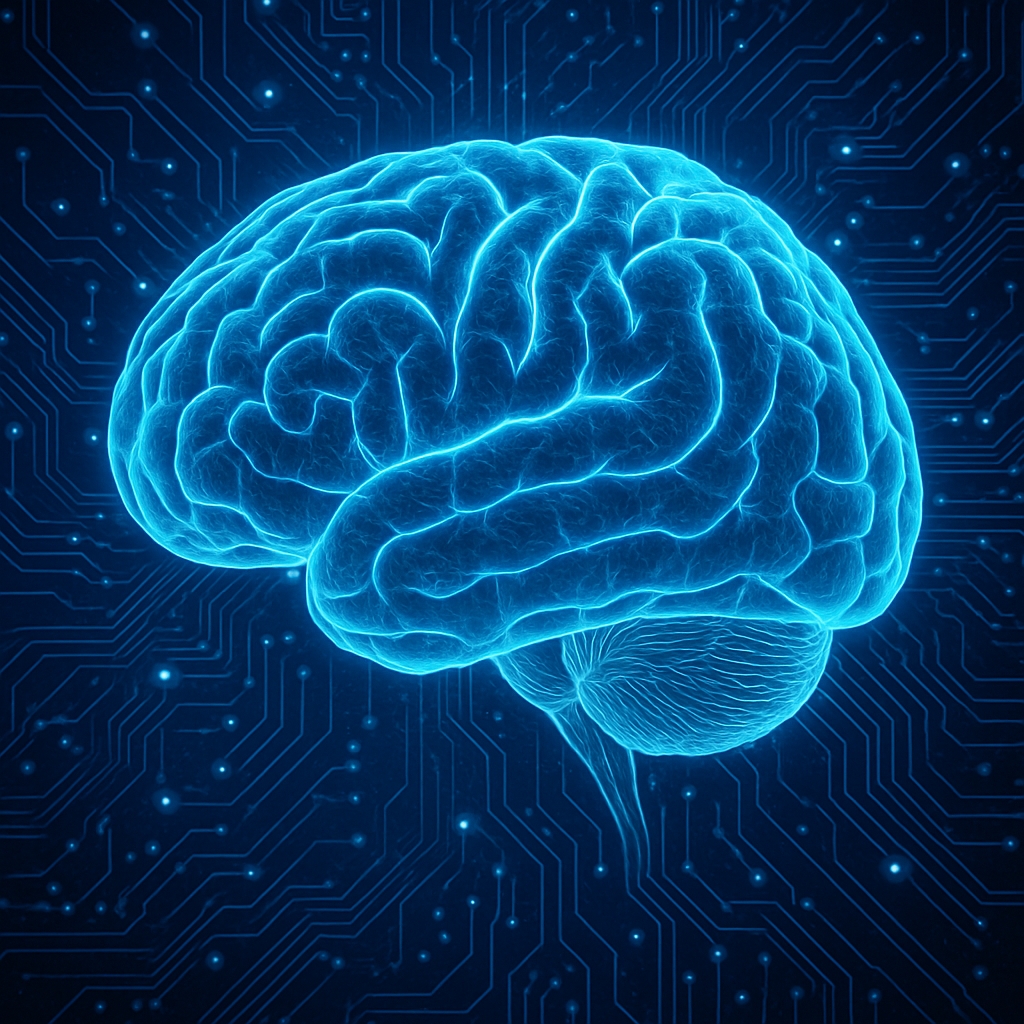
Freethought begins in the brain. It does not start with atheism, philosophy, or rebellion. It starts with understanding how neural circuits create conviction. The brain evolved for quick decisions, not for truth. It rewards certainty and punishes doubt. It embraces tribal loyalty and rejects unfamiliar facts. Therefore freethinking does not fight religion alone. It fights millions of years of biological habits. Once you see this, you finally understand why belief feels natural and skepticism feels difficult. Neuroscience explains everything that religion once claimed to explain and shows why true independence demands mental discipline.
The evolutionary roots of belief
Early humans did not survive by thinking slowly. They survived by making fast assumptions about threats because a wrong guess meant death. The brain therefore evolved toward rapid belief, instant conclusions, and decisive shortcuts. Early humans also saw patterns everywhere. Lightning struck, a hunt failed, a child died, and the mind created meaning even when none existed. Pattern detection saved lives, so natural selection strengthened it. The brain also assumed an agent behind events. A predator hid behind noise. A rival lurked behind shadows. This instinct later produced gods, demons, and invisible forces. Tribes that shared one story survived better than tribes without unity. Shared belief created shared identity, and shared identity created trust. This dynamic still shapes modern religion and politics.
How the brain forms beliefs
The brain predicts first and checks later. It builds a mental model of reality before evidence arrives, and then it updates the model only when necessary. Strong prior beliefs resist change because the brain treats contradictions as noise. Facts lose power when they challenge identity. Belief also saves mental energy. The brain hates overload, so it compresses complexity into shortcuts. Dopamine strengthens this process. Certainty triggers reward circuits, while doubt feels uncomfortable. Belief therefore becomes emotionally addictive.
The emotional engine behind conviction
Emotion fuels belief far more than logic does. The amygdala reacts to threats before conscious thought. Fear produces instant conviction, which is why religious narratives about hell, demons, and punishment feel so intuitive. Moral panic operates the same way. Dopamine rewards the feeling of being right, so certainty becomes pleasurable. Oxytocin deepens loyalty by increasing trust toward in-group members and hostility toward outsiders. Religion, nationalism, and ideology exploit this mechanism. Emotional memories also last longer. Awe, fear, trauma, and ritual imprint themselves in neural pathways and create durable beliefs. Neuroscience explains why dogma survives facts.
Biases that lock the mind
The brain protects belief with psychological armor. Confirmation bias filters information, so the mind seeks data that supports its worldview. Motivated reasoning bends logic to defend identity. Cognitive dissonance creates internal discomfort when beliefs collide, and the brain resolves this discomfort by strengthening one belief at the expense of another. Identity-protective cognition turns ideas into tribal markers, which makes any challenge feel personal. Overconfidence bias then convinces people that they know more than they actually do. These biases direct the mind toward emotional safety, not toward truth.
Why religious belief feels natural
Religion fits the brain perfectly. Fear circuits accept stories about divine punishment. Reward circuits welcome stories about salvation, forgiveness, and paradise. Oxytocin reinforces loyalty to the religious community. Ritual synchronizes movement, breathing, and emotion, which strengthens bonding and obedience. Hierarchy activates ancient primate instincts that link dominance to protection. Religion uses every evolutionary shortcut, and that is why it feels natural and spreads so easily.
Political belief as a neurological extension of faith
Political belief behaves like religion because it relies on the same neural systems. Brain scans show that political loyalty activates the same regions as religious loyalty. Tribal cognition sharpens boundaries: “us” becomes sacred and “them” becomes dangerous. Fear-based messaging triggers the same amygdala responses that sermons once triggered. Ideological satisfaction produces dopamine, so political belonging becomes intoxicating. The mind treats parties, nations, and ideologies as sacred families. Neuroscience shows that the difference between political faith and religious faith is minimal.
Freethought as a struggle against biology
Freethought challenges instincts that once ensured survival. The brain prefers conformity to isolation. It prefers certainty to confusion. It prefers tribal loyalty to independent judgment. Freethought demands conscious resistance. It forces the mind to question its shortcuts and examine its impulses. It requires metacognition, the skill of observing your own thoughts before acting on them. You slow down emotional reactions and evaluate them instead of obeying them. You break habits that evolution built into your neural circuits. Logic enters a system designed for instinct, and independence enters a system designed for obedience. This tension defines the freethinker’s life.
The neuroscience of doubt
Doubt comes from the prefrontal cortex, the region responsible for planning, reflection, self-critique, and long-term thinking. This part of the brain restrains emotional impulses from deeper structures. Inhibitory control allows a person to suppress immediate reactions and evaluate information more slowly. Intellectual humility reshapes neural expectations and teaches the brain that uncertainty does not threaten identity. Education strengthens these circuits. Reading, debate, scientific reasoning, and philosophical analysis train the mind to override emotion. Freethought becomes easier as these networks develop.
Why authoritarian systems fear neuroscience
Authoritarian regimes understand how the mind works. They manipulate fear because fear overrides reason. They saturate society with repetition because repetition hardens belief. They build mythologies around leaders because leadership triggers obedience circuits inherited from primate psychology. Neuroscience exposes these tactics. It reveals how propaganda hijacks reward systems, how identity suppresses truth, and how fear rewires decision-making. Regimes fear this knowledge because manipulation loses its power once the population understands the mechanisms behind it.
Tools that strengthen freethinking
Meditation reduces emotional reactivity and strengthens prefrontal control. Scientific literacy teaches people how to evaluate evidence and understand uncertainty. Philosophy sharpens logical thinking and shows the limits of intuition. Exposure to diversity expands cognitive flexibility by forcing the mind to compare different worldviews. Daily intellectual discipline rewires neural patterns until skepticism becomes automatic. Freethought turns into a trained habit, not a spontaneous mood.
The digital battlefield for the believer’s brain
Social media exploits the same neural systems that religion and propaganda exploit. Algorithms push outrage because outrage keeps people online. Fear spreads faster than facts and forms quicker neural imprints. Echo chambers reinforce identity and repel contradictory information. The attention economy competes for dopamine, oxytocin, and emotional energy. The digital world shapes belief more aggressively than any priest, dictator, or propagandist ever did.
Freethinkers International and the cognitive fight for autonomy
Freethinkers International fits this environment because it avoids tribal manipulation. It teaches neuroscience in clear language and warns people about cognitive vulnerabilities, it exposes the methods behind propaganda and identity-based thinking. And it builds communities without dogma and helps individuals break from inherited belief structures. It creates a global network of independent minds who value autonomy over ideology. Freethought grows stronger when cooperation replaces tribalism.
Conclusion
Belief grows from biology. The mind forms conviction long before it evaluates evidence. Emotional systems dominate rational systems, and tribal circuits shape judgment more strongly than logic ever can. Religion, ideology, nationalism, and propaganda exploit these mechanisms. Freethought wins only when people understand how their own brain works. The mind becomes free when it learns how its instincts deceive it. True autonomy begins with neuroscience, not with slogans. Freethought survives because people choose to master their biology instead of serving it.
Leave a Reply