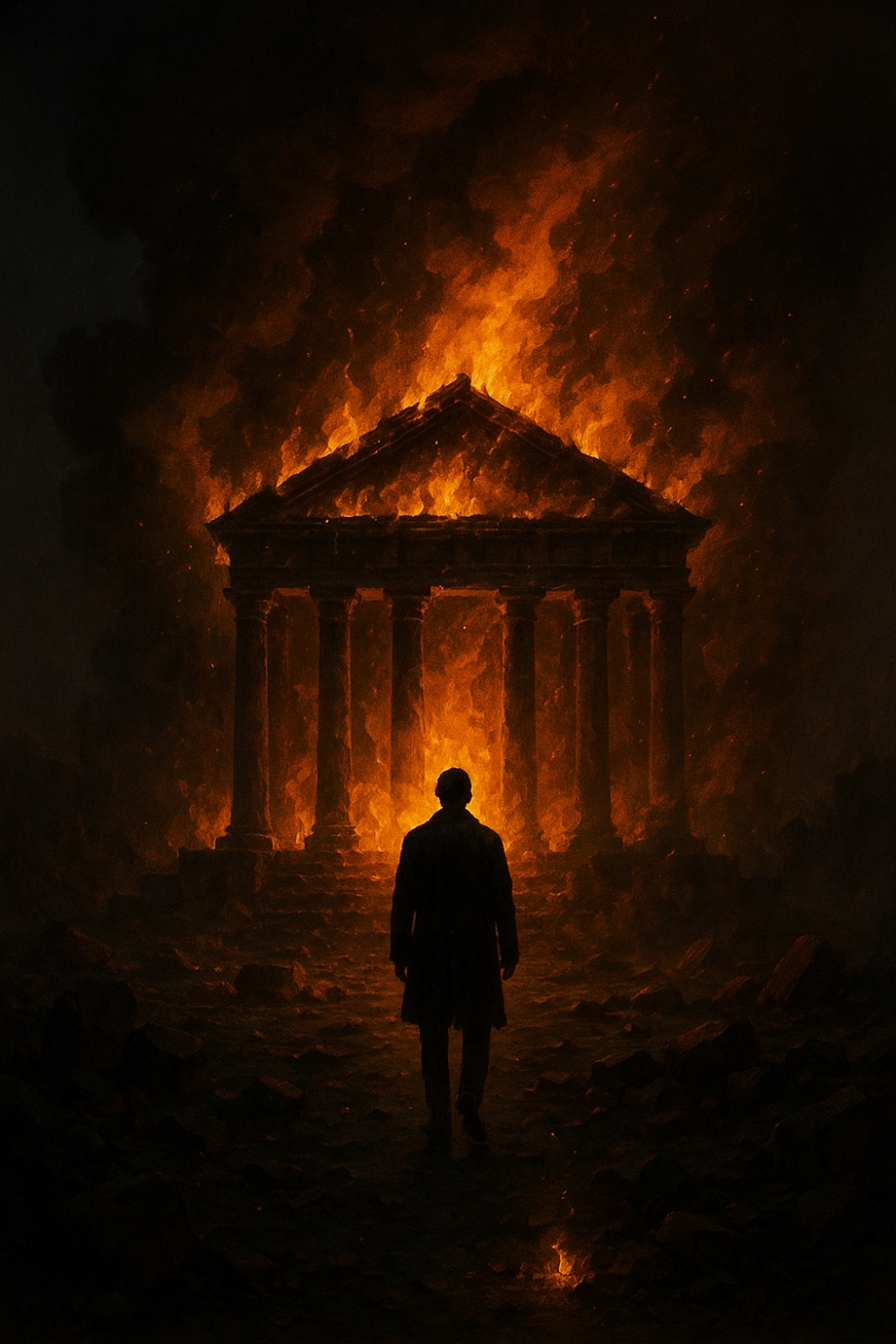
Leaving religion feels like dismantling a world inside your skull. You tear out a belief system that shaped your fears, your morals, your identity, your family bonds, your daily routines, and your sense of cosmic safety. And you do not simply reject a doctrine. You uproot an entire psychological ecosystem.
This manual explains every hidden mechanism. It explains every fear, it explains every emotional reflex. It shows you how to break each chain, it shows you how to rebuild your mind with clarity. And it takes from previous drafts and expands everything. Nothing remains missing, nothing remains shallow. Nothing stays unexamined.
You receive a complete roadmap for the most difficult transition a mind can make.
Why leaving religion feels like psychological violence
Religion enters early. It enters when your brain cannot resist. It enters when fear circuitry still forms, it enters when you do not question authority. Therefore leaving religion does not feel like changing opinions. It feels like betraying something fused to your nervous system.
You feel wrong even when you are right, you feel danger even when none exists. You feel guilt even when you hurt nobody. This emotional dissonance creates suffering. This manual explains why and shows how to heal it.
The emotional brain vs. the rational brain
Your rational brain thinks. Your emotional brain reacts. Religion targets the emotional brain. It imprints fear of hell, it imprints fear of punishment. It imprints guilt for thoughts. It imprints obedience.
Therefore your rational brain may stop believing, yet your emotional brain continues shaking. This explains why leaving religion feels impossible at first. The two brains disagree.
Childhood imprinting: The first prison
Religion reaches children before logic. Children lack a critical defense. They absorb threats. They absorb rituals, they absorb supernatural narratives; they absorb emotional shocks.
Fear of hell arrives before understanding probability, fear of sin arrives before understanding psychology. Fear of divine judgment arrives before understanding imagination. These early shocks carve grooves into the brain. They survive into adulthood.
This manual teaches you how to erase those grooves.
Evolutionary psychology: Why fear sticks
Your ancestors survived because fear reacted fast. They feared snakes, storms, predators, starvation, and darkness. Religion mapped supernatural threats onto these ancestral instincts. Therefore hell feels like a snake, not a doctrine. Demons feel like predators, not metaphors. Divine surveillance feels like a lurking animal, not a theological idea.
Your brain learned to fear things that do not exist. You must retrain those circuits.
The three layers of religious control
Religion traps you through three systems.
Cognitive control: doctrines, commandments, dogma, sacred texts.
Emotional control: fear, guilt, shame, punishment imagery.
Social control: family pressure, community surveillance, honor systems.
You fight all three. That is why leaving religion hurts more than leaving politics or ideology.
Loss of certainty: The hidden shock
Religion offers certainty. It gives final answers, it gives cosmic order. It gives emotional anesthesia. Once you leave, you lose that comfort. You face uncertainty. Uncertainty feels dangerous. It feels like lack of gravity.
Your mind prefers a comforting lie to a threatening truth. Learning to stand on uncertainty becomes part of healing.
Why many people return after disbelief
People return because fear overrides logic. They return because identity collapses. They return because community pressure crushes them, they return because their emotional brain demands stability. They sometimes return even when they know the doctrine is false.
This manual prevents that regression.
Emotional vs. cognitive belief
You can reject doctrine intellectually while still reacting emotionally; you can deny hell while still fearing it. And you can deny sin while still feeling shame. You can deny God while still feeling watched.
Therefore your emotions must deconvert as well.
This manual focuses heavily on emotional deconversion.
The surveillance mind: The watcher inside
Religion implants an internal watcher. You imagine divine eyes observing you, you feel judged. And you feel monitored. You feel exposed. This watcher survives disbelief. It functions like a phantom supervisor.
You must dismantle the watcher, you must identify its triggers and you must challenge its authority. You must create a mind without supervision.
CBT foundation: A thought is only a sentence
Religion teaches that thoughts carry danger. It teaches that doubt equals sin., it teaches that desire equals corruption. It teaches that fear equals spiritual warning. These lies created chains.
CBT destroys these illusions. A thought carries no power; a thought creates no cosmic reaction. A thought cannot condemn you. Once you grasp this, fear weakens.
Identifying automatic religious thoughts
Religious conditioning creates automatic thoughts.
“I will go to hell.”
“God will punish me.”
“My family will reject me.”
“I deserve suffering.”
“I betrayed moral truth.”
These thoughts appear instantly. They appear involuntarily. You write them down. You challenge them, you replace them.
Cognitive distortion: Catastrophizing
Religion exaggerates consequences. It predicts eternal punishment for tiny mistakes. It links normal behavior with cosmic disaster.
You crush catastrophizing through prediction testing, you predict harm and you break a rule. You observe. Nothing happens. The distortion collapses.
Cognitive distortion: Emotional reasoning
Fear feels real. Therefore religion convinces you fear equals truth. You fear hell, so you assume hell exists, you fear sin, so you assume thoughts carry moral weight. You fear divine anger, so you assume divine anger exists.
CBT teaches separation. You feel fear because of conditioning, not supernatural reality.
Cognitive distortion: Black-and-white thinking
Religion loves extremes. Saved or damned. Pure or sinful. Chosen or rejected. These binaries distort moral reasoning.
CBT restores nuance. You learn that morality exists in degrees. You learn that your humanity cannot be divided into holy or evil.
Cognitive distortion: Magical thinking
Religion links unrelated events. “I skipped prayer, so the accident happened.” “I doubted, so God punished me.” This is magical thinking.
You break it with probability, you observe random events. And you compare with secular lives. You see no pattern. The illusion fades.
Cognitive distortion: Guilt inflation
Religion magnifies guilt. You feel guilty for thoughts; you feel guilty for desires. And you feel guilty for normal behavior. You feel guilty for curiosity.
CBT removes guilt by exposing its origin. Most guilt came from human-made rules, not moral truth.
Fear of hell: The deepest prison
Hell attaches to survival circuits. It bypasses reasoning, it terrifies every ex-believer; it returns in nightmares. And it returns during stress. It returns during silence.
This fear dies through controlled exposure.
You read hell imagery.
You analyze its history.
You track your reactions.
You challenge the theological contradictions.
You repeat this process.
Fear weakens.
Ritual dependency
Rituals comfort the mind. They calm anxiety, they create structure. They create emotional stability. When you stop rituals, your brain panics.
You must replace them; you need new routines. And you need new grounding habits. You need new daily rhythms.
Craving the old comfort
Your brain misses ritual repetition. It misses collective chanting, it misses prayer trance. It misses the dopamine hit of obedience.
You replace religious comfort with secular comfort, you replace prayer with meditation.; you replace confession with journaling. You replace ritual singing with music. You rebuild comfort without superstition.
The collapse of meaning
Religion gave meaning artificially. It gave a story. It gave purpose. Once you leave, meaning collapses. You feel empty, you feel directionless. You feel hollow.
This collapse terrifies people. It pushes them back.
You rebuild meaning intentionally.
Rebuilding meaning through curiosity
List everything that sparks curiosity.
List everything that feels valuable.
List everything that creates joy.
List everything that creates purpose.
Meaning returns through exploration, not obedience.
Identity loss
Religion told you who you are. Once you leave, identity collapses. You feel erased. You feel undefined. And you feel like a silhouette with no center.
Identity reconstruction becomes essential. You rebuild yourself from the ground up.
Identity reconstruction through values
List five values you admire.
List five you reject.
List five you want to embody.
Turn each into an action.
Repeat daily.
Identity grows from repeated action.
Social fallout: The pain of rejection
Families panic. Communities judge. Friends distance themselves. You face guilt; you face shame, you face anger and you face pressure.
You protect yourself with boundaries, you protect your identity through assertiveness. And you protect your autonomy through emotional detachment.
Community loss and Isolation
You lose shared rituals. You lose group belonging, you lose cultural cohesion. And you may lose your entire social network. This isolation feels brutal.
You build new networks., you find secular groups, you find online communities. And you find rationalist circles. You replace old belonging with new belonging.
Why community pressure controls so many
Humans evolved for tribe life. Isolation once meant death. Religion exploits this instinct. Belong or die becomes belong or burn. The emotional brain obeys.
You must override tribal fear.
Betrayal trauma
Leaving religion makes you feel betrayed by leaders, texts, doctrines, and parents who repeated fear. You feel lied to, you feel used. You feel manipulated. This creates moral injury.
You process betrayal by acknowledging it, you validate your emotions. You reclaim ownership of your mind.
Moral injury and trust reconstruction
When a belief system betrays you, trust collapses. You struggle to trust yourself. You struggle to trust others.
You rebuild trust step by step.
Choose small decisions.
Validate your judgement.
Increase complexity.
Rebuild confidence.
Religious trauma syndrome
Some experience full trauma. They lived in high-control groups, they lived in cults. They lived under authoritarian doctrines. Trauma follows.
Their fear is deeper, their guilt is darker; their dissociation is stronger. Their panic arrives faster. These cases require trauma integration.
Trauma integration techniques
Name the memory.
Describe emotional reaction.
Describe bodily reaction.
Ground yourself with breath.
Reframe the memory.
Reduce intensity.
Repeat until the memory loses sharpness.
Exposure to forbidden knowledge
Religion blocks information. It censors science. It censors philosophy. It censors history. It censors skepticism. You must undo this.
You expose yourself to forbidden ideas. You read what was banned. You study what was hidden. You break taboo after taboo.
Reading structure
Science explains nature.
Philosophy explains thought.
History explains belief origins.
Psychology explains fear.
This combination replaces superstition with knowledge.
Journaling for insight
Journaling reveals patterns. It shows distortions, it shows fears. And it shows progress. It stabilizes thoughts.
Write without censorship. Write without fear.
Behavioral activation: Building life after religion
Your schedule once revolved around rituals. Now you build a new structure.
Morning: reflection.
Afternoon: learning.
Evening: exercise.
Night: writing.
Habits replace rituals.
Nervous system rewiring
Your brain adapts slowly. It rewires through repetition; it rewires through practice. It rewires through exposure.
Daily repetition breaks old patterns.
Relapse detection
Old patterns return under stress.
You notice guilt spikes.
You notice prayer urges.
You notice fear waves.
You notice ritual cravings.
You intervene early. You challenge them instantly.
Long-term defense against old conditioning
You build skepticism.
You build boundaries.
You build autonomy.
You build rational habits.
You build self-respect.
These defenses prevent regression.
The final state: The Fully Autonomous Mind
Fear dies.
Guilt dissolves.
Shame disappears.
Ritual cravings vanish.
Identity stabilizes.
Meaning returns.
You guide your mind, you choose your values; you stand without divine surveillance. And you think without superstition. You live without fear.
This is the complete transformation.
This is the mind religion tried to control.
This is the mind you reclaim.

I had it easy. My upbringing was atheist.

But not looking to the church when I look back is priceless. I am free.
Leave a Reply