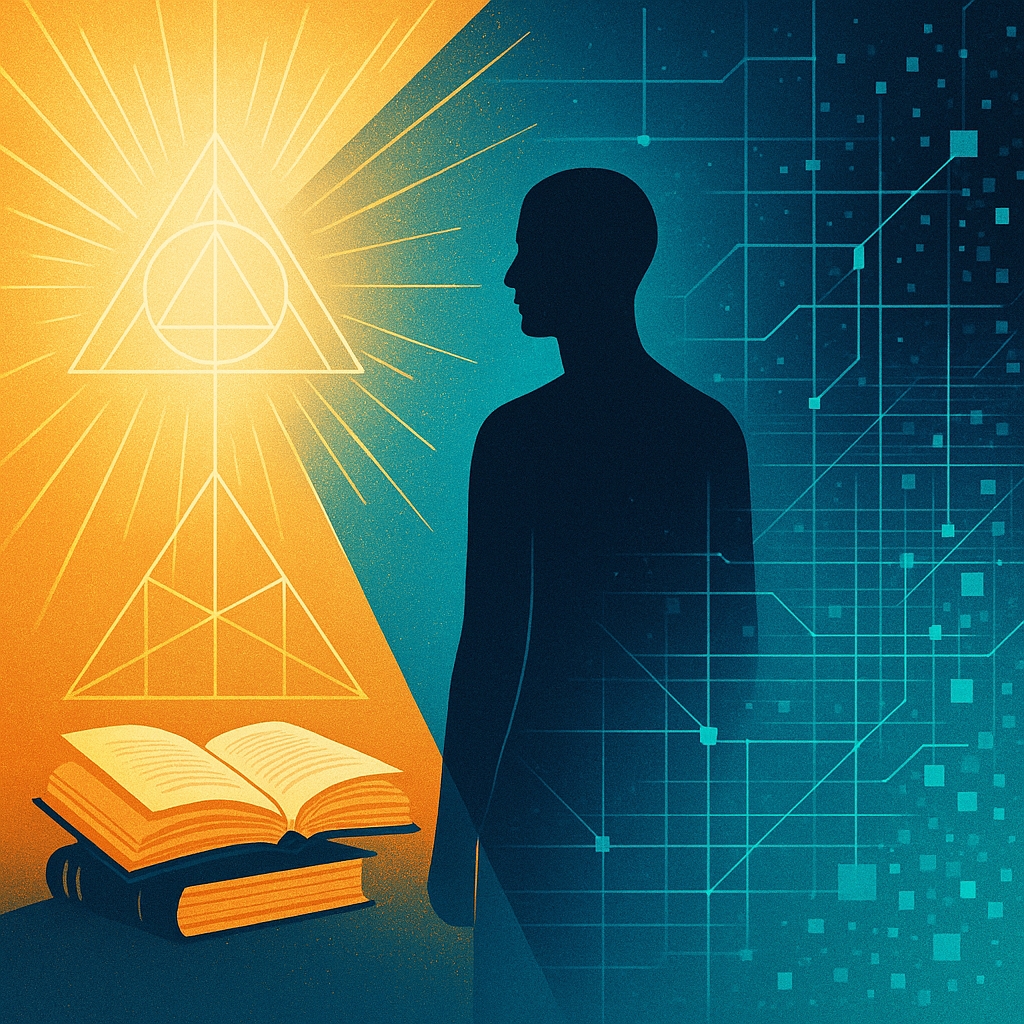
The Enlightenment reshaped how humanity thinks, argues, and governs. It turned reason into a public force rather than a private habit, and it built the mental architecture of modern life. Today we swim in digital noise, emotional narratives, identity battles, and ideological tribalism. Therefore the Enlightenment feels both triumphant and threatened. People enjoy technologies that reason created, yet they distrust the scientific and institutional systems that sustain them. They celebrate individuality, yet they demand tribal loyalty. They defend freedom, yet they attack the structures that protect it. Consequently the Enlightenment survives in our machines but erodes in our culture, and this paradox forces a serious re-examination of its legacy in a fractured age.
From darkness to inquiry: The birth of Enlightenment ideals
The Enlightenment grew from late medieval skepticism, Renaissance humanism, and early scientific breakthroughs. These forces pushed truth away from revelation and toward verification. Empiricism replaced dogma, skepticism replaced superstition, and reason became a universal tool rather than a privilege of scholars. Europe struggled under rigid hierarchies and theological control, yet that struggle created ideal conditions for a worldview built on evidence. People measured nature, examined society, and questioned every inherited belief. Consequently inquiry turned into a cultural force that carried humanity into modernity.
The Philosophical architecture of Enlightenment thought
Enlightenment thinkers pursued different questions but shared one ambition. They wanted to liberate the human mind. Locke grounded political legitimacy in natural rights and weakened divine authority. Hume dismantled superstition through radical doubt and sharpened awareness of human cognition. Kant insisted on moral autonomy and built ethics on universalizable reason. Voltaire attacked fanaticism with relentless satire and transformed ridicule into a weapon against tyranny. Together they created a worldview that valued clarity over mystery, argument over obedience, and progress over resignation. Consequently people began to believe that truth emerges from inquiry rather than tradition and that the mind can illuminate the world without sacred intermediaries.
Enlightenment politics: From divine thrones to secular constitutions
The Enlightenment transformed political life by removing heaven from the throne room. Kings no longer ruled because heaven blessed them. They ruled because laws limited them. Constitutionalism replaced divine mandate and created a system where authority required human justification. Freedom of speech challenged censorship. Equality before the law broke feudal privilege. Separation of powers prevented tyranny. These ideas inspired revolutions that shaped the modern state and produced political systems resilient enough to survive centuries of conflict. However these great achievements carried contradictions that later societies had to confront.
Scientific method: The Enlightenment’s most powerful weapon
The Enlightenment supplied science with its true engine. Method replaced speculation. Observation, falsifiability, precision, and prediction became the new standards. Reality became measurable rather than mystical. Mathematics linked with physics. Physics linked with chemistry. Chemistry linked with biology. Industrial society emerged from these connections. Electricity changed cities. Medicine prolonged life. Engineering built infrastructure. Digital science created entire virtual worlds. Consequently the Enlightenment did not merely encourage science. It institutionalized science as the dominant framework for truth. Yet scientific discoveries also revealed unsettling uncertainties, and these uncertainties later attracted postmodern critique.
Secular morality and the rise of human dignity
The Enlightenment broke religion’s monopoly on ethics. Morality no longer depended on divine order. It depended on human reasoning. Secular humanism, utilitarianism, and rights-based ethics grounded moral judgment in human welfare rather than scripture. People recognized that compassion, justice, and cooperation grow naturally from social life. And they embraced moral autonomy as a central value. This shift liberated individuals from clerical authority and created the foundation for modern universal rights.
The Postmodern reaction: Doubt turned inward
Postmodernism grew from the wreckage of total wars, collapsing empires, and rising distrust of authority. Therefore it challenged objectivity, universalism, and stable truth. Knowledge became framed as something produced by power rather than discovered by inquiry. Narratives multiplied into fragments. Identity overshadowed rationality. Foucault exposed institutions as systems of control. Derrida fractured language until meaning destabilized. Baudrillard argued that symbols replaced reality itself. Consequently postmodernism dismantled Enlightenment confidence and replaced coherent truth with suspicion directed at every universal claim.
Truth under siege: Enlightenment rationality meets Postmodern culture
Once postmodern ideas spread, truth became negotiable. Identity replaced universal citizenship. Feelings replaced analysis. Narrative replaced evidence. People trusted personal experience more than data and group loyalty more than logic. Science turned into just one viewpoint among many. Institutions struggled to defend authority. Consequently rationality fought for survival in a public arena shaped by emotion, tribal instinct, and relativism, and the Enlightenment framework that once unified societies lost ground.
Digital Chaos: Enlightenment tools in a Postmodern Arena
The internet emerged from Enlightenment engineering, yet algorithms amplify emotion rather than logic. Outrage receives more attention than nuance. Misinformation spreads faster than knowledge. Digital tribes form echo chambers that reject external evidence. Consequently Enlightenment rationality thrives inside laboratories but collapses inside digital ecosystems designed to manipulate attention. People gain unlimited information yet lose shared meaning. This paradox accelerates cultural fragmentation and weakens every Enlightenment ideal.
What the Enlightenment got brilliantly right
The Enlightenment achieved victories unmatched by any other intellectual movement. It created the scientific method as humanity’s most reliable path to truth. It built secular governance that protects pluralism; it defined universal rights that grant individuals moral value. And It institutionalized criticism as the engine of progress. Every modern advancement relies on these achievements. No alternative framework matches their coherence or stability. Consequently the Enlightenment remains essential for any society that values truth, human dignity, and rational inquiry.
Where the Enlightenment fell short
The Enlightenment misjudged human nature. It assumed rational behavior even though psychology reveals constant bias; it underestimated tribal instincts and overestimated universal reasoning; it ignored structural inequalities that distort opportunity. It believed free debate naturally produces truth even though power, media, and culture shape every discussion. Consequently its political model excelled in theory yet struggled in practice. These vulnerabilities opened the door for postmodern critique.
Toward a new rationality: Beyond the old battles
A new rationalism must preserve Enlightenment clarity while integrating postmodern insights. Reason must address identity rather than deny it. Science must speak to emotion rather than avoid it. Universal principles must adapt to cultural diversity without collapsing into relativism. Consequently modern rationality must become empirical, psychological, pluralistic, and resilient. It must defend truth against manipulation and protect inquiry against tribalism while avoiding dogma from both Enlightenment purists and postmodern skeptics.
Conclusion: The Enlightenment lives on – If we choose to defend It
The Enlightenment freed humanity from superstition and tyranny and built the foundations of the modern world. Postmodernism revealed blind spots but fractured shared reality. Now societies face a choice. They can revive inquiry or surrender to fragmentation. If they defend Enlightenment values, they preserve the only proven framework for truth. If they abandon them, they enter a world ruled by emotion, confusion, and distrust. The future depends on which path we choose.
Leave a Reply