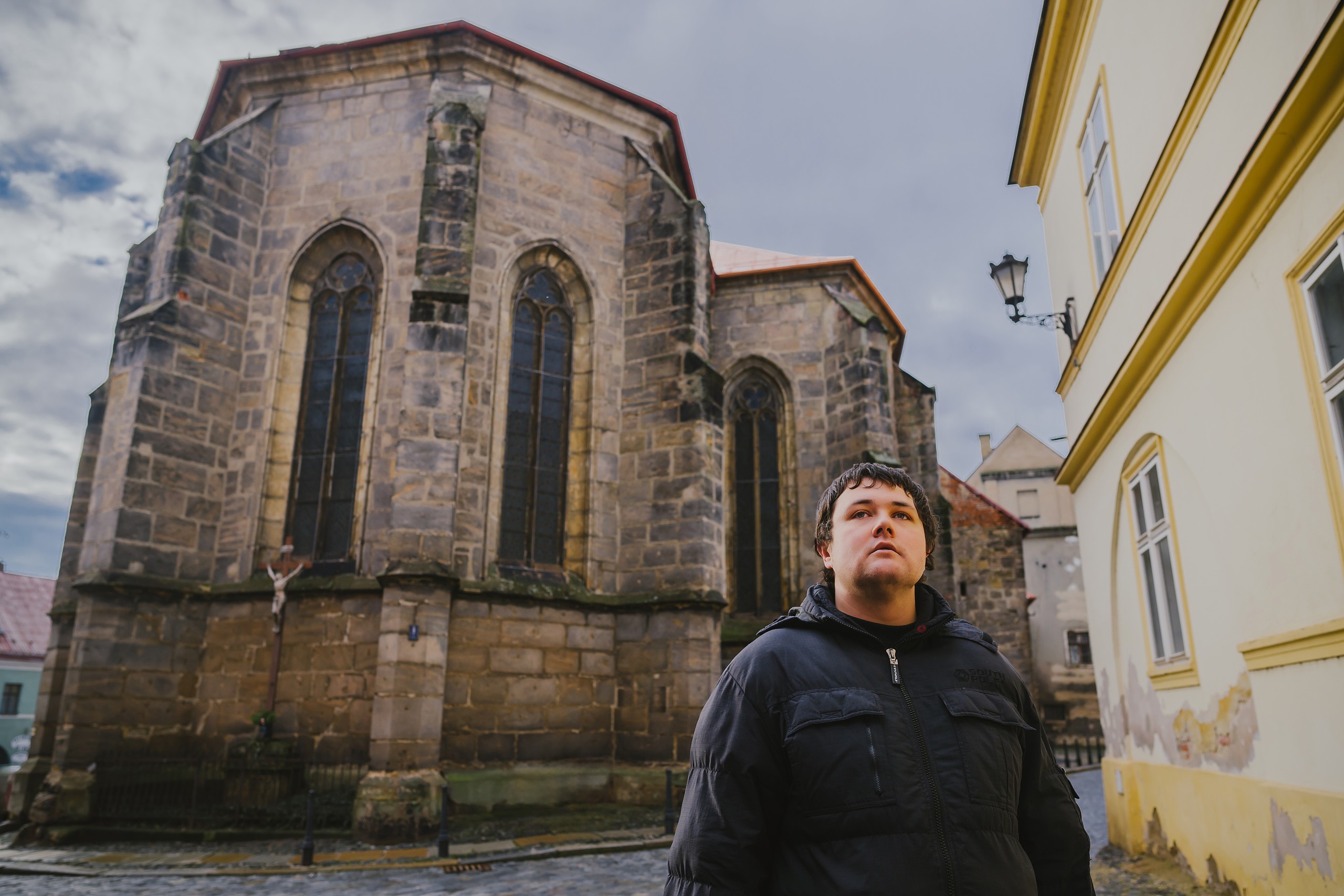
When I walk through my hometown of Jičín and pass its churches, I do not feel reverence; instead, I observe evidence. I move between the medieval church from the 13th or 14th century and the newer church from the 1600s; together, they form a continuous record of how humans once explained reality. These buildings do not represent spirituality; rather, they preserve cognitive history.
In other words, churches function as historical data points. They document how people thought when science did not exist; they reveal how fear, ignorance, and evolutionary wiring shaped explanations of the world.
How people in the 1600s understood reality
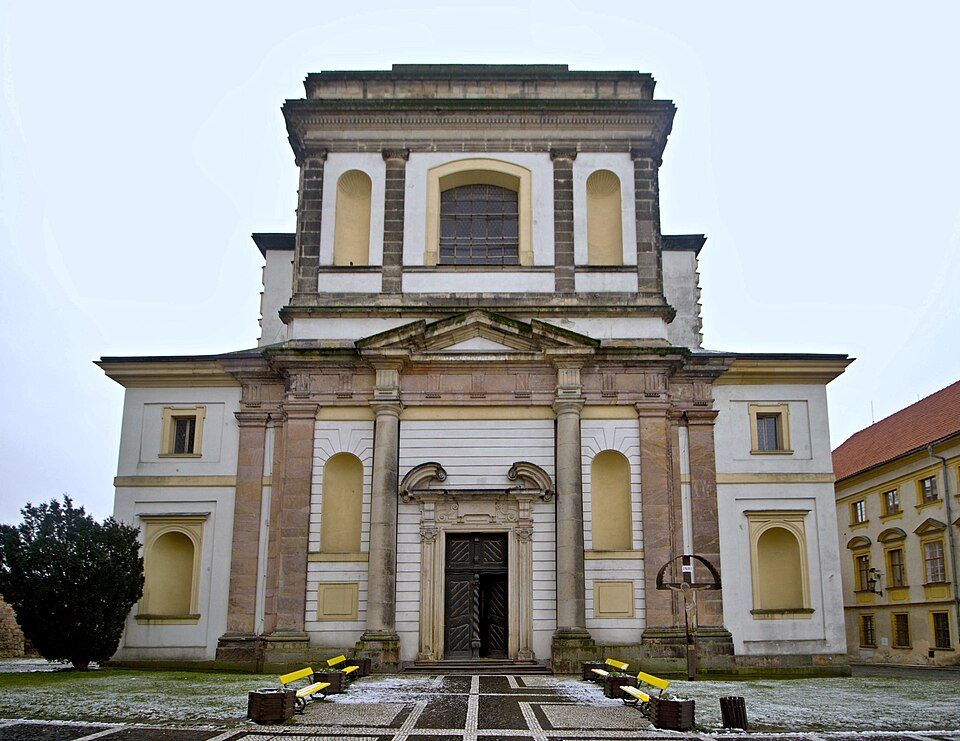
In the 1600s, people did not interpret weather through atmospheric systems; instead, they attributed rain, drought, storms, and calm skies directly to God. Consequently, every natural fluctuation carried moral meaning. Rain signaled mercy; drought signaled punishment.
Likewise, illness did not originate from bacteria or viruses; people framed disease as divine retribution or testing. When a child died, parents did not search for biological causes; they submitted to God’s will. Grief demanded obedience, not inquiry.
Food followed the same logic. People did not view food as the result of soil quality, climate patterns, or labor; rather, they believed God “gave” it. Gratitude therefore pointed upward, because no causal framework existed on the ground.
Evolutionary wiring made religion inevitable
This belief system did not arise randomly; instead, evolution produced it. Humans evolved in dangerous, unpredictable environments; therefore, they developed hyperactive agency detection. They learned to assume intention everywhere.
As a result, religion fit perfectly. It supplied a permanent agent; it explained randomness; it reduced anxiety; it enforced obedience; it stabilized social order. Truth never entered the equation.
In short, religion optimized survival, not accuracy.
God as a placeholder for ignorance
The universe appeared vast, complex, and terrifying; therefore, people inferred intention. Complexity became evidence of design; ignorance demanded explanation.
Without physics, chemistry, or biology, supernatural causation filled the void. God did not explain reality well; however, God explained ignorance completely. As long as no alternatives existed, the explanation survived.
Living now means access, not wisdom
I am glad to live in this era; however, not because humans became wiser. We remain philosophically illiterate animals; we remain scientifically illiterate in most domains; nevertheless, we now have access to accumulated knowledge.
Understanding lives outside individuals; it resides in methods, institutions, and data. We borrow it. That is the difference.
Evolution has no purpose
Evolution has no goal; it does not aim at intelligence, morality, or meaning. Natural selection filters outcomes; it does not plan destinations. Humans exist as a byproduct, not an endpoint.
Therefore, meaning does not emerge from nature; humans impose it afterward. Teleology reflects projection, not discovery.
Theodicy collapses immediately
Religious explanations of suffering collapse under basic knowledge. Disease follows biological mechanisms; disasters follow physical laws. Children do not die to teach lessons; pain carries no moral message.
Thus, theodicy survives only where ignorance persists; once knowledge enters, justification fails.
Prayer does not work
Prayer produces no measurable effect; controlled studies confirm this repeatedly. No hidden forces intervene in reality. If prayer worked, consistency would vanish; physical laws would break; medicine would fail; chaos would dominate.
Instead, reality remains stable; therefore, nothing intervenes.
Touching the church and knowing better
I can physically touch these churches; nevertheless, I know illness does not come from God. Knowledge creates distance from belief; proximity does not generate faith. Understanding replaces superstition.
Christianity contradicts itself structurally
Christianity claims God tests humans; yet, it also claims God is omniscient. Testing requires uncertainty; omniscience eliminates it.
Christianity claims free will; yet, it also claims divine foreknowledge. Moral responsibility collapses under determinism; punishment without choice makes no sense.
These contradictions sit at the core; they do not belong to the margins.
Jesus and the weakness of the narrative
Jesus very likely did not exist. No contemporary records mention him; no Roman administration documents him; no eyewitness accounts survive.
Decades later, stories appear; myth-making replaces evidence; silence becomes proof.
Corrupted texts and early Christian competition
Early Christianity fragmented immediately; groups competed for dominance. They selected texts; they rejected others; they edited doctrine to survive. Theology followed power, not truth.
Canon formation reflects political success; revelation plays no role.
Thousands of religions, one psychology
Thousands of religions have existed; they contradict each other entirely. Yet they share identical psychological structures. Myths recycle; names change; gods migrate.
Karma reappears as judgment, afterlife turns into heaven and hell, resurrection repeats under new prophets, and old stories get repackaged as new revelations.
Belief follows geography, not evidence. This fact alone destroys divine truth claims.
If I had been born then
If I had been born in the 1600s, I would have believed. Fear would have enforced obedience; doubt would have endangered survival; knowledge would not exist.
I might have questioned privately; however, I would still have complied; I would not have been exceptional. I would have been ordinary.
The modern fetish of ignorance
Today, people romanticize belief while enjoying science. They praise faith as humility; they frame knowledge as arrogance.
This attitude reflects cowardice. Knowing better creates responsibility. Choosing ignorance when understanding exists is not virtue; it is avoidance.
Churches should not inspire reverence; instead, they should remind us how easily humans misunderstand reality when fear replaces knowledge.
Leave a Reply