At first, the idea sounds absurd. Claims about elite satanic rituals belong to fringe forums, not serious inquiry. Rational thinking rejects them immediately. You dismiss them without hesitation.
However, over time, something changes. Not belief, but doubt. Not conviction, but discomfort. You begin to notice that some pieces of reality do not fit cleanly into the simplified narrative you once accepted.
At the same time, you hold a critical baseline. The vast majority of conspiracy theories are false. Many are fabricated. Some are exaggerated beyond recognition. In certain cases, information ecosystems may even be deliberately polluted. When absurd theories dominate, intelligent people learn to dismiss everything that resembles them.
Thus, a paradox emerges. If everything labeled “conspiracy” gets rejected, then even valid anomalies disappear in the noise.
Therefore, the question must evolve.
Not “Is this true?”
But “Is this entirely impossible?”
The structure of power: Real networks, not omnipotence
Before examining extreme claims, you must establish what is already supported by evidence.
Modern capitalism is not a neutral field of independent actors. It is shaped by networks. These include rich families, big banks, multinational corporations, investment funds, and lobbyists. Their influence extends across politics, finance, and media.
Capital flows determine policy constraints. Lobbying shapes regulation. Ownership structures connect competitors. Board members move between institutions. Influence accumulates.
However, a crucial correction is necessary.
These actors do not form a unified global command center. They do not operate as a single coordinated entity controlling the entire world. Instead, they compete. They form temporary alliances. They pursue overlapping but often conflicting interests.
Therefore, power is concentrated but fragmented.
This distinction matters. Without it, analysis collapses into simplistic narratives of total control. With it, you can examine complexity without falling into myth.
Conspiracy theories: Noise, disinformation, and rare signals
The term “conspiracy theory” has become intellectually toxic. It signals irrationality, paranoia, and lack of evidence.
In many cases, this reputation is justified.
A large portion of conspiracy theories rely on weak logic, selective evidence, and emotional appeal. Some contradict themselves. Others collapse under minimal scrutiny.
However, rejecting all of them creates a different problem.
If even a small fraction contains elements of truth, then total dismissal becomes a form of intellectual laziness. It replaces investigation with reflex.
Moreover, the information environment itself may be distorted. When extreme and absurd claims dominate, they discredit adjacent, more grounded inquiries. As a result, the boundary between nonsense and possibility becomes blurred.
Thus, two symmetrical errors emerge.
Believing everything leads to delusion.
Rejecting everything leads to blindness.
The only viable position lies in disciplined filtering.
Epstein as a turning point
The case of Jeffrey Epstein fundamentally altered the landscape.
Before Epstein, claims about elite abuse networks were often dismissed outright. They were grouped with unfounded paranoia and sensationalist fiction.
After Epstein, that position became harder to maintain.
He was not a marginal figure. He operated within elite circles. He maintained relationships with powerful individuals. His activities involved systematic abuse. These facts are documented.
This does not prove broader conspiracies. However, it destroys a prior assumption.
The assumption that such networks cannot exist at high levels of power.
Once that assumption collapses, the analytical framework must adjust.
The ranch investigation: Expanding the boundary of possibility
More recently, attention has focused on Epstein’s ranch and the investigation surrounding it.
Authorities have searched the property based on allegations, including claims of buried victims. At the time of writing, no confirmed discoveries have been publicly verified.
This distinction is essential.
There is no direct evidence of such findings.
However, the existence of the investigation itself carries weight. It indicates that authorities consider certain allegations serious enough to examine.
This shifts the boundary of what can be considered.
Previously, extreme claims about hidden crimes at elite properties were dismissed as impossible. Now, they fall into a different category.
Unproven, but no longer inconceivable.
This does not validate the claims. It simply expands the range of scenarios that require careful evaluation.
The “Baal” detail: Symbolism or coincidence
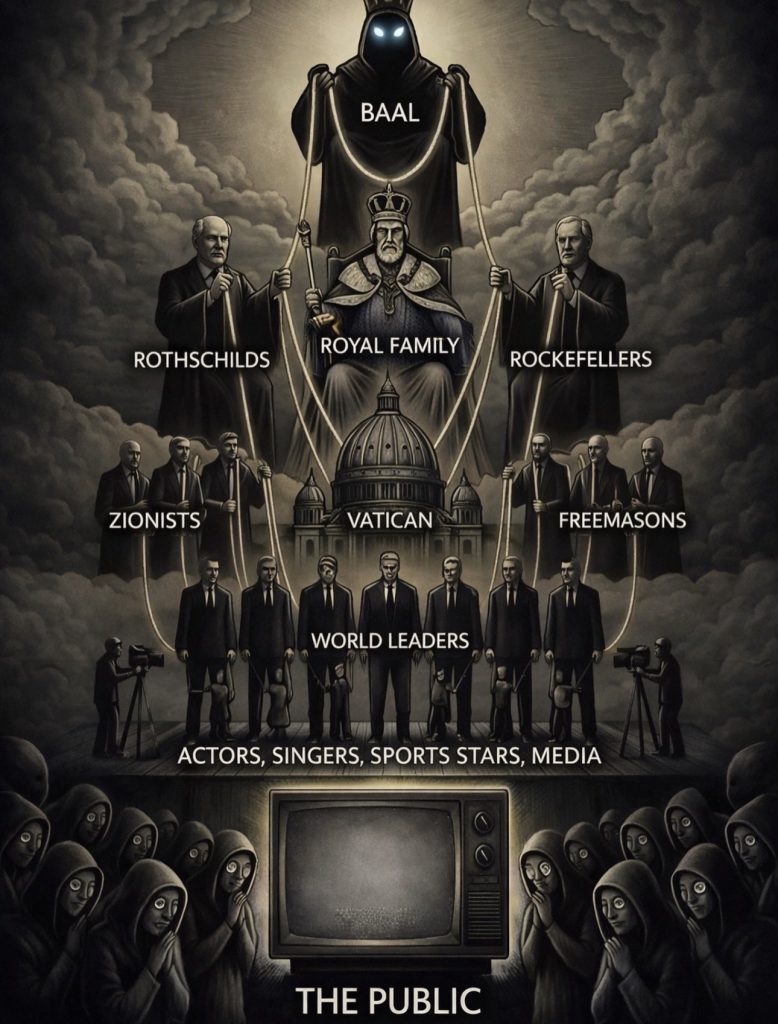
Another detail frequently cited involves a reported bank account linked to Epstein labeled “Baal.”
Baal is a figure with a complex historical background. In ancient cultures, it appears as a deity. In later Western interpretation, it becomes associated with evil or demonic symbolism.
This raises questions.
Is the name coincidental?
Is it ironic?
Is it private symbolism?
Or does it reflect something more intentional?
At this stage, there is no definitive answer.
The presence of such a label does not prove ritual behavior. It does not confirm ideological alignment. However, it introduces ambiguity.
It becomes a data point. Not proof, but not irrelevant either.
Death in custody: Suspicion without conclusion
Epstein’s death in custody remains one of the most controversial aspects of the case.
A high-profile prisoner.
Known connections to powerful individuals.
Failures in surveillance.
Procedural irregularities.
These elements create suspicion.
Many interpret the event as evidence of silencing. Others accept official explanations.
However, analytical discipline requires restraint.
Even if one assumes wrongdoing, it does not automatically support broader theories. It does not confirm networks of ritual behavior. It does not validate extreme claims.
Still, it contributes to a broader pattern.
Opacity, lack of accountability, and unresolved questions.
From impossibility to low-probability hypothesis
At this point, the intellectual position changes.
Initially, the idea of elite satanic rituals appears impossible.
After examining the available information, the position shifts.
Not to belief, but to a revised classification.
Highly unlikely, but not strictly impossible.
This distinction matters.
It reflects a move from emotional rejection to analytical evaluation. You do not accept the claim. You do not assert its truth. However, you recognize that prior assumptions about what elites are capable of have already been challenged.
Thus, the space of possibility expands.
The psychological mechanism: Why satanic narratives emerge
To understand these claims, you must also examine human psychology.
When individuals confront extreme wrongdoing, they seek meaning. They interpret actions through symbolic frameworks.
Satanic narratives function as such a framework.
They represent ultimate corruption.
They symbolize hidden evil.
They transform complex wrongdoing into a clear moral category.
In this sense, the narrative may not describe literal rituals. Instead, it expresses a perception.
A perception that certain actions appear so extreme that they transcend ordinary categories of crime.
Thus, even without evidence of actual satanic practices, the language emerges naturally.
Evidence vs speculation: Drawing the line
At this stage, clarity becomes essential.
There are elements supported by evidence.
Epstein’s criminal activities.
His connections to powerful individuals.
Ongoing investigations into related matters.
There are also elements that remain speculative.
Claims of rituals.
Occult practices.
Symbolic interpretations linked to specific details.
Confusing these categories leads to error.
Serious analysis requires separation.
Evidence must stand on its own. Speculation must remain labeled as speculation.
The role of future information: Epstein files and beyond
The story is not complete.
Documents continue to emerge. Investigations may uncover additional details. Testimonies may clarify aspects that remain hidden.
Future information may strengthen or weaken existing hypotheses.
However, at present, the available evidence remains limited regarding extreme claims such as satanic rituals.
Therefore, conclusions must remain provisional.
Open, but constrained.
Conclusion: Between rational skepticism and open inquiry
The question of elite satanic rituals sits at the intersection of evidence, speculation, and psychology.
Rejecting all such claims provides intellectual comfort. However, it risks ignoring anomalies that deserve attention.
Accepting them without evidence leads to distortion and loss of credibility.
Thus, the only defensible position lies between these extremes.
You remain skeptical.
You demand evidence.
You reject sensationalism.
At the same time, you acknowledge that reality has already proven more complex and more disturbing than many assumed.
Epstein’s case alone demonstrates that power, secrecy, and abuse can intersect in ways once dismissed as implausible.
Therefore, while the claim of satanic rituals remains unproven and unlikely, it can no longer be dismissed purely on intuition.
The door is not open.
But it is no longer completely closed.
Leave a Reply