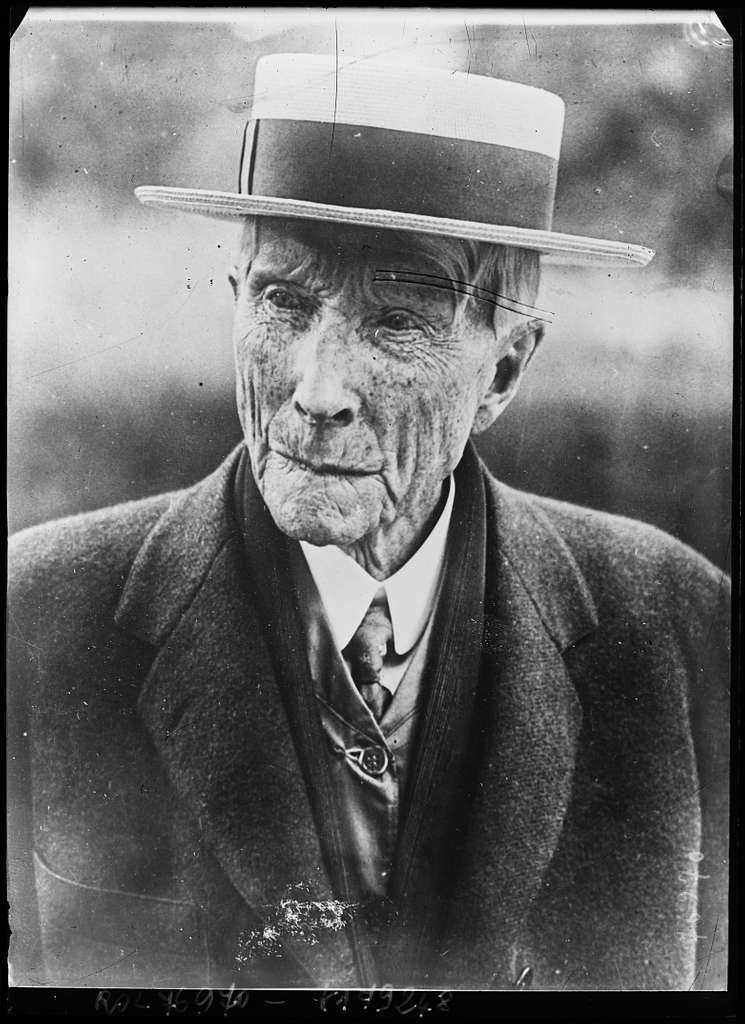
Education shapes far more than knowledge. It shapes behavior, expectations, and limits. It defines what people consider possible and what they reject without question. Therefore, control over education means control over society itself. Consequently, when a figure like Rockefeller enters this domain, the implications reach far beyond philanthropy. They extend into the structure of thought itself.
From oil monopoly to intellectual influence
Rockefeller built one of the most powerful economic systems of his time. However, economic dominance alone does not guarantee stability. Markets fluctuate. Political systems change. Therefore, long-term influence requires something deeper. It requires shaping how future generations think.
For this reason, Rockefeller moved into education. Moreover, he did so systematically. Through institutions such as the General Education Board, he directed massive resources into schools and universities. As a result, education did not simply receive funding. It began to align with the priorities of those who funded it.
Funding shapes thought: the core mechanism
Critics argue that Rockefeller concentrated influence. Funding shaped curricula and priorities. Therefore, education reflected elite interests. This is not a secondary effect. On the contrary, it represents the central mechanism of influence.
Education systems depend on resources. Without funding, institutions cannot operate. Therefore, financial support always carries implicit direction. It determines which subjects expand and which disappear. It defines which ideas gain legitimacy and which remain marginal.
Consequently, when a single network provides large-scale funding, it does not merely support education. It shapes the intellectual environment itself. It creates boundaries. It selects acceptable knowledge. It quietly removes alternatives.
Standardization as control
Uniform curricula
Rockefeller-backed reforms promoted standardization across schools. At first, this appeared beneficial. Systems became organized. Students received similar education regardless of location. However, this uniformity produced deeper effects.
When curricula become standardized, variation declines. When variation declines, intellectual diversity weakens. Therefore, students begin to think in similar frameworks. They approach problems in predictable ways. As a result, education becomes easier to manage, but less capable of producing radically different perspectives.
Bureaucratic structure
At the same time, centralized funding required administrative systems. Layers of management expanded. Regulations increased. Procedures became fixed. Consequently, education transformed into a structured system resembling industrial organization.
This transformation brought efficiency. However, it also brought control. Decisions moved upward. Flexibility moved downward. Therefore, institutions became stable, but also rigid.
Education for the industrial order
Designing the workforce
During this period, industrial expansion dominated society. Factories required disciplined workers. Offices required reliable administrators. Therefore, education adapted.
Schools began to emphasize punctuality, obedience, repetition, and routine. These traits did not emerge randomly. On the contrary, they aligned directly with industrial needs. Students learned to follow instructions. They learned to accept hierarchy. Consequently, education prepared individuals not only for knowledge, but for roles within a structured economic system.
Suppression of independent thinking
At the same time, creativity did not disappear. However, systems did not prioritize it. Standardized testing rewarded correct answers. Institutional structures rewarded conformity. Therefore, deviation became risky.
As a result, education produced individuals capable of functioning efficiently within systems, yet less inclined to challenge them. This outcome did not require explicit suppression. Instead, it emerged through incentives.
Higher education: Shaping knowledge itself
The University of Chicago
Rockefeller’s influence extended into higher education. He funded major institutions. He strengthened research capacity. He elevated academic standards. However, influence followed funding.
Universities determine what counts as knowledge. They define legitimate research. They allocate resources. Therefore, when funding shapes universities, it shapes knowledge production itself.
Consequently, research priorities align with available funding. Fields that receive support expand. Fields that do not receive support decline. This process appears neutral. However, it reflects underlying power structures.
Medicine as a case study of control
The Flexner Report
Medical education underwent radical transformation. The Flexner Report evaluated institutions. It promoted scientific, laboratory-based medicine. It demanded higher standards.
This reform improved consistency and rigor. However, it also eliminated many schools. Alternative approaches lost legitimacy. Therefore, the range of accepted medical knowledge narrowed.
Narrowing acceptable knowledge
As a result, medicine became more standardized. It became more scientific. However, it also became more exclusive. Only certain methods remained institutionalized. Others disappeared from formal education.
Thus, education did not only improve knowledge. It selected which knowledge survives.
The illusion of neutral education
Education presents itself as objective. It appears to deliver facts. However, in reality, it reflects selection processes. Curricula are chosen. Subjects are prioritized. Perspectives are filtered.
Therefore, neutrality often masks structure. What students learn depends on what institutions decide to include. What they never encounter remains invisible.
Consequently, education does not merely inform. It frames reality.
Long-term consequences
A system that reproduces itself
Students educated within this system become its future operators. They become teachers, administrators, policymakers, and researchers. Therefore, they reproduce the same structures.
This creates stability. However, it also limits transformation. Systems persist because they train individuals to maintain them.
Global expansion
Over time, this model spread beyond the United States. Other countries adopted similar systems. Standardization, hierarchy, and testing became global norms.
Therefore, Rockefeller’s influence did not remain local. It extended across continents. It shaped modern education worldwide.
Counterarguments and reality
Supporters argue that Rockefeller improved education. They highlight increased access. They point to scientific advancement. They emphasize institutional strength.
These arguments hold weight. However, improvement does not exclude control. Both processes can occur simultaneously. Systems can become more effective while also becoming more centralized.
Therefore, the question is not whether education improved. The question is who shaped that improvement and in whose interest.
Conclusion: Education as silent power
Rockefeller did not only dominate industry. He extended influence into the intellectual foundation of society. By funding education, he influenced what people learn, how they think, and what they consider normal.
This influence operates quietly. It does not require force. It does not require visibility. Instead, it functions through structure.
Therefore, education becomes one of the most powerful tools of long-term control. And precisely because it appears neutral, its influence remains largely unquestioned.
Leave a Reply