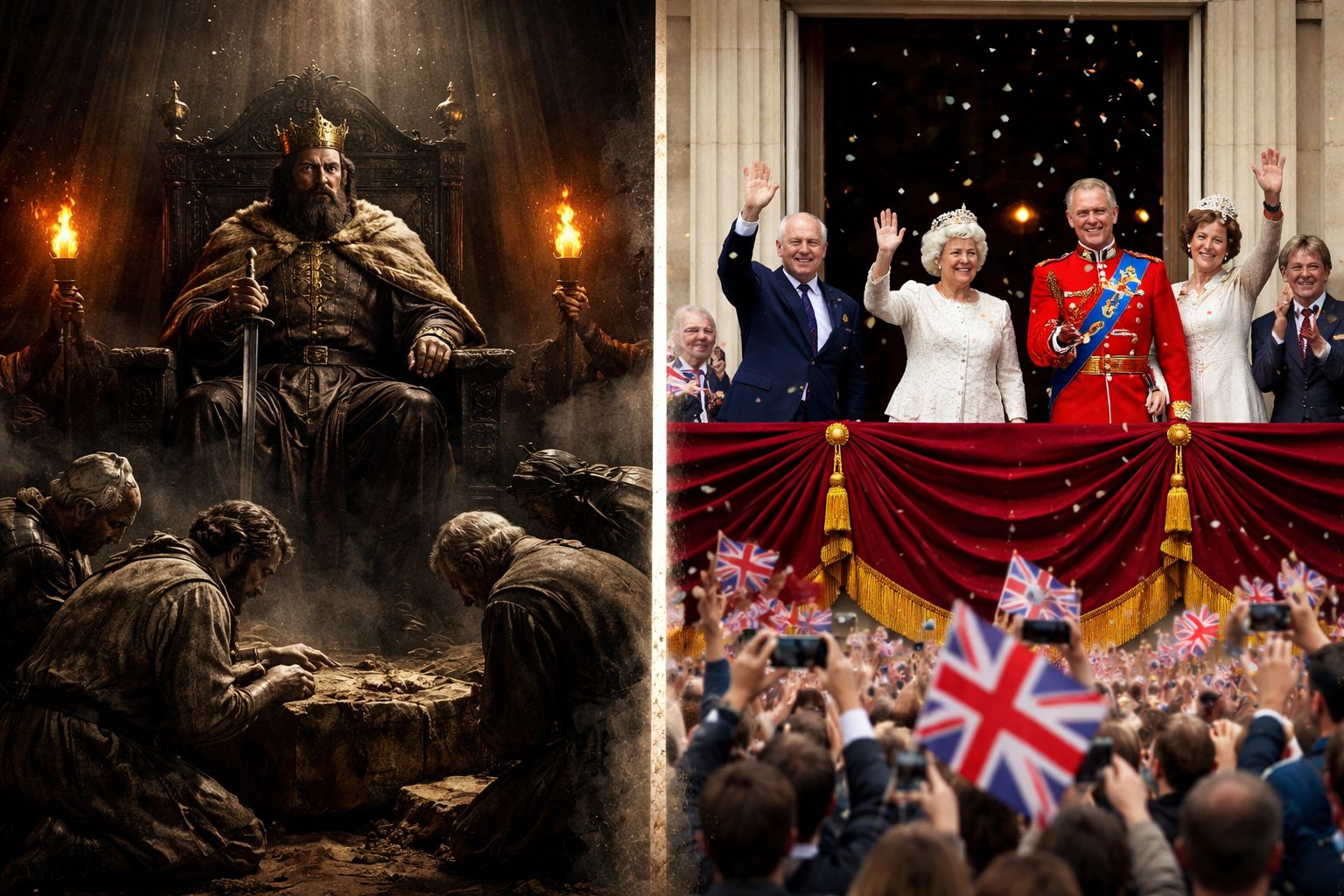
At first sight, monarchy looks harmless today. You see ceremonies, weddings, uniforms, and polished speeches. You see smiling figures waving to crowds. However, this image hides a radical transformation. Monarchies once ruled with absolute power. They controlled life, death, land, and law. Today, many of them exist as symbols, brands, and celebrities. This shift raises a central question. How did institutions built on domination become objects of admiration?
Absolute power and historical oppression
To begin with, monarchs held power without meaningful limits. They did not answer to voters. They did not face institutional constraints in the modern sense. Their word often functioned as law.
As a result, punishment could be arbitrary. Execution, imprisonment, or confiscation of property required little justification. Justice did not operate as an independent system. It operated as an extension of power.
At the same time, ordinary people had minimal protection. Peasants, workers, and lower classes lived under constant dependence. Their lives could change dramatically based on decisions made far above them.
Economic extraction and inequality
Furthermore, monarchies relied on systematic extraction of wealth. Populations paid taxes, rents, and duties that sustained royal courts. These payments were not optional. They were enforced.
Consequently, wealth concentrated at the top. Royal families and aristocracies lived in visible luxury. Palaces, banquets, and displays of power contrasted sharply with widespread poverty.
This inequality was not accidental. It was structural. The system required continuous flow of resources upward.
Divine right and ideological control
In addition, monarchs justified their authority through ideology. The concept of divine right presented rulers as chosen by God. This idea served a clear function. It discouraged resistance.
If power comes from God, opposing the ruler becomes not only political rebellion, but also moral or religious violation. Therefore, dissent could be framed as heresy or betrayal.
This fusion of religion and power strengthened control. It made obedience appear natural and necessary.
Wars and human cost
At the same time, monarchies frequently engaged in wars. These conflicts were often driven by ambition, territory, or prestige rather than necessity.
However, the cost fell on ordinary people. Soldiers came from the population. Casualties affected families and communities. Resources diverted to war reduced living standards.
In this system, the population functioned as a resource. It provided labor, taxes, and soldiers.
The slow decline of absolute monarchy
Over time, this structure faced pressure. Intellectual movements such as the Enlightenment questioned absolute authority. Thinkers argued for rights, representation, and limits on power.
Consequently, revolutions emerged. Events such as the French Revolution challenged monarchy directly. In some cases, monarchs lost power. In others, they lost their lives.
At the same time, gradual reforms introduced constitutions and parliaments. Power shifted from individuals to institutions.
Transformation into constitutional monarchies and their wealth
However, monarchy did not disappear entirely. Instead, it adapted. In many countries, monarchies became constitutional. They retained symbolic roles while losing direct political control. But their accumulated wealth did not disappear; they are rich on the level of the Rockefellers or Rothschilds.”
For example, in the United Kingdom, the monarch no longer governs policy (nominally). Instead, elected bodies exercise power, officially. The monarch represents continuity and tradition.
This transformation allowed monarchies to survive.
Reinvention through media and narrative
At the same time, monarchies reinvented themselves. They shifted from authority to image. Media played a central role in this process.
Royal events became spectacles. Weddings, funerals, and public appearances attracted global attention. Narratives focused on personal stories rather than political power.
Consequently, perception changed. Monarchs no longer appeared as rulers. They appeared as personalities.
Celebrity culture and fascination
Furthermore, this shift aligned with broader changes in society. Modern culture values visibility, image, and narrative. Monarchies fit this model.
Royal families became celebrities. People follow their lives, relationships, and conflicts. Media coverage reinforces this attention.
Importantly, the emotional response changed. Fear and obedience gave way to curiosity and admiration. Hierarchy remained, but its expression softened.
Economic function in modern states
In addition, monarchies acquired new roles. They contribute to tourism, national branding, and international visibility.
Ceremonies attract visitors. Palaces function as cultural sites. Royal figures act as symbols in diplomacy.
As a result, monarchies justify their existence economically. They are presented as assets rather than burdens.
Selective memory and historical amnesia
However, this transformation depends on selective memory. The oppressive aspects of monarchy receive less attention. Education may mention them, but popular culture rarely emphasizes them.
Instead, focus shifts to glamour, tradition, and continuity. The past becomes simplified. Complexity disappears.
This process is not unique to monarchy. Societies often reinterpret history to align with present needs.
Psychological foundations
At a deeper level, human psychology plays a role. People respond to hierarchy. They recognize status. They seek symbols of order and continuity.
Monarchies provide these symbols. They offer a visible hierarchy without direct threat. This makes them easier to accept.
In this sense, fascination with royalty reflects older patterns. It connects to evolutionary tendencies toward structured leadership.
Criticism and resistance today
Despite this, criticism persists. Republican movements question the legitimacy of inherited status. They argue that privilege without accountability conflicts with modern values.
Debates focus on cost, relevance, and fairness. Some countries have already abolished monarchies. Others continue to question them.
Therefore, monarchy remains contested. Its transformation is not universally accepted.
Conclusion: From domination to spectacle
In conclusion, monarchies did not disappear. They transformed. They moved from direct control to a symbolic role (officially) while still exerting significant power and owning unbelievable wealth.
Once, they ruled through power. Now, they operate through image. Once, they demanded obedience. Now, they attract attention.
The structure changed, but the institution survived. Understanding this transformation reveals how power can adapt rather than vanish.
Leave a Reply