
The most of conspiracy theories are written by secret services. They are crazy, with no internal logic, absurd, unbelievable, evidence-free and the goal is apparent – make people dismiss conspiracy theories altogether so people blindly rely on the establishment. So how to know whether a conspiracy theory is right?
However, there are a few “conspiracy theories” supported by mainstream media articles, literary evidence, they have internal logic and you can get that they are true by pure analogy (for example, there are super-rich people in the Czech Republic influencing politics, such people are likely in the US as well).
You can find truth (if you are selective) even in the most chaotic, lunatic conspiracy material if you have acquired critical thinking.
I already have my picks for what is true and what is not.
Newspapers explicitly or implicitly written
While media are irrelevant (or they don’t write such things) to what is not happening, actually they are relevant and credible sources of what is happening.
The Czech media – when globalists started the war against corruption – commenced bombing us that they are “crooks” behind politicians who alter their decisions to their interests.
Then it has gone further. Not only crooks with stolen funds but oligarchs who are richer and more influential.
But they somehow forgot to tell us about those above – banks and super-rich families. And yes, they are the Illuminati even though that organized Illuminati society is marginal to their full wealth.
You can guess some political background exists when journalists interview some influential person. They talk about world order, political systems (not those official), or how some countries should do more on some issues (not in media-observable politics). They often talk about diplomatic efforts, yet they never specify their form.
If the media writes the refugee influx to Europe is organized, it is true.
Super-rich as conspiracy? Evidence centuries ago from newspapers
The media of the 19th century frequently covered the activities of super-rich families, emphasizing their financial power, political influence, and social responsibilities. Newspapers and periodicals followed their successes and controversies, shaping public perceptions about wealth and privilege. Some families received praise for their philanthropy, while others faced criticism for their monopolistic practices or secrecy. The stories published during this period reflect the complex relationship between the elite and the press, where admiration and suspicion coexisted.
The Rothschild family was among the most extensively covered dynasties. Originating in Frankfurt, they built a banking empire that spanned Europe, with branches in London, Paris, Vienna, Naples, and Frankfurt. Their financial success gave them influence over governments and economies, attracting media attention that ranged from admiration to outright hostility. Some publications celebrated their role in financing major infrastructure projects, including railroads and national debts. Others accused them of manipulating financial markets for personal gain. In France, these narratives fueled anti-Semitic attacks, portraying them as secret rulers of the economy. Despite the controversy, the Rothschilds remained a symbol of banking power and elite status.
Gilded age
In America, the rise of industrialists during the Gilded Age created new figures of wealth who became media sensations. Families such as the Vanderbilts, Carnegies, and Rockefellers dominated industries like railroads, steel, and oil. Newspapers closely followed their business dealings, lavish lifestyles, and philanthropic efforts.
Reporters detailed their extravagant mansions, extravagant parties, and high-society marriages. The media played a dual role, both celebrating their contributions to economic progress and warning about the dangers of unchecked monopolies. Some articles questioned whether these industrialists used their wealth for public good or simply to expand their power. The press exposed controversial business practices, fueling public debates about regulation and economic fairness.
Publications like “Walford’s County Families” in Britain served as directories of aristocratic and wealthy families. They listed their lineage, estates, and influence, reinforcing social hierarchies and giving readers insight into the elite. Newspapers often referred to these lists when reporting on high-profile marriages, inheritance disputes, or political appointments. By cataloging the wealthiest families, these publications provided a structured view of power and class, shaping how society understood privilege.
The Carnegies and Rockefellers
The 19th-century press also documented philanthropy, showing how wealthy individuals shaped society through donations and cultural patronage. The Carnegies and Rockefellers invested in libraries, universities, and medical research, hoping to leave a lasting legacy beyond business. Articles praised their contributions but also questioned their motivations, wondering whether philanthropy served as a distraction from aggressive business tactics. This tension between wealth and responsibility remained a central theme in media discussions.
Media attention on the rich was not limited to admiration or criticism; it also played a role in exposing financial scandals. Investigative journalism uncovered fraudulent banking schemes, stock manipulations, and secret agreements between politicians and industrialists. These reports shaped public policy, leading to economic reforms and stricter regulations on monopolies and financial institutions. The press acted as both a mirror and a watchdog, reflecting the ambitions of the elite while holding them accountable for their actions.
Now they exert the control over media
The influence of the super-rich on media itself became a subject of discussion. As newspaper ownership consolidated, concerns grew about how much control wealthy families exerted over public discourse. Some journalists warned that powerful businessmen used their influence to shape narratives, protect their reputations, and push political agendas. The press became both an instrument for elite interests and a platform for challenging them.
Throughout the century, media coverage of the wealthy evolved, moving between admiration, skepticism, and direct confrontation. While the elite shaped economies and governments, the press shaped how they were perceived. The stories published during this period left a lasting impact on how society views wealth, power, and responsibility.
Analogies
When there are super-rich cliques in the Czech Republic, every country would likely have its super-rich controlling the politicians. When one “conspiracy” is shown on a small portion (induction), we may decide (deduction) that it is applicable to the whole. However, be aware of the Hasty Generalization fallacy.
It same goes with an influential person committing suicide with dubious circumstances (Jeffrey Epstein), another person may follow suit (this is just an example of of many).
Conspiracy theory is right? Literary evidence

For the existence of the super-rich banks, many books with letters as evidence were published.
Ferdinand Lundberg’s 1937 book, America’s 60 Families, argues that the United States is controlled by a small group of wealthy families who dominate its economic and political systems. Lundberg identifies families such as the Rockefellers, Morgans, Fords, Vanderbilts, Mellons, Guggenheims, Whitneys, Du Ponts, and Astors as part of this elite group. He claims that these families have significant influence over major industries, financial institutions, and government policies, effectively shaping the nation’s direction to serve their interests.
Lundberg’s analysis is based on 1924 income tax payments, which he uses to estimate the consolidated wealth of these families and map their networks of capital interconnectedness. He asserts that this small group controls mainstream media and has unchecked influence over American political institutions. According to Lundberg, this situation is unique to the United States, as the plutocracies of Europe had largely disintegrated due to World War I.
The book received mixed reactions upon its publication. Some praised it as a comprehensive indictment of the power of great fortunes, while others criticized it as bitter muckraking. Despite the controversy, America’s 60 Families sparked discussions about wealth concentration and its impact on democracy, influencing future works on economic power structures.
The New York Times exposing the super-rich?
In the early 20th century, investigative journalism began shedding light on the profound influence of super-rich families over global finance and politics. A notable example is the 1910 exposé by The New York Times titled “The Money Kings of the Modern World,” which delved into the vast wealth and control exerted by the Rothschild family over international banking. This article highlighted how their financial empire spanned continents, influencing economies and governments alike.
Similarly, in 1921, The Nation published “The House of Morgan,” an in-depth analysis of J.P. Morgan & Co.’s dominance in American finance. The piece detailed how the Morgan family’s banking operations had become intertwined with national politics, effectively steering economic policies to serve their interests. It underscored the intricate connections between private wealth and public power, raising questions about the democratic implications of such alliances.
These early journalistic endeavors played a crucial role in informing the public about the concentration of wealth and its impact on societal structures. By bringing the activities of these powerful families into the public eye, the media of the time fostered a discourse on economic inequality and the need for regulatory oversight to curb the unchecked influence of financial oligarchies.
All the presidents’ letters
Nomi Prins, a former Wall Street executive and investigative journalist, expands on these themes in her book All the Presidents’ Bankers. She explores the deep-rooted connections between financial elites and U.S. political power, showing how, since the early 20th century, Wall Street’s most powerful banking families have shaped presidential policies. Prins details how figures like J.P. Morgan, the Rockefellers, and the Warburgs maintained close ties with U.S. presidents, influencing economic strategies, foreign policy, and military decisions.
Prins reveals that financial elites have had direct access to presidential administrations, shaping major events such as the establishment of the Federal Reserve, the response to the Great Depression, and the deregulation of financial markets. She argues that the banking class operates above electoral politics, ensuring that regardless of who holds office, economic policies continue to serve elite financial institutions. This dynamic remains unchanged in modern times, as banking conglomerates influence global trade, economic sanctions, and financial bailouts.
The book demonstrates how banking dynasties maintain control through intergenerational wealth and political connections. By embedding themselves within advisory roles, economic councils, and think tanks, they ensure that financial power remains centralized within a small elite group. These revelations align with earlier analyses by Lundberg, reinforcing the argument that a hidden financial aristocracy dictates policy from behind the scenes.
No evidence: Media mystification with UFO
UFO is a good attention diverter from important things. However, the conspiracy is completely false, baseless, evidence-less.
I wrote an article about what would such a UFO encounter would look like. Our moral system is closer to moral nihilism than perfect morality, so we would have no chance of survival. So this conspiracy theory is not true.
Evidence-free conspiracies
These are conspiracies that are really just conspiracies: the Sandy Hook shooting, Clinton assassinations, chemtrails, J. F. Kennedy assassination, vaccines, UFO, FEMA, climate change denial, deep state, HIV/AIDS denialism, COVID-19, Obama birth certificate, reptilians, moon landing, The Protocols of the Elders of Zion. I am not sure whether the Secret services has had prior knowledge of the attack of 9/11. Make no mistake. The US government can be evil and is evil.
Deep state as impossible
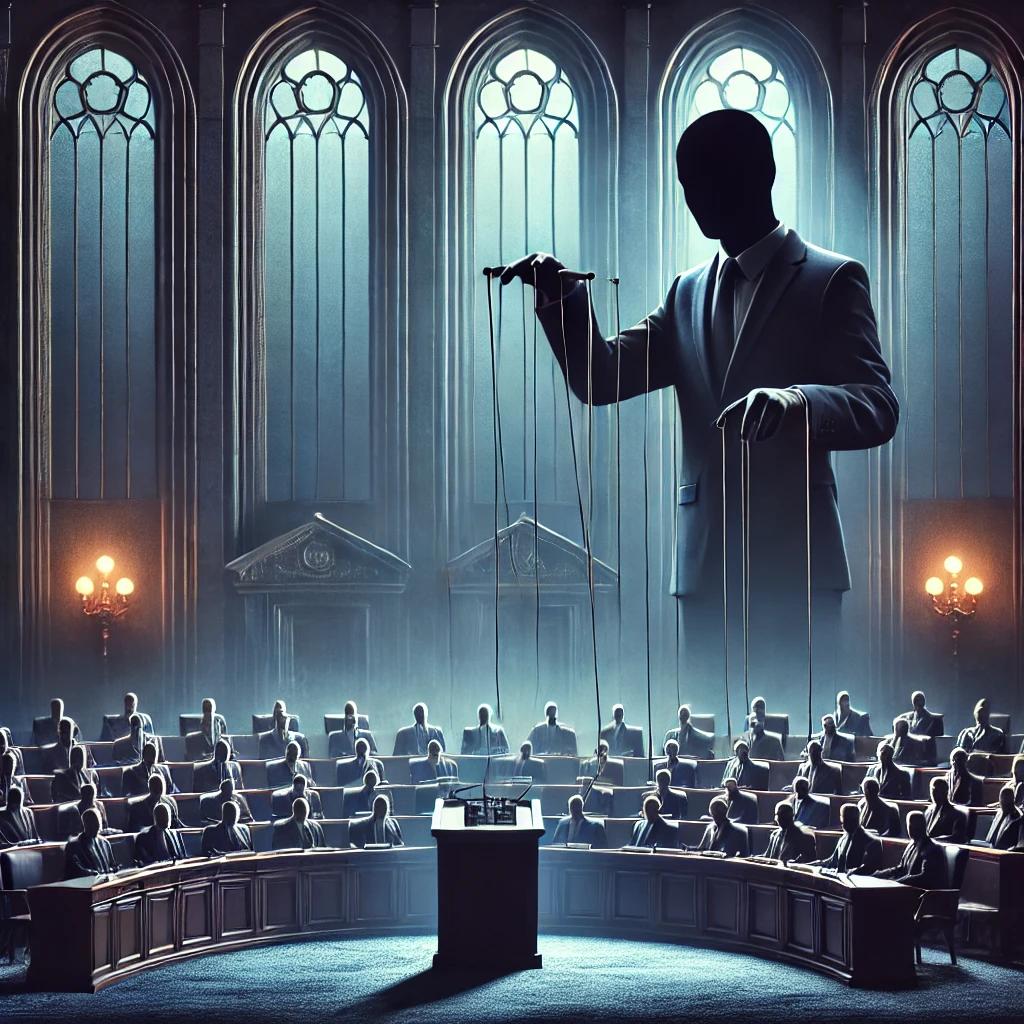
Shadow politics creates 98 % of the theater. It operates in the shadow. But a deep state having its laws implemented to the visible political system is impossible.
Imagine there are powerful (visible) actors in politics. They hold the power. But it is a fluid system nobody can fully control. Actually, the visible politicians would start altering the deep state itself.
For example, the deep state with its laws would command a prime minister to step down, but he would refuse to to do so with his allies.
This would have some consequences for the political system, but once again, the deep state would remain without control.
JFK assassination
If you use your critical thinking while going through extensive literature, you know the official version is not right. But JFK has had a very good relationship with the Big Banks ruling the US. So why to assassinate him? No conspiracy.
The Great Reset
This theory has no internal consistency, it is senseless, evidence-free. And while they are some steps of how the elite want to control us, this is completely out of any reasonable scope.
Epstein’s death conspiracy likely true
You don’t have to be a nuclear scientist to figure out Jeffrey Epstein shifted underage girls to the super-rich families’ members who control the USA (and yes, they are invisible) via banks and wealth. Also, there were top politicians, celebrities, maybe sportsmen.
Epstein’s death is suspicious from the beginning to the end, yet if we approach it scientifically we may never know whether we can exclude genuine suicide.
The issue is the super-rich have contacts with the FBI, judges, attorneys, and so on. So if they were so sure they were nonpunishable and the government would back them up (they would be immune), Epstein would live to this day.
So if the government is working at least a bit, they were scared to death that at least a part of the justice was going after them and Epstein consequently had to die.
Is this conspiracy theory right? The satanic rituals of the super-rich
The theory that the super-rich conduct satanic rituals lacks credibility for several reasons, making it an unlikely explanation for their influence and power. While it is undeniable that the wealthiest individuals gather in private settings and maintain control over many aspects of society, the idea that these meetings involve satanic worship is built on speculation rather than verifiable facts. There has never been any concrete evidence to support the claim that elites engage in ritualistic activities of this nature. Despite numerous accusations over the years, no reliable photographs, documents, or recordings have ever surfaced to confirm these allegations. Whistleblowers from powerful circles have occasionally exposed financial corruption, political manipulation, and unethical business practices, yet none have provided any proof of occult activities.
Most of the individuals accused of participating in such rituals follow mainstream religious traditions, with many of them being public about their faith and regularly contributing to religious institutions. Whether they identify as Christians, Jews, Muslims, Hindus, or even secular humanists, their beliefs tend to align with conventional systems rather than any form of satanic ideology. Many of them fund religious charities, support places of worship, and take part in major religious events, making the claim that they practice satanism contradictory to their known actions. If their goal were to secretly advance a satanic agenda, it would be difficult to explain why they have historically aligned themselves with religious institutions rather than working to dismantle them. Their connection to faith, whether genuine or strategic, suggests a different form of influence, one that is rooted in existing structures of power rather than an underground network of occult worshippers.
Power and history
The real source of their control comes not from supernatural forces but from financial power and political influence, which allow them to shape policies, economies, and public narratives in ways that serve their interests. Their ability to manipulate markets, fund political campaigns, and steer international institutions gives them far more control than any ritual ever could. Money itself is a tool that provides direct access to decision-makers, enabling them to influence laws, regulations, and even cultural norms without the need for secret ceremonies. If their goal is to maintain dominance, they can achieve it through entirely legal and strategic means, without resorting to clandestine gatherings involving satanic rites.
Throughout history, powerful groups have often been accused of engaging in dark or forbidden practices as a way to discredit them. And this pattern has repeated itself across different eras and societies. In the fourteenth century, the Knights Templar faced accusations of heresy and satanic worship. This led to their downfall, yet later investigations revealed that these claims were politically motivated rather than grounded in reality. Similarly, Jewish communities in medieval Europe were falsely accused of engaging in ritual sacrifices, a myth that was used to justify their persecution.
Forget about satanic rituals, let’s take a look at their power
Rather than focusing on satanic rituals, the real concern should be the way in which the super-rich families use their wealth to exert control over society. Their influence extends across politics, business, media, and finance, shaping the world according to their interests in ways that are often hidden but not mystical. Private meetings between the elite do take place, but their purpose is more likely to be economic coordination, geopolitical strategy, and policy alignment rather than anything supernatural. The narratives about satanism serve as a distraction from the real mechanisms of power, shifting attention away from the financial, legal, and institutional systems that allow a small group of individuals to maintain their dominance over society. By framing their influence as something occult and mysterious, these theories obscure the real, tangible structures that uphold their wealth and control.
The truth may be in a conspiratorial mess: Critical thinking as a necessity
I have been reading tons of conspiracy mess. The issue is that while 95% of it was lies, 5% were crucial truths. But you need critical thinking.
Going through pages of information requires both perfect selection and filtering.
For example, the satanic rituals of the US super-rich are nothing but baseless claims. But that is the point. The secret services want you to abandon the theory entirely because of the slim untrue part.
Internal logic
The “conspiracy” must have mutually compatible parts of constellation backed by evidence. And even if the evidence isn’t present, you may somehow derive the truth from logic.
For example, the total wealth of the top Czech oligarchs listed amounts to 65.3 billion USD. in the Czech Republic. However, according to the Czech National Bank, the total assets of the Czech banking sector reached 456.0 billion USD at the end of January 2025. So who rules the politics if the Iron law of oligarchy is in effect?
Is this conspiracy theory right? Ask AI, you may get the truth
“What do conspiracy theories claim how the Western world is interconnected vie banks?” You will get an answer which is true.
While AI denies any involvement of the super-rich families and big banks, it contradicts itself when saying bank dynasties had influence over the world wars. In relation to something, they had influence. But don’t worry, they don’t exist.
Is conspiracy theory right? Conclusion
Exposing whether conspiracy theory is right demands the right sources of information you will browse and navigate through critical thinking.
You will find 95% of the mess, 5 % of the truth. It only depends on you whether you acquire official mainstream politically correct narratives or make up your mind on your own.
Most conspiracy theories are designed to discredit legitimate investigations by mixing absurdity with grains of truth. That does not mean all theories are false—some contain crucial insights, but separating them from misinformation requires critical thinking.
Most conspiracy theories are either deliberate disinformation, speculative narratives, or fact-based deductions. Government-engineered disinformation often includes wild claims about reptilians or satanic cults to make real conspiracies seem ridiculous. Speculative narratives arise from fear and psychological biases. A small percentage of conspiracy theories rely on documented history, economic analysis, and rational induction, often revealing uncomfortable truths about power and influence.
The existence of financial dynasties controlling politics is not a modern fantasy but a historical fact. The Rothschilds, Morgans, Rockefellers, and others have influenced global finance for centuries. Old newspapers once openly discussed their power, something rarely seen today. Books like America’s 60 Families and All the Presidents’ Bankers document their influence over politics. If they manipulated economies a century ago, why would they suddenly stop?
Using critical thinking
Mainstream media rarely expose deep power structures but sometimes reveal clues indirectly. If the establishment dismisses a conspiracy theory with ridicule instead of addressing it with logical arguments, it might be touching on an uncomfortable truth.
Many conspiracy theories contain 95% nonsense and 5% crucial truth. Intelligence agencies and elites exploit this by flooding the information space with fabrications, ensuring that real insights are buried under layers of absurdity. The key is selective filtering—identifying what aligns with known history, logical deduction, and verifiable data.
The super-rich influencing politics and banks is not a theory but a historical and economic reality. However, distractions like satanic rituals or reptilian overlords make legitimate inquiries look foolish. The real conspiracy is not mystical but systemic, with financial dynasties exerting control through banking, lobbying, and media ownership.
Leave a Reply