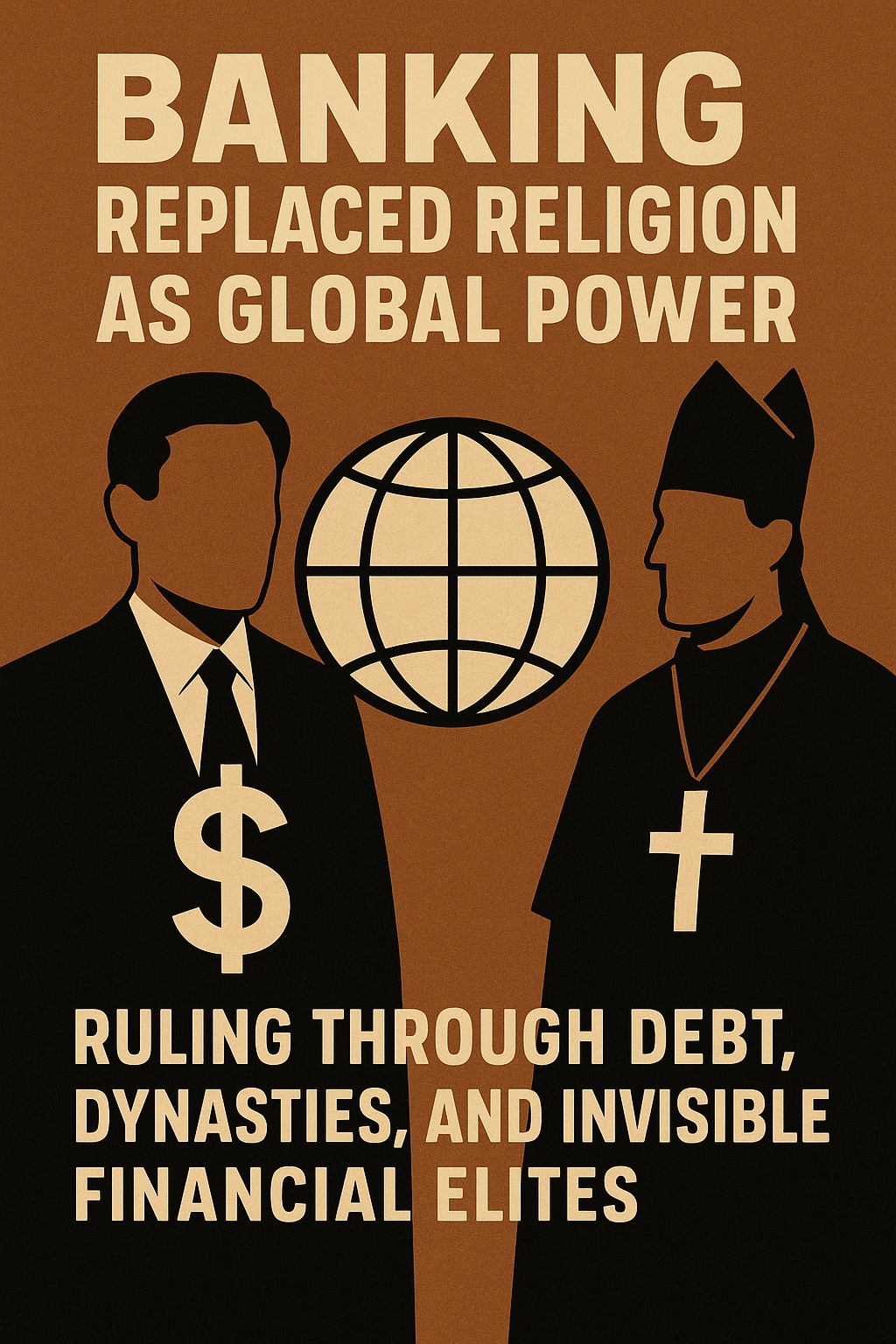
For centuries, religion ruled the human mind. It shaped laws, justified wars, and promised salvation in exchange for obedience. Priests and monarchs shared the same throne. Then science and reason broke faith’s monopoly. Yet power never disappears—it only changes form. When religion began to decline, another faith quietly rose to replace it. This time, it wore a suit, not a robe. Its temples became banks, its rituals became transactions, and its god became money.
From sacred authority to monetary faith
Medieval Europe revolved around the Church. It owned land, crowned kings, and defined morality. People prayed not just for heaven but for social order. The clergy were the keepers of meaning. But once reason entered politics, religion lost its grip. The Enlightenment dethroned God, but it did not abolish belief—it redirected it. Banking filled the void. It offered a new kind of salvation: financial security instead of eternal life. Money promised what prayers no longer could—control over destiny.
The invention of financial faith
When the Medici began lending to kings, religion met its rival. The Rothschilds later perfected the system. They moved gold across borders faster than armies. They replaced faith in divine will with faith in credit. Paper replaced miracles. Bonds became scripture. Banking became the first truly international power structure. It was secular but spiritual in its reach. The modern world began to trust banks the way the Middle Ages trusted saints.
The morality of profit replacing divine ethics
Religion once defined morality. Greed was a sin. Pride was dangerous. The rich were warned to help the poor. Banking rewrote these codes. Profit became virtue. Debt became sin. Redemption came not from confession but from repayment. The righteous were those who invested well; the damned were those who defaulted. Capitalism turned morality into accounting. The more you accumulated, the closer you came to grace. Poverty became proof of failure, not injustice.
The global network of invisible power
The Church once ruled through cathedrals, sermons, and rituals. Banking rules through numbers. Its power is invisible but total. It works through markets, reserves, and interest rates—forces as intangible as divine will. The Vatican once held sway over kings; now the IMF dictates to presidents. Central banks set destinies more quietly than priests ever did. Their authority depends not on revelation but on algorithms. Nations bow before debt like medieval peasants bowed before icons.
The new clergy — economists, bankers, and technocrats
Economists preach in equations. Bankers interpret the markets. Technocrats write policies the public cannot understand but must obey. They form the new priesthood of global finance. Their sermons come through forecasts and press conferences. Their scripture is data. And just like priests once spoke Latin to keep power distant, they use jargon to preserve mystery. The ordinary person can no longer question the creed of the market any more than a medieval farmer could question the Bible.
Crises as modern excommunications
Religion punished heresy; banking punishes insolvency. A nation that disobeys market rules faces sanctions, isolation, and collapse. A company that sins through bad investments is erased. Crises are not random—they are acts of purification. The IMF imposes austerity as penance. Stock markets panic as if God were angry again. And each time the system crashes, believers renew their faith, convinced that the market only punishes those who stray.
The illusion of secular liberation
Humanity believes it escaped divine rule. But the new god is even more abstract. Money does not demand prayer—it demands productivity. It does not promise paradise—it promises credit. Yet it dictates behavior just as strictly. It rewards obedience and punishes dissent. Its moral code is hidden in economic laws that seem natural but are man-made. The market became omnipresent, invisible, and unquestionable. Religion called it God. Banking calls it growth.
The dynasties behind the throne
Every era has its invisible monarchs. In medieval times, it was the Church. In the modern world, it is banking dynasties. Presidents change, parliaments argue, nations fight — but behind the scenes, the same families stay untouched. Their names rarely appear in headlines, yet their signatures move trillions. They fund both sides of wars, shape monetary policy, and decide who will rise or fall.
From the Medicis of Renaissance Florence to the Rothschilds of 19th-century Europe, finance has always sought the shadows. Real power does not need elections. It needs connections, secrecy, and trust among those who already control capital. These dynasties learned early that true influence is not in politics but in liquidity. Money crosses borders faster than armies and survives revolutions better than thrones.
The moving power
Modern successors inherited the same logic. They do not rule countries; they rule access, they own the debt that governments cannot repay. They bankroll campaigns, lobby for laws, and place their people inside ministries and central banks. Every president — from Roosevelt to Biden, from Macron to Zelensky — has had a family or network of billionaires behind his back. No leader governs alone. Each one serves a circle of financiers who expect returns, not justice.
These dynasties operate through discreet institutions. Investment funds, hedge networks, and global banks are their armor. Their philanthropy softens their image, but their donations often shape foreign policy, education, and media narratives. They appear as saviors while pulling the strings. Wars become profitable. Crises become opportunities. Their wealth grows even when nations collapse.
They avoid visibility because visibility means risk. The powerful learned long ago that to survive, they must hide behind governments, not become them. Presidents are faces. Bankers are hands. The super-rich families remain invisible, eternal, and beyond punishment — the same way priestly elites once claimed to speak for God. The new god needs no temple, only balance sheets.
How we are slaves of It — debt, investments, and so on
The new faith does not chain bodies. It chains minds through numbers. Debt became the modern leash. Everyone owes something — to a bank, to a company, to a government. From student loans to mortgages, from national bonds to credit cards, life is structured around repayment. We do not live freely; we live to pay back. Every decision, from career to family, bends under this invisible weight.
Debt creates obedience without force. You do not need soldiers to keep people working. You only need bills, deadlines, and interest. The fear of default replaced the fear of hell. Banks no longer need to bless; they just approve or deny. A simple signature can enslave a lifetime.
Investments are presented as freedom, but they are just another chain. People are told to put their savings into markets they cannot understand. Retirement depends on speculation. Stock prices decide whether millions can eat tomorrow. Even governments behave like anxious investors, terrified of losing “confidence.” Faith in God became faith in returns. And when markets fall, it feels like divine punishment.
The entire system works because everyone believes in it. We obey not out of reverence but dependence. Credit is the new oxygen. Without it, homes collapse, companies disappear, and countries fall apart. The result is a civilization that cannot stop worshipping growth, even when growth devours its future.
How the banking system destroys the Global South
The Church once sent missionaries to civilize the world. Banks send loans. The method changed; the mission did not. Developing nations are told that debt brings progress. In reality, it brings submission. The World Bank and IMF lend money with one hand and take sovereignty with the other. Each loan arrives with hidden chains — privatization, deregulation, austerity. Nations sign contracts that dictate how their citizens will live, what they will grow, and what they will sell.
The debt trap is simple. A poor country borrows for development. Interest accumulates. Payments exceed growth. The country borrows again to stay alive. Its resources are collateral — oil, minerals, labor. Soon, the economy serves creditors, not people. Hospitals close while payments continue. Children starve so that bonds stay stable. This is not aid. It is extraction.
Global finance disguises exploitation as cooperation. Western banks and investors buy government debt at discounts, profit from instability, and withdraw before collapse. Currency crises follow. Inflation wipes out savings. The same experts who caused the disaster return to “restructure” it. Every reform strengthens their grip.
Large banks own shares in one another, forming a closed financial loop. Executives rotate between banks, corporations, and governments to keep policies unchanged. Secret agreements protect their control from outsiders.
The Global South remains poor not because it cannot develop, but because it is kept developing. Its wealth flows northward through interest, taxes, and trade imbalances. Its governments fear credit ratings more than elections. The result is a modern empire without flags — ruled not by armies, but by spreadsheets. The colonizers changed names, but the hierarchy stayed the same.
If religion once divided heaven and hell, banking divided lenders and borrowers. One rules through guilt, the other through debt. Both thrive on faith — and both fear awakening.
Toward a synthesis or rebellion
Perhaps humanity cannot live without belief. When one god dies, another rises. But the faith in money has reached its moral limit. It cannot inspire virtue or meaning—only consumption and fear. The time may come when people realize that the true purpose of life cannot be measured in currency. To escape both divine and financial dogma, we must redefine value itself. Justice, knowledge, and dignity must once again matter more than numbers. Only then will humanity stop worshipping new gods disguised as systems.
Leave a Reply