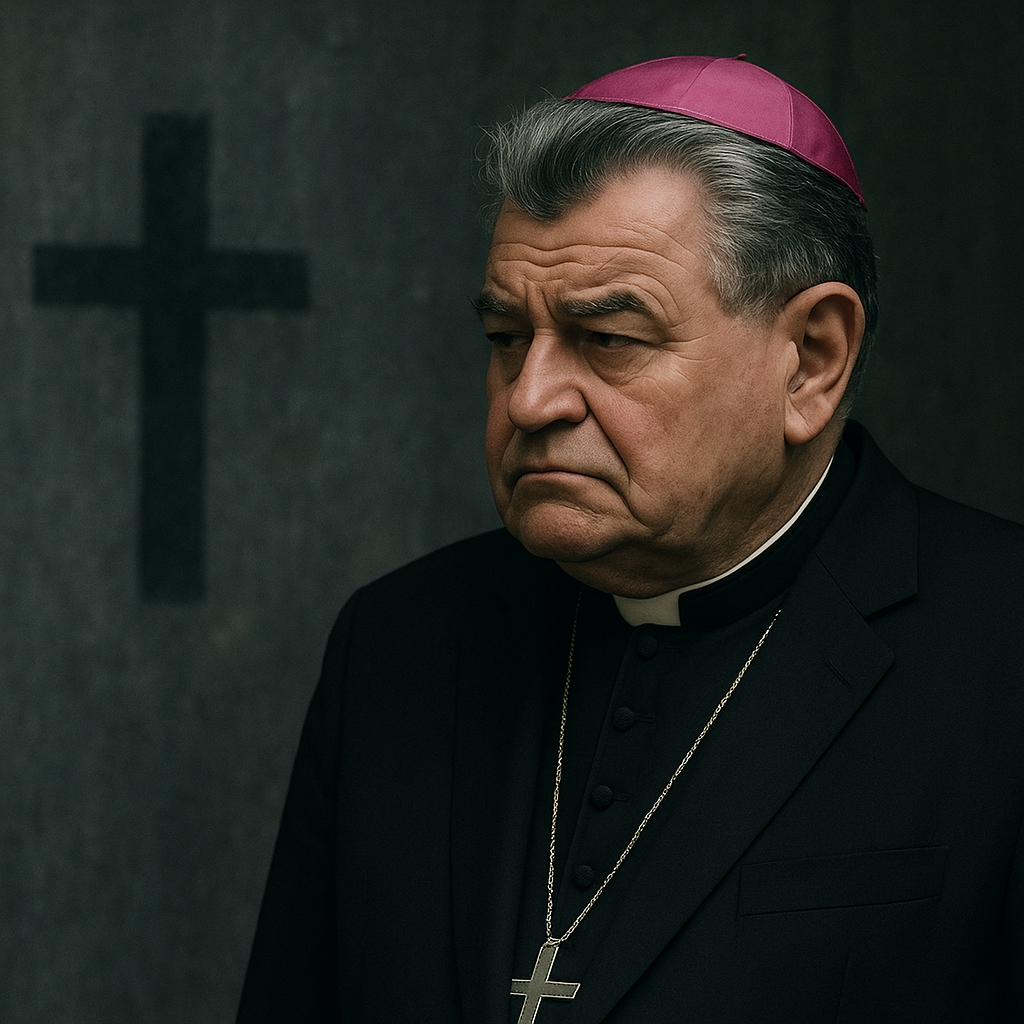
Dominik Duka, an archbishop, dies and the country loses its mind. Crowds rush to churches. Media scramble for every angle. Politicians race to stand near the coffin. The atmosphere feels more like a coronation than a funeral. This hysteria exposes a deep contradiction. The nation calls itself secular. Yet the reaction looks like a medieval procession. People behave as if the religious structure still defines collective identity. The chaos shows that society never separated emotion from authority. It also reveals how fragile reason becomes when tradition enters the stage.
Duka’s dissident past and his open mockery of LGBTQ people
Dominik Duka built his image on his dissident years. He joined the underground Church, he resisted communism; he spent time in prison. He cultivated this story for decades because it gave him moral credit in the public eye. Politicians respected him for it. Ordinary people treated him as a survivor of a harsh regime. His dissident identity created the impression of courage and principle.
However, his later behavior clashed with that heroic narrative. He mocked LGBTQ people; he dismissed their rights. He spoke about them with open contempt. And he used his authority to push culture wars instead of compassion. He acted like a man who climbed from oppression to the top of society and then pulled the ladder behind him. His dissident past did not guide him toward empathy. It guided him toward moral superiority.
This contradiction shaped his public legacy. He spoke about dignity while degrading minorities; he preached about freedom while attacking people who asked for basic respect. He used his dissident status as a shield for ideas that harmed others. Many admired him because of his past. Yet many saw how he used that past to legitimize intolerance. His attitude revealed how even former dissidents can become enforcers of hierarchy once they sit close to power.
Political elites at the funeral
Former presidents arrive in black suits. The current president appears in the center. Famous personalities fill the room with controlled drama. Cameras follow every handshake. Leaders treat the funeral like a diplomatic event. They use grief as a backdrop for influence. Their presence sends a clear message. They want to stand close to the Church because it still commands symbolic power, they want to remind voters that they understand tradition. They also want to show respect for an institution that shaped the political game for decades. The funeral turns into a performance where nobody mourns honestly. Everyone calculates.
Dominik Duka’s close connections to politics
Dominik Duka built strong ties with politicians throughout his career. He cultivated these relationships with skill. He understood that power grows when religion and politics cooperate. Presidents invited him to discussions behind closed doors. Prime ministers asked him for advice. He enjoyed access that few spiritual figures ever reach, he knew how to navigate influence networks without looking like a political actor. He used religious authority to enter circles where important decisions take place. In return, politicians used him to reach conservative voters. Their alliance shows how religion survives not through faith but through strategy.
The paradox of “helping people” versus protecting hierarchy
Church leaders insist that they help the poor. They speak about compassion. They preach equality. Yet they manage a strict hierarchy. The ranks begin with priests. They rise through monsignors and prelates, they climb toward bishops and cardinals. And they guard their position with discipline. They treat status as sacred. This structure resembles primate behavior. Dominant individuals control resources. Subordinates obey. Group rituals reinforce unity. Leaders survive because followers accept hierarchy. Religion uses this ancient pattern and calls it divine order. The paradox stands clear. The institution speaks about equality while defending inequality with every ceremony.
Religion as an evolutionary product
Religion emerged from evolution. Early humans needed cohesion. They needed rules that controlled aggression. They needed stories that unified tribes. Leaders used myths because myths worked better than logic. Rituals shaped obedience. They reduced internal conflict. They promised justice in a world that never offered any. Over centuries these instincts hardened. A person sees a coffin and feels loyalty. A crowd hears prayers and falls into rhythm. These reactions come from biology, not theology. People respond to symbols because their ancestors survived through symbols. Religion exploits these old shortcuts. It triggers emotional instincts that reason cannot override.
The Vatican’s trillions and the untouchable empire
The Vatican owns enormous wealth. It holds real estate across continents. It controls investment portfolios that stretch through banks, funds, and historical accounts. Its properties include palaces, land, and priceless art. This empire survives because the Vatican mastered secrecy. It operates like a multinational corporation wrapped in sacred imagery. My advice stands simple. Do not touch the Vatican and its trillions. The safest method would involve dismantling the entire structure. Yet politicians never attempt that. They fear the institution’s networks; they fear its credibility among voters. They fear the global influence it accumulated over centuries. No other religious authority enjoys that level of immunity.
Mass belief and the emotional pull of ritual
Despite religion’s falsity, people still prayed for the archbishop. They wanted to touch the casket. They cried over a man they never met. Their reaction comes from evolutionary psychology. Rituals ease fear. Group mourning provides stability. People search for meaning when they face death. Superstition fills the gap when rationality feels uncomfortable. The crowd responded not to theology but to emotion. They felt comfort in the illusion of continuity; they believed the ritual gave them safety. They wanted belonging more than truth. This desire kept religion alive long after its claims collapsed.
Lesson not learned
The country repeated an old story. Politicians used the funeral for image-building. Church leaders used it for authority. Ordinary people used it for emotional relief. Nobody examined the deeper meaning. Nobody questioned the spectacle. The lesson stayed untouched. Society still trusts religious symbols more than evidence. It still believes hierarchy brings order. It still reacts to power displays with instinct and not with reason. The archbishop’s death exposed a painful truth. The nation claims progress. Yet the reaction revealed a society still chained to old instincts, old rituals, and old illusions. The funeral became a mirror. The reflection showed how far we still need to go.
Leave a Reply