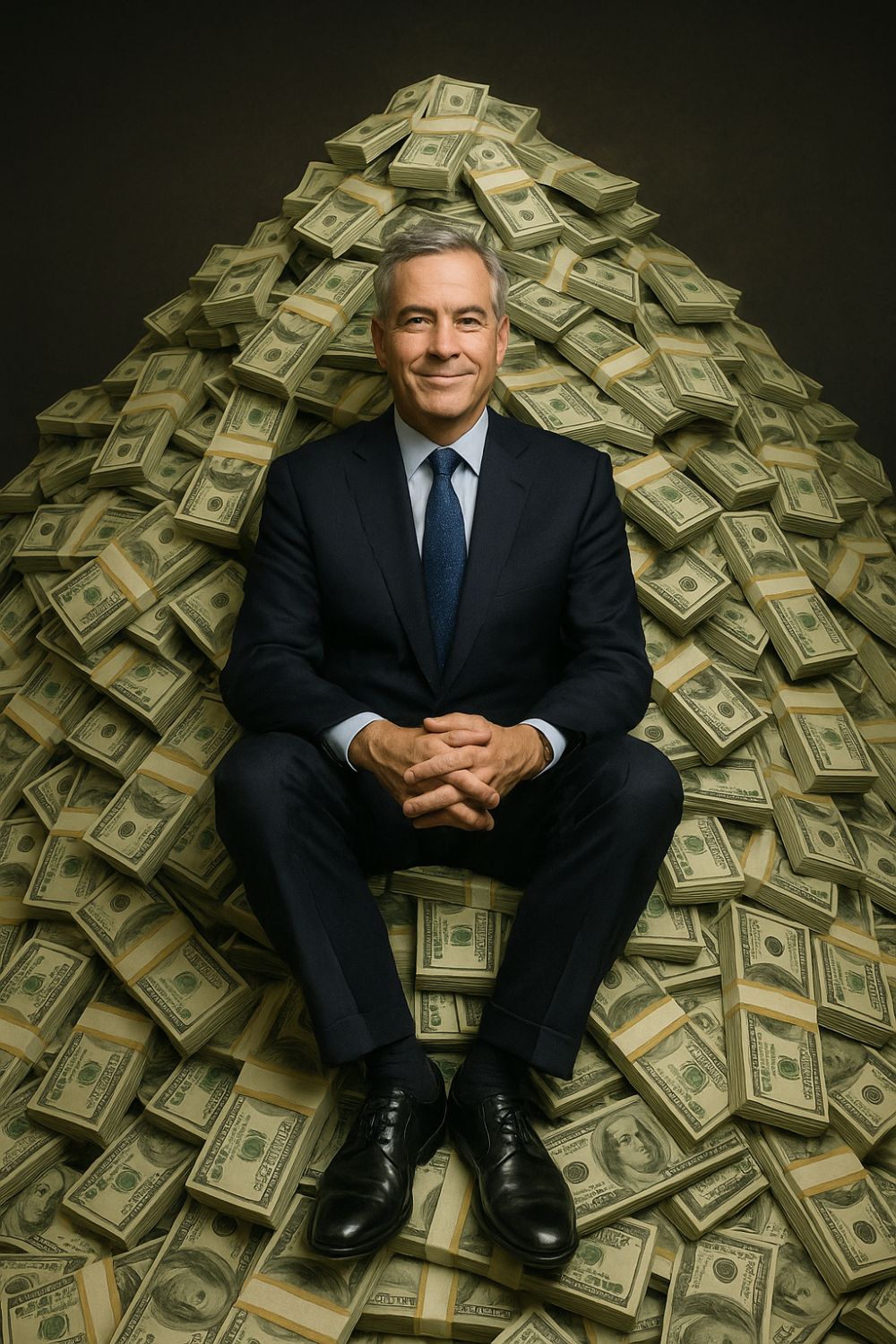
Power hides behind respectable faces; yet its shape changes with every century. Presidents rise and fall. Bankers remain. And when we trace this relationship through history, a disturbing shift appears. The alliance begins with helpful advisers. It ends with sociopaths who treat nations like disposable assets.
We travel from cooperation to domination; the arc becomes obvious.
When bankers acted as stabilizers
Early governments lacked tools. They lacked liquidity, they lacked expertise. They needed someone who understood the movement of money. Bankers filled the gap. They stabilized currencies, they funded armies. And they built national credit. They prevented states from collapsing. And they acted with caution because their own survival depended on the stability of the state.
Presidents trusted them because the partnership still served the public. Bankers did not dominate; they balanced risk with responsibility.
This era vanished quickly.
When finance expanded beyond politics
Industrial capitalism changed the world. Factories demanded credit. Railways needed massive financing. Trade expanded across oceans. Bankers gained power because they mastered complexity. Presidents lost leverage because they depended on that knowledge. The balance flipped; bankers understood the game. Presidents did not.
They influenced legislation. And they raised political money. They shaped economic philosophy. And they transformed presidents into clients who needed them for every major policy decision.
Once dependency appeared, politics lost control of finance.
When bankers became dynasties
The twentieth century brought dynasties that behaved like parallel governments. Central banks concentrated power. A small group of families controlled international credit. Bank mergers created institutions larger than most nations. Regulation became a puzzle to solve, not a barrier to respect. Every legal limit produced a more sophisticated workaround.
Presidents tried to resist. They passed reforms, they held hearings. They delivered speeches. Yet reforms ignored the core. Hearings changed nothing. Speeches calmed voters, not markets.
Every crisis showed the same hierarchy. Politicians argued. Bankers executed.
When neoliberalism removed the last barriers
Deregulation opened the gates. Banks expanded across continents. New financial instruments appeared faster than anyone could understand. Derivatives spread. Speculative products multiplied. Risk floated freely because no one understood its scale. And bankers reinvented themselves as untouchable architects of global prosperity.
They did not cooperate with governments.; they controlled governments. They wrote laws through proxies; they financed think-tanks. And they privatized gains and socialized losses. And the public kept voting while real decisions were made elsewhere.
A silent coup took place. No one admitted it.
When bankers became sociopaths
The modern banker views the world like a simulation. Borders matter only when they restrict profit. Nations matter only when they provide collateral. People matter only as data points. And crises matter only when they open new opportunities.
This mentality rewards indifference. It rewards detachment. It rewards destruction when destruction increases profit. Presidents stay trapped because they rely on the same networks that exploit them. They need donors, they need lenders. They need stability. But bankers provide stability only when stability benefits them.
The result becomes predictable. States rescue banks. Banks hurt states. Presidents apologize for disasters they did not cause and cannot prevent.
Case studies that reveal the pattern
History exposes the architecture of control.
The Morgan empire saved the U.S. Treasury during the 1907 panic; the same empire later shaped national policy to enrich itself.
The Rothschild networks stabilized European governments; they used intelligence and agility to build dominance no ruler could match.
The BCCI scandal showed how banks intertwine with intelligence agencies, crime networks, and geopolitics; powerful elites protected it because secrecy served them.
The 2008 crash exposed the final truth; banks gambled with global stability, destroyed millions of lives, and left taxpayers with the bill.
Presidents from Reagan to Bush to Clinton to Obama promised reform. None delivered structural change. The bankers always remained stronger.
When international institutions replaced democracy
IMF and World Bank programs deepened dependence. They tied nations to debt; they imposed conditions that shrank public sectors, cut wages, and destroyed safety nets. They treated entire societies as economic experiments. And presidents of poor nations agreed because refusal meant default.
The deal looked voluntary; it was not.
Global finance now governs without elections. It imposes rules without accountability. It reshapes nations without consent. Presidents accept it because they cannot afford to reject it.
Bankers became emperors without crowns.
When dynasties manipulate currencies and build debt traps
Financial dynasties do not stay inside one country. They operate across continents, they treat currencies as tools; they treat nations as assets. And they treat crises as chances to tighten control.
They hold reserves in several currencies; they influence central banks indirectly; they coordinate with investment houses that execute their strategies. They monitor political unrest because unrest often generates profit.
A dynasty signals a loss of confidence. Investors follow. A currency collapses. Import prices surge. Citizens panic. And the government faces a disaster with no instruments to solve it.
The same dynasty then offers loans. The government accepts. The trap locks.
Dynasties do not need armies. They use fear of default.
Interconnected banks amplify the leverage. They hold each other’s bonds. They insure each other’s risks; they rely on shared liabilities. Therefore a small shock becomes a global threat. Presidents fear triggering contagion. Dynasties exploit that fear with precision.
Poor nations fall first. They borrow in strong currencies. And they export raw goods. They lack defenses. Dynasties buy their debt. International institutions reinforce the dependency. The nations sink deeper.
Rich nations fall differently. They drown in long-term obligations.; they depend on foreign buyers for their bonds. They inflate their currencies to delay collapse. Dynasties hold enough capital to sway the outcome. When they buy, markets rise. When they sell, governments panic.
Every modern crisis repeats the same pattern. No country stands fully independent, no currency floats freely. No government acts without watching financial markets. Banks interlock like gears. Dynasties control the gears.
The system does not collapse because it does not need stability. It needs movement; it needs debt. It needs dependence. Dynasties maintain all three.
When technology gave bankers absolute reach
Money now moves at light speed. Algorithms trade faster than human reaction. Surveillance systems track every transaction. And financial networks gain the precision of intelligence agencies.
Presidents give speeches. Bankers restructure the world.
Finance runs on speed. Politics runs on ceremony. The gap widens. The imbalance grows.
Modern bankers behave like rulers of a parallel civilization. They control wealth that dwarfs national budgets, they influence intelligence services. And they manipulate currencies. They coordinate across borders with no democratic oversight.
The helpful banker of the past died long ago. The sociopathic banker replaced him.
Final reflection: Who controls the future?
The partnership between presidents and bankers began as mutual necessity. It became dependence. It turned into domination. And now it resembles captivity.
Presidents cannot govern without banks. Banks thrive when presidents weaken. This imbalance defines our century. It defines the next crisis. It defines the collapse that follows.
We now arrive at the only question that matters.
Will societies reclaim control over money, or will money forever control societies?
This answer decides the fate of democracy, and maybe the fate of the world.
Source: All the Presidents’ Bankers: The Hidden Alliances that Drive American Power
Leave a Reply