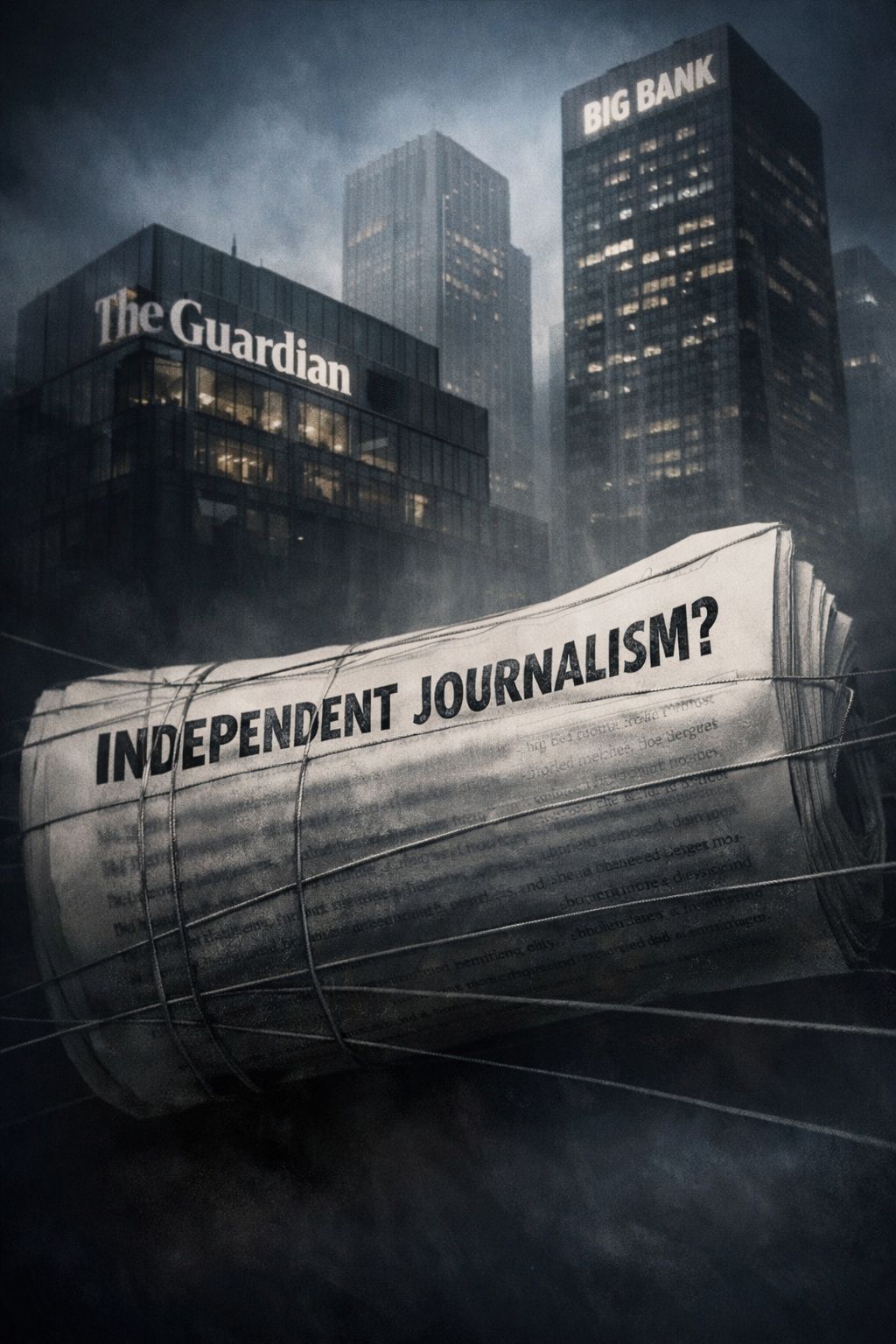
The Guardian tells a familiar story. It presents itself as undeterred, it presents itself as independent. It insists that multinational media lobbyists have nothing to do with its content. On the surface, this reassurance feels necessary. After all, trust depends on it.
Yet once we move past declarations, doubts emerge. Power rarely allows institutions to describe themselves honestly. Moreover, real influence does not announce itself. Instead, it embeds quietly. Therefore the question is not whether The Guardian publishes critical material. Clearly, it does. The real question asks where criticism stops and why that stopping point never changes.
What “independence” would actually demand
Independence sounds simple. In reality, it is brutally expensive. It requires insulation from financial retaliation. It requires freedom from advertiser pressure. Furthermore, it requires immunity from access blackmail. Above all, it requires distance from media lobbying structures that shape regulation itself.
However, large media organizations cannot afford this level of freedom. They operate inside tightly regulated markets; they depend on digital platforms. They rely on legal systems written by political and financial elites. Consequently, independence survives only conditionally. It exists only as long as it does not threaten core power.
Media lobbyists as structural censors
Every major media organization employs lobbyists. These lobbyists do not write headlines. Nevertheless, they shape the environment in which headlines must survive. They operate in London, they operate in Brussels. They operate in Washington. There, they negotiate copyright law, platform liability, regulatory exemptions, and public funding.
As a result, editorial freedom shrinks before writing begins. Journalists never vote on these constraints. Editors rarely name them. Still, everyone learns them. Over time, self-censorship replaces censorship. Thus, when The Guardian claims lobbyists have no influence, the claim misleads. Lobbyists shape the rules. The rules shape the news.
The Guardian inside the Big Bank ecosystem
The Guardian does not need to be owned by a bank. Ownership distracts from the real mechanism. Modern power operates through ecosystems, not commands. Big banks finance governments. They underwrite debt. They support platforms, universities, NGOs, and think tanks. Media interacts with all of them.
Therefore, alignment becomes inevitable. Editorial lines evolve to remain compatible with financial power. A newspaper may criticize inequality. It may condemn greed. It may attack abstract capitalism. Yet it avoids naming the financial architecture that engineers these outcomes. Silence preserves stability.
Why denying bank money proves nothing
A common defense appears quickly. “We do not take money from banks.” This defense misses the point. Influence rarely travels through direct payments. Instead, it flows through dependency.
Access matters. Legal safety matters. Platform reach matters. Career mobility matters. Each depends on elite tolerance. Consequently, even without bank funding, boundaries remain firm. The moment journalism threatens financial power too directly, retaliation follows. Lawsuits appear. Access disappears. Reputations suffer. Editors understand this calculus well.
The great omission: dynastic power erased
Western power is not faceless. It is dynastic. Rockefeller. Morgan. Rothschild. Vanderbilt. These names shaped finance, industry, and state formation. They did not vanish, they professionalized. And they diversified. They embedded.
Yet contemporary journalism treats them as relics. They appear in history sections. They appear in anniversaries; they do not appear as active power centers. This absence matters. It transforms power into abstraction. Markets replace people. Systems replace responsibility. Readers receive analysis without agents.
Lobbying replaces democracy, then disappears from view
Public politics offers spectacle. Elections dominate coverage. Scandals generate outrage. Speeches fill pages. Meanwhile, real policy emerges elsewhere. Banks, law firms, consultancies, and lobbying networks draft legislation long before parliaments vote.
Media reports outcomes. Rarely does it report authorship. Consequently, legitimacy remains intact. Citizens believe decisions emerged democratically. In truth, financial actors already shaped them. The Guardian participates in this omission. It exposes consequences. It avoids architects.
The antisemitism trap that protects real power
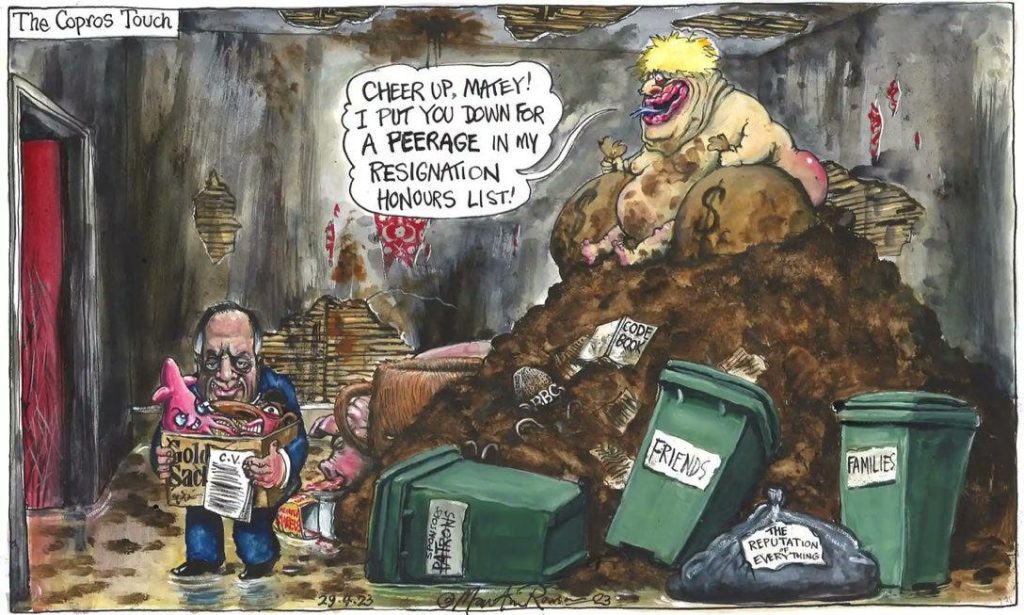
Occasionally, finance appears through ethnic imagery. A Jewish figure linked to Goldman Sachs sitting on money illustrates the danger. The financial link may exist. However, the framing activates antisemitic tropes.
This shift matters. It redirects anger away from institutions and toward identity. Big banks benefit directly. Structural critique collapses. Hatred replaces analysis. Responsible journalism must dismantle this trap, not reproduce it. Institutions deserve scrutiny. Ethnic symbolism does not.
Selective bravery and the illusion of resistance
The Guardian often looks courageous. It attacks corporations., it criticizes governments. It highlights inequality. These actions matter. They educate. They inform.
Still, the pattern repeats. Criticism stops before financial architects appear. Lobbying networks remain unnamed. Monetary power stays abstract. Therefore bravery becomes selective. It reassures readers. It avoids real confrontation.
Comparison without illusion
Compared to many outlets, The Guardian does more. This difference deserves recognition. Many media platforms function as pure propaganda.
Yet relative independence is not independence. Claims of full freedom remain false. When The Guardian declares itself undeterred, the declaration overreaches. Claims by outlets like The New York Times stretch credibility even further. Exaggeration elsewhere does not excuse exaggeration here. And it is utterly laughable.
Legal caution as structural obedience
Media organizations fear lawsuits. Financial ruin remains a constant threat. Therefore names disappear. Power becomes vague. This avoidance gets framed as responsibility.
In practice, it functions as obedience. Readers confuse silence with balance. Over time, omission becomes normal. Then it becomes doctrine. Journalism shrinks without admitting it.
What true independence would require
A truly independent Guardian would change radically. It would map media lobbying openly, it would name banking dynasties explicitly, it would trace money across borders. And it would expose how banks discipline governments. It would accept loss of access as proof of integrity.
Such journalism would provoke retaliation. It would lose prestige. It would suffer financially. However, it would deserve the word independent.
Gratitude without blindness
The Guardian is not malicious. It is constrained. Media lobbyists shape its environment. Big banks define its limits. Omission, not fabrication, defines modern journalism.
Therefore appreciation must coexist with clarity. Independence does not disappear entirely. Nevertheless, it ends exactly where money begins.
Leave a Reply