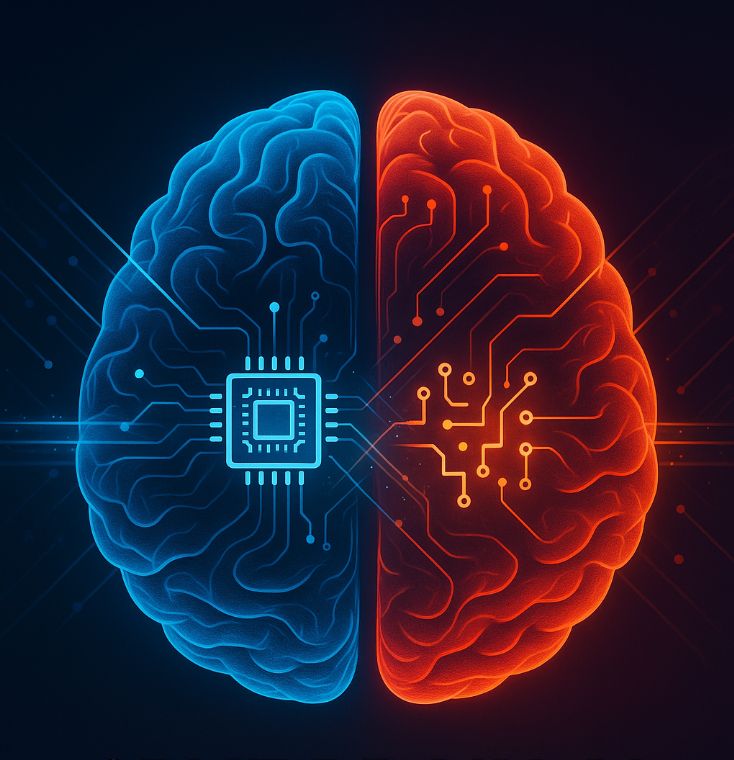
Humans live in a highly complex economic system. However, the brain did not evolve for it. It evolved in small groups under scarcity, danger, and constant competition. Therefore, capitalism does not create human behavior. It exploits pre-existing instincts. This mismatch defines modern life.
The evolutionary foundation of human behavior
For hundreds of thousands of years, humans lived in small bands. Survival depended on quick decisions, social awareness, and resource acquisition. Three forces dominated: survival, status, and reproduction. Therefore, the brain evolved to prioritize short-term rewards, social comparison, and risk avoidance. These instincts worked well in primitive environments. However, capitalism now scales them globally.
Scarcity instinct becomes artificial demand
Ancient humans faced real scarcity. Food could disappear and resources could vanish. Therefore, the brain developed a strong drive to accumulate. Modern capitalism transforms this instinct. It creates artificial scarcity through limited-time offers, exclusive products, and countdowns. These signals trigger urgency. People feel they must act immediately. Moreover, capitalism shifted consumption from needs to wants. It creates endless demand instead of satisfaction. As a result, the scarcity instinct never shuts off.
Status competition and conspicuous consumption
Status determined survival and mating success. Therefore, humans evolved to signal status. In modern capitalism, this becomes consumption. People use luxury goods, brands, and lifestyles to signal position. This follows what economists call conspicuous consumption. People buy expensive goods not for utility, but for visibility. Research shows such consumption signals wealth and attractiveness. Therefore, capitalism turns status into a market.
Dopamine, reward systems, and addiction
The brain rewards survival-related behavior through dopamine. Capitalism targets this system directly. Shopping creates anticipation and reward. Variable rewards keep attention high. Uncertainty increases engagement. This mirrors gambling systems. Studies suggest around 5–8% of the global population shows compulsive buying behavior. This group generates disproportionate revenue. Therefore, the system does not optimize satisfaction. It optimizes repeated engagement. Some researchers describe capitalism as an addictive process that constantly stimulates reward circuits.
Novelty seeking and endless stimulation
Humans evolved to respond to novelty. New environments meant opportunity or danger. Therefore, novelty triggers attention and excitement. Modern capitalism floods the brain with new products, trends, and updates. This creates escalation. The same stimulus no longer satisfies. Research shows exposure to novelty increases consumption. People need more to feel the same effect. Thus, desire expands endlessly.
Tribalism and brand identity
Humans evolved in tribes. Loyalty ensured survival. Today, brands replace tribes. People identify with products. They defend companies and attack competitors. Therefore, consumption becomes identity. This is not accidental. It creates emotional attachment and reduces rational evaluation.
Loss aversion and financial behavior
In evolutionary terms, loss meant danger. Losing resources could mean death. Therefore, humans fear losses more than they value gains. Capital markets exploit this. People panic sell or hold losing assets too long. Decisions become emotional. Thus, financial behavior becomes predictable.
Homo consumens: The insatiable consumer
Modern society produces what some theorists call Homo consumens. This is a person driven to consume endlessly. The goal is not to satisfy needs, but to fill psychological gaps. Consumption compensates for loneliness, anxiety, and lack of identity. As a result, the consumer becomes insatiable and unstable.
Capitalism as an amplifier, not creator
Capitalism did not invent these instincts. It amplified them; it scaled them globally. And it optimized them through data. It refined them through marketing. Modern systems use psychology, neuroscience, and behavioral data to increase engagement. Therefore, instinct becomes infrastructure.
Systemic consequences
This produces large-scale effects. Overconsumption increases. Environmental pressure grows. Financial instability emerges. Mental health declines. Research shows advanced capitalism increases materialism and insecurity. At the same time, inequality grows. Status competition intensifies. Social comparison becomes constant. Therefore, pressure increases across society.
The deeper layer: Addiction and dislocation
Some theories go further. They argue capitalism creates social disconnection. Traditional bonds weaken. Community declines. Identity becomes unstable. Therefore, consumption fills the gap. Addictive behavior becomes structural, not exceptional. The system reinforces this cycle continuously.
Can humans resist?
Awareness helps, but only partially. The system operates at scale. It uses data, testing, and optimization. Meanwhile, instincts remain ancient. Therefore, resistance requires education, regulation, and conscious decision-making. However, even then, the system adapts.
Conclusion: The mismatch defines the system
Humans did not evolve for capitalism. Capitalism evolved for humans. It studies instincts and exploits them. It scales them. Therefore, behavior becomes predictable. Not because people are irrational, but because they are human.
Leave a Reply