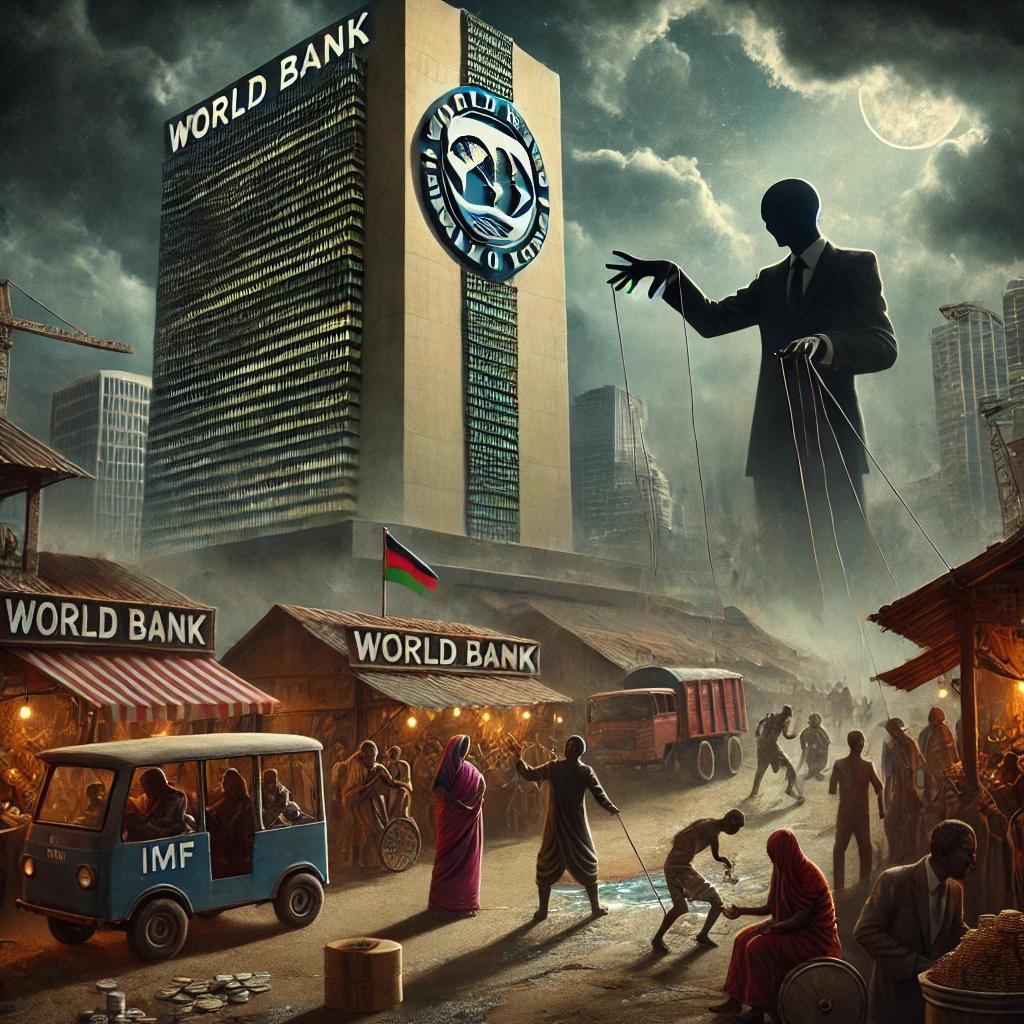
Western economic policies are marketed as instruments of stability, progress, and modernization. In reality, they often lead to financial collapse, political unrest, and long-term dependency. Institutions like the International Monetary Fund (IMF), World Bank, and Federal Reserve are not neutral organizations. They act as economic enforcers, shaping global markets to benefit Western financial elites. Their policies create crises that allow multinational corporations, banks, and investment firms to extract wealth from vulnerable nations. They destabilize foreign governments in extreme form.
Governments that resist privatization or refuse to align with Western economic interests are not left alone. Instead, they are targeted through financial manipulation, sanctions, and trade restrictions. If a country cannot be fully absorbed into the global economic system controlled by the U.S. and its allies, it is deliberately pushed into a state of endless political and economic turmoil.
How they profit from destabilization
Economic collapse is not an accident. It is a strategy. When a country falls into financial ruin, powerful Western players step in to seize control of industries, land, and natural resources. The first beneficiaries are multinational corporations. They acquire state-owned industries at low prices when governments are forced to privatize assets under IMF and World Bank conditions. Local businesses struggle under foreign competition, leading to a transfer of economic power to Western investors.
Investment firms and hedge funds also gain from financial crises. When a nation faces economic distress, its bonds and currency lose value. Wealthy investors buy this debt at a fraction of its original cost, then pressure the government to repay the full amount. This “vulture capitalism” allows financiers to make huge profits while taxpayers in the affected country suffer from deep budget cuts and rising costs of living.
The military-industrial complex profits as well. Destabilized countries often require arms, security services, and military support. Western arms manufacturers sell weapons to both governments and opposition groups, ensuring conflicts continue for years. Private security firms move in to “stabilize” key industries, protecting corporate interests rather than the population.
Western banks also exploit economic collapse. Once an economy is broken, foreign capital floods in to “help” rebuild. However, these loans come with high-interest rates and strict conditions that ensure long-term dependency. Countries that take this money must surrender control over key policies, industries, and financial institutions. This allows Western financial elites to control the future of entire nations.
Debt as a tool of control
Debt is the most effective method for controlling a government. The IMF and World Bank lend money not to help countries develop but to ensure they remain in a cycle of borrowing and dependency. Loan conditions force nations to cut public spending, reduce social programs, and open markets to foreign investors.
When a government refuses these terms, it faces financial punishment. International credit ratings drop, making borrowing impossible. The currency loses value, triggering inflation. Foreign investors pull out, creating an artificial economic crisis. If necessary, the country is denied access to the global banking system, blocking its ability to trade.
These conditions are designed to weaken state control. When public services like healthcare, education, and infrastructure are privatized, foreign corporations take over. Local populations lose access to affordable services, and governments lose control over their own economies. Instead of developing self-sufficient industries, nations are forced to rely on Western imports and financial aid.
Selective enforcement of human rights
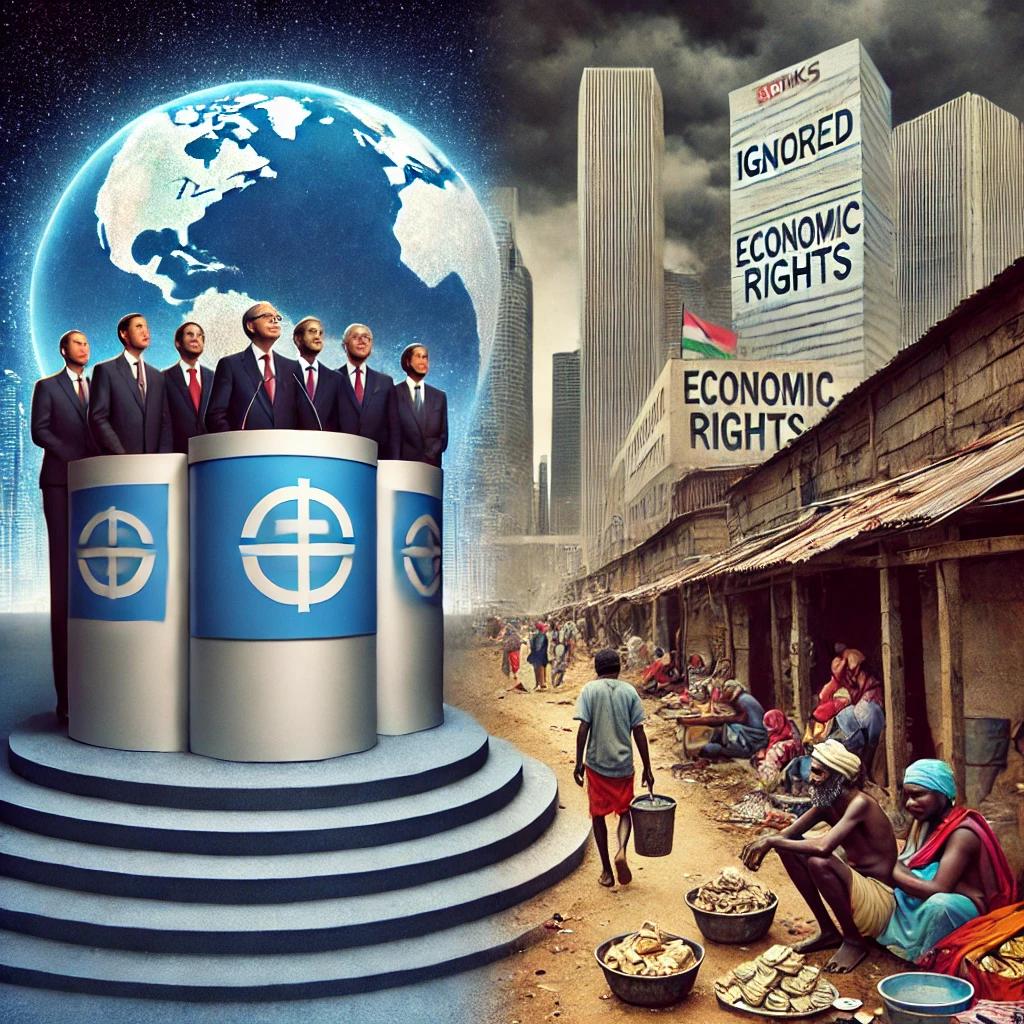
Western governments claim to support human rights. However, their focus is selective. Economic human rights—such as access to food, housing, education, and healthcare—are ignored. The focus is always on political rights like freedom of speech, elections, and press freedom.
This selectivity is not accidental. Promoting economic rights would challenge the neoliberal economic system that benefits Western elites. Ensuring access to healthcare and fair wages would require strong governments capable of regulating corporations and protecting their economies. Instead, Western-backed financial institutions push for deregulation, privatization, and market liberalization. These policies concentrate wealth in the hands of a few while increasing inequality and poverty.
This explains why the West supports “democratic” movements that push for political freedoms but ignores protests demanding economic justice. A government that restricts political rights but embraces free-market policies remains an ally. Meanwhile, a government that prioritizes economic stability and national sovereignty but resists foreign control becomes a target for regime change.
Destabilizing foreign governments: The role of sanctions
Sanctions are another powerful tool for economic warfare. Officially, they are used to punish governments for human rights abuses or security threats. In reality, they weaken economies to create instability. By blocking access to trade, freezing foreign assets, and cutting off financial institutions, sanctions cripple entire industries.
For example, Venezuela’s economic collapse was not just due to government mismanagement. U.S. sanctions restricted the country’s ability to access global financial markets, import goods, and conduct trade. This led to food shortages, hyperinflation, and a humanitarian crisis. Western media framed this as the failure of socialism, ignoring the role of economic warfare.
Sanctions also allow corporations to profit. When a sanctioned country’s currency collapses, its businesses and resources become cheap for foreign investors. Those with political connections buy assets at low prices, waiting for sanctions to lift. When trade resumes, they sell for massive profits.
The West attacks: Currency manipulation and financial attacks
The U.S. dollar dominates global trade, giving Washington enormous economic power. By adjusting interest rates and controlling financial institutions, the Federal Reserve can trigger recessions in developing nations. When the dollar strengthens, it increases the cost of repaying foreign debt, forcing countries to accept IMF and World Bank conditions.
Another method of financial warfare is capital flight. Large Western banks and hedge funds suddenly withdraw billions from a country, crashing its currency. This happened during the 1997 Asian financial crisis. Speculative attacks on Thailand’s currency spread across the region, wiping out entire economies. The IMF then stepped in with “rescue packages” that forced governments to accept strict economic reforms.
Why they want weak governments
Strong, independent governments threaten Western financial control. A nation with its own banking system, energy sector, and industries cannot be easily exploited. Western elites prefer weak governments that depend on foreign loans, imports, and military support.
If a country refuses to follow economic orders, Western powers create internal divisions. Intelligence agencies fund and train opposition groups, fueling protests and political unrest. Media coverage presents this as a “fight for democracy,” ignoring the foreign role in destabilization.
If regime change fails, the next step is economic isolation. The country is cut off from trade, technology, and international markets. Those that resist, like Iran and Russia, face continuous economic attacks. Those that surrender, like post-war Iraq, are handed over to Western corporations.
Examples
In Chile (1973), economic sabotage played a crucial role in preparing the ground for Pinochet’s coup. The U.S. imposed financial pressure and manipulated trade to weaken the nationalist government of Salvador Allende. As inflation soared and economic conditions deteriorated, public unrest escalated. This instability provided the justification for a military takeover, replacing Allende with a U.S.-backed dictatorship that embraced free-market policies favorable to Western corporations.
In Venezuela (2010s-Present), Western powers used sanctions and oil price manipulation to create a financial crisis. The country, heavily reliant on oil exports, faced economic collapse when international sanctions cut off access to financial markets. Hyperinflation and shortages of basic goods followed, fueling protests and political instability. Repeated attempts at regime change through economic coercion have sought to weaken Venezuela’s socialist government, making it more vulnerable to external influence.
In Libya (2011), Gaddafi’s plan for a gold-backed African currency posed a direct threat to Western financial dominance. By establishing a new monetary system independent of the U.S. dollar and euro, Libya would have reduced Western influence in Africa. In response, NATO launched a military intervention under the pretext of humanitarian concerns. After Gaddafi’s overthrow, Libya descended into permanent chaos, with warring factions and foreign powers competing for control over its vast oil reserves.
Russia, Iraq and Afghanistan
In Russia (1990s, 2022-Present), Western economic policies devastated the country’s economy. After the collapse of the Soviet Union, “shock therapy” imposed by Western financial advisors led to mass privatization, hyperinflation, and widespread poverty. Russian oligarchs, many with Western backing, seized control of state industries, further weakening the government’s authority. More recently, Western sanctions following the Ukraine conflict aim to isolate Russia economically, attempting to weaken its financial and geopolitical influence.
In Iraq and Afghanistan, economic destabilization has been a long-term strategy. When full economic control was not feasible, these countries were left in a cycle of endless political instability. The destruction of Iraq’s infrastructure and economy after the 2003 invasion allowed Western corporations to dominate its oil industry, while Afghanistan became a battleground for geopolitical control. Neither country was given the opportunity to develop an independent, stable economy, ensuring continued reliance on foreign powers.
The media’s role in economic warfare
Western media justifies economic interventions by controlling the narrative. Coverage focuses on corruption, dictatorship, and political oppression in target countries. Meanwhile, it ignores how Western policies create poverty, instability, and suffering.
When a crisis hits, the media blames local leaders. It calls for “reforms” that benefit Western investors. Rarely does it mention sanctions, financial attacks, or economic sabotage. This ensures the public supports interventions without understanding the real causes.
Destabilizing foreign governments: Resistance and alternative economic systems
Some nations are breaking free from Western financial control. China and Russia are creating financial institutions that bypass Western banks. The BRICS alliance is developing alternatives to the U.S. dollar. Digital currencies and gold-backed banking networks offer new ways to trade without Western oversight.
Regional trade agreements also challenge Western dominance. Latin American and African nations are forming economic blocs that prioritize local industries over foreign investment. These efforts threaten the traditional power structure, which is why they are met with resistance.
Conclusion
Western economic policies are not about development. They are about control. Debt traps, financial crises, and sanctions force nations into dependency. If a government resists, it faces economic warfare and political instability. If full control is impossible, the country is left in chaos.
This system benefits multinational corporations, banks, and arms manufacturers. It ensures that the Global South remains weak and dependent. The only way to escape this cycle is through economic independence. Countries must build their own financial institutions, protect their resources, and reject neoliberal economic policies. Without this, they will remain trapped in a system designed to extract wealth rather than create prosperity.
Leave a Reply