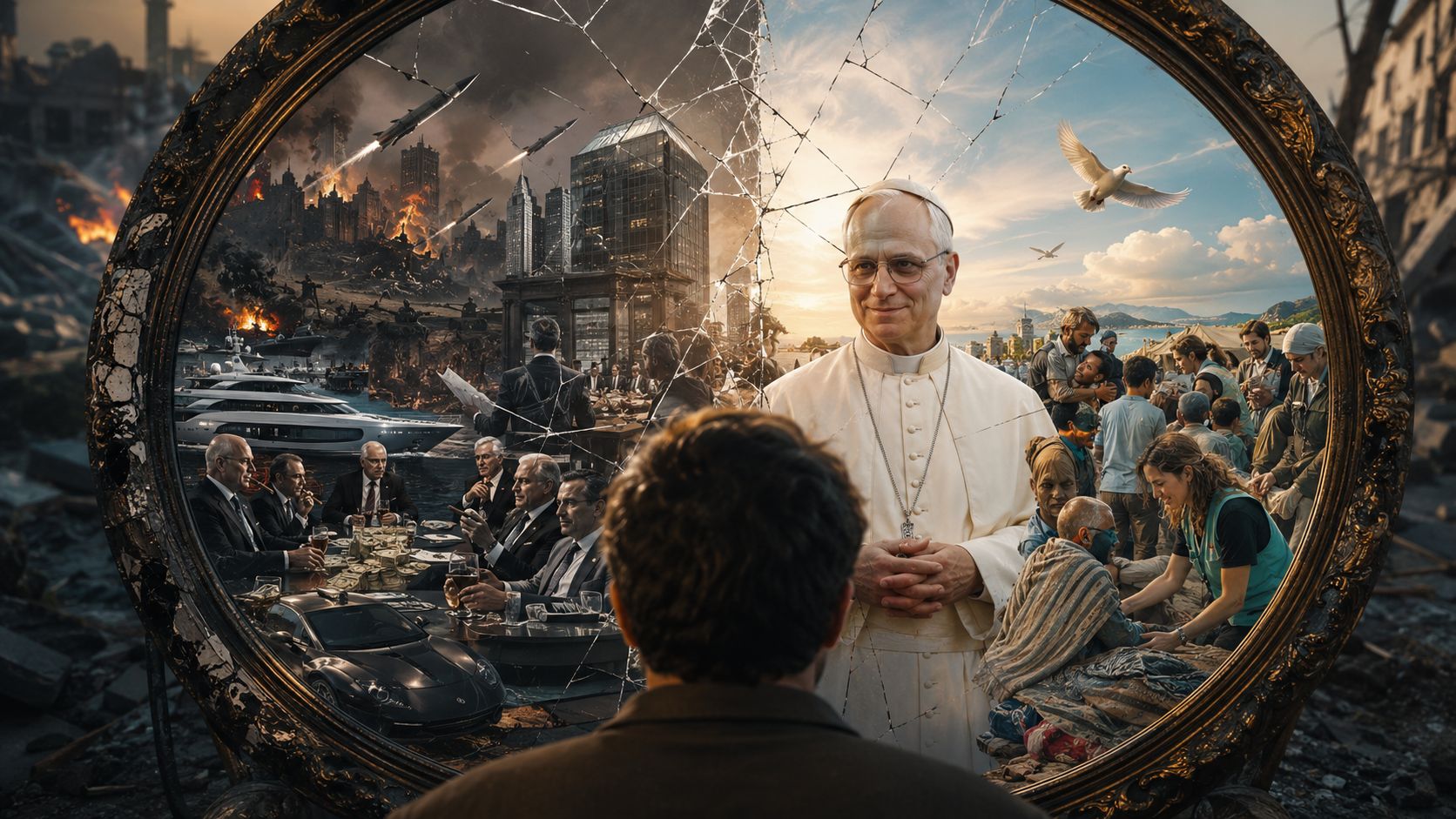
I am not only an atheist, but I also dispute central tenets of Christianity. I believe neither in a theistic nor a deistic God, and I also have serious doubts that Jesus Christ existed as a historical figure. In my opinion, he either did not exist at all, or the figure is based on someone who barely resembled the Biblical Jesus.
No, I do not agree with everything Pope Leo XIV has said, especially regarding AI. However, he is right about one thing. The warmongers, the super-rich, and multinational corporations are truly disgusting. The Pope deserves credit for making that point. I wrote a short summary, but you can read the piece here.
The Guardian piece by Simon Tisdall
I read an opinion column by Simon Tisdall. Its central argument is that many of today’s most powerful political leaders have abandoned basic moral principles, while Pope Leo XIV has emerged as one of the few influential global figures willing to speak consistently about ethics, justice, and human dignity.
Tisdall argues that the world is experiencing a widespread moral crisis. He accuses leaders such as Donald Trump, Vladimir Putin, and Benjamin Netanyahu of promoting violence, dishonesty, corruption, nationalism, and the pursuit of power at the expense of human life.
He also criticizes the influence of billionaires, multinational corporations, and other powerful interests, claiming that financial and political elites increasingly shape government policies without sufficient moral restraint. Against this backdrop, the author presents Pope Leo XIV as an unusual exception. Although he leads the Catholic Church rather than a state, Tisdall argues that the Pope has become one of the strongest moral voices on the international stage. He praises Leo for condemning wars, criticizing the political misuse of religion, defending migrants and vulnerable people, calling for international cooperation, and urging political leaders to place ethical considerations above power politics.
Moral issues
The article also highlights Pope Leo’s broader agenda. It notes his rejection of the traditional Catholic “just war” doctrine in favor of diplomacy and nonviolence, his call for stricter regulation of artificial intelligence, and his apology for the Catholic Church’s historical involvement in slavery. Tisdall portrays these actions as evidence that the Pope is willing to confront difficult moral issues rather than simply preserve tradition. The column concludes by arguing that morality should once again become central to political leadership. According to Tisdall, citizens should demand honesty, justice, compassion, and accountability from governments instead of accepting the normalization of violence, corruption, and the pursuit of power for its own sake. He presents Pope Leo XIV as an example of the type of moral leadership that is currently missing from much of world politics.
My opinion: Immigration cannot ignore morality—or reality
Immigration has become one of the most divisive political issues in the Western world. Politicians often reduce the debate to two extreme positions. One side demands open borders. The other wants to close the gates almost completely. Neither approach offers a lasting solution.
A compassionate society should help people fleeing war, persecution, or genuine humanitarian disasters. At the same time, every country has the right to control its borders, enforce its laws, and decide who may settle permanently within its territory. These principles do not contradict one another. They complement one another.
Governments also have a responsibility toward their own citizens. Large-scale immigration without successful integration can increase pressure on housing, schools, healthcare, and public finances. It may also deepen social tensions, particularly when newcomers reject the democratic values of their host country. Ignoring these concerns only fuels support for extremist parties.
At the same time, politicians should avoid turning every immigrant into a scapegoat. The overwhelming majority of migrants are not criminals. Many work, pay taxes, establish businesses, and contribute to the societies that welcomed them. A responsible immigration policy should distinguish between people who respect democratic laws and those who abuse the system.
Moral leadership requires honesty. Governments should acknowledge both the humanitarian duty to protect vulnerable people and the practical limits of immigration. Pretending that immigration creates no challenges is as misleading as claiming that every migrant threatens national security.
Democracies should therefore reject both xenophobia and naïve idealism. They should protect their borders, enforce the law, promote integration, and preserve human dignity. Only by balancing security with compassion can democratic societies maintain both public trust and their moral principles.
Leave a Reply