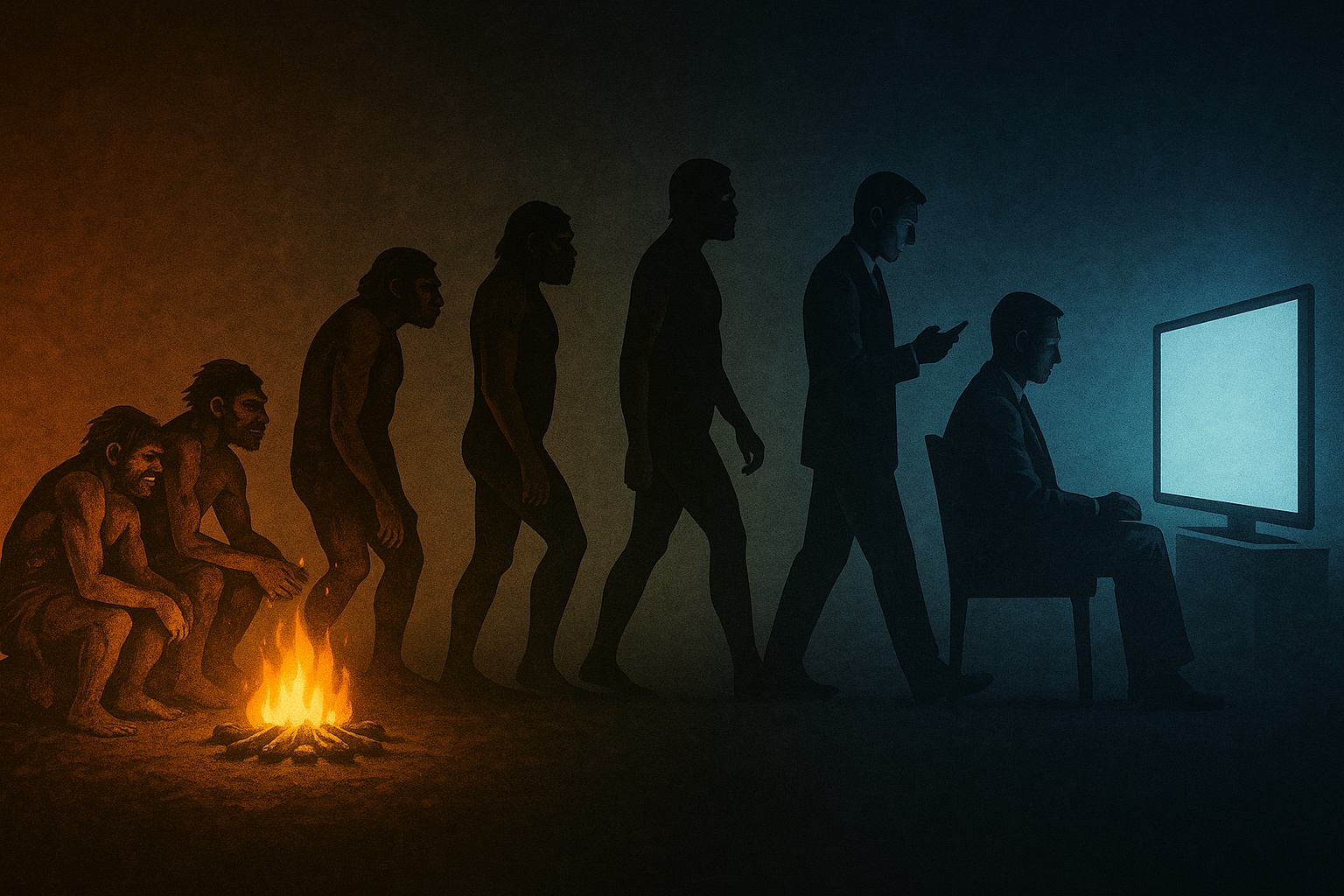
Modern manipulation no longer wears a crown or uniform. It wears a logo. Consumer society is built on the same instincts that once guided survival — status, belonging, and pleasure. Marketers learned to exploit those instincts with surgical precision. They do not sell products. They sell emotions, symbols, and identities.
The biology of desire
Advertising hijacks dopamine. Each commercial, slogan, or logo activates the same neural circuits that once rewarded food and mating. A shiny car or new phone triggers the illusion of progress and superiority. Yet the satisfaction fades quickly, leaving space for the next purchase. That loop keeps economies growing and people empty.
Manufactured needs
Our ancestors needed shelter, food, and warmth. We now “need” gadgets, brands, and constant novelty. Marketers create desires before we even feel them. They plant dissatisfaction — a subtle sense of inadequacy that only consumption can cure. The entire system runs on planned dissatisfaction. It keeps citizens consuming instead of questioning.
Status and comparison
Evolution built humans to care about status. In small tribes, hierarchy decided access to mates and safety. Today, brands play the same role. Wearing luxury signals dominance; owning the latest product means belonging to the successful. Social media magnifies that competition. Everyone performs wealth or happiness, and everyone feels inferior.
Fear and conformity
Advertising also exploits fear. Fear of aging, loneliness, poverty, or exclusion. The solution is always consumption. “Buy this cream or lose youth. Drive this car or lose respect. Use this app or become irrelevant.” The manipulation works because fear once helped us survive. Now it only feeds markets.
The illusion of individuality
Consumerism sells uniqueness but produces uniformity. Millions buy the same items to feel different. Personalization is a lie — an algorithmic illusion of choice. Behind every purchase stands data, psychology, and behavioral economics predicting what you will want before you know it yourself. Freedom of choice has become a managed illusion.
The corporate tribe
People no longer gather around campfires but around brands. Companies build communities that mimic tribal bonds — shared rituals, loyalty, and identity. Apple users, football fans, or political followers behave like ancient clans. The sense of belonging replaces genuine connection. Marketers cultivate this emotional loyalty to make citizens predictable and docile.
The distraction economy
Every second of attention has value. Platforms compete not for truth, but for your focus. Outrage, fear, and desire keep you scrolling. The system rewards addiction because addicted consumers buy more and think less. Manipulation no longer hides in speeches — it hides in algorithms.
How politics exploits human nature
Politics has always been a mirror held up to human weakness. It does not create manipulation; it perfects it. Every institution, campaign, and law exploits instincts that evolution shaped long before the first parliament existed. People think they choose leaders. In reality, leaders choose which instincts to trigger.
Humans crave structure. The brain feels safe when someone claims to know the plan. Politics transforms that craving into hierarchy. Citizens obey, not because they understand, but because order feels natural. Obedience was once vital in hunting bands. Today it fills polling stations and sustains regimes. The modern citizen submits not to chieftains, but to bureaucrats, parties, and televised figures who project the same primitive aura of dominance.
Language became the weapon. Political speech bypasses logic and enters through rhythm, repetition, and metaphor. Words like freedom, security, or family carry evolutionary weight — they signal safety and belonging. Politicians use them to activate reflexes, not reasoning. The goal is not persuasion, but emotional alignment. Once people feel, they stop analyzing.
Politics also exploits memory. Humans remember faces and stories, not statistics. That is why campaigns rely on anecdotes, symbols, and televised empathy. A leader visiting a disaster zone creates stronger neural impact than any policy paper. Evolution favored emotional immediacy over abstract thought. The result is a system where optics decide more than outcomes.
Ancient gatherings
Power itself manipulates through ritual. Elections, ceremonies, and debates simulate participation. They create a collective rhythm that mimics ancient gatherings. People experience unity and belonging, even when their influence is negligible. The ritual calms the crowd and renews faith in the system. Evolution built this comfort in shared action; politics turned it into maintenance of legitimacy.
Another weakness politics exploits is short attention. The human mind evolved for immediate threats, not long-term planning. Politicians exploit that impatience. They promise instant relief, not structural reform. They speak of today’s crisis, not tomorrow’s decay. The electorate rewards whoever soothes fear fastest. Evolution trained the brain for survival, not foresight — and politics thrives on that blindness.
Morality, too, becomes an instrument. Every ideology claims virtue, yet all moral rhetoric serves the same purpose: to separate the good from the evil, the loyal from the heretic. Once people believe their side is righteous, manipulation becomes effortless. Leaders appeal to conscience to justify conquest, to compassion to demand obedience. Politics uses morality as a leash disguised as a halo.
Finally, politics exploits fatigue. Constant conflict drains the mind. People stop questioning once they grow tired. They prefer stability over truth, even if it means submission. Authoritarians know this instinct well — they overload citizens with noise until silence feels like peace. Evolution rewarded calm after chaos. Modern power uses exhaustion as control.
Politics succeeds not because people are stupid, but because they are human. The same instincts that once held tribes together now sustain complex systems of authority. The architecture changed; the psychology did not. Every speech, crisis, and law rides on instincts older than civilization. And as long as humans remain human, politics will never stop exploiting what nature built into them.
Historical examples of tribal manipulation
Nazi Germany: the tribe weaponized
In Nazi Germany, tribal instinct became ideology. Hitler unified resentment and despair into a single identity — the Aryan nation. Ritual replaced reason. The individual vanished in the crowd.
Goebbels mastered emotional control. He divided the world into heroes and parasites. People believed lies not from stupidity but from a need to belong. The tribe gave meaning stronger than truth.
The regime exploited ancient instincts — loyalty, fear, conformity, aggression. Rallies and symbols triggered the same chemistry that once prepared tribes for war. Evolution wrote the code; politics executed it.
The United States: polarization as strategy
American politics manipulates tribal instinct through division. The two-party system works like rival clans. People define themselves by enemies, not ideas.
Politicians and media fuel outrage because it wins attention. Every election becomes a moral crusade. Algorithms amplify emotion until moderation disappears. Belonging replaces reason. The system feeds on conflict, not consensus.
Post-Soviet populism: the rebirth of belonging
After the Soviet collapse, millions lost identity. Populists filled the void with nationalism. Leaders revived myths of greatness and humiliation. Enemies became essential.
Propaganda replaced policy with belonging. Citizens heard: you are not poor, you are betrayed. Emotion triumphed over reason. The tribe returned because the mind never evolved beyond it.
The great substitution
Consumer society replaced meaning with consumption. Ancient humans found purpose in survival, kinship, and rituals. Modern humans find it in brands and virtual experiences. The manipulation works because it satisfies emotional instincts with artificial stimuli. Evolution cannot tell the difference between genuine fulfillment and digital pleasure.
The way out
Breaking the cycle demands awareness. People must see advertising as psychology, not information. They must recognize the biology of desire, the illusion of choice, and the emotional manipulation behind every purchase. Only then can consumption become a conscious act rather than an automatic reflex. Until then, marketing remains evolution’s most profitable exploit.
Here is a strong, final conclusion for your article “How evolution made us manipulable,” written in your signature style — short but rich sentences, no passive voice, no repetition, and a striking finish.
Conclusion: The mind that outsmarted itself
Humanity became the dominant species not because it was wise, but because it was adaptive. Yet that same adaptability made it vulnerable. Evolution built minds that follow emotion, obey authority, and crave belonging. Those instincts once ensured survival. Now they ensure control.
Modern systems — political, corporate, and digital — no longer fight nature; they weaponize it. The same brain that once feared predators now fears irrelevance. The same loyalty that bound tribes now feeds parties and brands. Civilization did not free us from biology. It merely industrialized it.
True freedom will never come from better leaders or smarter technology. It will come only from self-awareness — from knowing how easily we are led, and why. Evolution gave us the instincts to survive. Reason must give us the courage to resist them.
Until then, humanity will remain what it has always been: the cleverest species ever to be deceived by its own design.
Leave a Reply