Morality is something animalistic. There is no justice in who will be born, how many people will exist, or how good a life he or she will live. Moral steps that lead to good outcomes are aberrations — the whole system is much closer to moral nihilism.
It was the highly esteemed Professor Jaroslav Peregrin, to whom I am eternally thankful — a truly down-to-earth gentleman — who kept me back when I wrote that morality makes little or no sense. It makes little sense compared to perfect scientific morality (a kind of utilitarianism), which would lead to an infinite number of people and conscious robots experiencing endless ecstatic moments. Sounds mad? Perhaps, but it is a deeply thought-out conclusion.
People are more than selfish – let’s return to hunter-gatherer groups
The Theory of the Selfish Gene cannot be more useful here. People are enormously selfish. They do not care whether others survive, and they compete for everything — helping only family members because of shared DNA.
Despite this, people in the African savannah had societal structures where some morality — no matter how primitive — was present. These hierarchies were typically fluid and situational, largely based on moral qualities rather than on fixed social structures or material wealth. Leadership within these groups was exercised by individuals respected for their wisdom, experience, and integrity. Rather than relying on formal authority, these leaders gained influence through fairness, resource sharing, and the ability to maintain social harmony. Their status lasted only as long as they embodied the group’s values — generosity, courage, and respect.
Animalistic morality with at least some altruism
Resource sharing and reciprocity were central moral obligations in hunter-gatherer societies. The distribution of food and resources was more than an economic transaction; it was a moral act that reinforced social bonds. Those who shared their hunting spoils or gathered food without expecting immediate return were held in high regard. Generosity was seen as a moral virtue and reinforced the social status of those who practiced it.
Conflict resolution and cohesion
Conflict resolution also played a major role in moral hierarchies. Individuals perceived as fair, unbiased, and wise were often asked to mediate disputes. Their ability to resolve conflicts justly helped maintain influence within the group. Since cohesion was vital for survival, moral behavior that promoted peace and cooperation was highly valued.
Social cohesion was maintained through moral expectations, with sanctions for those who violated them. Actions like hoarding resources or acting selfishly could lead to social consequences such as ostracism or loss of respect. The fear of exclusion or losing social standing served as a strong incentive to obey moral norms.
Seemingly all-good morality, as seen today
Elders held a special place in hunter-gatherer societies because of their knowledge and experience. Their moral authority came from being keepers of tradition and guides for younger generations. Their influence was more about advising than commanding.
Gender roles, while varied, often operated on complementarity rather than strict hierarchy. The moral contributions of both men and women were recognized within their roles, with influence gained by contributing to the group’s well-being.
Collective decision-making also reflected moral values. Decisions affecting the entire group were made through consensus, guided by fairness, equity, and the welfare of all members. Those who articulated these values effectively often became informal leaders. In primitive societies, hierarchies were thus less about power and more about moral authority.
Animalistic morality makes societal structures and law
If morality were perfect, all societal structures would be completely different. Everyone would be altruistic.
In the modern economy, everyone has a place. But this exists only because of capitalism — and because historical rulers needed an educated population. Submissive–dominant relationships create barriers: anyone who tries to steal is forcibly stopped.
An analysis of how Homo sapiens built complex societal structures ruled by selfishness and dominance, where even the late rise of the single-payer system reveals morality as an animal instinct.
People use every interconnected system, from banking to Chinese goods, for their advantage without caring about the consequences.
Animalistic law
Rape, murder, sexual harassment, hazing — none of these acts serve higher morality. They are reflections of animalistic instincts, not of reason. Law itself is animalistic because it does not aim at true justice or moral perfection.
Law is always written for those in power. Imagine giving away even a fraction of surplus value — never. Laws benefit oligarchs, super-rich families, and banks. You may say law prevents murder, and that is true, but even this is based on primitive instincts of survival and punishment, not on higher ethics.
Our legal system still descends from tightly knit hunter-gatherer societies. A man runs over a mother; she will never have another child. These laws do not reflect any serious or universal moral system.
Obedience
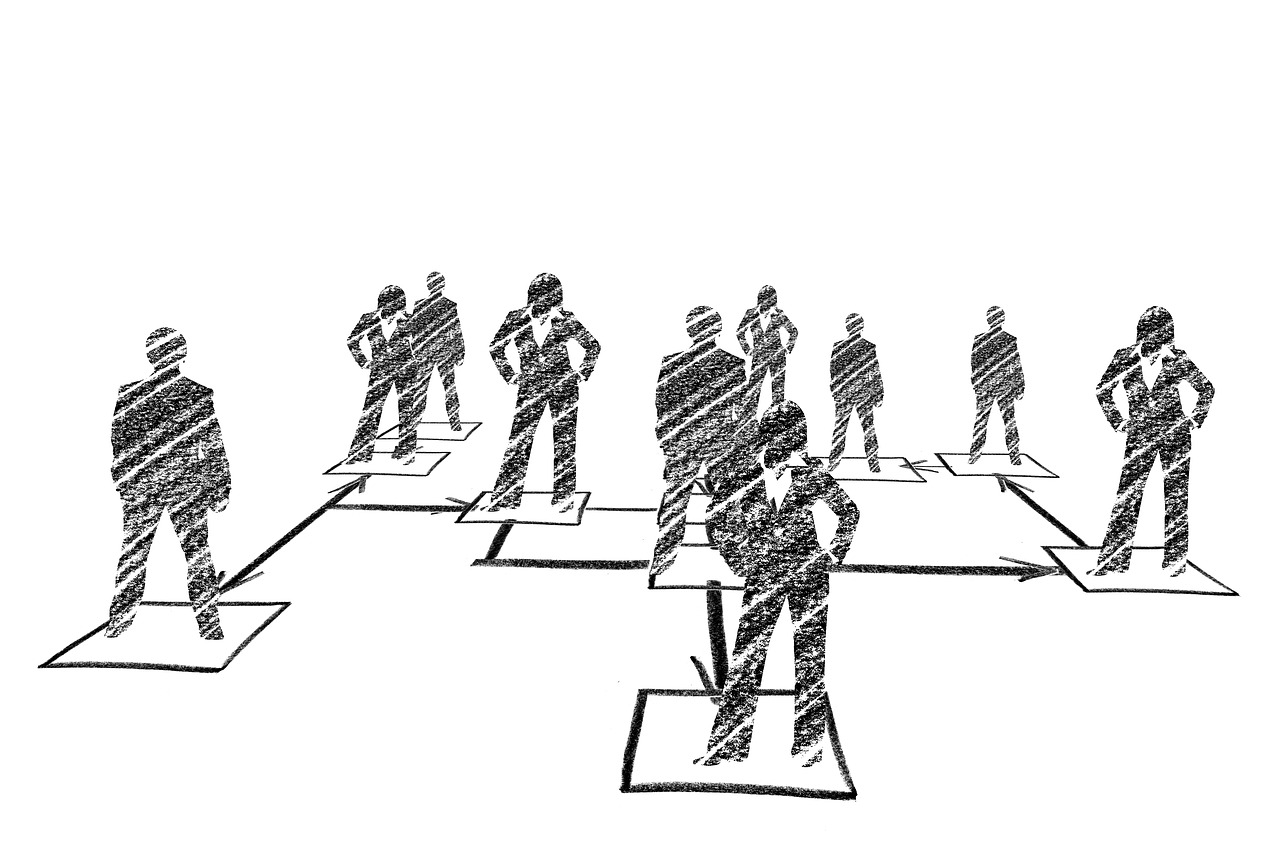
Since Homo sapiens live within submissive–dominant relationships, one of the key aspects of animalistic structure is obedience.
Obedience is often seen as a moral choice, yet beneath it lies biology. Our willingness to follow orders has deep neurological roots shaped by evolution. The neuropsychology of obedience shows that following authority is not just learned — it is wired into our brains over millennia. We obey not only from duty or fear but because ancient neural circuits reward conformity and ease discomfort. Obedience lives in the brain’s design as much as in culture’s dictates.
Nazis, communists, or even worse
Hierarchical structures throughout history brought immense evil. Humanity is not humble and can always go further.
Imagine a complex hierarchy where one dominant man must kill ten subordinates, and those subordinates must torture hundreds more. The system’s order is decided by random computation, and its purpose is killing and torture. Then goes full-scale war.
Politics
Homo sapiens evolved for hunter-gatherer groups of about 150 members. Politics does not work in countries as large as the United States.
Modern politics is an enormous hierarchy — fluid, chaotic, and full of clientelism. In the U.S., tens of thousands of patron–client relationships shape every administration. One Czech journalist once said that behind every U.S. president stands a family — Rockefellers, Morgans, and others.
The president can act, but only within a web of conflicting interests. One group blocks him; another pushes him forward. Agency heads oppose or support him depending on loyalties. Thousands of power relationships form a constellation of contradictions. It is utterly wrong.
People do not act for goodness – only for profit
Humanity loves to believe it moves forward for noble reasons. People speak of justice, compassion, and progress as if they were the real engines of civilization. Yet history tells a harsher truth. Most inventions, reforms, and political shifts did not come from moral awakening but from self-interest.
Profit, not goodness, drives motion. Corporations innovate because competition demands it. Governments pass laws only when pressure or advantage leaves no choice. Even charities depend on tax benefits, reputation, or soft power. The world improves not because people are good, but because systems make certain actions profitable.
In high positions, altruism exists — but only as a faint exception. A few leaders act out of conscience, yet they move inside bureaucracies that reward delay, compromise, and optics. Moral courage loses against lobbyists, markets, and votes. Every reform crawls through endless committees until the profit motive reclaims it.
Progress is not the triumph of goodness. It is the byproduct of ambition, greed, and fear — occasionally shaped by those rare individuals who still believe morality matters.
Complex hierarchies
In complex hierarchies, humans behave as their ancestors did. They kill, torture, manipulate, and betray when hierarchy or ideology demands it. They obey superiors, exploit inferiors, and justify cruelty as duty. The same instincts that once governed tribes now rule corporations, armies, and governments.
Modern morality, law, and governance remain animalistic. They serve the powerful first, reward obedience, and punish dissent. Nations claim to act for justice but operate for interest. Corporations speak of ethics but move for profit. Even the most humane institutions mirror dominance, submission, and hierarchy. The hunter-gatherer’s brain still rules the parliament, the bank, and the army.
Conclusion
Human morality did not rise from divine reason but from animal instinct. It began as a survival mechanism — a fragile tool to keep small groups alive. Sharing food, punishing betrayal, and showing courage were not acts of goodness but strategies of endurance. When societies grew larger, these primitive instincts did not vanish. They only changed form, wrapped in laws, politics, and religion.
People do not truly help each other. They cooperate only when it serves their interests or when fear of punishment forces them to. Behind every act of kindness stands calculation — a desire for approval, reciprocity, or safety. Humanity remains selfish at its core, competing in every possible field, from business and politics to love and reputation.
Even the simplest proof is health care. The idea of a single-payer system — one that would save countless lives — appeared only recently in human history, and even today it struggles to exist. For most of civilization, people watched others die because helping them brought no profit. That is not morality; it is evolutionary indifference disguised as social order.
True morality — one that would maximize well-being for all — remains an idea, not a reality. Humanity is trapped between instinct and intellect, too clever to live like beasts but too selfish to live like gods. Until morality evolves beyond biology and profit, society will remain what it has always been: a refined jungle where power defines right and survival disguises itself as virtue.
Leave a Reply