
Even my occasional readers know I am a fierce critic of the USA. And why the US? Because criticizing China or Russia won’t change anything, you will only get killed. I am not saying the US doesn’t kill people, see Donald Trump at his best: “There are a lot of killers. You think our country’s so innocent?” But let’s imagine if China ruled the world. What influence and consequences would it have for the rest of the world?
The United States, as I am writing this article in 2024, remains the sole superpower. The extended financial system through owning whole economies (when you are strong economically, you are strong politically; for example Japan, Australia, New Zealand, the UK, South Korea, Canada; to some degree Mexico and Germany), interconnected banking system (private banks or in fact privatized central banks), the interconnected super-rich families, and, to some degree lodges (no, I am not joking). The evidence of the existence of the bankers and the super-rich families is substantial.
Petrodollars and the Chinese threat
The U.S. dollar, as the world’s primary reserve currency, is central to global trade and finance. This ensures that nations rely on it for transactions and reserves, giving the U.S. economic leverage. The petrodollar system, where global oil is priced in dollars, further reinforces this dominance by requiring countries to hold dollar reserves for energy trade. Simultaneously, the U.S. military presence across key regions, particularly in oil-producing areas. It secures its energy interests and stabilizes global trade routes while providing security guarantees to allies. This combination of financial control, energy influence, and military power enables the U.S. to shape international systems. And maintain its global leadership.
The intention of this article is to describe that while the US is really bad. It could get worse by normalizing countries’ possession of concentration camps, and massive torture. Other things are totalitarian or autocratic regimes everywhere and other aspects connected with the possible scary dominance. If you have somehow acquired the basic Western values, this is a scary article.
The scary predictions went fortunately wrong
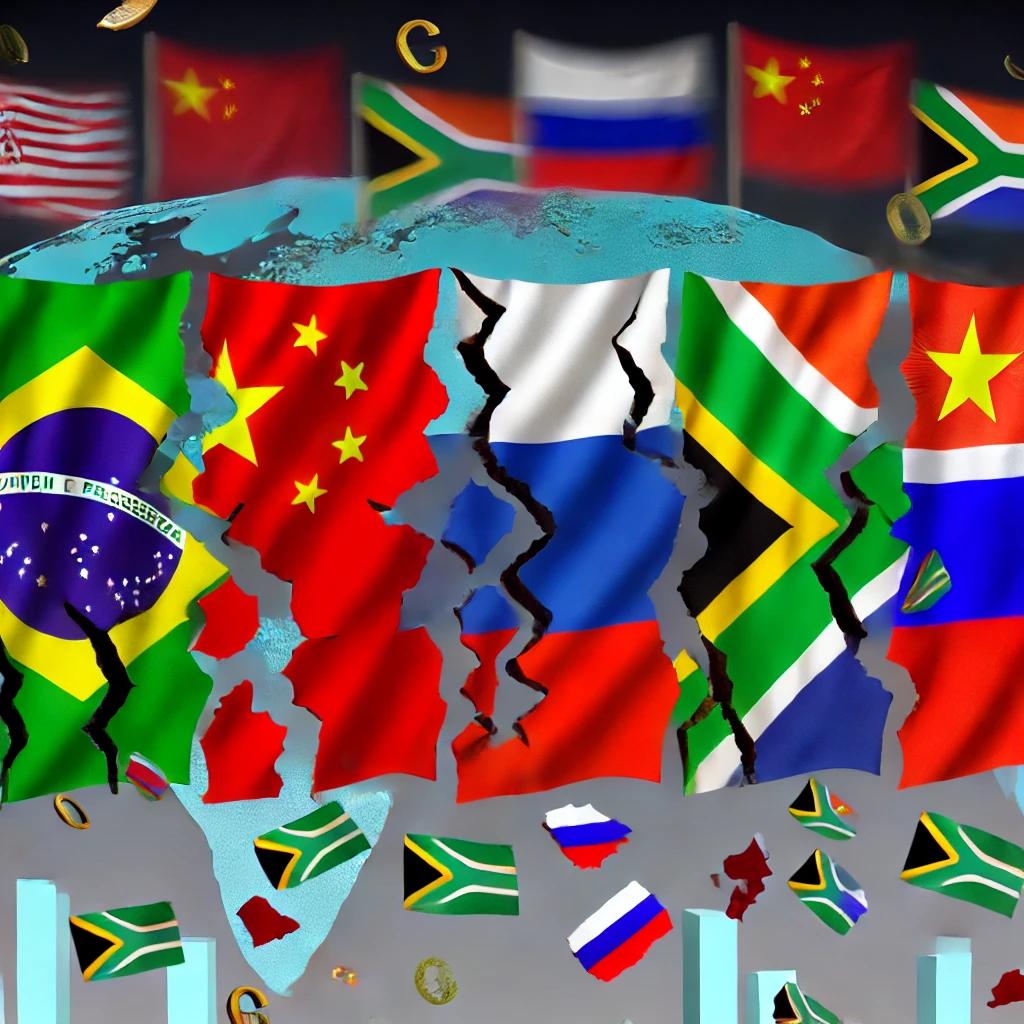
Over the past decade, many predictions claimed that China, along with BRICS nations, would dominate the world. But these forecasts have not materialized as expected. Analysts saw China’s rapid economic growth, its Belt and Road Initiative (BRI), and its expanding global influence as signs of an inevitable rise to global supremacy. However, China’s economic slowdown, coupled with internal challenges such as a shrinking workforce, mounting debt, and political crackdowns, has stalled its growth trajectory. The BRI, once hailed as a transformative global infrastructure project, has faced delays, financial difficulties, and resistance from participating countries, limiting its success.
Predictions about BRICS – Brazil, Russia, India, China, and South Africa (see the explotation of the Global South) – emerging as a formidable bloc challenging Western dominance have also fallen short. These nations control large shares of global population and resources. Their economic and political systems vary widely, making cohesive cooperation difficult. The New Development Bank, launched to rival Western financial institutions like the IMF and World Bank, has not significantly altered global financial dynamics. Trade between BRICS members has grown. But it has not led to the significant displacement of the U.S. dollar or the creation of an alternative financial order, as some had envisioned.
Thwarted military ambitions
China’s military ambitions, particularly in the South China Sea and its growing naval power, were seen as indicators of its challenge to U.S. military dominance. However, China’s assertiveness has led to increased regional opposition. Countries like Japan, South Korea, and Australia strengthening ties with the U.S. for security purposes. The U.S. has reinforced its military presence in the Indo-Pacific, and the Quad alliance (U.S., Japan, India, and Australia) has gained momentum. This is counterbalancing China’s influence in the region.
Economically, China’s rise to the world’s largest economy in purchasing power parity (PPP) terms did not translate into global dominance. Its economic model, reliant on state control and investment-driven growth, has shown signs of strain. Predictions that China would surpass the U.S. in nominal GDP by 2030 now seem overly optimistic, as its growth slows, while the U.S. economy remains resilient and dynamic. Similarly, the BRICS nations, particularly Russia and Brazil, have faced economic stagnation, political instability, and global isolation in the case of Russia, limiting their global influence.
Technological backwardness
In the technology sector, they expected China to lead, particularly with 5G, AI, and digital infrastructure, resistance from Western countries has curbed its ambitions. Huawei, once at the forefront of China’s tech dominance, has faced bans and restrictions in key markets like the U.S., Europe, and Australia, limiting its global reach. The global backlash against China’s authoritarian governance model and its handling of issues like human rights and the COVID-19 pandemic has further dampened its soft power.
Diplomatically, China’s aggressive foreign policy, including its approach to the South China Sea and increasing tensions with India, has alienated many potential allies. Its partnerships with countries in Africa, Latin America, and the Middle East have not yielded the sweeping geopolitical realignment that some predicted. Many countries remain wary of China’s long-term intentions and are balancing their relationships with both China and the West, rather than fully aligning with Beijing.
The BRICS bloc not so cohesive
Within the BRICS bloc (If China ruled the world), internal differences have hindered their ability to act as a unified force. India, for instance, has grown closer to the U.S. due to security concerns over China. Brazil and South Africa have struggled with economic and political turmoil, preventing them from playing a more significant global role. Russia’s invasion of Ukraine in 2022 has left it globally isolated, further weakening the idea of BRICS as a dominant geopolitical and economic force.
In conclusion, the bold predictions of China and BRICS dominating the world have proven wrong. Economic challenges, internal divisions, and increasing opposition from the West have stalled their rise to global leadership. While China and BRICS remain important players in international affairs, they have not succeeded in displacing the U.S. or the Western-led global order.
If China ruled the world: concentration camps as part of many countries
If China ruled the world and established a global system of concentration camps, nearly every country would likely see these camps appear on their soil. China’s current model of mass surveillance would expand globally. Sophisticated facial recognition, AI-driven monitoring, and social credit systems would identify dissidents, religious groups, or anyone seen as a threat to the state’s control. Governments around the world, under China’s influence, would adopt these systems. People flagged as dangerous or undesirable would face immediate detention, with no fair trial or due process. These camps would be widespread, reaching into every corner of the globe.
Inside these camps, individuals would undergo harsh reeducation. Forced political indoctrination would strip away personal beliefs, cultures, and values. Inmates would be subjected to brainwashing. With the goal of total ideological conformity. Religious and ethnic minorities, including Muslims, Christians, and indigenous groups, would be targeted. They would be forced to renounce their faith, cultural identity, and traditions. These camps would not be places of education, but centers of control and submission. The state’s power over the mind and spirit would be absolute.
Torture would become a regular part of life in these camps. Prisoners would endure physical and psychological abuse designed to break their will. Beatings, electric shocks, sleep deprivation, and solitary confinement would be standard practices. Authorities would use torture to extract confessions, force compliance, and crush any resistance. The goal would be to turn human beings into obedient tools of the state. The global reach of these camps would ensure that no one, in any country, could escape this brutal system.
Forced labor
Forced labor would also define life in the camps. Detainees would be made to work long hours under grueling conditions. Factories and fields would become extensions of the camp system, using detainees to fuel the global economy. Governments around the world would benefit from this system, as the cheap labor produced in these camps would drive profits. Companies, especially those seeking favor with China, would participate. Forced labor would not just be economic exploitation; it would be another method of control.
Ethnic and cultural erasure would be another horrifying reality. Entire populations would be detained with the goal of wiping out their identities. Languages, traditions, and religions that did not conform to the global system would face systematic destruction. Indigenous cultures, minority faiths, and dissident communities would be silenced. These camps would become engines of cultural genocide, erasing the rich diversity of human life and replacing it with one state-controlled narrative.
A vast global detention infrastructure would emerge. Camps would spread across continents, as China established them in nearly every country. Regimes dependent on China for economic aid or political support would be quick to implement these systems. Some countries might even build the camps themselves to align with China’s demands. This would create a sprawling, interconnected network of repression, with millions of people caught in the system.
Political dissent
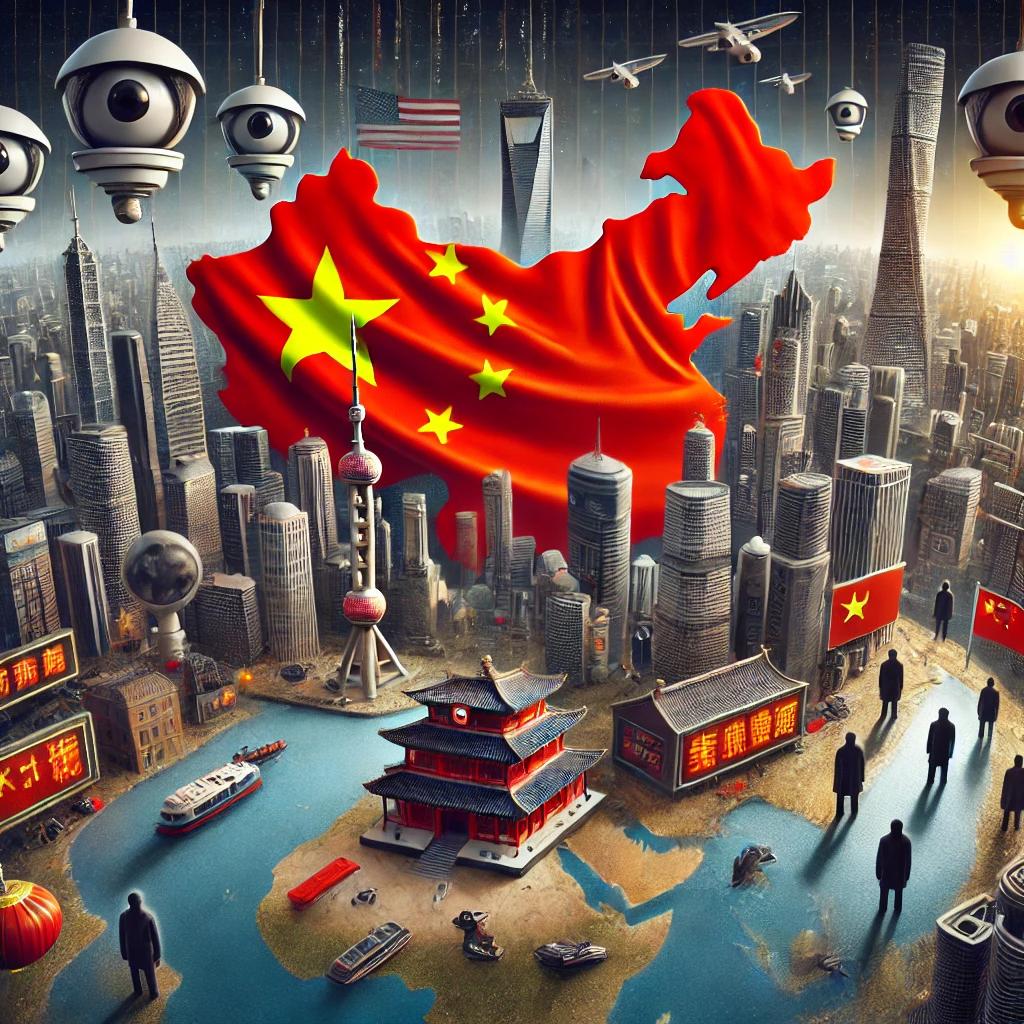
Political dissent would be crushed. Journalists, activists, and anyone daring to speak against the regime would be detained. Governments worldwide, following China’s lead, would eliminate freedom of speech and the press. Political opponents would vanish into the camps, leaving no trace behind. Every country under China’s influence would adopt these measures, silencing opposition and solidifying authoritarian rule.
Internationally, countries would face severe pressure to conform. Nations that resisted China’s global camp system could face economic sanctions, isolation, or military threats. China, with control over global trade and resources, would coerce weaker nations into submission. International organizations would struggle to intervene. The global system of camps would become entrenched, as most of the world remained complicit out of fear or necessity.
Torture
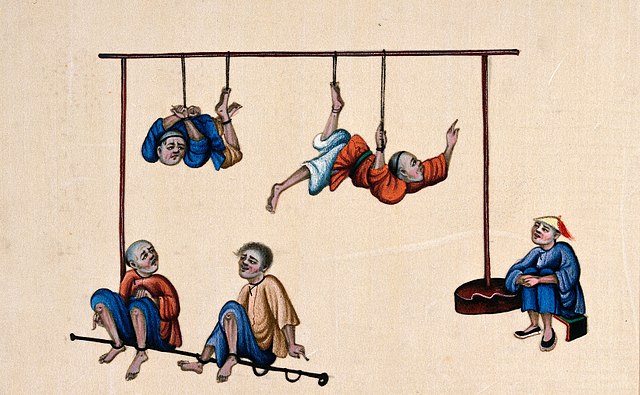
Human rights abuses, including torture, forced confessions, and indefinite detention, would be normalized. Governments around the world would justify these actions under the guise of maintaining global stability. The global community, especially nations dependent on China’s economic or political influence, would likely stay silent. These camps, and the atrocities within them, would become a routine part of the world order.
Documented cases of torture in China reveal methods. Such as physical beatings, electric shocks, waterboarding, stress positions, sleep deprivation, forced medication, and prolonged solitary confinement. Other reported techniques include deprivation of food and water, exposure to extreme temperatures, and psychological abuse aimed at breaking the victim’s will.
Religious practices, cultural expressions, and political dissent would be criminalized. People practicing certain religions or engaging in native cultural traditions would face imprisonment. Wearing religious symbols or speaking a forbidden language could result in detention. In nearly every country, they would suppress diversity and enforce conformity. The world would become a uniform, authoritarian society, driven by fear and repression.
Economic incentives would ensure compliance. Countries that participated in or allowed these camps would receive favorable trade deals and investments from China. Those who resisted would face economic penalties. Global corporations, especially those tied to Chinese markets, would become complicit in the system. They would turn a blind eye to the abuses happening within the camps to protect their profits. This global system of concentration camps would operate not only through fear but also through the lure of economic gain.
Disappearing of human rights
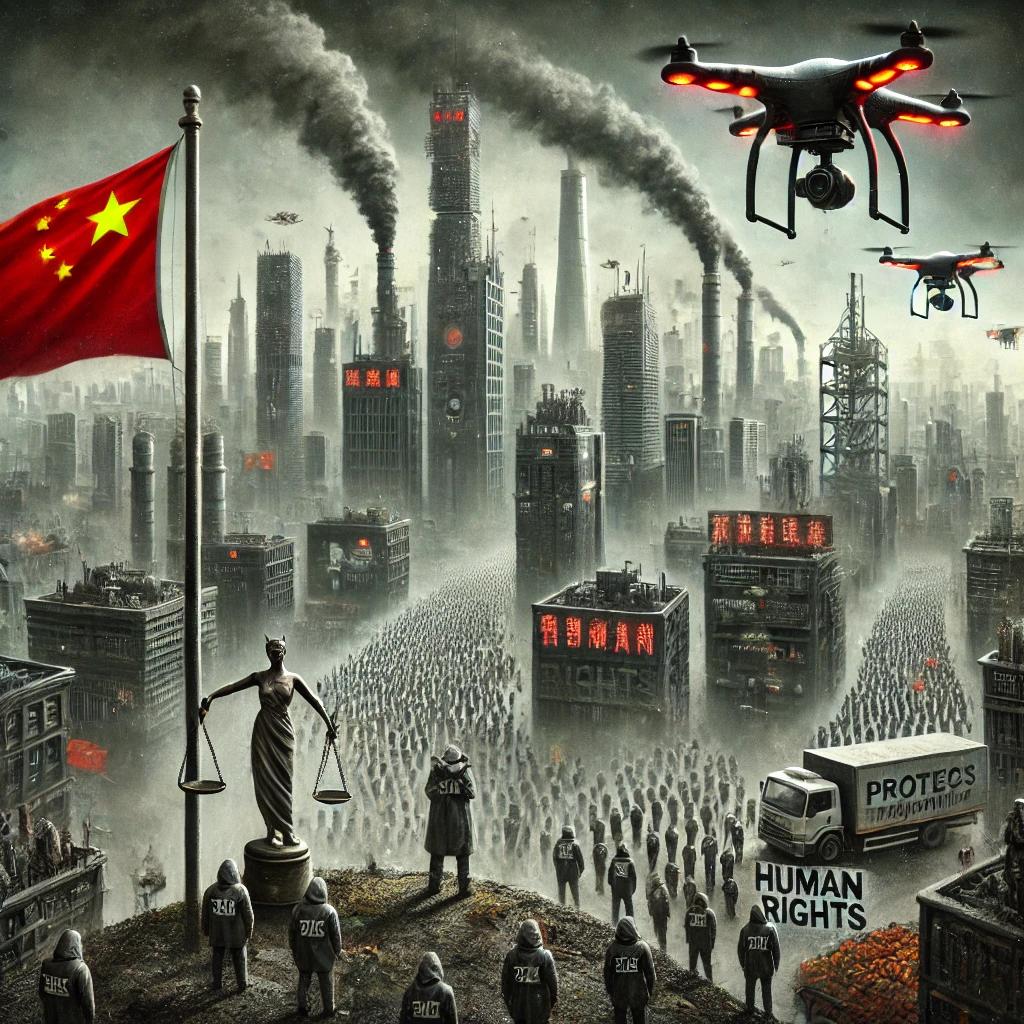
If China ruled the world, human rights abuses would become widespread. China’s system of mass surveillance would likely spread globally. Countries under Chinese influence would adopt facial recognition, AI-driven monitoring, and data-collecting technologies. Governments would track people’s movements, communications, and online activities. Privacy would no longer exist. Personal freedoms would shrink, as authorities could use surveillance to control behavior and suppress dissent.
In many places, a social credit system could emerge. People would face punishment for criticizing the government or failing to conform. These punishments could include restricted access to travel, employment, and education. A global network of surveillance would ensure that dissenters had nowhere to hide. Fear would permeate everyday life as citizens lived under constant watch.
China’s approach to political control would extend to other nations. Governments aligned with China might detain dissidents without trial. Political opposition would be silenced. Torture and forced confessions would become common. In some regions, concentration camps like those used for Uyghur Muslims in Xinjiang could be established. Detainees would undergo brutal treatment, including beatings, sleep deprivation, and electric shocks. Governments would claim these camps were for “reeducation” or maintaining order, but their true purpose would be to crush resistance.
Let’s crush religion, but not in the Chinese way
Religious freedoms would also suffer. In a China-dominated world, religious groups could face persecution. Followers of Islam, Christianity, and other faiths might be forced to renounce their beliefs. Religious leaders would be arrested, and places of worship would be destroyed. Some governments might ban religious symbols and practices altogether, forcing individuals to choose between their faith and survival. Religious persecution would likely spread across regions influenced by China.
Ethnic minorities could also face extreme oppression. China’s history of targeting Uyghur Muslims and Tibetan Buddhists would offer a preview of what might happen globally. Entire communities could be detained, their cultures erased, and their identities stripped. Governments might implement forced assimilation programs. Languages, traditions, and histories could be systematically destroyed. Ethnic diversity would shrink as the world became more controlled and uniform.
The world devoid of even this limited freedom of speech
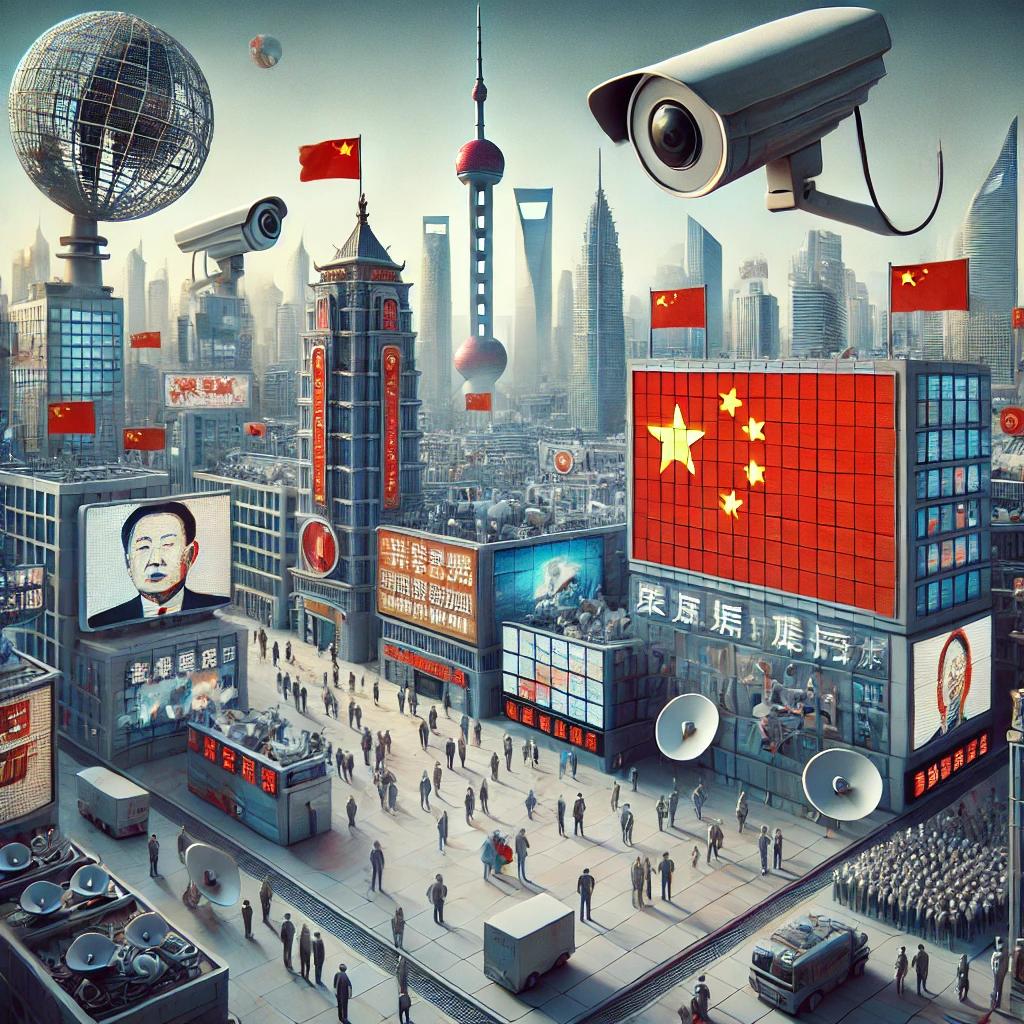
Freedom of speech would vanish. Journalists, activists, and anyone critical of the government would be silenced. Independent media would be crushed, replaced by state-controlled outlets that only spread government-approved information. Misinformation and propaganda would dominate the global discourse, manipulating public perception. People who spoke out would disappear into detention centers or face other forms of retaliation. The free press, a cornerstone of democracy, would cease to exist in many parts of the world.
In a world under China’s dominance, forced labor could become a standard practice. Governments could use detainees in camps to fuel the global economy. Factories and production centers could exploit prisoners, driving down labor costs. Multinational companies, seeking to maintain favor with China, might turn a blind eye to the use of forced labor. Human exploitation would become embedded in global supply chains, with little accountability.
Cultural repression would follow. Governments, taking cues from China, might begin controlling artistic and cultural expression. They would censor or ban art, literature, and film that did not align with state-approved ideologies. They would force artists into exile or detain them. Cultural identity would be suppressed as governments promoted a singular, dominant narrative. Diversity of thought and expression would be erased.
If China ruled the world: Chinese-style governance
The global influence of Chinese-style governance could also lead to widespread restrictions on freedom of movement. Citizens might find it increasingly difficult to travel internationally without state approval. Countries could impose stricter controls on migration, especially for political or religious reasons. Internal movement within countries could also be restricted. Checkpoints and monitoring systems ensuring that only those with government authorization could travel freely.
Social and political inequality would deepen. Governments aligned with China could prioritize loyalty over merit, rewarding those who supported the regime while punishing dissenters. Corruption could flourish, with elites gaining more power while ordinary citizens suffered. Social mobility would stagnate, as access to opportunities would depend on political connections rather than merit.
Environmental and labor standards could erode. In a world where human rights abuses are normalized, governments might ignore environmental protections in pursuit of economic gains. Workers would face harsher conditions, with fewer protections for their health and safety. Exploitation would become widespread, with little recourse for those affected.
The use of torture would likely become normalized in many countries. Governments seeking to maintain control would turn to brutal tactics to silence opposition. Methods such as physical beatings, electric shocks, waterboarding, and sleep deprivation would be widely used. These techniques would serve as tools for extracting confessions, forcing compliance, and instilling fear. The global spread of torture would further erode the rule of law.
No human rights institutions
In this world, international organizations that promote human rights would face significant challenges. China’s influence over global institutions, such as the United Nations, would grow. Human rights resolutions could be blocked. And international bodies might hesitate to criticize abuses for fear of economic or political repercussions. Countries dependent on China would be pressured to remain silent, further weakening global human rights protections.
A world dominated by China would see individual freedoms disappear, cultures suppressed, and human rights abuses become the norm. Governments across the globe would adopt policies that prioritize state control over personal liberty. This leads to a future where dissent is crushed, and diversity is erased.
Chinese Communist Party conducts the harshest capitalism
The Chinese Communist Party’s claim to be a bastion of communism is deeply grotesque when viewed against the backdrop of the country’s full-throttle embrace of hardcore capitalism. The Party clings to the rhetoric of Marxist ideology. China’s actual economic system runs on the principles of market-driven capitalism, where profit reigns supreme, wealth inequality soars, and the welfare of workers is frequently disregarded. The state has transformed into a capitalist giant, where state-owned enterprises, despite being publicly owned, function like monopolistic corporations driven by profit maximization. These enterprises dominate crucial industries like energy, banking, and telecommunications, and although controlled by the government, their primary goal is generating wealth rather than promoting equality or serving the people.
Meanwhile, China’s private sector, often supported and protected by the state, has grown exponentially in influence. Billionaires and corporate elites rise through ranks, accumulating vast fortunes, which would be unthinkable in a truly communist system. Workers, especially in manufacturing and tech sectors, face exploitation, long hours, low wages, and poor working conditions, all in the name of rapid economic growth. The wealth gap in China has reached extreme levels, with urban elites and corporate heads living in luxury, while millions of rural and factory workers struggle in poverty. This inequality and capitalist exploitation starkly contrasts the Communist Party’s proclaimed mission of economic justice and equality for all. Instead of serving the people, China’s capitalist machine benefits the few at the top, eroding the very essence of communism.
Chinese world order
In a world dominated by China, this contradiction between communist rhetoric and capitalist reality would spread across the globe, establishing a new world order. Under Chinese dominance, many countries could adopt China’s model of state-controlled capitalism, where governments control vast sectors of the economy but operate them with the same drive for profit as private corporations. Wealth inequality would likely rise worldwide, with state elites and politically connected corporate leaders reaping the benefits while ordinary citizens suffer under increasingly harsh conditions.
This new global order would see governments prioritizing economic growth over social welfare, human rights, and environmental sustainability. Countries aligned with China might follow its example of repressing labor movements, restricting unions, and eroding workers’ rights. Exploitation would become widespread, as companies – whether state-owned or private – would be incentivized to prioritize profit above all else. The global working class could face increased precarity, with low wages, poor working conditions, and little recourse to challenge corporate or state power.
Pro-Chinese? You will grow
This new order would also redefine the relationship between government and business. China’s model of intertwining political loyalty with business success could spread, with political elites determining which companies succeed based on their alignment with the ruling regime. In countries influenced by China, this could lead to the rise of oligarchies. Only those with close ties to the government gain access to wealth and power. Corruption and nepotism could become the norm, and economic opportunities would be reserved for those who serve the interests of the ruling party. This system would stifle competition, crush innovation, and erode the free market principles that many countries once championed.
Meanwhile, China’s capitalist expansion would likely lead to the exploitation of global resources on an unprecedented scale. Governments, eager to remain in China’s good graces, could allow corporations – many backed by the state – to extract natural resources without regard for environmental consequences. Industries such as mining, manufacturing, and agriculture could expand rapidly in developing nations, leaving environmental destruction and social displacement in their wake. Countries dependent on Chinese investment might ignore environmental regulations and human rights abuses to secure economic deals, turning a blind eye to the social and ecological costs of rampant capitalist expansion.
19th-century working conditions and suppressed protests
Workers who protest for fair wages or better working conditions might face detention or persecution, as governments suppress movements that threaten the smooth operation of the capitalist machine. China’s use of reeducation camps, forced labor, and harsh surveillance could be adopted globally, with human rights abuses normalized in the name of maintaining economic growth and political stability.
Culturally, the Chinese dominance of the world would also reshape the values and expectations of capitalism itself. The world would witness a capitalism that is not rooted in Western democratic ideals of freedom and opportunity. But in authoritarian control, where the state determines the winners and losers. Capitalism would no longer be associated with individual liberty, free markets, and competition, but with political loyalty, cronyism, and exploitation. This new form of state-driven capitalism would erode the concepts of free enterprise and democratic governance, replacing them with a system that serves the few at the expense of the many.
If China ruled the world: communism all about money
The Chinese model of capitalism, while masked in the language of communism, would reshape global trade and economic systems as well. As China extends its Belt and Road Initiative and influences key markets, global supply chains would come under greater control of Chinese companies. Corporations that do not conform to China’s economic and political agenda could face exclusion from these vital markets. This would compel nations, businesses, and industries worldwide to align with Chinese standards. Even if it means abandoning democratic values and human rights principles. Economic dependency on China could lead to a global reordering where they force nations to prioritize trade deals and investment opportunities over human dignity and ethical governance.
In this new world order, capitalism would take on a darker, more oppressive form, where state power controls both political and economic life. The very essence of capitalism – free enterprise and innovation – could be eroded. With replacement by a system that thrives on exploitation, inequality, and cronyism. And the Chinese Communist Party, while maintaining the facade of communism, would oversee a capitalist empire that stretches across the globe, transforming the values and structures of the international economy.
We detest our super-rich, let’s take a look at the Chinese-style ones
In China, the power structure surrounding so-called “self-made billionaires” is deeply intertwined with the political apparatus of the Chinese Communist Party (CCP). While many of these billionaires have built vast fortunes through entrepreneurship and technological innovation, their success is not solely the result of free-market capitalism. Instead, it is contingent on maintaining close ties to the CCP and aligning their business interests with the state’s political objectives. These billionaires, though wealthy, do not operate in a vacuum of pure merit or market forces. They are part of a system where the government maintains ultimate control, and economic power is inseparable from political favor.
The relationship between China’s “self-made billionaires” and the state is delicate and highly controlled. Figures like Jack Ma, the founder of Alibaba, have faced severe consequences when they’ve appeared to challenge or critique the Party’s authority. Ma’s public criticism of China’s regulatory system in 2020 led to the suspension of Ant Group’s IPO and his temporary disappearance from the public eye. A clear message from the state about the limits of business influence. This incident, among others, illustrates how even the wealthiest individuals in China remain subordinate to the political power of the CCP. Their influence is conditional and can be revoked if they overstep or fail to align with the Party’s broader goals. In essence, China’s billionaires can rise and thrive as long as they serve the state’s interests, but they are always vulnerable to political retribution.
If China ruled the world: Chinese structures spreading
If China ruled the world, this power structure would likely spread globally. In other countries, particularly those heavily influenced by or aligned with China, billionaires and corporate elites would face similar dynamics. Wealth and business success would no longer be purely the result of market forces or innovation, but would increasingly depend on political loyalty and alignment with the ruling regime. Entrepreneurs and corporations in these countries would need to cultivate close relationships with government officials, much as China’s billionaires do with the CCP. Business leaders would not operate independently. They would be part of a system where their economic power is conditional on serving the interests of the state.
Chinese “self-made” billionaires
The influence of “self-made billionaires” in this new global order would extend beyond just economic matters. Like in China, they would play a role in shaping government policy, but only within the limits set by political authorities. In exchange for their loyalty, they could wield significant influence over key industries, technologies, and resources. Their wealth would give them power. But it would be power that is always subservient to the interests of the state. In this system, innovation and entrepreneurship would not be driven by market demands but by the priorities of the ruling political elites. Corporate leaders who deviate from these priorities or challenge the state would face consequences, from regulatory crackdowns to the seizure of their assets, mirroring the treatment of Chinese billionaires who fall out of favor.
This would result in a global economic environment where the line between business and politics is blurred. Corporate leaders would not only seek to dominate industries but would also need to navigate political landscapes where their success depends on their relationship with the state. In countries under China’s influence, billionaires would become extensions of the government’s power. Their companies could be used to advance political goals, whether through investing in state-favored projects, supporting political campaigns, or promoting government policies. Economic power would increasingly serve political ends, and business leaders would have to act as intermediaries between the government and the market.
Worldwide oligarchy
At the same time, this system could lead to the creation of oligarchies in countries influenced by China. Only those with the right political connections would have access to wealth and economic opportunity. Meritocracy would give way to cronyism, where success is determined not by innovation or market competition, but by who is closest to those in power. This would stifle entrepreneurship, as individuals would be incentivized to pursue political patronage rather than invest in groundbreaking business ideas or technological advancements. The result would be an economic system where wealth is concentrated in the hands of a few, closely tied to the state. The majority of the population struggles under a system that prioritizes political loyalty over economic opportunity.
Globally, this could lead to the rise of politically aligned billionaires who wield enormous influence not only in their home countries but also in international affairs. As these billionaires expand their businesses across borders, they could bring with them the political agendas of the regimes they are tied to. Their companies, while technically private, would act as arms of the state, advancing not just economic interests but also political strategies. In this way, the influence of China’s model of state-controlled capitalism would spread globally, with business leaders acting as agents of the political power structure, rather than independent economic actors.
Chinese economic structures as key players
In this new world order, multinational corporations, particularly those originating from China or heavily invested in Chinese markets, would become key players in shaping international relations. Their investments and partnerships would serve not only to generate profit but also to extend China’s influence over other nations’ economies and political systems. Governments in smaller or developing countries could become dependent on these corporations for economic growth, giving China indirect control over their domestic policies. These billionaires, therefore, would become crucial intermediaries in China’s global strategy, using their economic reach to shape the political and economic landscapes of other nations.
Ultimately, the influence of “self-made billionaires” in a China-dominated world would be a paradox. On the surface, they would represent capitalist success stories, symbols of wealth and power. However, their fortunes and influence would always be tied to the whims of the state. They would act as conduits for extending political control, ensuring that economic power remains firmly aligned with state interests. In countries under China’s influence, these billionaires would not drive economic freedom or innovation. But rather reinforce a system where economic opportunity is determined by political loyalty and government approval. This would create a world where wealth and power are concentrated, and where true independence – whether economic or political – becomes nearly impossible to achieve.
Yuan, Chinese major central banks, interconnected banks and the Big Oil
If China ruled the world and the yuan became the global currency, the world would operate under a Chinese-led financial order with far-reaching consequences. China would hold immense control over global trade, monetary policy, and financial markets, dictating the rules of international commerce and investment. Countries would need to maintain large reserves of yuan, aligning their economies closely with China’s economic interests and policies. This shift would diminish the power of the U.S. dollar, weakening Western influence over global institutions like the International Monetary Fund (IMF) and World Bank, which currently play a central role in shaping global financial standards.
Nations dependent on trade with China would find themselves more vulnerable to China’s economic decisions, as Beijing could manipulate currency values, impose trade restrictions, or influence global interest rates to advance its own strategic goals. The yuan’s dominance would allow China to bypass international sanctions and exert pressure on nations that challenge its policies, further strengthening its geopolitical reach.
If China ruled the world: our own governance
This Chinese-led world order would also extend beyond economics. China’s authoritarian governance model, which merges state control with capitalist practices, could become a template for other nations. Governments worldwide might face increased pressure to conform to Chinese political norms – limiting press freedom, silencing dissent, and prioritizing state control over individual rights – in exchange for economic stability and favorable trade terms. Global institutions, under China’s influence, would likely prioritize security and economic development at the expense of human rights and democratic governance, leading to a more authoritarian and state-controlled global landscape.
Financial institutions, global corporations, and trade networks would become deeply intertwined with China’s political system. Multinational businesses might be required to adhere to Chinese regulatory and political demands. This includes the censorship of political speech, in order to maintain access to Chinese markets. Meanwhile, countries that rely on Chinese investments or loans, particularly developing nations, would face political and economic pressure to align their policies with Beijing’s strategic interests, further eroding their sovereignty.
In this world, financial decisions would be increasingly centralized in China, with global economic stability becoming dependent on Chinese leadership. The yuan’s influence would grant China leverage to impose its standards for trade, environmental policies, and labor practices, reshaping the global order to reflect its priorities. This would create a world where economic and political power is concentrated in Beijing, and where the autonomy of individual nations is increasingly compromised in favor of a Chinese-dominated global system.
Interconnected banks
In a world dominated by China, global banking systems would become increasingly interconnected under a Chinese-centric financial architecture, driven largely by the prominence of the yuan and China’s strategic control over global trade and investment. Much like how Western banks are deeply interconnected today through networks such as SWIFT, international banking would pivot toward Chinese systems, potentially relying on platforms like China’s Cross-Border Interbank Payment System (CIPS). This would make CIPS the backbone of international transactions, replacing or rivaling Western-dominated systems like SWIFT.
Chinese banks, particularly state-owned giants like the Industrial and Commercial Bank of China (ICBC) and the China Construction Bank, would play a central role in global banking networks. These banks, already among the largest and most powerful financial institutions in the world, would expand their influence, establishing partnerships, opening branches, and setting up regional banking hubs in major financial centers across Africa, Asia, Latin America, and Europe. Foreign banks would need to align with Chinese banking standards, integrate into yuan-dominated systems, and follow Chinese regulatory practices to participate in global markets.
Chinese banking nightmare
Under this interconnected banking system, credit lines, loan agreements, and international investments would increasingly flow through Chinese financial institutions. Developing nations, which are already heavily reliant on Chinese loans through initiatives like the Belt and Road Initiative (BRI), would find themselves even more deeply embedded in Chinese financial networks. China’s state-controlled banks would dominate global lending, offering credit to countries and corporations under terms favorable to China’s geopolitical objectives.
Foreign banks would need to establish deeper ties with Chinese financial institutions to maintain their access to international financial markets. They would likely engage in joint ventures with Chinese banks. And there would be increased cross-border lending and cooperation in sectors like trade finance, infrastructure investment, and energy development. Western and other foreign banks could become more dependent on Chinese financial flows for liquidity and growth, positioning them to comply with China’s broader political and economic agenda.
The Chinese central bank, the People’s Bank of China (PBOC), would have considerable power over the global money supply. Changes in Chinese monetary policy – whether through interest rate adjustments, liquidity injections, or currency interventions – would have a significant impact on global financial stability. This would give China unprecedented leverage over international banking operations, allowing it to shape financial decisions in other nations. Central banks worldwide would need to coordinate closely with the PBOC, adjusting their policies to avoid destabilizing their currencies and economies in response to China’s decisions.
You must be with China, otherwise no business is happening
Financial regulations in a Chinese-dominated banking system would reflect Chinese values of state control and surveillance. Banking practices that align with Chinese political and economic objectives would thrive, while those that challenge or resist China’s dominance would struggle to access capital markets. Banks would likely adopt compliance practices influenced by China’s strict regulatory environment, including increased monitoring of capital flows, surveillance of financial transactions, and tighter restrictions on financial activities deemed politically sensitive by Beijing.
Moreover, China would use its dominance over international banking networks to further integrate its digital currency – the digital yuan – into global financial systems. Central banks and commercial banks globally would need to support this digital currency. And China could encourage or mandate its use in trade and international transactions. This digital infrastructure would give China real-time oversight over financial flows, further entrenching its control over the global economy.
Overall, a Chinese-dominated banking world would mirror the interconnectivity of the current Western banking system but with a shift in power, where Chinese banks and financial regulations govern the flow of money and credit across borders. The banking system would be tightly linked to China’s geopolitical ambitions, making it an instrument for both economic and political leverage globally.
The Big Oil in Chinese-style
China, as the sole global superpower, would take a pragmatic approach to energy, especially when it comes to oil. Already the world’s largest importer of oil, China’s focus would be on securing energy sources from a wide range of countries. It would deepen its relationships with Middle Eastern producers like Saudi Arabia, Iraq, and Iran. It would maintain strong ties with Russia and key oil producers in Africa and Latin America. This strategy would reduce dependence on any one region, ensuring steady energy flows that support its vast industrial machine.
Chinese state-owned oil companies like CNPC and Sinopec would grow into dominant players on the global stage. They would rival current Western energy giants. With backing from Beijing, these companies would expand their operations worldwide, securing major stakes in oil fields, refineries, and other strategic assets. This would give China significant control over global oil production and prices, using this leverage to influence other nations. Countries reliant on oil exports would increasingly find themselves tied to Beijing’s economic and political agenda.
Chinese diversification
At the same time, China’s leadership would push hard for a shift towards renewable energy. China has already invested heavily in solar, wind, and nuclear power, and as the world’s leader, it would accelerate this transition. Yet oil would remain a crucial part of the global energy mix for decades. And China would manage this transition carefully. Oil would be used as both a resource and a geopolitical tool. Beijing would invest in renewable projects abroad, offering developing countries green energy solutions in exchange for political loyalty.
A world dominated by China would see energy security at the forefront of global politics. Nations that wish to avoid economic isolation would need to align with China’s strategic goals. In this new world order, energy infrastructure projects – pipelines, ports, refineries – would fall increasingly under Chinese influence. Countries would be compelled to accept Chinese investment and control in exchange for secure energy supplies. Nations attempting to resist could face economic penalties or find themselves cut off from key energy supplies.
China would maintain relationships with authoritarian regimes, especially those that control significant energy resources. This pragmatic approach would sideline traditional Western concerns about democracy and human rights, prioritizing stability and economic cooperation. Chinese influence in global governance would reshape the world economy. It would create new trade alliances and global institutions that reflect China’s interests, pushing aside those led by the West. Human rights would take a back seat, and dissent would be suppressed in favor of stability.
For much of the developing world, China’s rise would bring both opportunity and dependency. Countries would gain access to Chinese investment and technology, but their political and economic choices would become limited. They would be less free to pursue independent foreign policies. Meanwhile, China’s control over global oil and other energy sources would make it harder for rival powers, including the United States and Europe, to exert influence. China’s dominance in energy would cement its role as the world’s superpower, locking other nations into a Chinese-led order where Beijing sets the rules.
Shaping the world order
People who are used to reading my blog know very well that it is the banks and their mutually exchanged shares, assets, board members, and shady deals that make the West what it is.
While it may sound perverse, it brings some advantages that my sentient readers can guess: Europe had been fighting between her respective nations for eternity. This makes it much harder. While, of course, they lead the world.
If China ruled the world, their banks and state-owned influential companies would produce a patron-client system that would extend to Chinese-aligned multinational lobbyists (some kind of Chinese George Soros).
The best educational system
If China dominated the world and had the best schooling system, the changes would go far beyond education. A global adoption of the Chinese model would create ripple effects in technological, scientific, economic, and cultural spheres.
The West is trying to use hard (military) and soft power (multinational lobbyists, lobbying in the Chinese political system, banking system, super-rich families) to make the Chinese educational system bad as it is. But let’s take a look if the system was the best.
Education in influenced countries would pivot heavily toward science, technology, engineering, and mathematics (STEM), where China already excels. Chinese schools focus on rigorous testing and rote learning, producing students who perform exceptionally in these areas. Countries adopting this system would see their schools prioritize high-stakes exams. This would go with less emphasis on creativity or critical thinking outside the structured framework. This approach would foster a generation of technically proficient but potentially less innovative thinkers. However, this might also lead to an increase in research output and technological progress in these countries, aligned with China’s goals.
Chinese as lingua franca
With Mandarin as a key language in education, fluency in Chinese would become necessary for global business and technological collaboration. International students would seek higher education in Chinese universities, boosting China’s intellectual capital. Over time, China’s universities would gain prestige, overtaking traditional Western institutions like those in the U.S. and Europe. Academic papers, research, and technological standards would be published primarily in Chinese. Western influence in education and academia would shrink, and new technologies would likely emerge within China’s framework.
This dominance would likely lead to China becoming the world’s leading hub for technological innovation. Chinese companies, already growing rapidly in artificial intelligence, quantum computing, and biotechnology. It would all solidify their position at the forefront of these fields. Countries under Chinese educational influence would contribute to this research network, reinforcing China’s technological supremacy. Chinese corporations like Huawei, Tencent, and ByteDance would integrate deeply into global markets, driving technological standards and hardware specifications globally.
As a result, the world’s reliance on Chinese technology would deepen. From telecommunications infrastructure to green technologies, China would control much of the critical supply chains. Nations heavily influenced by Chinese educational and scientific dominance would adopt Chinese systems like 5G, AI-driven healthcare, and clean energy technology. This dependency could create geopolitical leverage, with China setting the terms for technological collaboration, patents, and innovation-sharing agreements. This would further entrench its power on the global stage.
The best science? Chinese
Scientific research would also shift toward Chinese priorities. For instance, China’s current focus on AI-driven surveillance, bioengineering, and space exploration would shape global research agendas. Other countries would align their research goals with China’s, leading to potential ethical and policy challenges. China’s approach to issues like privacy, genetic modification, and AI governance might clash with the values of countries traditionally led by Western norms. Chinese scientific and technological norms set global standards. The dissenting countries would either need to adopt these norms or risk falling behind.
The social and political impacts would be far-reaching. Technological dominance often correlates with military and geopolitical power. China’s influence would extend into cyber warfare, advanced weapons systems, and space militarization. Countries adopting China’s technological and educational model would become reliant on Chinese defense technology. This would create a global military order more aligned with Chinese strategies. As China’s digital infrastructure spreads, many countries could become subject to increased digital surveillance and censorship.
Technological dominance
Economically, China’s technological dominance would reshape global markets. China’s massive production capabilities and technological innovation would mean that countries under its influence would trade heavily with China. That would diminish economic ties with the West. Global supply chains would be organized around Chinese interests. And technological goods from software to consumer electronics would be developed under Chinese standards. Patents, intellectual property, and research discoveries would largely fall under Chinese control, giving China further economic leverage.
The cultural consequences would also be profound. As China’s scientific and technological achievements lead the world, Chinese culture and values would spread more intensely through global media, entertainment, and digital platforms. With Chinese tech firms controlling significant parts of the internet and social media landscape, content moderation, digital rights, and access to information would be subject to China’s more controlled internet policies. These platforms would influence how information is shared, how history is framed, and how global events are interpreted.
Ultimately, the world would face a new kind of global order. One deeply shaped by China’s educational, technological, and scientific dominance. A shift from Western-driven liberal ideals to China’s collectivist, technocratic approach would be felt in every sphere, from governance and economics to personal freedoms and global cooperation. As China sets the pace for technological innovation and scientific progress, the world would have to adapt to this new reality, where China—not the West—dictates the terms of the future.
What else would occur if China ruled the world
If China ruled the world, its influence over education and ideology would be profound. Schools and universities globally would adopt curriculums reflecting Chinese values. History and political science could be rewritten to favor China’s narrative. They would restructure education systems to promote loyalty to the state, just as they are in China. They would discourage critical thinking and debate. Instead, students would learn obedience and respect for authority. Academic freedom would shrink as scholars and researchers would be pressured to align with Chinese political ideologies.
Textbooks could omit or downplay topics like democracy, human rights, or the abuses of authoritarian regimes. China’s model of education would emphasize nationalism and collective good over individual freedom and expression. Foreign universities might face restrictions on the subjects they teach if they want access to China’s markets or partnerships with Chinese institutions. Confucius Institutes, which already operate worldwide, would expand further, spreading Chinese language and culture with a focus on state-approved values. Free expression in classrooms would diminish, and dissenting ideas would be silenced.
The largest military
China’s military presence and influence would also extend far beyond its borders. Chinese military bases could be established globally, in strategic locations across Asia, Africa, and South America. China would likely seek to control key sea routes, just as it already does in the South China Sea. The Chinese military would protect China’s economic interests and secure trade routes vital to its global dominance. Nations dependent on Chinese investments might allow Chinese military installations on their soil. This could shift the balance of power in regions that were once under U.S. or Western influence.
China’s People’s Liberation Army (PLA) would project power through both naval and air forces. The Belt and Road Initiative, which builds infrastructure across continents, could also serve dual purposes by creating pathways for military expansion. China’s growing technological prowess in areas like artificial intelligence, cyber warfare, and missile technology would add another layer of military dominance. Smaller nations would have little choice but to cooperate with China’s military objectives. Military exercises could be conducted with allied nations to showcase strength and intimidate adversaries. The military influence would not only secure China’s political power but also create fear among nations that might resist its control.
Chinese-like one-party systems
In a Chinese-dominated world, many nations would be influenced to adopt one-party systems. The Chinese Communist Party’s (CCP) model of centralized political control could spread across regions. Democracies might erode as political opposition is eliminated or marginalized. Nations could abandon competitive elections in favor of systems where only one party holds real power. Citizens might lose the right to choose their leaders, with governments justifying this as necessary for stability and economic growth.
Elections, if held, would become symbolic gestures rather than genuine contests for power. Political dissent would be suppressed through surveillance, censorship, and imprisonment. Governments aligned with China would learn how to control opposition, following Beijing’s lead. Civil society groups, activists, and journalists would face increased repression. Only those who support the ruling party would be allowed to participate in politics. Corruption and cronyism would thrive under these regimes, as loyalty to the ruling elite would become more important than competence or merit. The rule of law would diminish, replaced by rule through party decrees. Freedom of speech and assembly would be heavily curtailed, and political debate would be stifled.
If China ruled the world: exploiting other countries just like the West do it to the Global South
If China became ruling the world, exploiting other countries much like the West does with the Global South, the world would be shaped by China’s overwhelming economic, political, and technological dominance. The yuan would replace the dollar as the dominant global currency, solidifying China’s grip on international trade. Countries would be forced to accumulate yuan reserves, as their own currencies would become increasingly irrelevant in global markets. This shift would worsen existing trade imbalances, with nations across Africa, Latin America, and Southeast Asia selling their natural resources to China at low prices while importing high-value Chinese goods, creating massive deficits they could not escape.
China’s banking system would extend into every corner of the globe. Chinese state-owned banks would finance infrastructure projects in poorer countries, offering loans with strict conditions. These loans, seemingly beneficial at first, would entangle recipient countries in crippling debt traps. Once unable to repay, countries would have to surrender control over key assets like ports, mines, and even portions of their land. Much like the West once did through colonialism and modern debt diplomacy. The profits from natural resources, instead of fueling local economies, would be funneled directly back to China. Countries rich in minerals, oil, or rare earth metals would extract these resources at breakneck speed, but see little of the wealth created. Chinese companies would manage the extraction. This would keep wages low and working conditions poor, while ensuring that the bulk of profits stayed in Chinese hands.
Unequal global trade relationships
Global trade relationships would be highly unequal. Developing nations would be pushed into agreements that overwhelmingly favored China. Chinese industries would flood markets with cheap goods, undercutting local businesses and stifling the growth of domestic industries in other nations. Countries unable to compete would rely even more on imports from China, deepening their dependence. Any attempts to impose tariffs or protect local industries would be met with swift economic retaliation. Unfair trade relationships would become the norm, as China’s economic muscle forced nations to accept terms that kept them perpetually disadvantaged.
Technological suppression would become a key tool of control. China, leading in advanced technologies like AI, telecommunications, and green energy, would restrict access to innovations that could threaten its dominance. Developing nations would be locked into using older, less efficient technologies, sold at premium prices, while China reaped the benefits of cutting-edge advancements. Local tech sectors in these nations would struggle to develop, as China would monopolize patents, knowledge, and talent. Any attempts to break free from this technological dependence would be met with severe economic consequences, including trade embargoes or the withdrawal of Chinese investments.
Chinese-controlled financial technologies
China would impose its financial systems and digital payment platforms on other nations, forcing them to adopt Chinese-controlled financial technologies. This would further cement China’s control over global banking and capital flows. Any country that resisted would see its access to Chinese credit lines and markets cut off, leaving it isolated in the global economy. The yuan would not just dominate trade; it would also become the primary currency in international reserves and financial settlements, stripping smaller nations of any monetary sovereignty they once had.
In this world, the environmental costs would be severe. China’s insatiable demand for raw materials would drive deforestation, overfishing, and mining in developing countries to extreme levels. These nations, desperate for Chinese investment, would have little choice but to degrade their environments in exchange for temporary economic relief. Meanwhile, China would export its most polluting industries to these regions. It would turn them into environmental dumping grounds. In this case much like the West has done with certain parts of the Global South.
Chinese self-interest first
This global order would run on exploitation disguised as mutual benefit. China’s state-run companies would enter nations under the guise of development, promising jobs and infrastructure. But in reality, these projects would serve China’s interests first, extracting wealth and leaving behind economies that were dependent on Chinese markets and financing. Local governments, heavily indebted and without alternatives, would have no bargaining power. Protests or attempts to renegotiate would be quashed, either through economic coercion or diplomatic isolation.
The global trade system would serve as a machine that funneled resources and wealth into China. Smaller nations, rich in resources but poor in power, would be reduced to suppliers of raw materials and cheap labor. Their economies would be designed to serve China’s consumption needs, not their own development. While China’s cities would boom, developing nations would see little benefit from the wealth they helped create. This would be exploitation at its most sophisticated, wrapped in the language of global cooperation. But it would be built on a foundation of unequal power.
The Global South underdeveloped and powerless. It is to our advantage
Western nations, through powerful, interconnected banks, create a monopoly over the financial system that keeps the Global South in economic bondage. Super-rich banks dominate global flows of capital. This reinforces a system where developing nations remain dependent on Western funds and institutions like the IMF. These banks control interest rates, dictate loan conditions, and pressure governments into adopting policies that prioritize foreign debt repayments over domestic welfare. Through their collective influence, they ensure the Global South stays locked into unfair trade, resource extraction, and low-value production cycles, maintaining a global economic hierarchy.
Western corporations exploit natural resources, extracting wealth while leaving these countries underdeveloped. Nations rich in resources like oil, minerals, and agriculture see little benefit. As profits flow back to the West, while they are forced to import high-value goods. The super-rich banking monopoly, in turn, perpetuates these trade imbalances, with developing nations selling cheap raw materials while buying costly manufactured goods. This imbalance worsens their debt and stifles local economic growth, leaving them reliant on the West for technology and capital.
Western interconnected banks
These banks are also linked with technological giants that suppress innovation in the Global South, monopolizing patents and intellectual property. Developing nations struggle to access modern technologies, which keeps them technologically dependent on the West. This monopoly system tightens control over global markets, as developing nations are forced to pay high prices for outdated technologies while Western firms hoard cutting-edge innovations. As a result, the West solidifies its control over global economic and technological systems. This keeps the Global South in a state of permanent economic subordination.
The more underdeveloped the Global South, the more chance for democracy and human rights
I want to make the case that even if China ruled the world, it may and may not end up in the collapse of the Western human rights system. No matter what, the more we exploit the Global South (and I know it is immoral), the greater the chance for preserving democracy and human rights at least in the USA and Europe.
The rich, powerful, and technologically developed Global South would definitely pose a threat to Western values, even though they are obsolete.
I know very well that people living in the Global South are affected by a lack of healthcare, food, clean water, torture, and no respect for human rights. But if the world can give an example, it is the US and Europe. I will describe their flaws below.
The Western primacy and millions of killed as a result
The U.S.-led War on Terror, initiated in response to the 9/11 attacks, has had profound and far-reaching consequences, particularly in the Middle East. Since 2001, U.S. military operations in countries such as Afghanistan, Iraq, Syria, Libya, Yemen, Somalia, and Pakistan have contributed to the deaths of an estimated 4.5 million people, either directly or indirectly.
These conflicts have also led to the displacement of millions, creating humanitarian crises that continue to this day. The Los Angeles Times noted that “U.S. military forces have been at war for all eight years of Obama’s tenure, the first two-term president with that distinction.” The ongoing violence and instability in these regions have raised serious questions about the effectiveness of the War on Terror and whether it has achieved its intended goals. The human cost of these wars, in terms of lives lost and communities destroyed, remains a significant and tragic legacy of U.S. foreign policy.
Criminally-minded Vietnam war
The Vietnam War also saw significant actions that are now viewed as war crimes. The My Lai Massacre, where U.S. soldiers killed hundreds of unarmed Vietnamese civilians, is a notorious example. Additionally, the widespread use of Agent Orange, a chemical defoliant, caused long-term health issues and environmental damage. It affected both the Vietnamese population and American veterans. These actions violated principles of warfare concerning the protection of civilians and the environment.
NATO’s intervention in Libya in 2011 is another conflict now viewed critically. While the initial intent was to protect civilians during Libya’s civil war, NATO’s airstrikes contributed to significant civilian casualties and left the country destabilized. Critics argue that the intervention, which led to the overthrow of Muammar Gaddafi, caused more harm than good. It destabilized the region and created a power vacuum that led to ongoing violence and civil war.
The Western super-rich go where the money and influence are, not repulsed to kill and maim millions. Their human rights approach is selective and they break human rights at an unimaginable scale.
But imagine if China was in the position the US is in! A lot of genocides wouldn’t be bad given the cruelty the Chinese government would conduct.
If China ruled the world: conclusion
Of course, the majority of Western Europeans want harsh jail conditions and cruel punishments.
But let’s make it clear: no direct democracy. The elites rule, and this is considered good. Even if the mob took over, it would still be a paradise compared to if China ruled the world.
The remarkable sadism and disregard for human life could not be greater (similar to Russian-style). The Chinese nightmare would see many freethinking people imprisoned, tortured, and killed. If China ruled the world…
Leave a Reply