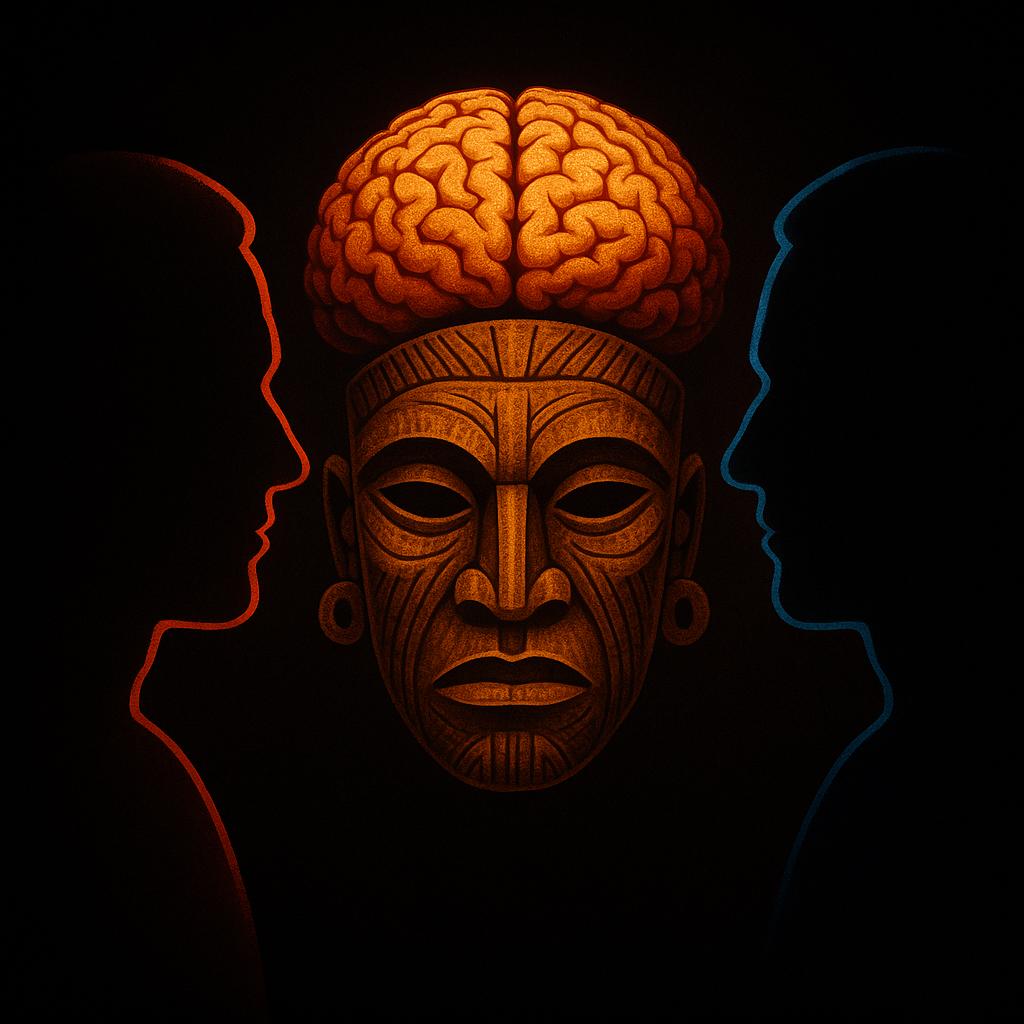
Political polarization did not begin with modern politics. It began in the deep past. Humans evolved inside small tribes where loyalty meant survival and disloyalty meant danger. Because of that, our brains still react to politics as if we lived in hostile plains filled with rival clans. Therefore modern polarization is not rational disagreement. It is ancient tribal psychology wearing modern clothing.
The evolutionary roots of tribal identity
Humans survived because they formed tight groups. Each group needed trust. Each group needed cohesion. People learned that safety came from belonging. Consequently the mind built fast identity mechanisms. It created automatic judgments about who belongs and who threatens the group. Early humans learned to see strangers as potential enemies. They learned to bond with familiar faces. These instincts allowed quick decisions, and quick decisions saved lives.
Coalition psychology in prehistoric groups
Every tribe evolved around coalitions. People aligned with allies. They watched rivals. They followed leaders who protected them. These coalitions helped tribes win conflicts, secure food, and defend territory. Today’s political blocs work the same way. People search for allies. People search for dominant figures. And people search for enemies. Modern party identity therefore follows prehistoric patterns. Citizens join teams not because of logic but because the brain wants a coalition.
The role of threat detection
Ancient environments were dangerous. Predators attacked. Rival tribes raided. Therefore human brains developed a threat-detection system that fires quickly. It over-detects danger, it exaggerates risk. It turns small concerns into large fears. Modern politics feeds this system. Media narratives amplify risks. Politicians create a sense of invasion, corruption, or collapse. The ancient brain reacts with fear, anger, and panic. Political polarization grows because fear strengthens tribal bonds.
Moral emotions shaped by evolution
Humans evolved strong moral emotions to protect the tribe. Disgust kept the group safe from disease. Anger punished cheaters. Contempt isolated violent individuals. Today these moral emotions target political opponents. People feel disgust toward rival ideologies. They feel anger toward opposing voters. They express contempt toward anyone outside their narrative. These emotions create loyalty. They create unity. And they create hostility. Tribal instincts shape every reaction.
Storytelling and myth-making as tribal glue
Early tribes used stories to maintain unity. These stories explained who they were. They explained who their enemies were. They explained what the group valued. Modern politics mirrors this pattern. Parties build myths about national identity. They create symbols. They simplify complex events into stories of heroes and villains. These stories keep groups together. They also keep groups apart. Tribes once used stories for survival. Now parties use them for votes.
Why humans divide into two sides so easily
Binary thinking helped early tribes make fast decisions. A threat required a yes or no. A fight required unity or collapse. Therefore the brain prefers simple divisions. Modern politics reflects this instinct. People split into two camps even when issues have many layers. They reduce complex debates into simple labels. They reject nuance because nuance feels unsafe. Two opposing sides feel familiar to an ancient mind. The modern world pays the price.
Leaders as ancient alpha figures
Tribes followed dominant leaders. These leaders provided safety. They organized hunts. They defended people from enemies. Because of that, humans evolved to bond with powerful individuals. Today this instinct supports political strongmen. People follow leaders with charisma. They form emotional attachments. They treat leaders as protectors, not administrators. This instinct helps political personalities rise quickly and hold influence even when evidence contradicts their claims.
Why facts fail during polarization
Ancient tribes valued loyalty more than truth. A lie that protected the group mattered more than a truth that weakened it. This survival mechanism still exists. People reject facts that threaten their tribe. They reinterpret evidence to protect their identity. The brain rewards conformity with feelings of safety. It punishes dissent with anxiety. Therefore evidence loses power. Facts collapse in front of tribal loyalty. Polarization strengthens because truth matters less than identity.
Tribal punishment mechanisms
Tribes survived by punishing behavior that threatened unity. They used shaming, they used exclusion. They used public pressure. Modern society repeats these methods. Cancel culture uses shame to enforce obedience. Online mobs replicate tribal purges. Parties punish internal dissent. These mechanisms keep the tribe strong but poison the broader society. Ancient survival tools now create modern hostility.
Echo chambers as modern tribal camps
Early tribes controlled information. They limited what people heard. They repeated their own stories. Modern echo chambers act the same way. Social media algorithms create information bubbles. They show people what reinforces identity. They hide what challenges it. As a result, individuals live in isolated ideological clans. Each clan holds its own truth. Each clan holds its own myths. And each clan strengthens its hostility toward others.
Why polarization keeps escalating
Tribal conflict escalates when groups feel existential threat. Rival tribes once fought for land, water, or survival. Modern political groups now feel similar fear. They believe the other side wants to destroy their way of life. They believe compromise equals defeat. Consequently polarization rises without limit. Culture wars become battles for identity. Conspiracies replace reasoning. Each tribe sees the other as a mortal enemy. The ancient brain enjoys this conflict. The modern world suffers.
How the super-rich exploit tribal instincts
The super-rich understand tribal psychology better than ordinary citizens. They know polarization keeps the public distracted. They know divided societies never unite against wealth concentration. Therefore they finance media networks that activate fear. They amplify identity conflicts. And they feed outrage. They bankroll think tanks that weaponize tribal instincts. And they benefit when two furious tribes fight each other instead of looking upward at hidden wealth, cartels, dynasties, and political clientelism. Polarization protects the elite because two hostile tribes never unite against the real centers of power.
How elites exploit tribal instincts
Political elites exploit the same instincts. They use fear campaigns, they use identity narratives. And they manipulate emotions. They promise protection from an enemy, even when the enemy is imaginary. They strengthen their positions by activating ancient instincts that bypass reasoning. Because people respond to tribal cues faster than to evidence, elites gain power through psychological shortcuts.
Overcoming tribal instincts
Political polarization stems from ancient tribal instincts shaped by fear, identity, and elite influence. Humans cannot erase their tribal psychology. But they can override it. Awareness weakens reflex reactions. Cross-group contact reduces fear. Critical thinking slows automatic judgments. Institutional design lowers the temperature of conflict. Humans evolved for survival, not for truth, but humans can choose better tools. Modern societies must learn to see tribal instincts, understand them, and push beyond them.
Conclusion
Political polarization comes from ancient tribal instincts. Humans react to politics as if the modern world were a prehistoric battlefield. They search for allies. They fear enemies, they cling to narratives. And they punish dissent. And they follow leaders like ancient clans followed dominant figures. The super-rich and political elites exploit these instincts for power. The only escape comes from awareness, reason, and the willingness to override ancient programming. Modern societies cannot move forward until they understand the tribal brain that still controls them.
Leave a Reply